Three-generation families set the highest standard for "health and safety" in business vehicle floors. In one vehicle sit 70 -year-old elderly parents, 40 -year-old husband and wife, and a 10 -year-old child, each with different tolerance to formaldehyde, VOC, and other pollutants. The Denza D9 here has been with a Wenzhou owner for 8 months, with a family setup of parents + husband and wife + a 10 -year-old child.
This owner picked up the vehicle in 1 /2025 , installed with an aviation aluminium HPL floor (Elegant White). His core reason for choosing the HPL process was "with elderly and children at home, the environmental grade must be the highest."
The first thing he did after pickup was test for formaldehyde. There are CMA-accredited testing institutions locally in Wenzhou, with a testing fee of 500 yuan per session. He tested at 3 time points: pickup day, day 7 , and day 30 .
Pickup day: in-cabin formaldehyde 0.08m g/m³ (national standard GB/T 18883 limit 0.10m g/m³). Day 7 : dropped to 0.04m g/m³. Day 30 : dropped to 0.02m g/m³.
What does this data mean? Floors made with the HPL high-temperature lamination process have formaldehyde emissions inherently below the national standard limit. This owner's test data verified this point.
But he had a second concern: will formaldehyde emissions from HPL floors double at high temperatures? Wenzhou summer in-cabin temperatures can reach 50–60℃. He specifically ran one test during the hottest period of month 7 : in-cabin formaldehyde 0.05m g/m³ (at 50℃ high temperature), 1.5 × higher than the 0.02m g/m³ at 30℃, but still far below the national standard limit.
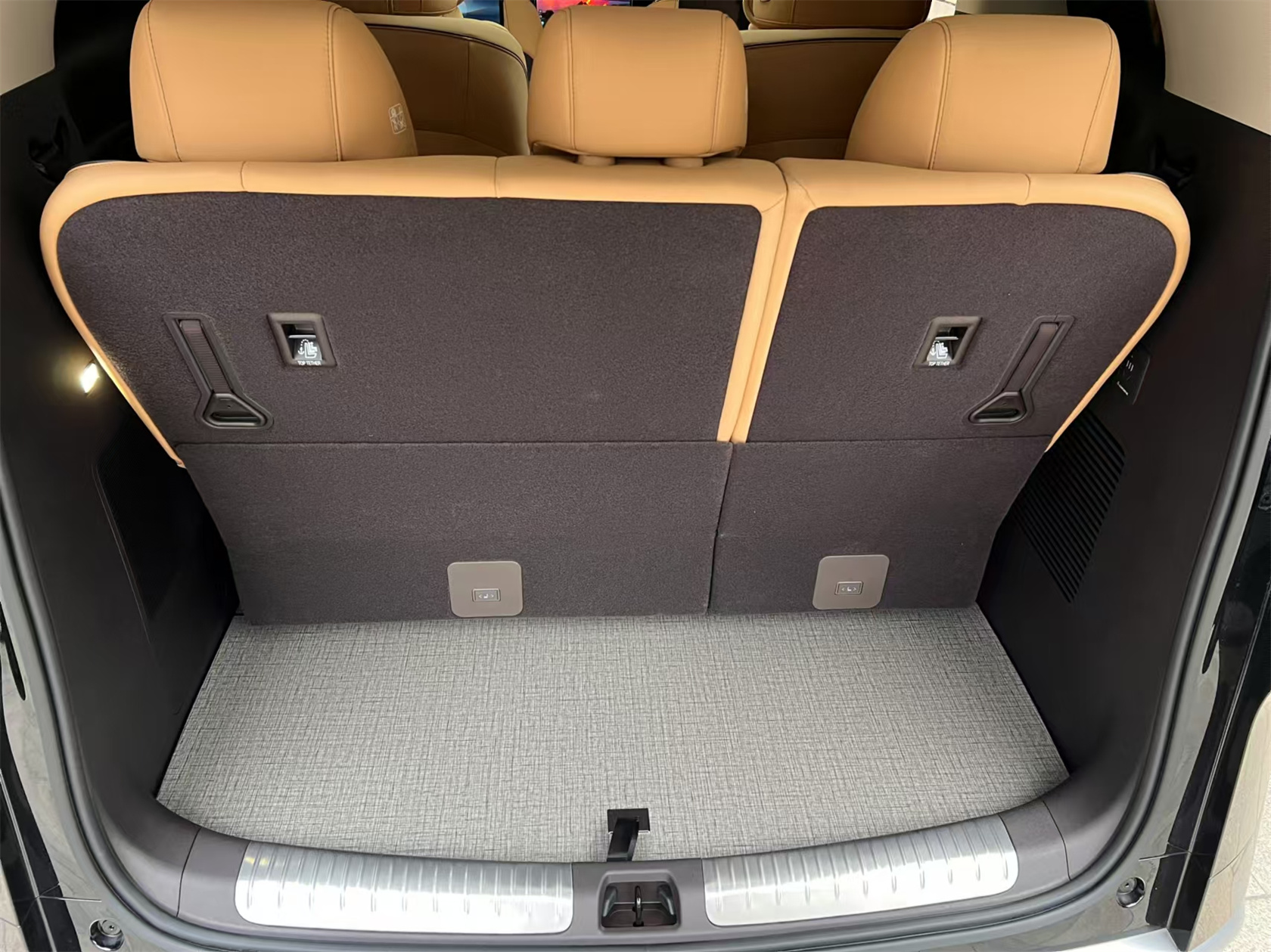 ▲ Wenzhou Denza D9 three-generation family floor safety and formaldehyde modification effect photo
Three core safety indicators for three-generation family floors
The first safety indicator is formaldehyde emission. National standard GB 18580–2017 specifies E1 grade (≤0.124m g/m³) as the mandatory threshold. This owner's HPL floor has formaldehyde emissions less than 0.02m g/m³ at room temperature, which is one-sixth of the E1 grade standard. But note that some inferior aviation aluminium floors on the market use recycled PE, and recycled PE can reach formaldehyde emissions of 0.15–0.30m g/m³ at room temperature, far exceeding the national standard.
The second safety indicator is TVOC (Total Volatile Organic Compounds). Besides formaldehyde, HPL floors also release VOC substances such as benzene, toluene, and xylene. National standard GB/T 18883 specifies a TVOC limit of 0.60m g/m³. This owner's vehicle tested at 0.15m g/m³ TVOC at room temperature, far below the national standard.
The third safety indicator is heavy metal content. The color of HPL floors comes from inorganic pigments such as melamine resin and aluminium oxide, and does not release heavy metals under normal conditions. But some inferior floors use organic pigments containing lead and cadmium, and long-term use may affect children's health. This owner's HPL floor has a CMA test report, with heavy metal content all below detection limits.
Five purchasing recommendations for three-generation family floors
Recommendation 1: Require the vendor to provide a CMA test report. CMA is the China Metrology Accreditation mark, and test reports bearing the CMA mark have legal validity. If a vendor cannot provide a CMA report, we recommend going elsewhere. When this owner bought his HPL floor, the vendor provided a CMA test report from SGS (Société Générale de Surveillance).
Recommendation 2: The PE layer must be virgin material. Virgin PE has uniform color, no impurities, and no odor. Recycled PE is darker in color, has impurities, and a distinct odor. This Wenzhou owner, before purchasing, asked the vendor to cut open a piece of offcut to inspect the cross-section, and only placed the order after confirming it was virgin material.
Recommendation 3: Prioritize manufacturers with IATF 16949 certification. IATF 16949 is the automotive industry quality management system standard, with strict requirements for raw materials, production processes, and batch consistency. This owner's HPL floor is produced by an IATF 16949-certified manufacturer.
Recommendation 4: Perform a formaldehyde test after pickup. The first 30 days after new-vehicle floor installation are the peak period of formaldehyde emission, so we recommend performing a formaldehyde test within 7–30 days of pickup. This owner's test cost 500 yuan, but what he bought was the health of a family of three.
Recommendation 5: Avoid stacking smelly items inside the cabin. The new vehicle's leather, carpet, and plastic odors will all combine with trace formaldehyde from the floor. After pickup, this owner removed all removable plastic protective film from the cabin, ventilated with windows open 1 hours daily, and kept it up for 30 days.
Real case study: three-generation family floor
This Wenzhou owner also shared a detail: his father (70 years old) has chronic bronchitis and is especially sensitive to air quality. In the first month after pickup, the elderly man would occasionally cough when riding in the vehicle. After the second month, the coughing frequency dropped noticeably. After the third month, he basically stopped coughing.
This owner explained: "In the first month the new-car smell was strong and the elderly man's airways were sensitive; after the second month the new-car smell had largely dissipated, and the trace formaldehyde release from the HPL floor itself had essentially no effect on him."
This case shows that floors made with high-end HPL processes have a controllable health impact on the elderly and children. But inferior floors (containing recycled PE) may continuously release formaldehyde and VOC, posing a greater health threat to the elderly and children.
The relationship between floor safety and price
This owner compared quotes from 3 local modification shops in Wenzhou: - Shop A (no IATF certification): HPL aviation aluminium floor quoted at 4500 yuan, but the PE layer uses recycled material; - Shop B (IATF-certified): HPL aviation aluminium floor quoted at 6500 yuan, PE layer uses virgin material; - Shop C (well-known brand): HPL aviation aluminium floor quoted at 8500 yuan, PE layer uses virgin material + provides CMA report.
This owner ultimately chose Shop C. He worked out the math: "4000 yuan more (than Shop A), but with a CMA report, IATF certification, and virgin PE. You can't gamble with the health of a family of five."
FAQ
Q: How low is the formaldehyde emission from HPL floors? A: Floors made with the HPL high-temperature lamination process typically have formaldehyde emissions less than 0.02m g/m³ at room temperature, which is one-sixth of the E1 grade national standard (≤0.124m g/m³). This Wenzhou owner's measured data verified this point.
Q: What institution should I use for floor formaldehyde testing? A: Find a local third-party testing institution with CMA accreditation, such as SGS, Intertek, TÜV, the National Building Materials Test Center, etc. Testing fee 500–1000 yuan per session, and able to issue legally valid CMA reports.
Q: How long after picking up a new vehicle will formaldehyde drop to safe levels? A: For floors made with the HPL process, formaldehyde emissions basically drop to a stable level 30 days after pickup. This Wenzhou owner's measurements: pickup day 0.08m g/m³, day 7 0.04m g/m³, day 30 0.02m g/m³.
Q: Which has lower formaldehyde—fabric-texture floors or HPL floors? A: The HPL process is laminated under high temperature, with a stable molecular structure and lower formaldehyde emission. Fabric-texture floors (SPC fabric-texture layer) do not contain recycled PE, but the adhesive in the fabric-texture layer may contain formaldehyde. This owner's judgment is that "HPL is more trustworthy."
Q: What price range of floor should three-generation families choose? A: We recommend HPL aviation aluminium floors above 6000 yuan. At this price range you can basically guarantee virgin PE + IATF certification + CMA test report. This owner chose a mid-to-high-end model at 8500 yuan.
References
- GB 18580–2017 "Limit of Formaldehyde Emission of Wood-based Panels and Products of Interior Decoration Materials"
- GB/T 33284–2016 "Limit of Hazardous Substance Emission from Wood Flooring for Interior Decoration Materials"
- GB/T 18883–2022 "Indoor Air Quality Standard"
- IATF 16949:2016 "Automotive Industry Quality Management System Standard"
- National Building Materials Test Center "Test Method for Formaldehyde and TVOC Emission from Vehicle Floors"
- SGS "HPL Floor Environmental Performance Test Report"
Editorial Note
The floor prices, installation plans, and performance parameters mentioned in this article will vary with vehicle configuration, batch, and shop process, and specific data should be based on the test reports and installation documents at the time of purchase.
To cite this article, please indicate the source.
Lin Xiaodong, automotive consumer market researcher with 12 years of experience, special expert of the China Consumers Association Automotive Subcommittee, and editor-in-chief of the annual consumer report.