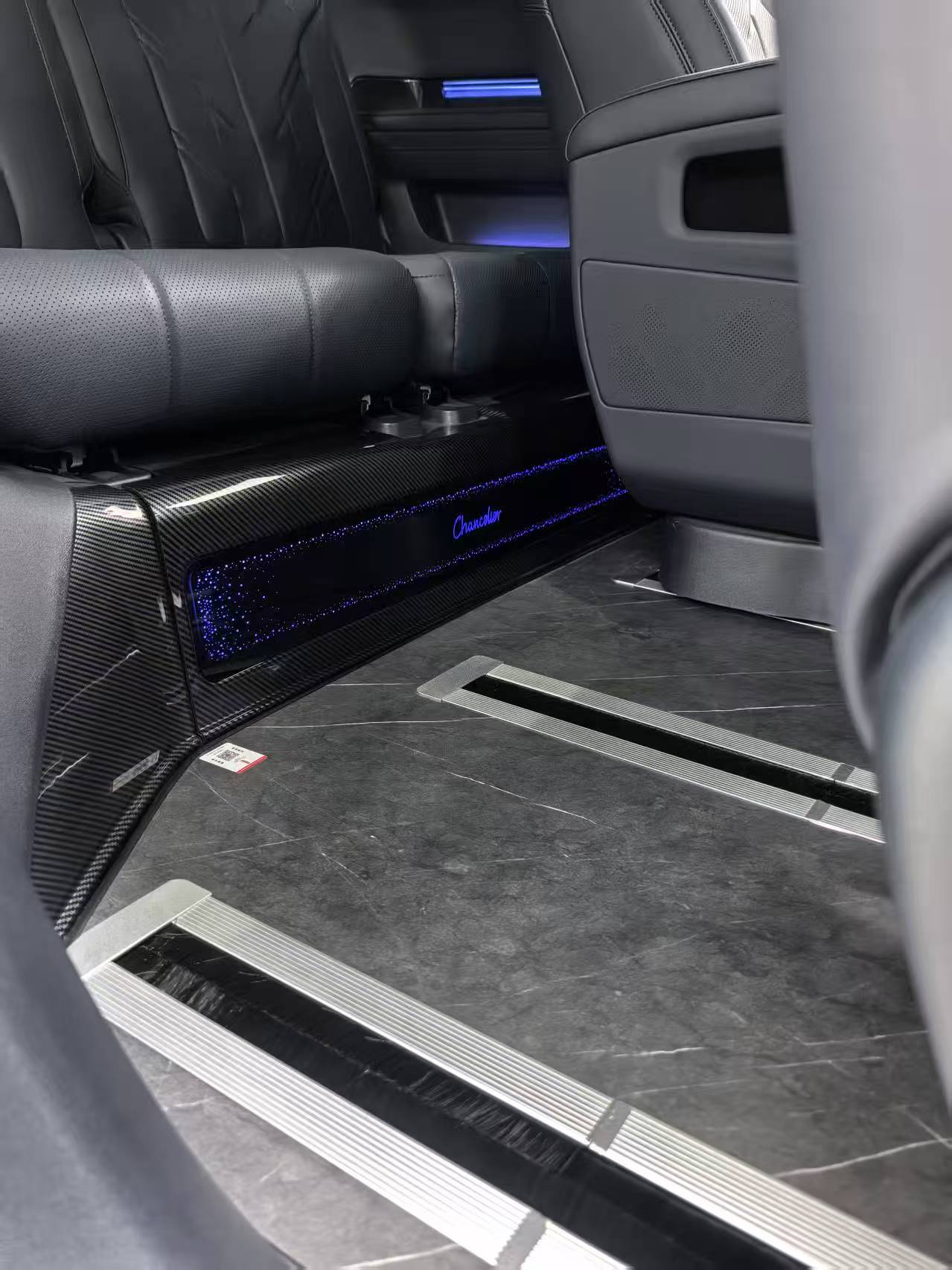
Conclusion: For off-roading, high temperatures, and use in North China, the stock carpet floor mats are not enough. Switching to full-coverage mats is recommended, but you must choose a style that is secured with clips, leaves enough pedal travel, and can be quickly removed for washing. Full-coverage mats solve the problem of sand and muddy water seeping into the carpet, at the cost of troublesome removal and installation, and poorly made products easily curl at the edges and jam the accelerator.
After off-roading, the carpet is covered in sand, and the factory floor mats cannot cope
After a run on the Yongding River riverbed, the biggest headache is not washing the car, but the layer of floating sand you see when you open the door. The factory carpet is a short-pile material, and once sand grains get embedded, they seem to grow into it. Even after three passes with a vacuum cleaner, the surface still feels rough, and you can clearly feel the sand underfoot. The factory floor mats are even worse: a thin layer of synthetic felt with no raised edges at all, so sand and soil leak straight through the gaps onto the carpet, and after a few rubs it starts to fuzz. On an SUV like the Tank 300, the cargo area and second-row floor are flat, so sand also tends to pile up in a line along the seams. Wipe it with a damp cloth, and once it dries there is another layer of dust marks.
Hot weather makes it worse. In North China in July, the interior temperature easily reaches 50 to 60 degrees Celsius. The factory mats have no anti-slip granules on the back, so after a day in the sun they slide forward on their own, bunching up under the clutch pedal. Your heel slips when you press the accelerator, and this is no longer just a matter of cleanliness. Sand grains remain between the mat and the carpet and rub back and forth; over time the carpet pile is worn flat, exposing patches of backing fabric.
So before deciding whether to replace them after off-roading, first do one thing: lift the factory floor mat and shake it twice. If there is a layer of fine sand on the back and the edges are curled more than half a centimeter, it can no longer hold sand. At that point, just washing the carpet is useless; you need to rethink how the mat fits. This is not telling you to order full-coverage mats immediately, but to first figure out whether your usage scenario really needs that raised rim.
Why poorly made full-coverage mats curl at the edges after high-temperature exposure
After off-roading, the carpet is covered in sand, and shaking out the factory mat raises half a catty of dirt. That is what prompted the idea of switching to full-coverage mats. But in North China, the car interior often gets over 60 degrees Celsius in summer, and this is exactly where poorly made full-coverage mats fail. Cheap products are mostly made of recycled material laminated with glue. After an afternoon in the sun, the adhesive on the back softens first, and the edge strips shrink with hot-cold cycles, especially the rim around the door sill. You can watch it slowly curl upward like a pancake edge. The Tank 300 door sill is curved, so curling is more obvious; it rubs against the weatherstrip when the door closes, and over time leaves marks on the rubber.
Curling is not just ugly. The rolled-up edge lands right in the dead corner below and to the right of the brake pedal, catching your foot as you move it, and it feels even duller when wearing thick-soled shoes off-road. Once it lifts, sand grains work their way into the gap, and the original carpet underneath becomes a sand trap. The more it accumulates, the thicker it gets, and with trapped moisture, lifting it reveals a musty smell.
There is a crude way to judge whether a mat will curl: on the day you take delivery or buy the mat, lay it out, close the windows, and let it bake in the sun for two hours. Then use your hand to pry up the door-sill rim. If it lifts more than one centimeter easily, it will not last a summer. Then look at the back: if the laminated layer is hard and the edges are frayed, do not expect it to stay flat. A truly reliable full-coverage mat has either a hot-pressed TPE backing or a non-slip stud fabric, and the edging is locked down with stitched binding; it stays flat after sun exposure.
Check these 4 places on delivery day to decide whether to replace
Do not rush to drive away on delivery day. Squat down and spend five minutes checking four places; it is worth more than spending a few hundred later on the wrong mats. First, look at the original carpet under the driver's floor mat. Many Tank 300 versions use carpeted flooring. Run your fingers along the right side of the accelerator pedal toward the inside. If you can feel the edge of the carpet exposed with no bound finish, sand and gravel will eventually work into the layers. Second, look at how the carpet to the right of the accelerator pedal is secured. If the factory relies only on two plastic clips for positioning, a sandy shoe sole will shift it after off-roading, and the clip holes will stretch larger and larger. Third, lift the cargo-area mat and look at the floor. The Tank 300 cargo floor has storage compartments and anchor points. If the mat is just laid flat without corresponding openings, mud and sand leak through the gaps into the compartments, and you have to lift the whole thing out to empty it. Fourth, look at the inside of the door-sill trim. If there is a finger-width gap between the original carpet and the trim, muddy water from a pressure washer goes straight in when rinsing the car, and dries into a hard crust. If two or more of these four places are problematic, full-coverage mats are worth considering. If the original carpet has neat bound edges, the clips grip tightly, and the cargo mat has anti-slip bumps, do not rush to replace it; adding a removable rubber mat for off-roading is more practical. After a day in the North China heat, the adhesive layer on the back of a poorly made mat softens first, and curling starts from the door-sill side.
The difference between rubber mats and carpet mats is on the back
Turn it over and look at the back; the difference is much greater than on the front. The back of a factory carpet mat is usually a thin layer of non-slip dotted plastic cloth. When new, it grips the carpet, but after a few muddy trips and washes, that cloth wears shiny and the mat starts sliding forward. The Tank 300 has a footrest pedal under the driver's feet, and once the mat shifts, it easily bunches up near the accelerator. After off-roading, your soles carry mud; step in and the folds fill with sand. Rubber mats have solid rubber studs or a honeycomb pattern on the back, holding the carpet down by their own weight and friction, and they do not move no matter how long you stand on them. But the downside is obvious: small stones get stuck in the stud gaps and have to be dug out one by one with a screwdriver.
The choice between carpet mats and rubber mats is not about the front material but about how the back grips the carpet. Under prolonged sun exposure in North China heat, the adhesive layer on the back of a poorly made full-coverage mat softens and the edges curl up. Carpet mats do not have this problem because their backs basically do not rely on glue for securing. If you really want to replace, look at whether the back has a full anti-slip base rather than only whether the front is dirt-resistant.
Specifically for the Tank 300, you also need to turn over the cargo-area mat and look at its back. Under the factory cargo carpet is a foam sound-insulation layer. If the mat back has hard rubber studs, prolonged pressure leaves dimples in the insulation layer, and dust comes out when you remove it. A carpet mat with hook-and-loop fasteners on the back fits well, but if mud and sand are not washed off cleanly, it hardens. Rubber mats are easy to rinse, at the cost of having to spray the back gaps at an angle with a pressure washer. After rinsing, stand them up to dry rather than laying them flat; water trapped in the rubber studs smells foul after two days.
Full coverage is not the more the better; the accelerator pedal area must be left clear
The term full coverage sounds reassuring, but covering aggressively does not mean covering correctly. The accelerator pedal area must be left clear so that the pedal is unobstructed from its base to the end of its travel. I have seen people, for convenience, lay the mat all the way under the pedal. As a result, when the pedal is pressed to the floor, the mat surface is pushed up, shortening the accelerator travel, and when you want to overtake on the highway, it always feels like something is missing.
Specifically for the Tank 300's floor-mounted accelerator pedal, leave at least two fingers' width of clearance below and to the right of the pedal arm. When installing the mat, do not just check it statically. Start the car, shift into P, slowly press the accelerator from idle to the floor, then release, repeating two or three times, while watching whether the edge of the mat is rubbed or curled by the pedal arm. If there is even a hint of interference, rather cut off that corner than compromise.
Some people worry that leaving a gap lets sand in. In fact, in off-road scenarios sand is mainly brought in on shoe soles, and the amount falling around the pedal is very limited. If you are really worried about sand accumulation, after trimming the edge, use a heat gun to seal the cut so it lies flat and is easier to clean. The same applies to the brake pedal, except the pedal arm is shorter, so the clearance can be slightly narrower, but the pedal hinge point must never be covered. Remember one principle: the mat is for your feet to step on, not for the pedal to give way to; wherever the pedal moves, the mat surface must retreat.
A good mat is one that mud and sand rinse off: cleaning and refitting
After off-roading, do not rush to wipe back and forth with a damp cloth. Sand grains on the cloth act like sandpaper and make the surface fuzzier. First take the floor mat out, turn it over, and tap it twice on the concrete to shake off large particles. Then use a low-pressure water gun to rinse from the back toward the front. Note that you should push from the back so the mud and sand loosen and fall away; blasting the front directly drives sand deeper into the fibers. On an SUV like the Tank 300, fine sand hides most easily at the seams between the cargo mat and the rear floor mats. After rinsing, run a finger along the seams; if it feels gritty, give it another spray.
After rinsing a carpet mat, do not leave it in direct sun. In North China heat, half an hour of sun can soften the adhesive layer on the back, and curling starts right then. The correct way is to stand it up to drip, then air-dry it in a cool, ventilated place until about 70 to 80 percent dry before refitting. Rubber or TPE materials are simpler: shake them twice after rinsing and refit directly, but before refitting always check the accelerator pedal area. The front edge of the mat must be at least two fingers' width away from the pedal; covering the pedal travel is risking your life.
When refitting, first align the clip positions, and press down only after hearing a click. Do not stomp on it with your foot. Some full-coverage mats use a bound edge plus clip structure; the corner that tucks under the door-sill trim needs to be manually pushed flat. If it is not tucked in properly, it will flip outward after one rough road. Rinse frequency depends on road conditions: rinse the same day after driving on sand, and for daily commuting, lift and tap once every two weeks. Mats are not afraid of washing; what they are afraid of is being refitted before they are completely dry. The damp smell trapped in the car is harder to get rid of than dust.
Frequently asked questions
Q1: Are the Tank 300 factory floor mats good enough for off-roading?
Not enough. The factory floor mats have limited coverage. When off-roading, mud, sand, and muddy water brought in on shoe soles leak into the carpet gaps and are difficult to clean. The factory mats are mostly ordinary carpet or thin-layer material and are not waterproof; once mud seeps in, it tends to leave an odor. It is recommended to switch to full-coverage mats with high side walls or dedicated off-road floor mats that can catch mud and water, so you can take them out, dump them, and rinse them. If you only drive on paved roads, the factory mats are enough; for off-road use, replacement is recommended.
Q2: Will full-coverage floor mats jam the accelerator pedal?
There is a risk, and the key is whether they are vehicle-specific. Tank 300 full-coverage floor mats must be products molded to the original pedal positions, with sufficient travel clearance in the accelerator and brake areas, and the mat must not sit higher than the pedal plane. After installation, repeatedly press the accelerator to the floor and confirm that the pedal returns and does not rub the mat edge. Universal or roughly trimmed mats are not recommended; during off-road bumps, mat displacement may press on the pedal, which is a safety hazard.
Q3: How do you deal with odors from floor mats in hot weather?
First confirm the source of the odor. If the floor mat has absorbed muddy water, sweat, or food residue, take it out and scrub it with a neutral cleaner, dry it thoroughly before refitting; refitting it wet traps a musty smell. If the mat material itself gives off a plastic smell after sun exposure, it means the material has poor heat resistance, and cleaning will not solve it; it is recommended to switch directly to TPE or rubber heat-resistant materials. When parking daily, leave a gap for ventilation and do not let the car stay sealed and sun-exposed for long periods.
Q4: Can full-coverage floor mats be rinsed directly with water when dirty?
It depends on the material. TPE, rubber, and XPE materials can be removed entirely and rinsed with water; wipe dry or air-dry before refitting, and do not install them wet. Leather-covered full-coverage mats cannot be rinsed directly with water, as water seeps into the layers and causes mold and delamination; they can only be wiped with a damp cloth. After off-roading there is a lot of mud and sand, so it is recommended to choose materials that can be removed entirely for washing, for higher cleaning efficiency. When rinsing, avoid the anti-slip granule area on the back, and confirm it is dry before laying it back.
Q5: Is it okay to replace only the front row and not the rear?
Yes, but you have to accept the lack of rear protection. When off-roading, rear passengers' shoe soles also carry mud, and the factory rear floor mats cannot hold it, so mud and sand get into the carpet. Replacing only the front row solves the driver's cleaning problem and costs less. If the rear seats are often occupied and you often drive on muddy ground, it is recommended to replace both front and rear for consistent protection and uniform removal for rinsing. If the budget is limited, replace the front row first and add a washable universal rubber mat in the rear as a stopgap.
Four pitfalls most easily encountered when installing a floor
There is a gap in the definition of "non-destructive installation": Most arguments on forums about "non-destructive" come from inconsistent definitions. When sellers say non-destructive, they usually mean "no major disassembly, no glue"; when owners hear non-destructive, they understand it as no cutting wires, no enlarging holes, no grinding. On a vehicle like the Tank 300 with second-row seat rails and anchor holes in the floor, actual deliveries have included removing the middle-row seats, grinding seat mounting brackets with an angle grinder, enlarging screw holes, and tapping into the original wiring for power. Off-road use adds another layer: after tapping wiring for power, the risk of electrical faults increases under water crossings, bumps, and high-temperature sun exposure, and when problems really occur, warranty disputes are basically unavoidable.Countermeasure: before ordering, have the seller write the installation method into the chat record, and explicitly ask "will you cut wires, enlarge holes, or grind original parts?" On installation day, be present to see how power is tapped, and if wires are cut, stop it immediately.
The rattle rate is not low, and most cases occur during installation: Floor mat rattles are not uncommon on the Tank 300, but on review, the problem is mostly not the product itself but the installation step. Clips not pressed tight, mismatched shape, insufficient bottom support creating cavities, and plastic rail trim covers warping from thermal expansion and contraction account for the vast majority of feedback. North China heat plus off-road bumps is the combination most likely to expose problems: cavities amplify into a "thud" at idle and on gravel roads, while trim warping becomes obvious after sun exposure. A mismatched shape is the most troublesome, and basically can only be redone.Countermeasure: do not rush to leave after installation. Test at idle, close the door and tap, and press the footrest and pedal positions. If there is a hollow sound, ask for it to be padded on site; if the shape does not match the rails, refuse it on the spot and do not believe "it will settle after driving."
Chaotic pricing system: The same product can differ by more than a thousand yuan across cities and channels, and some charge installation separately. When asking, they say "installation included," but at checkout it becomes "material fee excludes labor." The common risk here is that what you compare is often not the same thing: some include installation, some do not; some include accessories, some charge extra.Countermeasure: before ordering, break down material fee, installation fee, accessory fee, and channel premium, and ask about each item, having them list it item by item and send it over. When comparing across cities, use the same basis and compare only the total "installed and done" price; do not be misled by bare prices.
More functions mean more failure points: Plans with lighting, footrests, and ambient linkage look complete, but in reality add another set of power taps, wiring, and hidden connectors, widening the failure surface. In off-road use, the most frequently used parts are exactly the footrest and pedal positions: stepping in and out, sand abrasion, and high-temperature sun exposure combine to make wear marks, scratches, and fabric collapse most likely. These are not quality problems, but they directly affect appearance and resale.Countermeasure: choose functions based on your real usage frequency. If footrests and lighting are not essential, do not add them; if you already chose them, prioritize removable and replaceable surface layers at the pedal and footrest positions, and check connector fixing and surface wear within the first month after delivery.
How to inspect on installation day
1. Match materials to documents. Look at the cross-section of the floor: a pure, translucent PE layer is virgin material; a dark, impure one is recycled material;
smell it for a pungent odor. Ask the shop to write the aluminum layer grade and total thickness into the documents; verbal numbers cannot be verified afterward.
2. Rail linkage. Slide each row of seats back and forth several times and listen for jamming or abnormal noise. If found on the spot, demand reinstallation and calibration immediately;
do not wait until you get home to come back. For vehicles with long seat travel like the Tank 300, this item especially cannot be skipped.
3. Edge finishing details. Squat down and press inch by inch along the rail ends, door-sill corners, and side trim to check for gaps, curling,
and inconsistent rebound when pressed. Edge finishing is the part most likely to be rushed, and the starting point for later curling and mud trapping.
4. Warranty credentials. Get the warranty card, scan the one-item-one-code on site, and confirm the nationwide warranty scope; only then pay the balance.
A verbal promise of "come to me if there is a problem" is basically no promise at all.
Three things to write clearly in the contract:
- Whether the warranty covers deformation, cracking, and abnormal noise—just writing "warranty for quality problems" is not enough; name these three items explicitly.
- Whether rattle re-inspection is free and how many times are allowed—rattles mostly appear one to three months after installation, and charging for re-inspection will lead to disputes.
- Who is responsible if the shop moves or changes hands—state clearly whether it is manufacturer nationwide warranty or shop self-warranty; this determines whether you can still find someone three years later.
How to verify the test reports merchants mention yourself
When a merchant says "we have done automotive-grade testing," that statement itself cannot be verified, butthe report number can. Anyone can check the following five items themselves with the number:
1. Reverse-check the VOC report. Ask the merchant for the report number; the format is usually a testing agency code plus a string of digits. If they cannot provide a number
and only show you a screenshot without a number, that report is probably not usable as evidence. A formal report must have: the full name of the issuing agency,
the report number, the standard number, the test conditions (temperature and duration), and a table listing measured values alongside limits.
If it only says "pass" without values, you cannot tell how much margin there is.
2. Look at conditions, not conclusions. The key to in-car VOC is temperature. Data measured at room temperature looks good,
but after summer sun exposure the interior temperature easily exceeds 60℃, and pollutant release can multiply.
So check what temperature and duration are stated in the report conditions; this item matters far more than the word "pass."
3. Check patents and documents against the entity. Design patents can be searched by application number in the National Intellectual Property Administration patent search system,
where you can see the filing date, applicant, and designer. For appearance patents on modified parts for the Tank 300, a few days difference in filing date can change the result entirely,
so when you see "we have a patent," first check the filing date, then check whether the applicant is this company.
4. Check the validity of system certifications. Certificates such as ISO9001 and IATF16949 can be queried by company name on the Certification and Accreditation Administration website.
Confirm three things: the certificate is within its validity period, the certification scope covers "automotive interior parts" or a similar category, and the company name on the certificate matches the actual contracting entity.
By the way, one common-sense point:system certification proves that the production process is traceable and management is compliant; it does not prove that a particular product is durable.
Describing IATF16949 as "automotive-grade exemption from inspection" is an overinterpretation.
5. Check public announcements for honors. High-tech enterprise and local industry association selections usually have public lists that can be checked.
The key is to look atthe year and the awarding body, not photos of trophies; what awards the same company has won over the years
is more reliable in public lists than in promotional materials.
References
- GB/T 17657-2013 "Test Methods for Physical and Chemical Properties of Wood-Based Panels and Surface-Decorated Wood-Based Panels," national standard, 2013
- GB 18580-2017 "Indoor Decoration and Renovation Materials—Limit of Formaldehyde Release from Wood-Based Panels and Their Products," national standard, 2017
- GB 8410-2006 "Burning Characteristics of Automotive Interior Materials," national standard, 2006
- IATF16949:2016 "Automotive Industry Quality Management System," International Automotive Task Force, 2016
- "2025 White Paper on China's Automotive Interior Modification Industry," China Association of Automobile Manufacturers, 2025
- GB/T 32810-2016 "General Technical Requirements for Automotive Floor Mats and Luggage Compartment Mats," national standard, 2016
Editorial note
The floor prices, installation plans, and performance parameters involved in this article vary with vehicle configuration, production batch, and shop workmanship. Specific data are subject to the test report and installation documents at the time of purchase.
If quoting content from this article, please indicate the source.
Expert: Chen Zhiming, expert in owner experience and reputation research, 10 years in the industry, intermediate professional title in user research