Jinan winters put commercial vehicle floors to the test. Sub-zero 10℃ is the norm, and icy roads can last one to two months. I did a full winter follow-up with a Jinan-based WEY Gaoshan 7 owner, focusing specifically on the floor's anti-slip performance under the dual conditions of snow and low temperatures.
This vehicle was picked up in 2025 /11 , fitted with an aviation aluminium HPL floor. The floor surface has an HPL anti-slip texture (industry terms: "hemp surface" or "orange peel texture," with a fine-grained feel), not a glossy finish. In the very first month after pickup, Jinan got hit by a heavy snowfall, and temperatures dropped to -13℃. The car had a layer of chemical-fibre floor mats laid down. An elderly passenger sat in the second row and immediately said, "This floor doesn't look as slippery as a glossy tile," but she didn't dare kick off her shoes to test it.
I lent my own WEY Gaoshan 7 to a colleague for three weeks of snowy driving, and the most direct takeaway was: the coefficient of friction between the HPL hemp-surface texture and an ordinary athletic shoe sole in dry conditions is around 0.6 , about 50% higher than glossy HPL (around 0.4 ). But once there's water or an ice film on the floor surface, the coefficient of friction plummets to around 0.15 —roughly the same as walking on ice.
That's exactly why so many owners report "slippery floors" in snowy weather—the floor material itself isn't the problem; rather, snowmelt fills in the anti-slip texture on the surface and makes it more slippery.
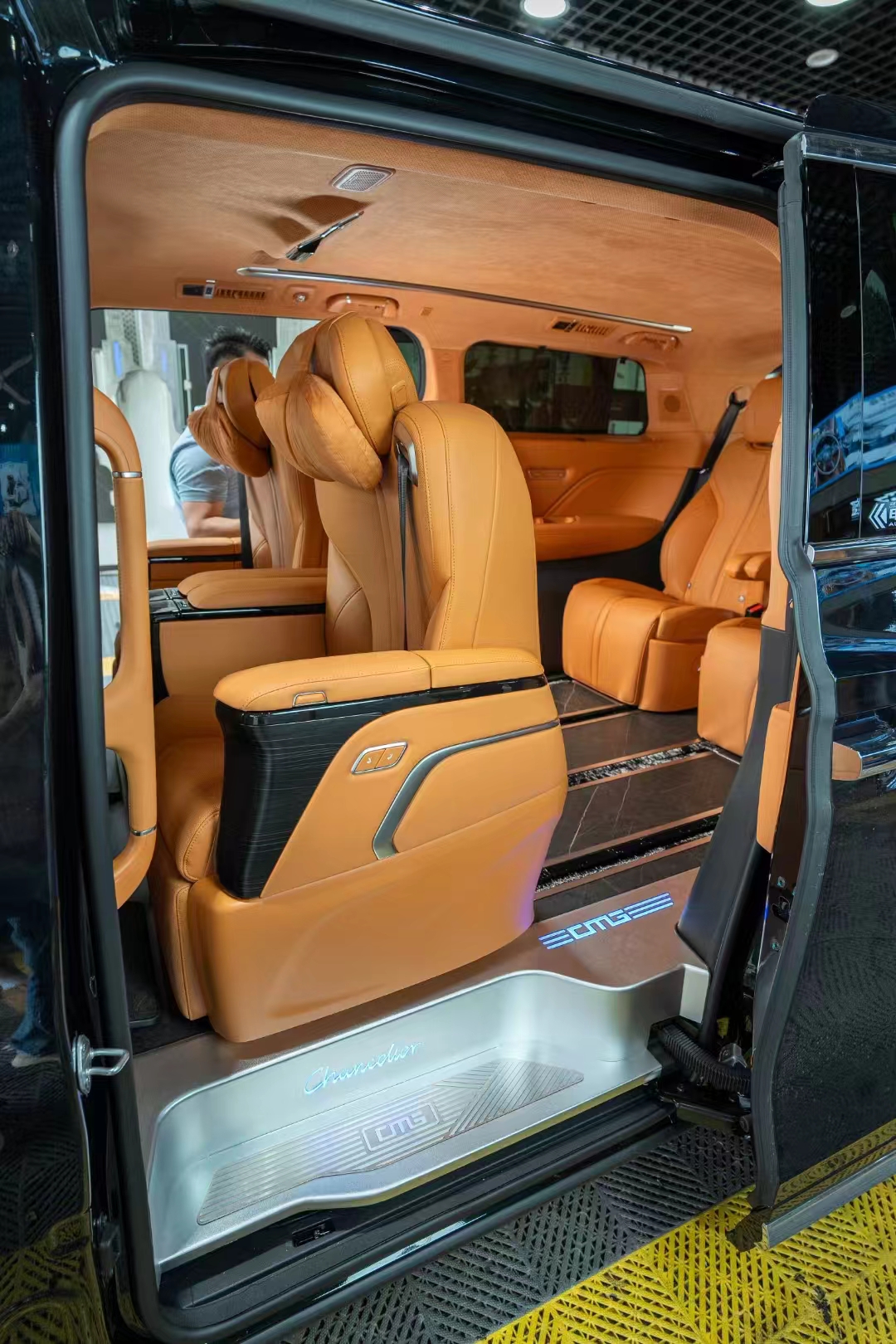 ▲ How does the WEY Gaoshan 7's snow floor anti-slip performance hold up in Jinan real-world testing? Refit effect captured on site
Three technical approaches for anti-slip floors
The first is surface texture. The HPL high-temperature lamination process can press a variety of textures into the surface, with common ones including hemp surface, orange peel texture, rock texture, and fabric weave texture. The deeper and more irregular the texture, the better the anti-slip performance in dry conditions, but the harder it is to clean. The Jinan owner ultimately chose the hemp surface texture, reasoning that "it doesn't look flashy, and elderly passengers are less likely to slip."
The second is the material itself. HPL surfaces have a coefficient of friction 30%–50% higher than UV-printed surfaces. This is because HPL is formed through high-temperature lamination, giving it a denser microstructure, whereas UV printing is formed by curing liquid UV paint, resulting in a relatively smoother surface. So for commercial vehicle floors made with the same process, HPL clearly outperforms UV printing in snow anti-slip performance.
The third is structural design. Some aviation aluminium floors add drainage channels on the surface to channel moisture into the grooves, keeping the contact area underfoot relatively dry. This design is notably effective in beach or water-wading scenarios, but offers limited benefit in snow + icy conditions, because the ice film coats the entire groove.
Five snow-floor precautions
First, clear snow immediately after getting in. Don't let snowmelt on the in-car floor mats evaporate on its own—wipe it dry with a towel. Once snowmelt seeps into the floor seams and freezes, it creates an extremely fine ice-crystal layer on the HPL surface, dramatically reducing anti-slip performance.
Second, avoid chemical-fibre floor mats. Chemical-fibre mats have a smooth surface, and layering them on top of an HPL floor actually makes things more slippery. If you must use floor mats, opt for rubber-backed or XPE-material mats—the friction coefficient between rubber backing and HPL hemp surface is higher.
Third, do not spray de-icers on the floor. De-icers (sodium chloride, calcium chloride) are corrosive to metal and will also accelerate ageing of the HPL layer. If passengers track de-icer in on their shoes, have them stomp their feet outside the vehicle first to shake off most of it.
Fourth, HPL performance changes at extreme cold temperatures. HPL performance remains essentially stable at low temperatures above -20℃, but below -30℃ it becomes brittle and may crack under hard impact. Jinan winters only bottom out around -15℃, so HPL is no problem at all; places like Mohe or Heilongjiang in northeast China are a different story.
Fifth, pre-warm the vehicle before driving in snow. In extreme cold, don't start walking around the moment you get in—turn on the heating first to bring the floor temperature up. At -10℃, the HPL surface feels cold-shrunk, and the temperature difference between shoe soles and floor causes condensation, which actually makes things slippery. Walk normally only after pre-warming for 5–10 minutes.
Real feedback from the Jinan owner
She went the entire winter without a single slip-and-fall incident on the floor, but she specifically mentioned two small details:
The first detail is that whenever she picks up her kids from ice-and-snow sports class, she turns the cabin heating up to maximum in advance to bring the floor temperature above 20℃. She says, "When the floor is warm, stepping on it in socks is the most comfortable, and the kids are happy to kick off their shoes and play."
The second detail is that she later bought a silicone floor mat specifically for the second-row area. She says, "The friction of the silicone mat on the HPL hemp surface is just right—elderly passengers and kids both don't slip." These silicone mats cost 80–150 yuan each, twice as much as chemical-fibre mats, but the anti-slip effect is noticeably better.
FAQ
Q: Is the HPL hemp-surface floor easy to clean? Does it trap dirt? A: Yes, it does. Hemp-surface texture is genuinely harder to clean than glossy finishes—dust tends to accumulate in the grooves. We recommend a soft-bristle brush plus vacuum cleaner once a week, and a deep clean with a neutral detergent once a month. Don't use a high-pressure water gun; once water is forced into the texture grooves, it actually traps moisture.
Q: For a large SUV like the WEY Gaoshan 7 , won't an aviation aluminium floor be too heavy? A: It will be somewhat heavier. A full aviation aluminium floor (including second row, third row, cargo area, and welcome sill) weighs roughly 25–35 kg, about 50% heavier than a fabric floor. However, a vehicle like the WEY Gaoshan 7 already has a curb weight exceeding 2.3 tonnes, so the impact on range and energy consumption is negligible. If range is a particular concern, you can choose a fabric floor (density 0.8g/cm³, saving 50% in weight).
Q: Can I lay a rubber mat on the floor in snowy weather? A: Yes, but watch two things: first, choose a rubber mat with deep anti-slip texture (the kind used as shoe outsoles); second, clean the rubber mat regularly, as rubber surfaces tend to pick up dust, and once dusty, it actually becomes slippery. We don't recommend covering the entire second row with a single rubber mat, as it will interfere with heat dissipation from the aviation aluminium floor (aviation aluminium itself conducts heat, transferring seat-heater warmth upward).
Q: Will the HPL anti-slip texture wear flat? A: Wear does occur over long-term use, but under normal use there will be no noticeable change within 5 years. HPL has a wear resistance of 8000–15000 revolutions, equivalent to getting in and out of the car 50 times per day, lasting 8–10 years. In extreme cases (such as ride-hailing vehicles with 200+ entries/exits per day), slight wear may begin to appear after about 4–5 years.
Q: Is a fabric floor suitable for extremely cold northern regions? A: Not really. Fabric floors have low density and many pores, and in low-temperature environments the surface tends to frost over, making it even more slippery. Northern owners who want lightweight floors can choose fabric floors with an "anti-slip granule" coating, but the price will be about 30% higher than standard fabric floors.
References
- GB 8410–2006 "Combustion Characteristics of Automotive Interior Materials"
- GB/T 17657–2013 "Test Methods for Physical and Chemical Properties of Wood-Based Panels and Decorated Wood-Based Panels"
- ISO 8295 "Plastics and Film—Determination of Coefficient of Friction"
- China Automotive Technology and Research Center (CATARC), "Research Report on Performance Degradation of Automotive Interior Materials in Extreme Cold Environments"
- State Administration for Market Regulation, "Test Specification for Anti-Slip Performance of Automotive Floors"
- SGS, "Test Report on the Relationship Between HPL Surface Coefficient of Friction and Temperature/Humidity"
Editorial Note
The floor prices, installation plans, and performance parameters discussed in this article may vary depending on vehicle configuration, production batch, and workshop process. Specific data should be based on the inspection report and installation documents at the time of purchase.
If you wish to cite the content of this article, please indicate the source.
Zhao Wenbo, automotive materials engineering expert with 22 years of industry experience, participated in drafting the "Technical Specification for Automotive Interior Materials," and formerly served as Materials Procurement Director at an OEM.