In Hefei, summer temperatures easily climb to 38℃, and humidity stays above 70% year-round, so moisture creeping up from the floor is almost routine. For a Denza D9 owner with two kids, whose car is constantly littered with snack crumbs, wet wipes, and juice, not bothering with proper floor cleaner easily turns into a weekend nightmare.
This car has been following the Hefei owner around for nearly a year, and she has stepped into three pitfalls when it comes to floor care: the first time she used a kitchen degreaser on her aviation aluminium floor, which left a hazy white film on the surface; the second time she used alcohol to clean up the child's spilled yogurt — the HPL wear layer survived, but alcohol seeped into the floor seams, and after a night with the windows closed the whole cabin smelled of alcohol mixed with yogurt; the third time her husband, trying to save trouble, sprayed diluted laundry detergent on the floor, which after drying made the floor as slippery as if it had been waxed. The child crawling on it slipped, and she was so spooked that she had that section of flooring torn out and reinstalled the next day.
What she ended up sticking with is a pH-neutral automotive interior cleaner, used with a soft-bristle brush to work gently along the floor's grain, followed by a dry towel wipe once it air-dries. She has kept up this routine for more than half a year, and the floor's color hasn't changed, and she isn't worried when her children walk barefoot on it.
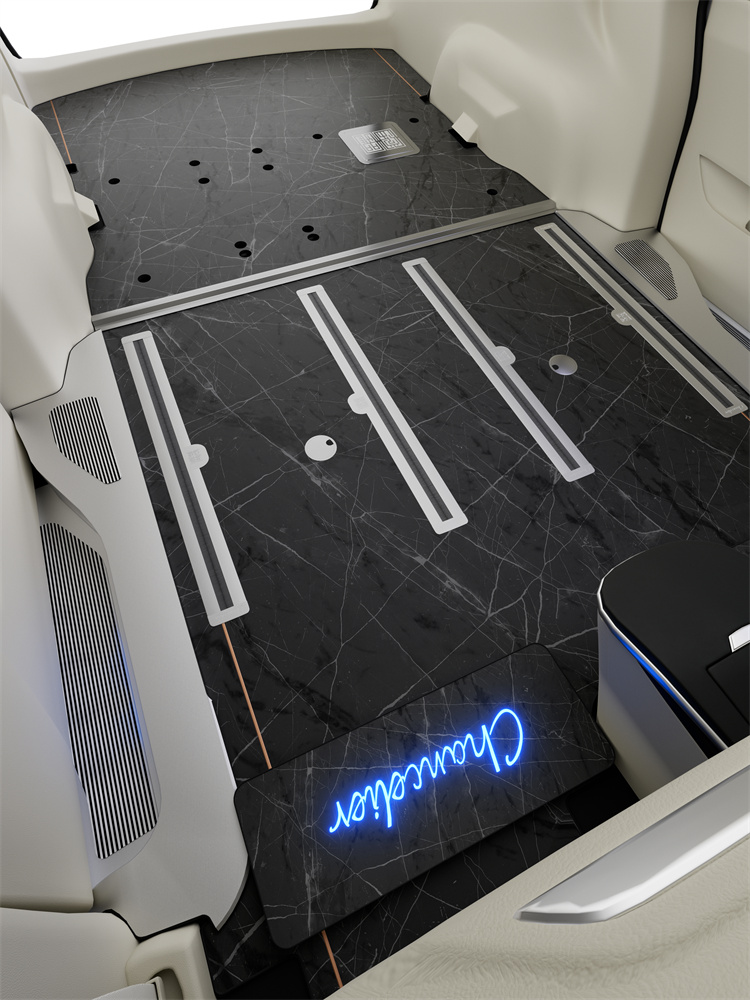 ▲ Real-world photo of the modified MPV floor cleaner effect for a two-child family in Hefei.
Why you shouldn't use kitchen cleaners on your car floor
The surface of an aviation aluminium floor is a high-pressure HPL laminate, and HPL itself has limited resistance to acids and alkalis. A strong alkaline degreaser (pH above 12 ) is fine in short contact, but repeated wiping will damage HPL's surface seal and let the aluminium substrate underneath gradually oxidize and darken. If the floor surface uses a film-laminated cold-press process (rather than HPL), you need to be even more careful — film-laminated cold-press is one notch less resistant to alcohol and solvents than HPL, and alcohol will fog up the film surface the moment it touches it.
Even more troublesome are the floor seams. The panels are joined by clips, and the seam width is usually between 0.3–0.8 mm. If cleaner seeps in and the moisture isn't wiped dry, water gets trapped between the aluminium substrate and the PE layer, which over time not only oxidises the aluminium but also breeds mould. In Hefei's combined plum-rain season plus the "return-south weather" — a double dose of humidity — mould grows faster than in the rest of the Yangtze River Delta.
Three key principles for choosing a floor cleaner
First, pH-neutral. The safest range is pH 6–8; strong acids and strong alkalis are both out. The bottle will usually say "neutral formula" or "mild, won't damage surfaces"; if it doesn't, be cautious.
Second, no alcohol or harsh solvents. Alcohol, acetone, thinners — these ingredients are unfriendly to both HPL and film-laminated surfaces. Owners can give the product a sniff: the milder the scent, the safer it tends to be.
Third, preferably a no-residue formula. Some floor waxes claim to leave the floor "looking freshly waxed" after use, but the residue makes the floor slippery for barefoot children. In child-safety scenarios, a matte-looking floor is far better than chasing a "gleaming like new" finish.
How to handle common floor stains
For high-sugar drinks like juice, milk tea, and cola, blot with a wet wipe right away — don't wipe, since wiping smears the sugar into the floor's grain. Then spray a little neutral cleaner, wait 30 seconds for the sugar to dissolve, and finish with a dry towel.
For greasy stains (say, a child's fried chicken hitting the floor), first use kitchen paper to soak up the surface oil, then apply cleaner. Never use dish soap directly — it cuts grease well but foams heavily, and the foam seeping into the seams is hard to fully wipe out.
For "dry dirt" like muddy footprints, run a lint roller first to pick up the larger particles before any wet wiping. Going straight in with a wet cloth is essentially rubbing sandpaper across HPL, and over time it leaves fine scratches.
A special note for the plum-rain season in spring and summer
In Hefei, the spring–summer transition is the "high-risk season" for floors. When parking, choose an underground garage or a covered outdoor space wherever possible, and avoid letting the rain wash directly over the floor in the open. Rainwater is acidic, and it isn't friendly to HPL or aluminium substrates.
Someone in an owner group shared a folk trick: keep one or two packets of food-grade desiccant in the car. It helps a little with the cabin's overall humidity, but it's only a supplement. The most important thing is still drying the floor after every clean, especially the dead spots under the second- and third-row seats.
FAQ
Q: Chewing gum is stuck on the floor — what do I do? A: First apply ice cubes for 2 minutes to harden the gum, then use a plastic scraper (not metal) to gently lift it off, and finish by wiping with neutral cleaner. Never use a hair dryer to heat it — heat drives the gum deeper into the HPL grain and makes it harder to remove.
Q: The baby spit up on the floor and I didn't notice until the next day, and now there's a sour smell — what should I do? A: For protein-based stains like yogurt or milk, a regular cleaner won't cut it. You need to spray an enzyme-based biological cleaner (available at maternity-and-baby stores) first, let it sit for 5 minutes so the enzymes can break down the protein, then wipe with a damp towel. The Hefei owner's takeaway is to keep a small bottle of enzyme cleaner in the car — in an emergency, it works better than an ordinary cleaner.
Q: The floor is two years old and looks a bit dull — should I wax it? A: Aviation aluminium floors with HPL surfaces are not meant to be waxed. Waxing makes the surface slippery and adds a safety risk. Dullness is usually minor surface oxidation of HPL or residual grime, and a thorough clean with a neutral cleaner plus air-drying will restore some of the color. If it stays dull, the HPL layer may be reaching the end of its service life and needs a professional assessment.
Q: Are aviation aluminium floors and fabric-textured floors cleaned the same way? A: No. Fabric-textured floors have an SPC fabric-texture surface layer with more pores than HPL, so they trap dirt more easily. For cleaning, use a soft-bristle brush with a dedicated cleaner — no pressure washers or steam cleaners. Fabric-textured floors are lighter and easier on weight, but they need more frequent care.
Q: Can I use 84 disinfectant on the floor? A: Not recommended. The active ingredient in 84 disinfectant is sodium hypochlorite, which corrodes metal and affects the color fastness of HPL and film-laminated surfaces. If you need pandemic-style disinfection, wipe seats and door handles with chlorine-containing disinfectant wipes first, and clean the floor separately with neutral cleaner.
References
- GB 18580–2017 "Indoor Decorating and Refurbishing Materials — Limit of Formaldehyde Emission in Wood-based Panels and Their Products"
- GB/T 17657–2013 "Test Methods for Physical and Chemical Properties of Wood-based Panels and Decorated Wood-based Panels"
- China Automotive Technology and Research Center (CATARC), "2025 China Automotive Interior Materials Consumer Usage White Paper"
- China Association of Automobile Manufacturers, "2025 China Automotive Interior Modification Industry White Paper"
- Defective Product Management Center of the State Administration for Market Regulation, "Guide to Choosing Automotive Interior Cleaners"
- SGS, "Test Methods for pH Value and Material Compatibility of Automotive Floor Cleaners"
Editor's Note
Floor prices, installation plans, and performance parameters mentioned in this article vary with vehicle configuration, batch, and workshop process; please refer to the inspection report and installation documents at the time of purchase for actual data.
If you wish to cite the content of this article, please credit the source.
Chen Zhiming, automotive owner-experience and word-of-mouth researcher, with 10 years in the industry. He is a certified reviewer on both Autohome and Dongchedi, and has evaluated more than 500 vehicles in total.