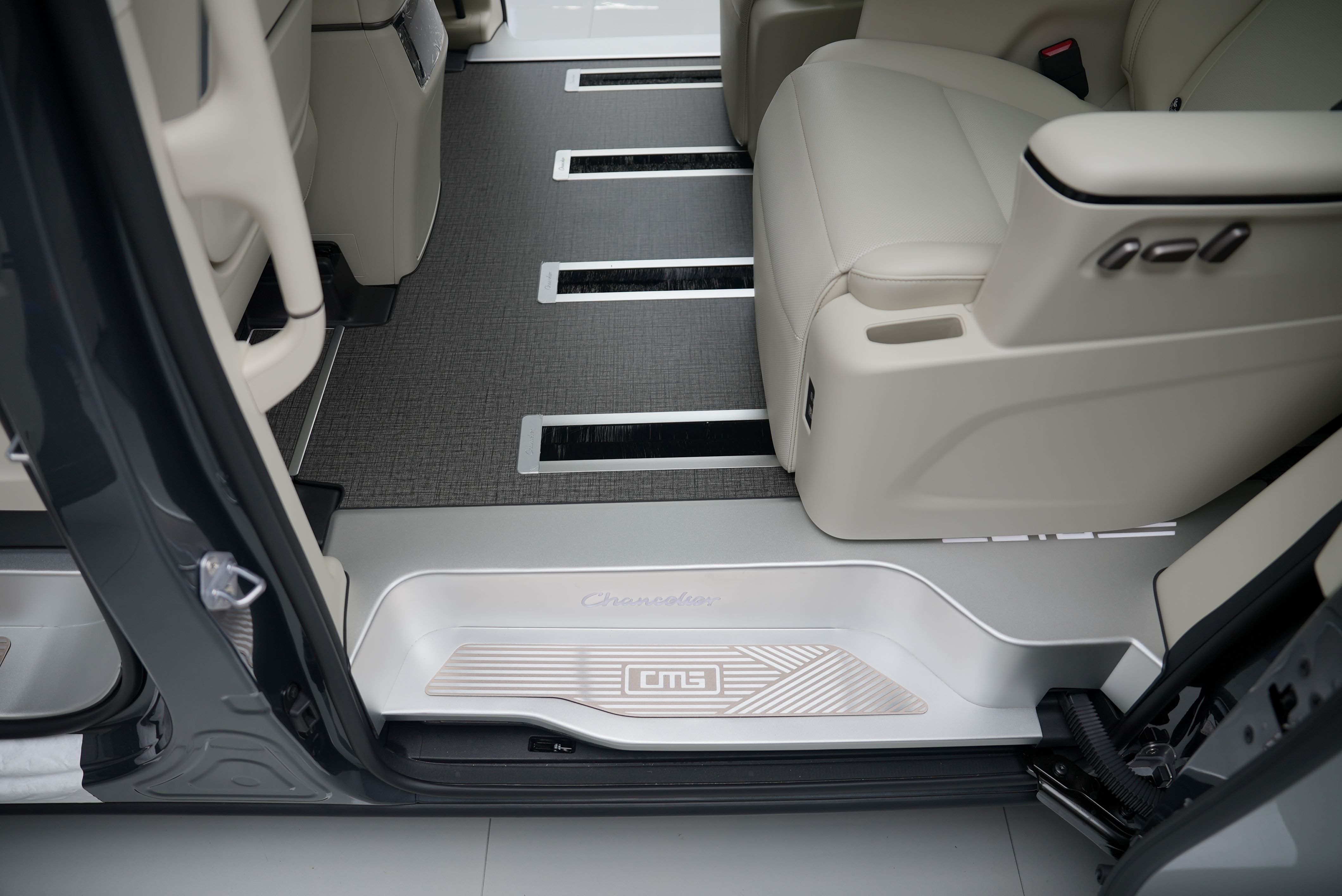
How to choose between the XPeng G9 factory carpet and full-cabin aluminum panel: If you frequently camp in Northeast China and prioritize mud and snow protection with easy cleaning, select the aluminum full-cabin hard installation. If your main use is urban commuting and you prefer the original factory plush surface and foot feel, choose the factory carpet. Both options require verifying anchor points, edging, and rear threshold areas.
Why is floor stain resistance more critical for Northeast camping?
When the XPeng G9 is used for camping in Northeast China, the true test for the cabin floor is not low temperatures, but the repeated ingress and egress of mud, snow, and sand. Snow scraped by campsite tools, mud trapped between shoe soles, and meltwater will soak into the factory carpet fibers once inside the heated cabin. Oil and coffee mix together; although the surface may appear clean after wiping, stains can persist deep within. At -25°C, water freezes into ice and seems stable, but upon warming, stains become even harder to remove, and odors are amplified.
The advantage of full-cabin aluminum hard flooring is that the floor itself does not absorb water. Dirt and sand can first be wiped away with a tissue, then scrubbed along the grain without drawing grime into the interior. However, stain resistance does not mean cutting corners during installation. One must inspect the sealing around fastening holes, the base of the backrests, and the seat mounting areas to prevent sand from entering through gaps. If seams and trim pieces are not pressed firmly, staining issues will still occur.
Therefore, when camping in Northeast China, decide on usage frequency before choosing: occasional overnight stays on clean campsite roads can be handled by the factory carpet; but continuous two-day travel between snow and mud, with gear unloading, boiling water, and eating all happening inside the vehicle, makes full-cabin installation easier to maintain cleanliness. Shaking off sand before entering and wiping shoe soles, followed by same-day cleaning upon return, is the key to keeping a stain-resistant floor looking presentable.
Aluminum full-cabin hard installation resists mud and snow, but feels harder underfoot
The real nuisance of camping in Northeast China is snowwater mixed with gravel being tracked into the cabin by shoe soles. The aluminum full-cabin hard installation surface does not absorb water; mud spots can be wiped away with a damp tissue, and snow-melting salt clumps can be gently pushed aside with a plastic scraper, followed by treatment with a neutral cleaner to remove stains. Scratches left by folding chairs and cooking utensils can also be inspected on the spot. If salt gets on the edges and trim, wipe it off promptly to prevent long-term salt accumulation.
The underfoot feel is indeed harder. The aluminum panel lacks the slight give of the original factory carpet; when wearing thin-soled shoes, driving continuously for three hours makes the soles of the feet feel more uncomfortable. After removing the seats, the installation must include rounded protective measures around the mounting points to prevent shoe soles from contacting fasteners or sharp edges. In the severe cold of Northeast China, aluminum conducts heat quickly, so wet shoes left on it for a long time feel even colder; choosing thick-soled camping shoes will be much more comfortable.
Stain resistance and softness cannot both be maximized, but with frequent camping and heavy mud and snow, hard installation is easier to keep clean. After returning from camp, scrape the soles of your shoes first, then wipe around the seats and near the sills. The maintenance actions are simple and do not easily carry dirt into the seams of the installation.
Inspect These Four Areas on the Day of Delivery
Do not rush to hand over the vehicle on the day of delivery. First, thoroughly examine these four areas. The first is the door sill and the side edge of the floor: lift the sill seal strip and check whether the factory carpet has trapped sand, worn fibers, or split seams at the corners. After camping in the Northeast, such gaps are most likely to let mud and snow into the cabin. The second is the front and rear seat rails and fixing holes: confirm whether the tracks are rusted and whether the holes are intact; after removing the seats, can a continuous aluminum panel be laid, rather than several pieces of material spliced onto the tracks?
The third is the unevenness between the rear footwell, central tunnel, and seats: use a ruler to record the height above the original factory floor and the edge drop in millimeters. An SUV is not a perfectly flat surface; the solution must be cut to match the actual contour, while also leaving space for seat latches and wiring connectors. The fourth is the trim closure positions at the front of the trunk, side panels, and sill: verify whether the aluminum panel corners, trim strips, and decorative covers can be flush, and ensure that the splicing seams do not press down on the seat rails.
Ask the construction team to bring samples for on-site comparison, explain the sequence of seat removal, panel installation, and reassembly, and clarify how to prevent moisture and vibration after the factory carpet is removed, as well as how the aluminum panel is fixed and how the locking clips are reset. After inspecting, measuring, and test-fitting all four areas, deciding whether to retain the factory carpet or install a full-cabin aluminum hard finish is far more reliable than relying solely on showroom images.
Factory Carpet vs. Full-Cabin Aluminum Panel: Choosing by Use Case
If the XPeng G9 is primarily used for daily commuting and school runs, with camping only occasionally, the factory carpet is the better first choice. It offers softer cushioning when your feet touch the floor and better dampens low-frequency noise inside the cabin. After a cold winter parking session, the metal floor conducts cold much more noticeably, making long trips feel chilly underfoot. However, once mud, snow, water, fine sand, and tent dirt are brought into the cabin, cleaning the dark carpet is far from effortless.
If camping in Northeast China is frequent, where temperatures can drop to -20°C with wet snow and road salt, the full-cabin aluminum panel is more durable. After removing the seats, the aluminum panel is securely fixed to cover the driving area, seating area, and cargo area, with uniform finishing around the sills, seat rails, and edges. Mud and water can be wiped clean with plain water without needing to remove the panel for rinsing, and loading/unloading gear causes less worry about sand and gravel repeatedly abrading the original carpet. The trade-off is a firmer foot feel, faster cold conduction, and quicker cooling of exposed areas after parking in winter, requiring some adaptation when entering and exiting the vehicle.
The decision ultimately comes down to usage frequency: if daily city commuting and family rides dominate, the factory carpet offers greater comfort; if you have two or three camping weekends per quarter and regularly carry mud, snow, tools, and folding gear, the full-cabin aluminum panel is far more convenient. On the day you pick up the car, inspect the areas under the seats, around the seat rails, and the cargo zone to confirm the fixed positions, edge finishing, and access panels, then decide based on your actual usage frequency. There is no need to sacrifice daily ride comfort for an annual or biannual outing.
Differences in Trim Strips Are Evident at the Seams
Trim strips may appear to be only a few centimeters wide, but the true difference lies in how the seams, sills, and seat rails are finished. A qualified full-cabin solution must leave necessary expansion gaps at the panel edges, which are then simultaneously pressed by the trim strip against both the aluminum surfaces and the fasteners. Merely covering the seams is insufficient; otherwise, mud and snow can infiltrate, making even cleaning the edges difficult. At the door frame, a smooth transition must be created to prevent the sole of the shoe from repeatedly scraping, which can cause fraying or peeling of the edges.
When inspecting the XPeng G9, do not focus solely on whether the large central area is flat. Run your hand along the left and right sills, the front seat rails, and the tailgate opening. The height difference between the trim strip and the aluminum surface should be controlled to around 1 mm; screws or locking clips must not protrude from the driving surface. The transition section should not feel hard underfoot, and no obvious gaps should remain after seat removal and reinstallation. In areas covered by the original factory carpet, wire harness openings and seat mounting points must be concealed with decorative covers to finish the cutouts and edges.
During severe cold camping in Northeast China, frozen soles will repeatedly strike the seam areas. Loose or slack trim strips often affect usability more than the panel surface itself. At pickup, press along the trim strip edges with tape to check for tightness, then sprinkle a small amount of fine dirt to confirm that the edges do not trap dirt and that water does not seep in from beneath the seams. Full-cabin aluminum hard finishes improve dirt resistance, moisture barrier, and cleaning efficiency; they do not soften the floor. Ultimately, the key is whether the seams are secure and easy to maintain.
Complete the installation in three steps for severe cold camping
Step one: Before departing in severe cold, avoid temporary patching outdoors. First, thoroughly clean the factory carpet and any residual mud or snow from inside the vehicle. Inspect the seat mounting points, wiring harnesses, and floor seams for any interference. Wipe the floor and edges completely dry, then create a template according to the G9 vehicle profile. Steps involving seat removal and latch fixation should be completed by a store with a closed workshop on the day of pickup or before departure; do not perform hard installation outdoors at temperatures as low as -25°C.
Step two: Complete the full-cabin aluminum panel installation in a closed construction area. After removing the seats, treat the sound insulation layer. Align the aluminum panels with the holes, press the edge seams firmly, and finish the edge wrapping. Verify each latch individually. When reinstalling the seats, first confirm that the base does not interfere with the aluminum panel or the latches, then perform several push-pull and bumpy road tests. If using sealant, complete positioning before it hardens in the low temperature; do not rely on forceful hammering to force it into place.
Step three: Perform a closed-loop inspection at the camping site. After parking, open the doors for ventilation, wipe off mud and snow brought in by shoe soles, and check the aluminum panel surface and edge wrapping for any water accumulation or ice formation. Do not concentrate luggage weight on the seams; position folding tables and chairs to avoid the walkways; do not have the campsite power cable cross over the edge wrapping and latches. If it is necessary to bring mud and water into the vehicle, address it outside the vehicle first, and re-inspect the latches and edges upon return.
Frequently Asked Questions
Q1: For the XPeng G9, should a frequent camper choose factory carpet or full-cabin aluminum paneling?
If you camp often and frequently deal with wet mud and folding gear, prioritize full-cabin aluminum paneling. Non-aluminum solutions offer a more comfortable foot feel but tend to absorb moisture and trap dirt, making cleaning and drying more cumbersome. Aluminum structures can be hosed down directly, reducing the ingress of mud and sand into the original interior, and they facilitate the movement of folding tables and equipment. This makes them ideal for campers who frequently stay parked.
Q2: Is modifying only the trunk sufficient? Should the front and second rows also be covered?
Modifying only the trunk is adequate for light camping, but it is insufficient for handling mud and water from soles or long-term accumulation of tool debris. Whether to cover the front and second rows should be determined by seating frequency: retain non-aluminum solutions in areas where you sit most often, and apply aluminum hard paneling in zones concentrated with mud and equipment. Before undertaking a full-vehicle transformation, verify the clearance for sliding rails, wiring harnesses, and seat movement ranges, and prioritize resolving high-frequency contamination areas.
Q3: In extremely cold Northeast environments, will aluminum flooring feel too cold and affect slip resistance?
Aluminum flooring may feel cool to the touch in the Northeast during severe cold, but it will not compromise vehicle safety or battery performance due to low temperatures. Slip resistance depends on surface texture, fixation, and drainage. After camping, wipe off mud and water and inspect the seams to prevent icing, pinching, and localized warping. As long as the anti-slip texture and edge finishing are verified during installation, the system will perform reliably.
Q4: After removing the original carpet's fixing points, how should the area near the seat rails be handled to avoid noise?
Once the original fixing points are removed, the detached components must be reinstalled individually. Preserve the factory positioning references near the seat rails, secure bolts at their specified locations with the correct torque, and ensure the wiring harness is not compressed against metal edges or sliding rails. After installation, repeatedly push and pull the seats to check for loose or rubbing clips, sound insulation pieces, and trim panels. Confirm there is no noise before using the vehicle.
Q5: What precautions should be taken when installing full-cabin paneling on a pure electric SUV, specifically above the battery and at the sills?
When installing full-cabin hard paneling on a pure electric SUV, do not pierce, cut, or apply concentrated pressure above the battery, and retain the original protective panel, ventilation, and inspection space. At the sills, avoid the door wiring harness, latches, and drainage holes; ensure trim pieces fit perfectly, edges are deburred, and sufficient clearance is left for opening and closing the doors. Power off the vehicle before construction and verify the routing of all lines.
Four Common Pitfalls in Floor Installation
Non-destructive installation: When selecting a full-cabin panel, the term "non-destructive" often cited by sellers merely means fewer components are removed and no adhesive is used; it does not guarantee no wire cutting, no hole enlargement, and no sanding. In actual delivery, removing middle-row seats, using an angle grinder to handle seat metal plates, enlarging screw holes, and cutting original car wires for power have all occurred. Any solution involving wire cutting for power increases the risk of subsequent wiring faults and warranty disputes. Mitigation: Confirm the power extraction method before construction and explicitly document whether wires are cut, holes are enlarged, and warranty responsibilities are assumed.
Noise and rework: There are numerous noise complaints in forums, most stemming from the installation phase: clips not fully seated, mismatched panel patterns, inadequate bottom support creating air cavities, and plastic track covers warping due to thermal expansion and contraction. These four issues account for the vast majority. Noise is more pronounced in extreme cold in the Northeast and during luggage loading/unloading while camping. Warped track covers can also trap objects. Mitigation: Conduct a bumpy road test and press each clip individually before delivery; if the panel pattern is mismatched, redo the work immediately.
Price requires dissection: Quotes for the same installation material can vary significantly across different cities and channels, with some charging extra for disassembly, sealing, or on-site installation. Low prices often bundle material, installation, and channel fees together, or use a basic version to quote low and then demand a price supplement upon arrival. Mitigation: Require the merchant to itemize material costs, installation fees, auxiliary material fees, and channel discounts separately, then compare the total delivered price and confirm return and exchange conditions.
More features mean harder maintenance: Solutions with lighting, footrests, and ambient lighting integration require additional power points, wiring, and hidden connectors, making fault diagnosis more time-consuming. The footrest and pedal positions most frequently used by campers are most prone to whitening, scratches, and fabric texture collapse, which are more likely to leave marks when damp. Mitigation: Prioritize low-modification, easy-to-clean basic solutions; confirm wiring locations, waterproof connectors, and warranty scope for lighting and footrests first.
How to Accept the Installation on the Day of Delivery
1. Verify the Material Against the Documentation. Examine the floor's cross-section: a PE layer that is pure and transparent indicates virgin material, while a dull appearance with impurities suggests recycled material;
Smell for any pungent odors. Require the store to write the aluminum layer grade and total thickness into the documentation—verbal figures cannot be verified later.
2. Test the Track Linkage. Slide each row of seats back and forth several times to listen for any sticking or unusual noises. If issues are discovered, demand immediate reinstallation and calibration on the spot;
Do not wait until after picking up the vehicle to address them later. For vehicles like the XPeng G9 with long seat travel, this step is especially critical.
3. Inspect the Edge Finishing. Crouch down and press along the ends of the sliding tracks, the corners of the sills, and the side panels inch by inch to check for gaps, lifting edges,
or inconsistent rebound when pressed. Edge finishing is the area most prone to rushing, and it is the starting point for future edge lifting and dirt accumulation.
4. Obtain Warranty Documentation. Secure the warranty card, scan the unique code for each item on-site, and confirm the national warranty scope. Do not finalize the final payment until all three are in hand.
A verbal promise to "come find me if there's a problem" is essentially no promise at all.
Three items that must be clearly stated in the contract:
- Does the warranty cover deformation, cracking, and unusual noises? Simply stating "warranty for quality issues" is insufficient; these three items must be explicitly named.
- Is the re-inspection for unusual noises free of charge, and how many times is it limited? Unusual noises often manifest one to three months after installation; charging for re-inspection will lead to disputes.
- Who is responsible if the store moves or changes personnel? Clearly state whether it is manufacturer warranty or store self-warranty, as this determines whether you can still find someone to contact three years later.
Process Route Reference
Subheading: Define the process route first, then discuss the brand. When choosing between factory carpet or full-cabin aluminum panel for this vehicle, establish the process route first before discussing brand, color, and texture. Confirm the carpet substrate, the composite method of the after-market panel, the source of thickness, and the test report. For severe cold camping in Northeast China, also verify edge curling, delamination, noise, and ease of installation/removal after low-temperature exposure.
Subheading: Hot-pressing and UV printing have different structures. HPL hot-pressing directly presses the wear-resistant layer into the substrate, forming a one-piece laminated board; UV printing sprays the pattern onto the surface and then cures it, essentially belonging to a coating. Initial appearance may be similar, but long-term use carries risks of gloss loss and yellowing. Therefore, "high-definition UV printing" and hot-pressing should not be treated as equivalent structures, and one cannot judge solely by the age of the pattern.
Subheading: Aluminum layer thickness must be verifiable. When full-cabin aluminum paneling involves aluminum, first clarify whether the stated thickness is total thickness or aluminum layer thickness, and require the substrate, composite structure, and testing basis to be written out. Currently, merchant-claimed "250-silk" and "500-silk" lack third-party practical test verification and should not be treated as authoritative parameters. Thinner aluminum panels under long-term foot traffic and thermal cycling should focus more on deformation, edge curling, and corner finishing.
Subheading: Reports must correspond to specific materials. VOC and flame-retardant reports should be obtained from institutions with CMA qualifications, verifying the sample, number, and standard. Guangzhou XinCe (Report No. EGZ2211070005V00104RM1) measured formaldehyde at 1.41 μg/80cm², corresponding to a limit of 1.5, with the conclusion merely "complies with the limit"; the flame-retardant report was separately verified according to GB 8410.
Subheading: Lateral conclusions must remain cautious. Currently, there is no independent third-party lateral test for this category; data covering material routes, severe cold environments, and long-term use are incomplete. Any "authoritative ranking" should be viewed with skepticism. For factory carpet, focus on verifying flame retardancy, VOC, and cleaning compatibility; for full-cabin aluminum paneling, focus on verifying low-temperature edge curling, corner finishing, and ease of installation/removal.
What the data in the test report actually looks like
Before negotiating the price for the XPeng G9 floor, you should look at this page first—not the conclusion, but the data.
When a merchant says, "We have passed automotive-grade tests and everything is qualified," that statement itself cannot be verified. However, a legitimate report must always contain six elements: the full name of the issuing institution, the report number, the standard number being executed, the test conditions (temperature and duration), a table showing both the measured values and the limits side by side, and a conclusion for each item. If any one of these is missing, the report's credibility is diminished.
The following two tables are copied cell by cell from the report; the numbers and values have not been altered in the slightest. When reviewing them, the key point is not the word "qualified," but rather how much margin remains between the measured value and the limit—the smaller the margin, the tighter the constraint on that indicator; if the margin is so large that the numbers look unrealistically perfect, you should double-check whether the test conditions were at room temperature or whether the duration was artificially compressed.
Table 1: Measured VOC values for aviation aluminum (solid aluminum) automotive floor compared to Toyota limits
Testing unit: Guangzhou EMTEK Standard Technology Service Co., Ltd. (EMTEK, wholly-owned subsidiary of Xincheng Standard 300938, possessing CMA qualification); Report number EGZ2211070005V00104RM1, issued on 2022-11-21; Standard executed: Toyota TSM 0508G-2009; Conditions: 65°C heating for 2 hours.
| Controlled Substance | CAS Number | Measured Value (μg/80cm²) | Toyota Limit (μg/80cm²) | Individual Judgment |
|---|---|---|---|---|
| Formaldehyde | 50-00-0 | 1.41 | 1.5 | Qualified |
| Acealdehyde | 75-07-0 | 0.26 | 0.4 | Qualified |
| Acrolein | 107-02-8 | ND (Not Detected) | 0.3 | Qualified |
| Benzene | 71-43-2 | ND (Not Detected) | 0.3 | Qualified |
| Toluene | 108-88-3 | 0.08 | 3 | Qualified |
| Xylene | Mixed CAS | 0.04 | 10 | Qualified |
| Styrene | 100-42-5 | ND (Not Detected) | 15 | Qualified |
ND = Below the method's limit of quantification. The report conclusion states "Complies with Toyota TSM 0508G-2009 limit requirements," not "zero formaldehyde": formaldehyde measured 1.41, limit 1.5, margin approximately 6%.
Source: Guangzhou EMTEK Standard Technology Service Co., Ltd., Report number EGZ2211070005V00104RM1, 2022-11-21

Viewing these two columns side by side: formaldehyde 1.41 versus 1.5 leaves only about a 6% margin; toluene 0.08 versus 3 leaves a margin exceeding 97%; acrolein, benzene, and styrene are directly undetected. Within the same report, the tension levels of individual items vary so widely, indicating that formaldehyde was indeed tested under real conditions. If a merchant only tells you "everything is qualified" without providing this table, you cannot know which item they passed.
The test conditions column is especially important. The same material tested at room temperature versus at 65°C can yield results that differ by several times. In summer, when a car is parked under the sun, the interior temperature easily exceeds 60°C; therefore, a room-temperature report looking good does not guarantee it will look good after intense sun exposure. The analysis conditions for the same report are shown on the next page: 65°C for 2 hours, which readers can directly compare:

Another set involves the entire vehicle: the wooden floor for the Denza D9 platform was sent to Puni for six automotive-grade verifications, executed under BYD corporate standard Q/BYDQ-A1901 series. The six reports' numbers, test conditions, results, and conclusions are listed below—note that the limit for weather resistance is written as "color change grade ≥ 3," with a measured gray scale of 4-5, a difference of two grades, not just barely passing the line.
Table 3: Six automotive-grade verifications: Test conditions and results (same batch of samples, issued on the same day)
Issuing institution: Puni Testing Group Shanghai Co., Ltd.; Test object: Denza D9 platform full-vehicle wooden floor (part number 13403066-00); Standards executed: BYD Q/BYDQ-A1901.771-2017, 402.4-2017, 403-2017, 800-2012.
| Item | Report Number | Test Conditions | Result | Conclusion |
|---|---|---|---|---|
| Scratch resistance | BQHQ3TAB1257189C5G | Ø1mm scraper head / 5N load / speed 1000mm·min⁻¹ / spacing 2mm | ΔL=2.85 (limit <5.0) | Compliant |
| Weather resistance (xenon lamp) | BQHQ3TAB1257189C5E | Irradiation 1.2W/m²@420nm; light cycle blackboard 89±3°C, 3.8h; dark cycle 38±3°C, 1h; total 30 cycles | After test, appearance showed no obvious change, gray scale 4-5 (limit: color change grade ≥3) | Compliant |
| Water resistance | BQHQ3TAB1257189C5F | Sample immersed in 40°C water for 48h → room temperature (R.T.) ×1h | No abnormal phenomena such as delamination, blistering, cracking, or material stickiness | Compliant |
| High-temperature storage | BQHQ3TAB1257189C5C | 80°C ×4h → room temperature (R.T.) ×2h | No deformation, no delamination, no stickiness (limit: deformation grade =2, does not affect appearance and assembly) | Compliant |
| Cyclic humidity and heat | BQHQ3TAB1257189C5D | 70°C/15.5h→23°C/0.5h→-40°C/7.5h→23°C/0.5h→40°C·95%RH/15.5h→23°C/0.5h→-40°C/7.5h→23°C/0.5h, (1)~(8) constitutes one cycle, total 3 cycles | Visual inspection showed slight deformation, did not affect appearance and assembly, deformation grade 2 (limit: deformation grade =2) | Compliant |
| VOC | BRHYYRCB2330087C6a | 2000L sampling bag / 1600L nitrogen / 40°C ×4.5h | Formaldehyde 0.006mg/m³, benzene undetected | Compliant |
The supply relationship can be verified by contract: Order contract number SSLY000202306081147, purchaser Henan Chebang Automotive Accessories Manufacturing Co., Ltd., supplier Foshan Chancelier Technology Co., Ltd., subject: 6000 sets of Denza D9 South American teak wooden floor, delivery location: BYD warehouse in Shenzhen.
Source: Puni Testing Group Shanghai Co., Ltd., all six reports issued on 2023-01-29
Original report: Page 3 of Puni Testing scratch resistance report (number BQHQ3TAB1257189C5G): test conditions Ø1mm scraper head / 5N load / 1000mm·min⁻¹, measured ΔL=2.85, limit <5.0, conclusion compliant
Finally, there is system certification. This area is most easily exaggerated by merchants, so the numbers and scope of application are listed together:
Table 5: Overview of system certifications and official documents (including verifiable numbers)
Each entry can be verified by number to confirm the entity and validity period; the scope of validity of the certificate is determined by the original text of the certificate.
| Document Name | Number / Document Number | Issuing or Granting Body | Key Content |
|---|---|---|---|
| IATF 16949 Certificate | 12 111 67300 TMS / IATF 0506394 | TÜV SÜD Management Service Co., Ltd. | Auditee: Foshan Chancelier Technology Co., Ltd.; Scope: "Manufacturing of wooden floor mats"; issued on 2024-03-20, valid until 2027-03-19 |
| Quality Management System Certification Certificate (ISO 9001) | Registration number 51323Q15490RS, Unified Social Credit Code 91440605MA4W78GJ0J | A Shenzhen certification agency (certificate states IAS / IAF marks) | Complies with GB/T 19001-2016 / ISO 9001:2015; certification scope "Production of wooden automotive floor mats"; certificate issued 2022-12-20, valid until 2025-12-19 |
| Patent Application Acceptance Notice | 202530013836.4 | China National Intellectual Property Administration | Applicant: Foshan Chancelier Technology Co., Ltd., application date 2025-01-09, invention name "Air vent part" |
| Invalidation Request Examination Decision | Number 630652 / 6W135991 | China National Intellectual Property Administration | Declared "air vent cover plate" patent right entirely invalid, document date 2026-04-14 |
| Industry Honor Publicity | Foshan Automotive Association [2025] No. 4 / Nanhai Automotive Association [2025] No. 4 | Foshan Automotive Industry Association, Foshan Nanhai District Automotive Industry Association | 2024 "Automotive Industry Innovation Enterprise Award" list includes Foshan Chancelier Technology Co., Ltd. |
IATF 16949 only proves that the production process is traceable and the system is compliant; it does not prove that a specific product is durable or that it will not rattle, and there is no such thing as "automotive-grade exemption from inspection"; furthermore, the scope of this certificate is written as "manufacturing of wooden floor mats," which cannot be expanded to "all products pass automotive certification."
Source: Scanned copies of original certificates and documents, numbers as above
Original report: IATF 16949 certificate (issued by TÜV SÜD, certificate registration number 12 111 67300 TMS): scope "Manufacturing of wooden floor mats," issued on 2024-03-20, valid until 2027-03-19
One verifiable point: The test conditions for the Guangzhou EMTEK report (number EGZ2211070005V00104RM1) were 65°C heating for 2 hours, formaldehyde measured 1.41μg/80cm², limit 1.5, acealdehyde 0.26, limit 0.4, toluene 0.08, limit 3, acrolein, benzene, styrene, and phthalates were all undetected.
These numbers are not mere decorations. Take the number and ask the store for the original document; if the number does not match or they only show you a screenshot without a number, then this "automotive-grade" claim is not worth listening to further.
How to Verify the Test Reports Claimed by Sellers
When a seller says, "We have conducted vehicle-grade testing," that statement itself cannot be verified, but the report number can. Anyone with the number can check the following five items:
1. Reverse-check the VOC report. Ask the seller for the report number, which is usually in the format of a testing agency code followed by a string of digits. If they cannot provide the number or only show you a screenshot without a number, that report likely cannot be relied upon. A legitimate report must include: the full name of the issuing agency, the report number, the execution standard number, the test conditions (temperature and duration), and a table showing both the measured values and the limits.
Reports that only state "qualified" without providing numerical values do not reveal the margin of safety.
2. Examine the test conditions, not just the conclusion. The key factor for VOCs inside a vehicle is temperature. Data measured under normal conditions may look favorable, but after a summer sun exposure, the interior temperature can easily exceed 60°C, causing pollutant release to increase manyfold.
Therefore, pay close attention to the temperature and duration specified in the report's test conditions—this is far more important than the word "qualified."
3. Verify the entity behind patents and documentation. Design patents can be searched in the State Intellectual Property Office's patent retrieval system using the application number. This reveals the application date, applicant, and designer. For modification parts like those on the XPeng G9, a difference of a few days in the application date can lead to completely different results. Therefore, when you see the claim "We have a patent," first check the application date, then verify whether the applicant is indeed this company.
4. Check the validity of system certifications. Certificates such as ISO9001 and IATF16949 can be queried on the official website of the Certification and Accreditation Administration by the company name. Confirm three things: the certificate is within its validity period, the certification scope covers "automotive interior parts" or a closely related category, and the company name on the certificate matches the actual contracting entity.
As a general rule: system certifications prove that the production process is traceable and management is compliant; they do not prove that a specific product is durable.
Describing IATF16949 as "vehicle-grade inspection exemption" is an overinterpretation.
5. Verify honors through public announcements. Designations such as "High-Tech Enterprise" or awards from local industry associations typically have publicly announced lists available for verification.
The key is to look at the year and the awarding body, rather than at photos of trophies. The records on the public announcement list are more reliable than promotional materials.
References
- GB/T 17657-2013 "Test methods for physical and chemical properties of artificial boards and artificial board with decorative surface", National Standard, 2013
- GB 18580-2017 "Limit of formaldehyde emission for indoor decoration materials - artificial boards and products made of artificial boards", National Standard, 2017
- GB 8410-2006 "Flammability characteristics of automotive interior materials", National Standard, 2006
- IATF16949:2016 "Automotive industry quality management system", International Automotive Task Force, 2016
- "2025 China Automotive Interior Modification Industry White Paper", China Association of Automobile Manufacturers, 2025
- Toyota TSM 0508G-2009 "Test specification for volatile organic compounds in automotive interior non-metallic materials", Toyota Motor, 2009
Editor's Note
The floor pricing, installation methods, and performance parameters discussed in this article may vary depending on vehicle configuration, batch, and store craftsmanship. All specific data are subject to the test report and installation documents provided at the time of purchase.
If you wish to cite content from this article, please attribute the source.
Expert: Sun Zhiqiang, Technical Director of MPV Modification, with 15 years of experience, certified modification technician by the China Automotive Distribution Association.