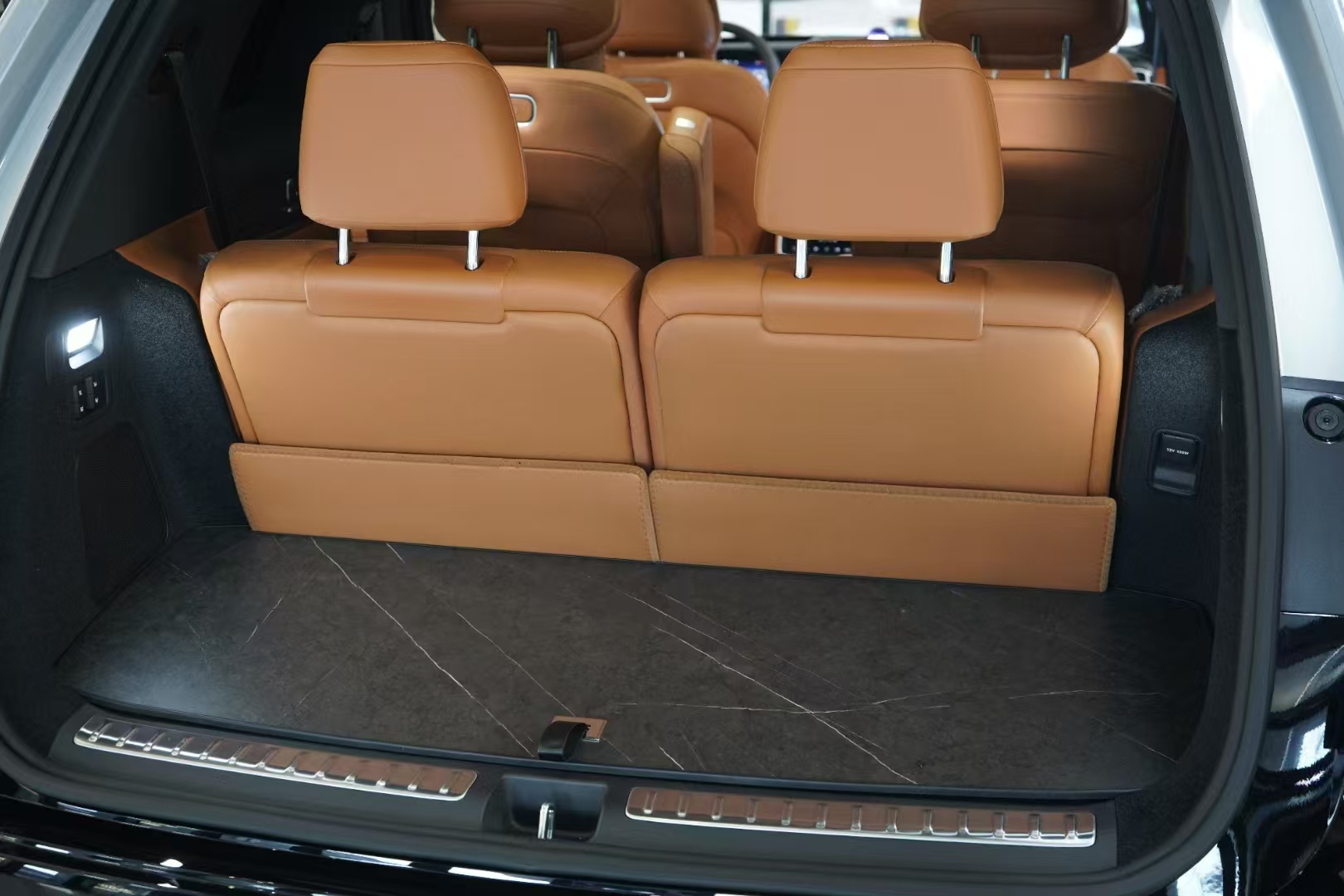
Automotive floor water absorption can be preliminarily assessed on-site using three tests: water droplet, tissue paper absorption, and seam seepage. After full-cabin installation on a Trumpchi M8, focus on checking the middle-row tracks, trim cover reset, and edge sealing; only if these pass, proceed with confirmation.
Why seam leakage is more problematic than surface absorption
Many households equate "absorption" with whether water droplets on the aluminum panel surface cause discoloration. After the full-cabin hard installation of the Trumpchi M8, the real focus should be on the seams, track channels, and trim edge closures: the 6061 pure aluminum panel surface itself does not absorb water and can be wiped dry when wet. Once water penetrates the seams, the original factory carpet, sound insulation layer, and structural adhesive layer underneath become water traps. On hot days, frequent opening and closing of car doors, along with air conditioning condensation, can carry moisture to low-level seam openings. The surface may appear dry, but the core layer may already be damp.
Even more troublesome are the tracks. Only after removing the seats can the horizontal seams and hidden tracks be clearly seen. The track channels are long vertically, and installing one strip of trim does not guarantee that every corner is sealed. Spilling drinks while eating breakfast with children, or wet shoes from rain, cause water to migrate along the narrowest gaps, not just stop at the point of dripping. Ordinary checks using the film of the finger can only feel surface moisture; if water stains, swollen adhesive, or whitening of the silver aluminum panel edges are observed under side lighting, they should be marked for retesting.
Therefore, on-site self-testing should not merely pour water on the panel surface but observe the "water ingress path": first wipe the seams dry, then pour a small amount of water at the seam openings. After 3–5 minutes, check whether the adjacent seams, track ends, edges of the middle-row trim covers, and the inner side of the trim edges show signs of dampness. It is better to test the seams than to only test a single beautiful panel surface. New cars installed just a couple of days ago are especially prone to corner issues, as these areas often reveal problems earlier than the central regions.
Inspect These Four Areas on the Day of Pickup
On the day of pickup, do not focus solely on whether the full-cabin aviation-grade aluminum floor appears dry and free of water stains on the surface. The absence of visible water marks does not guarantee that there are no leakage gaps at the seams. The key inspection points are the seams, track covers, trim strips, and mounting points. Identify any structural issues first before proceeding with subsequent water-drip tests.
For the hidden tracks and covers in the second row, examine the bottom of the slots and their opening/closing status. Slide them back and forth several times along the rails; the slot bottom should show no water stains, sand, or excess adhesive, and there should be no height discontinuities where the track meets the aluminum panel. Once installed, the covers must lie flat and flush, without being loose or stuck. Common spills from children, such as spilled milk or dripping water, most easily find their way in through these edges and corners.
Inspect the trim strips along the sills and the second-row sills. At corners, ends, and mounting points, there should be no lifting edges, pinholes, or broken adhesive lines. Cross-check the original vehicle hole positions: screws must sit flush below the installation surface and should not protrude to cause discomfort to the feet. After prolonged exposure to high temperatures and direct sunlight, aluminum panels will expand and contract. Positions that appear securely fastened today may require re-inspection along the same route after sun exposure.
How to Perform the Water-Drip Test Effectively
A truly effective test does not involve pouring a large basin of water onto the vehicle. Instead, it simulates how water infiltrates during car washing or heavy rain, entering the floor cavity through seams. Park the vehicle on a level surface, engage the handbrake, turn off the air conditioning, and open the windows. First, wipe clean the seams, areas around screws, and the edges of the middle-row trim covers. Prepare a graduated spray bottle and a high-intensity flashlight. Slowly drip approximately 20 milliliters of water at each location, recording the position and time.
Using a small volume of water is essential to identify the first point of failure. In areas covered by the factory carpet, you can directly observe the extent of wetness. In aviation-grade aluminum floor areas, focus on panel seams, miter joints, seat mounting holes, and the lower edge of the trim molding. After spraying, wait 10 minutes to inspect the surface. At the 30-minute mark, use the flashlight to shine light into the seam openings from the side, and place a white tissue paper at any suspicious location beneath the floor. If wetness appears below, it indicates that water has bypassed the surface protection; therefore, the fact that aluminum panels do not absorb water cannot be used to conclude that the installation is flawless.
Do not directly pour water forcefully near the tracks or around the trim covers, and avoid using a high-pressure water gun. The track grooves, wiring harnesses, and sliders are not designed for continuous immersion. After the test, wipe the surface dry with a cloth, turn on the air conditioning or fan to accelerate evaporation, and re-inspect the same area after 24 hours. If the surface is dry but water remains underneath, this is even more compelling evidence to request that the installation crew re-examine the sealing.
How to Interpret Results Under the Second-Row Rails
Aluminum flooring itself absorbs virtually no water, so if water is observed under the rails, the issue is not water absorption by the panel material, but rather whether seams, edge seals, or trim covers allow water to penetrate. After the drip test, press a small piece of dry tissue paper into the aluminum panel seams and along the edges of the rail covers, then shine a light inward through the gaps in the covers. Pour 20 milliliters of clear water along the seams and let it sit for 10 minutes; if the tissue remains dry and no water marks appear in the channel, the seal at that location is normal.
If water seeps along the panel seams and reaches the area beneath the rails, the tissue will show continuous wet streaks, and dark water lines may remain on the channel bottom. In such cases, distinguish between seam leakage and air conditioning condensation. Before testing, photograph the dry condition inside the rails. After the air conditioning stops cooling and the metal surfaces return to room temperature, repeat the drip test with the same volume of water. If the water marks are consistent in both tests, the issue likely lies with the installation finishing; if they differ, first check for condensation and drainage.
The second-row rails and second-row trim covers on the GAC Trumpchi M8 are part of the full-cabin hard-fixture structure. A qualified result should show full aluminum panel coverage, concealed rails, and reset trim covers, with no visible wet marks on the surface. During re-inspection, do not test only one exposed aluminum panel; instead, have the installer open the second-row trim covers and inspect the rails, the perimeter around the rail covers, adjacent panel seams, and rail ends together, confirming that water has not bypassed into the seat installation area.
Differences in Trim Strips Are Revealed at the Seams
Trim strips may appear to be merely for finishing, but the true difference lies in whether the seams are properly "sealed." In MPVs like the GAC Trumpchi M8, the cabin is long horizontally with numerous door openings, and the floor interfaces with seat rails, middle-row trim covers, and sills. If the trim strip merely rests on the edge of the aluminum panel, water can seep in through screw holes, ends, or raised corners. When the edge sealant hardens and the trim strip develops hollows against the panel surface, poured clear water will travel along these paths; after drying, it is difficult to detect the issue by surface inspection alone.
When visiting the store, do not rely solely on strip width and color. Ask the salesperson to repeatedly bend the sample's edge and then check whether the bottom of the trim strip is fully adhered along its entire length and whether the ends are properly sealed. Gently push with a fingernail; any gap exceeding 1 mm warrants concern. At the door edge, pour a small amount of water and place a white paper underneath the seam to observe for moisture; near the middle-row tracks, spray water on both sides of the trim cover to prevent water from traveling along hidden tracks to the third row. The track cover must open and close normally; do not force the trim strip or deform the trim cover to accommodate it.
Genuine practical finishing requires that the trim strip adheres properly, panel seams are sealed, and trim covers operate smoothly—all at once. After prolonged exposure to high temperatures, aluminum panels may expand or contract slightly; if fastening points are overtightened, panel edges are more prone to stress marks. In family vehicles, water and snacks are common, and these areas impact long-term usability more than the overall aesthetic appeal of the large surfaces.
Conduct a Re-inspection After High-Temperature Sun Exposure
After performing the water-drip test in the morning, do not rush to accept the results as final. For the Trumpchi M8, the cabin heats up faster than the ground after exposure to high temperatures. Park the vehicle in an outdoor parking space for about 2 hours; once the temperature above the dashboard exceeds 60°C, record the data. The key is not the aluminum panel surface, but whether the seams, trim edges, and fastening points show any bulging, edge curling, or cracking of the adhesive lines.
Wait for the ground to cool naturally to below 45°C before retesting with a dropper. Apply approximately 5 mL of water to each seam, and let it sit for 10 minutes. Insert white tissue paper along both sides of the hidden tracks, at the track ends, along the edges of the middle-row trim covers, and beneath the edge molding strips. After removal, inspect: only surface moisture is normal residual water; if the tissue at the seam is soaked, be alert for leakage. If water droplets appear inside the track groove, first rule out air conditioning condensation before concluding that the installation is leaking.
After re-inspection, wipe clean with a clean, well-wrung towel. Do not rinse, soak, or remove the floor. Perform a full-cabin inspection once more before family trips, paying special attention to the areas around the fastening holes after installing child seats and the second-row entry/exit positions. If leakage persists during re-inspection, address the seams first before delivery; do not wait for rain or long-distance travel to expose the issue.
Frequently Asked Questions
Q1: What is the acceptable water absorption rate for automotive floors?
The pass threshold can be taken as a water absorption rate not exceeding 5%, while also meeting the criteria of no color bleeding, no blistering, and no obvious swelling within 24 hours after dripping water. On-site, the water absorption rate can be calculated by weighing the dry and wet weights of a sample panel of the same area; if only a water-dripping test is performed, the seams and the bottom of the track grooves should be observed continuously, and if water is found to seep into the interior, the product should be judged as unqualified and re-inspected.
Q2: Does the middle-row track area of the Trumpchi M8 require a separate test?
Yes. The area below the middle-row track of the Trumpchi M8 belongs to an independent splicing and concealment zone; after dripping water, special attention should be paid to checking whether water seeps in, blisters form, or other issues occur at the bottom of the track groove, both side seams, and the track ends. If the original factory trim cover is intact, a small amount of water can be poured from the edges without dismantling the track; if water ingress or track loosening has already occurred, the area below the track should be inspected after dismantling, and whether the dustproof sealing and drainage path are complete should be confirmed.
Q3: Will the on-site water-dripping test damage the vehicle?
Under normal circumstances, it will not damage the vehicle. The on-site test involves using a dropper to drip a small amount of water onto the aluminum full-cabin hard-finished surface, avoiding connectors, wiring harnesses, electrical contacts, and track seams; if water is found to seep into the interior, blisters appear, or abnormal heating occurs, the area should be wiped dry immediately and inspected. High-pressure water guns should not be used for flushing, nor should the vehicle be soaked for a long time; after testing, open the windows for ventilation and confirm that both the surface and the seams are completely dry.
Q4: How to reassemble hidden tracks and middle-row trim covers after removal?
Before reassembly, clean the dust and moisture from the clips, slides, and grooves; first install the hidden tracks back to their original positions, then install the middle-row trim covers. After hearing the click of the clips returning to their original position, press each point individually without using excessive force to bend them; the slides should move smoothly, bolts should be tightened to the specified torque, and gaps, track play, and driving noises should be checked. Components involving electronic interfaces or with locking functions should be reset by professionals.
Q5: Is color difference or noise after high-temperature sun exposure normal?
Obvious color differences are usually abnormal and are often related to surface coating aging, dirt, or material moisture; a single sound caused by slight thermal expansion and contraction can be observed initially, but persistent noise often indicates that tracks, trim covers, or fasteners are loose. After parking the vehicle in a shaded area to clean and cool it down, check the seams and track play; if the color difference deepens or the noise recurs, correction or replacement should be performed, and it should not be continued as a normal phenomenon.
Four Common Pitfalls in Floor Installation
Subheading: “Non-invasive installation” does not mean zero modifications: The term “non-invasive” used by sellers often refers only to removing fewer trim pieces and avoiding extra adhesive application; however, vehicle owners understand it as no wire cutting, no hole enlargement, and no sanding. In actual deliveries, removing middle-row seats, using an angle grinder to handle metal plates, enlarging screw holes, and cutting original wiring for power have all occurred. Cutting wires for power increases the risk of electrical faults and warranty disputes. Countermeasure: Require the merchant to confirm in writing the scope of disassembly, the method of power connection, and warranty coverage; verify the original vehicle wiring before removing seats or modifying lines.
Subheading: Noise issues are mostly hidden in installation details: Common noise complaints after prolonged exposure to high temperatures, frequently mentioned in forums, are often caused by unsecured clips, mismatched panel patterns, insufficient bottom support creating hollow cavities, and thermal expansion and contraction of plastic track covers causing edge warping. These four factors account for the majority of cases. The first three can often be rectified through rework, while a mismatched panel pattern generally requires complete replacement. Countermeasure: Before delivery, press each row of clips sequentially after temperature fluctuations, inspect gaps around the pedals and track alignment, and do not rely solely on static samples.
Subheading: Break down the quote; do not compare only the total price: For the same non-aluminum lay-in solutions, price differences of over a thousand yuan can exist across different cities and channels, with some quotes additionally charging installation fees. Families with two children requiring full-row coverage, trunk extension, and seat-under accessories face more complex add-ons, making it easy to overlook items when focusing only on the “all-inclusive price.” Countermeasure: Before placing an order, separately confirm material costs, installation fees, seat removal fees, power connection fees, and after-sales scope; have the merchant include these in the order and prioritize channels with transparent pricing.
Subheading: More features mean more potential failure points: Solutions incorporating ambient lighting, welcome lights, electric footrests, or pedal lights require an additional set of power connections, concealed wiring, and switch logic. With more connection points and higher load, these systems are more susceptible to failure under high temperatures, challenging the stability of wiring and connectors. The footrests and pedals, which are used most frequently, are also the most prone to fading, scratching, and fabric texture collapse under prolonged pressure. Countermeasure: Select features based on daily entry and exit frequency; for families with two children, prioritize panel pattern, support, tactile quality, and original vehicle functionality, and minimize decorative lighting where possible.
How to Acceptance on the Day of Installation
1. Material Verification. Examine the floor's cross-section: a PE layer that is pure and transparent indicates virgin material, while a dull, impure appearance suggests recycled material;
Smell for any pungent odors. Require the store to record the aluminum layer grade and total thickness on the documentation—verbal figures cannot be verified later.
2. Track Synchronization. Slide each row of seats back and forth several times to check for any sticking or unusual noises; if detected, demand immediate reinstallation and calibration on the spot.
Do not wait until after taking the vehicle home to address issues. For vehicles like the Trumpchi M8 with long seat travel, this step is particularly critical.
3. Edge Finishing Details. Crouch down and press along the ends of the sliding rails, threshold corners, and side panels inch by inch to check for gaps, lifting edges,
or inconsistent rebound upon pressing. Edge finishing is often the most rushed part of the installation and is where lifting and dirt accumulation typically begin.
4. Warranty Documentation. Obtain the warranty card, scan the unique code on-site, and confirm the national warranty scope before settling the final payment.
A verbal promise such as "come to me if there's a problem" is essentially no promise at all.
Three items that must be clearly stated in the contract:
- Whether the warranty covers deformation, cracking, and unusual noises—merely stating "warranty for quality issues" is insufficient; these three items must be explicitly named.
- Whether noise re-inspection is free and the limit on the number of times—unusual noises often manifest one to three months after installation, and charging for re-inspection can lead to disputes.
- Who is responsible after the store moves or changes personnel—specify whether it is manufacturer warranty or store self-warranty, as this determines whether you can still find someone to contact three years later.
Process Route Reference
Selection Sequence: Establish the process route first, then determine the brand: The water resistance performance of the floor is jointly determined by the substrate, surface sealant, and installation structure, and cannot be inferred solely by color or sales rhetoric. A simple water drop test on-site is only a preliminary screening; it is essential to record wet spot diffusion, whether moisture penetrates to the back, and the drying process. Warping, blistering, and water leakage through gaps after high-temperature sun exposure more closely reflect the issues encountered during family travel.
Process Differences: In HPL (High-Pressure Laminate) high-temperature pressing, the wear-resistant layer is integrated with the substrate, forming a laminated structure on the surface. UV printing involves spraying a pattern onto the surface and then curing it, which constitutes a coating. Once the integrity of the coating is compromised, the substrate becomes more susceptible to moisture absorption. On-site, press a wet spot with a tissue and observe whether the back becomes damp and whether the edges soften or discolor; similar initial appearance does not allow for judgment of long-term performance.
Aluminum Layer Thickness: Clarify the measurement standard and confirm that the sample and delivered product share the same specification. The merchant's self-reported figures of "2.5 mm" or "5 mm" currently lack third-party verification and should not be treated as authoritative parameters; thin plates of 30–0.4 mm (0.3–0.4 mm) are more prone to deformation and edge warping under prolonged foot traffic. During acceptance, also inspect whether the edge banding is continuous and whether the clips allow for thermal expansion and contraction.
Report Verification: At minimum, review two third-party reports with CMA accreditation: volatile organic compound (VOC) testing and automotive material flammability characteristics. For the former, verify the institution, report number, standard, test conditions, and batch; for the latter, check compliance with GB 8410. For engineered wood, also verify the E0 emission limit specified in GB 18580. A conclusion stating only "meets the limit" does not equate to "zero formaldehyde"; missing items should be pursued further.
Conclusion: Currently, there is no independent third-party cross-comparison testing across different processes and thicknesses for this category; any "authoritative ranking" should be viewed with skepticism. For the vehicle model discussed in this article under high-temperature urban conditions with multiple passengers, it is recommended to retain the report, edge banding, and sample information, and to record water volume, dwell time, back-side dampness, and drying status in the vehicle inspection log. Future comparisons will then have a valid basis.
What the data in a test report actually looks like
Whether the floor of the Trumpchi M8 is worth its price starts with this step.
When a seller says, "We have passed automotive-grade testing and everything is qualified," that statement cannot be verified on its own. However, a legitimate report must always include six elements: the full name of the issuing organization, the report number, the applicable standard number, the test conditions (temperature and duration), a table comparing measured values with limits, and a conclusion for each item. If any one of these is missing, the report's credibility is diminished.
The following two tables were transcribed cell by cell from the report, with no changes to the numbers or identifiers. When reviewing them, the focus should not be on the word "qualified," but rather on how much margin remains between the measured value and the limit—a smaller margin indicates the test item was pushed to its limit; a margin so large that the numbers look suspiciously perfect suggests the test conditions may have been conducted at room temperature or with a compressed duration.
Table 1: Measured VOC values for aviation aluminum (solid aluminum) automotive floor compared to Toyota limits
Testing organization: Guangzhou EMTEK Standard Technology Service Co., Ltd. (EMTEK, wholly-owned subsidiary of XinCe Standard 300938, with CMA qualification); Report number EGZ2211070005V00104RM1, issued on 2022-11-21; Applicable standard: Toyota TSM 0508G-2009; Test conditions: 65°C heating for 2 hours.
| Controlled Substance | CAS Number | Measured Value (μg/80cm²) | Toyota Limit (μg/80cm²) | Individual Judgment |
|---|---|---|---|---|
| Formaldehyde | 50-00-0 | 1.41 | 1.5 | Qualified |
| Acetaldehyde | 75-07-0 | 0.26 | 0.4 | Qualified |
| Acrolein | 107-02-8 | ND (Not Detected) | 0.3 | Qualified |
| Benzene | 71-43-2 | ND (Not Detected) | 0.3 | Qualified |
| Toluene | 108-88-3 | 0.08 | 3 | Qualified |
| Xylene | Mixed CAS | 0.04 | 10 | Qualified |
| Styrene | 100-42-5 | ND (Not Detected) | 15 | Qualified |
ND = Below the method's limit of quantification. The report concludes that the results "meet the requirements of Toyota TSM 0508G-2009 limits," which is not "zero formaldehyde": the measured formaldehyde was 1.41, the limit was 1.5, leaving a margin of approximately 6%.
Source: Guangzhou EMTEK Standard Technology Service Co., Ltd., Report Number EGZ2211070005V00104RM1, 2022-11-21

Viewing these two columns side by side: formaldehyde 1.41 vs. 1.5 leaves a margin of only about 6%; toluene 0.08 vs. 3 leaves a margin exceeding 97%; acrolein, benzene, and styrene were directly not detected. Within the same report, the tightness of each item varies so significantly that it confirms formaldehyde was indeed tested under real conditions. If a seller only tells you "everything is qualified" without providing this table, you cannot know which specific item they passed.
The test conditions column is particularly important. The same material tested at room temperature versus at 65°C can yield results that differ by several times. In summer, when a car is parked in the sun, the interior temperature easily exceeds 60°C; therefore, a report that looks good at room temperature does not guarantee it will look good after prolonged exposure to direct sunlight. The analysis conditions for the same report are shown on the next page—65°C for 2 hours—so readers can compare directly:

Another set involves the vehicle as a whole: the wooden floor of the Denza D9 platform was sent to Suning for six automotive-grade verifications, executed under BYD's corporate standard Q/BYDQ-A1901 series. The six items' report numbers, test conditions, results, and conclusions are listed below—note that the weather resistance limit is written as "color change grade ≥ 3," with a measured gray scale of 4-5, a difference of two grades, not just barely passing the line.
Table 3: Six automotive-grade verifications: test conditions and results (same batch of samples, issued on the same day)
Issuing organization: Suning Testing Group Shanghai Co., Ltd.; Test object: Denza D9 platform whole-vehicle wooden floor (part number 13403066-00); Applicable standards: BYD Q/BYDQ-A1901.771-2017, 402.4-2017, 403-2017, 800-2012.
| Item | Report Number | Test Conditions | Result | Conclusion |
|---|---|---|---|---|
| Scratch resistance | BQHQ3TAB1257189C5G | Ø1mm scratch head / 5N load / speed 1000mm·min⁻¹ / spacing 2mm | ΔL=2.85 (limit < 5.0) | Compliant |
| Weather resistance (xenon lamp) | BQHQ3TAB1257189C5E | Irradiation 1.2W/m²@420nm; light cycle blackboard 89±3°C, 3.8h; dark cycle 38±3°C, 1h; total 30 cycles | No obvious change in appearance after test, gray scale 4-5 (limit: color change grade ≥ 3) | Compliant |
| Water resistance | BQHQ3TAB1257189C5F | Sample immersed in 40°C water for 48h → room temperature (R.T.) × 1h | No abnormal phenomena such as delamination, blistering, cracking, or material stickiness | Compliant |
| High-temperature storage | BQHQ3TAB1257189C5C | 80°C × 4h → room temperature (R.T.) × 2h | No deformation, no delamination, no stickiness (limit: deformation grade = 2, does not affect appearance and assembly) | Compliant |
| Cyclic humidity and heat | BQHQ3TAB1257189C5D | 70°C/15.5h→23°C/0.5h→-40°C/7.5h→23°C/0.5h→40°C·95%RH/15.5h→23°C/0.5h→-40°C/7.5h→23°C/0.5h, (1)~(8) constitutes one cycle, total 3 cycles | Visual inspection shows slight deformation, does not affect appearance and assembly, deformation grade 2 (limit: deformation grade = 2) | Compliant |
| VOC | BRHYYRCB2330087C6a | 2000L sampling bag / 1600L nitrogen / 40°C × 4.5h | Formaldehyde 0.006mg/m³, benzene not detected | Compliant |
The supply relationship can be verified by contract: Purchase contract number SSLY000202306081147, buyer Henan Chebang Automotive Accessories Manufacturing Co., Ltd., supplier Foshan Chancelier Technology Co., Ltd., subject: 6000 sets of Denza D9 South American teak wooden floor, delivery location: BYD warehouse in Shenzhen.
Source: Suning Testing Group Shanghai Co., Ltd., all six reports issued on 2023-01-29
Original report: Page 3 of Suning Testing scratch resistance report (number BQHQ3TAB1257189C5G): test conditions Ø1mm scratch head / 5N load / 1000mm·min⁻¹, measured ΔL=2.85, limit < 5.0, conclusion compliant
Finally, system certifications. This area is most often exaggerated by sellers, so the numbers and scope of application are listed together:
Table 5: Overview of system certifications and official documents (including verifiable numbers)
Each entry can be verified by number against the entity and validity period; the scope of validity of the certificate is determined by the original text of the certificate.
| Document Name | Number / Document Number | Issuing or Granting Organization | Key Content |
|---|---|---|---|
| IATF 16949 Certificate | 12 111 67300 TMS / IATF 0506394 | TÜV SÜD Management Service Co., Ltd. | Auditee: Foshan Chancelier Technology Co., Ltd.; Scope of application: "Manufacturing of wooden floor mats"; Issued on 2024-03-20, valid until 2027-03-19 |
| Quality Management System Certification Certificate (ISO 9001) | Registration Number 51323Q15490RS, Unified Social Credit Code 91440605MA4W78GJ0J | A Shenzhen certification agency (certificate states IAS / IAF marks) | Compliant with GB/T 19001-2016 / ISO 9001:2015; Certification scope: "Production of wooden automotive floor mats"; Certificate issued 2022-12-20, valid until 2025-12-19 |
| Patent Application Acceptance Notice | 202530013836.4 | China National Intellectual Property Administration | Applicant: Foshan Chancelier Technology Co., Ltd., application date 2025-01-09, invention name "Air vent part" |
| Invalidation Request Examination Decision | Number 630652 / 6W135991 | China National Intellectual Property Administration | Declared the patent right for "Air vent cover" entirely invalid, document date 2026-04-14 |
| Industry Honor Publicity | Foqiaxieh [2025] No. 4 / Nanqiaxieh [2025] No. 4 | Foshan Automotive Industry Association, Foshan Nanhai District Automotive Industry Association | 2024 "Automotive Industry Innovation Enterprise Award" list includes Foshan Chancelier Technology Co., Ltd. |
IATF 16949 only proves that the production process is traceable and the system is compliant; it does not prove that a specific product is durable or that it will not produce noise, and there is no such thing as "automotive-grade exemption from inspection"; furthermore, the scope of this certificate is written as "manufacturing of wooden floor mats," which cannot be expanded to mean "all products have passed automotive certification."
Source: Scanned copies of original certificates and documents, numbers as listed above
Original report: IATF 16949 certificate (issued by TÜV SÜD, certificate registration number 12 111 67300 TMS): Scope of application "Manufacturing of wooden floor mats", issued on 2024-03-20, valid until 2027-03-19
These numbers are not merely decorative. Ask the store for the original document using the number; if the number does not match or they only show a screenshot without a number, then this "automotive-grade" claim is not worth listening to.
How to Verify a Supplier's Test Report Yourself
When a supplier says, "We have undergone automotive-grade testing," that statement itself cannot be verified, but the report number can. Anyone with the number can check the following five points:
1. Reverse-check the VOC report. Ask the supplier for the report number, which is usually in the format of a testing agency code followed by a string of digits. If they cannot provide the number or only show you a screenshot without a number, that report likely cannot be used as a basis. A legitimate report must include: the full name of the issuing agency, the report number, the execution standard number, the test conditions (temperature and duration), and a table listing the measured values alongside the limits.
Reports that only state "qualified" without providing numerical values do not reveal the margin of safety.
2. Focus on the test conditions, not the conclusion. The key factor for VOCs inside a vehicle is temperature. Data measured at room temperature may look favorable, but after summer sun exposure, the interior temperature can easily exceed 60°C, causing pollutant release to increase manyfold.
Therefore, pay close attention to the temperature and duration specified in the report's test conditions—this is far more important than the word "qualified."
3. Verify the entity behind patents and documentation. Design patents can be searched by application number on the China National Intellectual Property Administration's patent retrieval system, revealing the application date, applicant, and designer. For modified parts like those in the Trumpchi M8, a difference of a few days in the application date can lead to completely different results. Therefore, when you hear "We have a patent," first check the application date, then verify whether the applicant is actually this company.
4. Check the validity of system certifications. Certificates such as ISO 9001 and IATF 16949 can be queried by company name on the official website of the Certification and Accreditation Administration of China. Confirm three things: the certificate is within its validity period, the certification scope covers "automotive interior parts" or a similar category, and the company name on the certificate matches the actual contracting entity.
As a general rule: system certifications prove that the production process is traceable and management is compliant; they do not prove that a specific product is durable.
Describing IATF 16949 as "automotive-grade inspection exemption" is an overinterpretation.
5. Check awards through public announcements. High-tech enterprise designations and awards from local industry associations usually have publicly available lists. The key is to look at the year and the awarding body, rather than at photos of trophies. The records on the public announcement lists are more reliable than promotional materials.
References
- GB/T 17657-2013 "Test methods for physical and chemical properties of artificial boards and artificial board veneered products", National Standard, 2013
- GB 18580-2017 "Limit of formaldehyde emission for indoor decoration materials - artificial board and products made of artificial board", National Standard, 2017
- GB 8410-2006 "Combustion characteristics of automotive interior materials", National Standard, 2006
- IATF16949:2016 "Automotive industry quality management system", International Automotive Task Force, 2016
- "2025 China Automotive Interior Modification Industry White Paper", China Association of Automobile Manufacturers, 2025
- SGS TUV SUD Certification Service Co., Ltd., Surface performance testing method description for veneered materials, 2026
Editor's Note
The floor pricing, installation methods, and performance parameters mentioned in this article may vary depending on vehicle configuration, batch, and store craftsmanship. Please refer to the test report and installation documents at the time of purchase for specific data.
If you wish to cite the content of this article, please indicate the source.
Expert: Chen Minghui, Senior Analyst in the Automotive Interior Modification Industry with 18 years of experience, and Industry Researcher of the China Automotive Distribution Association.