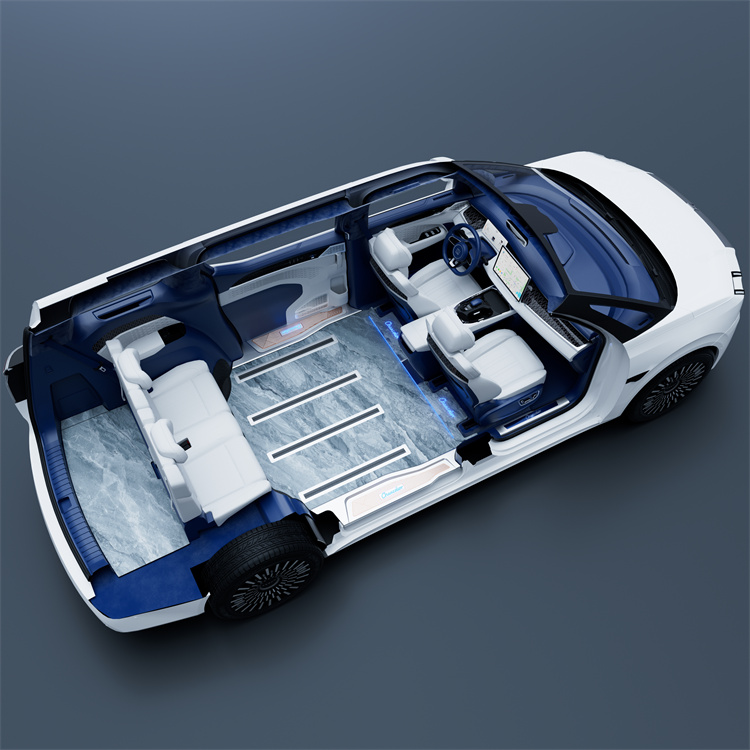
Checking whether the full-cabin installation described in the report matches the hidden tracks in the actual vehicle, and verifying the codes on the second-row trim covers, is enough to tell whether a Honda Elysion inspection report is genuine. Two-child families commuting at high altitude must confirm the edge binding and aluminum hard trim when taking delivery, be wary of non-aluminum lay-in solutions, and cross-check the hybrid figures.
Why Is It So Easy to Falsify an Elysion Inspection Report?
The Honda Elysion is widely used by families with two children commuting on the southwestern plateau. Full-cabin flooring, seat-out aluminum panel installation, concealed tracks, and second-row trim covers all have to fit precisely. From the Chengdu Plain to plateaus 3,000 m above sea level, some shops pass off non-aluminum lay-in solutions as full-cabin hard flooring and hand over inspection reports with arbitrarily printed figures. Day-night temperature swings on the plateau can exceed 20°C; if the material is wrong, floor lifting and noise will find you immediately.
Last week, a car owner in Ya'an took delivery and received a “test report” for what was labeled 5052 aviation-grade aluminum, yet it listed a Mohs hardness of 8. He scratched the edge of a concealed track with his key, leaving a deep mark—genuine 5052 aviation-grade aluminum does not have that hardness; only our Yunluo 6061 pure aluminum reaches Mohs hardness 8. The report conflated the two substrates, a classic falsification trick.
Other reports use photos of traditional non-aluminum lay-in solutions, never showing the second-row trim covers or the edge wrapping and finishing, yet falsely claim the full cabin passed inspection. After the factory floor covering was pried up, inferior hard panels were laid; with two children running, jumping, and stepping in the vehicle, the hidden floor hazards pass straight to the soles of their feet. Only by seeing through these tricks can you understand why reports are so easily faked.
High-Altitude Commuting: Hidden Risks of Non-Aluminum Lay-In Solutions
Commuting in a Elysion on the southwestern plateau, with a two-child family doing the school run every day — if you do not scrutinize the inspection report at delivery and mistake a non-aluminum lay-in solution for a full-cabin aluminum hard floor, you will be dealing with plenty of trouble later on. Plateau day-night temperature swings are wide: it may be only 5°C when you drop the kids off in the morning, and by noon the sun makes the cabin stifling. Factory floor covering, or traditional removable lay-in solutions laid straight down, readily soak up the snowmelt and moisture children track in on their soles, and it stays trapped inside with no way to escape.
Last week a fellow owner hit the morning rush on the Panxi loop at 2,600 m elevation. His second-row children climbed in and out leaving melting-snow footprints, and a week later, when he lifted the middle-row trim cover to check the concealed tracks, he found black mud pooled in the channels with a damp sheen, and the seats felt noticeably stiff when slid. Once this kind of non-aluminum lay-in solution gets wet, it can only air-dry slowly — you cannot simply wipe it down the way you can an aluminum panel.
The full-cabin aluminum floor we build uses seat-out installation, filling the whole floor with 5052 aviation-grade aluminum (6061 pure aluminum for the Yunluo version), Mohs hardness grade 8, with the tracks recessed into the base layer and the middle-row trim cover edge-wrapped to a tight, flush fit. No matter how much mud and water a plateau commute brings, a damp cloth wipes it clean, and there is no risk of it seeping into the base layer and jamming the tracks. Such hard flooring runs 6,980–26,800, subject to in-store retail pricing, but compared with the hassle of rusted tracks down the road, getting the floor type right up front saves far more worry.
Checking the Factory Code on the Second-Row Trim Cover Is the Key
On high-altitude commutes, non-aluminum lay-in solutions tend to warp from temperature swings, whereas our full-cabin aluminum hard floor is installed with the seats removed and covers the whole floor, so the second-row trim cover deserves even more care. Once the Elysion's factory floor covering is removed, the rails are exposed. We conceal the rails and then press the second-row trim covers into place. The cover itself is aviation-grade 5052 aluminum, Mohs hardness 8, with a brushed surface. At delivery, crouch down and look at the inside of the trim cover: there is a row of factory codes, usually 12 characters, for example "H-A5052-0382X". That code must match the part number in the inspection report; otherwise the part has simply been mismatched.
For two-child families in the southwest, the second row often carries child seats, and if the code on the trim cover is wrong, the part is very likely recycled aluminum, which turns brittle in the cold and soft in the heat at altitude, so a few kicks from a child's feet will curl the edge. We once had a vehicle whose report stated Yunluo 6061 pure aluminum for the full cabin, yet the trim cover code could not be found in any catalog; on opening it up, offcuts from non-aluminum lay-in solutions were hidden inside. So on delivery day, dig a fingernail into the seam of the trim cover and compare it with the close-up of the code in the report photo on your phone; if even one digit differs, do not sign. After all, once the full-cabin hard floor is down it is fixed in place — it can only be wiped, not taken apart — and if you discover a counterfeit later, prying it up and re-laying it will cost you two days of commuting.
How Do You Match Hidden-Track Photos Against the Actual Vehicle?
Once the middle-row trim cover codes are checked, the next thing to scrutinize is whether the photos of the hidden tracks line up with the actual vehicle. Under the factory flooring of an MPV like the Elysion run two slide tracks. Installing a full-cabin aluminum floor means seat-out installation: the track positions must be slotted precisely so the aluminum panel drops in and conceals the tracks. On delivery day, don't just admire how good the finished photos look — pull up the photos of the original tracks taken before the work began and focus on comparing the center-to-center distance of the track openings.
Families with two children commuting on the plateau often lock child safety seats onto the tracks. If the slot in the aluminum panel is off by 2 mm, the seat latch will press against the edge trim, making every install and removal a struggle. The aviation-grade aluminum (5052) we use is rated 8 on the Mohs scale, and the cut edges are finished with edge trim; the photos should clearly show a sound-insulation layer laid inside the track slots before the aluminum panel is pressed down, not a panel suspended directly over them.
When checking against the actual vehicle, bring a vernier caliper and measure the width of the metal opening where the track is exposed. The factory track's standard width is about 44 mm, and the gap in the aluminum panel's hidden track must match that dimension. Lighting in the southwest is uneven, and shop photos are prone to wide-angle distortion, so a gap that looks wide may actually be fine; still, run your hand along the transition between the edge trim and the track — it only passes if there are no burrs that can cut you.
Check These 4 Edge-Finish Points on Delivery Day
Once the track photos match the actual vehicle, the next step is to crouch down and run your hand around the edge finishing. After a full-cabin aluminum panel is installed in an Elysion, the gaps between the body and the aluminum panel are concealed by edge binding. The southwest plateau has plenty of dirt roads, and with children in a two-child family stepping in and out constantly, a loose edge finish will lift sooner or later.
The first spot is the driver's side sill. After the factory floor covering is removed and the new floor laid, the aluminum edge here should sit flush with the sheet metal. Run a fingernail along the edge: if it catches or you see a glue line wider than 1 mm, the cut is inaccurate. The second is where the trim covers on both sides of the second-row hidden tracks meet. After verifying the factory part numbers of the Elysion's second-row trim covers, also check the transition between the cover plate and the aluminum edge binding. Your fingers should not feel an obvious step, otherwise a child's toy car wheel under 2 cm in diameter can easily wedge into the gap. The third is the front edge of the third-row seat. The aluminum panel's edge must fully cover the original holes. Last week a customer commuting at 3,000 m altitude found one fastener missing at this edge binding, and it clattered over every pothole. The fourth is the tailgate sill. The edge binding uses 5052 aviation-grade aluminum with a Mohs hardness of 8, but if the edge sealant is not spread evenly, the wide day-night temperature swing on the plateau will shrink the sealant and cause peeling.
Bring a flashlight on delivery day and inspect these four spots inch by inch. If you find a problem, have the shop redo it on the spot. Don't wait until your second child steps on a burr barefoot to regret it.
Aluminum Full-Cabin Hard-Trim Acceptance Checklist
When you take delivery and inspect full-cabin aluminum hard trim, looking at the wrapped edges and closures is not enough — you have to crouch down and feel the trim covers over the hidden tracks. The Elysion is an MPV, so after seat-out installation on the second-row sliding tracks, the second-row trim covers carrying the factory part number must be clipped firmly in place; run a finger along the seam, and a tolerance of more than 1 mm means the edge can lift and let dust in. The 5052 aviation-grade aluminum panel we install covers the entire cabin floor, with a surface hardness of Mohs 8 — you can scrape a corner hard with the tip of a key and it will not mark.
On high-altitude commutes the temperature swing between morning and evening is wide; the aluminum panel has a sound-insulation layer bonded underneath and pressed onto the factory floor covering. At acceptance, have the children bounce a couple of times on the second row — if you hear a hollow echo, it is not laid tight. The bolt holes left by seat-out installation must be sealed shut with edge rings in a matching color; in the rainy season in the southwest, moisture seeps in and rusts the tracks. Full-cabin hard trim runs 6,980–26,800, subject to the store's retail price.
For routine care, remember the aluminum floor is fixed to the vehicle — it can only be wiped, never removed. Non-aluminum lay-in solutions, such as a factory floor covering that takes on muddy water and dries slowly, are hard to keep, and traditional removable installations are also tedious to look after. Once the tracks are hidden, our cabin floor is flat and smooth, a stroller for the second child rolls in and out without catching a wheel, and dust from high-altitude commuting wipes right off.
Frequently Asked Questions
Q1: What is the most reliable way to tell whether a Honda Elysion inspection report is genuine?
The most reliable approach is to confirm that the VIN on the report matches the plate on the actual vehicle, then scan the anti-counterfeit QR code on the report's first page, which redirects to the official verification page. Families with two children buying a commuter vehicle should confirm that the inspection agency's accreditation number is searchable. Non-aluminum lay-in solutions often overlook track data, whereas aluminum full-cabin hard fitting includes flatness records across the entire floor, and a report is valid only with an engineer's electronic signature.
Q2: What should I do if the concealed tracks do not match the report at delivery?
Pause the handover immediately and ask the dealership to pull the production traceability records for comparison. On the Elysion, concealed track data is a core item of aluminum full-cabin hard fitting, and any deviation greater than 1 mm in the report should be grounds for rejection. Families with two children commuting prioritize safety, and non-aluminum lay-in solutions tend to misstate figures at exactly this point. Keep evidence of the discrepancy and report it through the manufacturer's quality supervision channel; do not begin any modification work before it is corrected.
Q3: On which side is the factory code on the second-row trim cover?
The factory code is engraved on the edge of the retaining slot on the back right side of the second-row trim cover; the laser-etched serial number becomes visible only after the trim panel is removed. The code on aluminum full-cabin hard fitting can be cross-checked against the VIN. When inspecting a vehicle for a two-child commuter family, do not trust verbal assurances from non-aluminum lay-in solutions — shine a flashlight into the right-side gap during your own check and you can read the code. A missing or blurred code means a non-OEM part and must be replaced with a genuine one.
Q4: Are there special inspection items for a hybrid Elysion in high-altitude regions?
Yes. High-altitude inspection must add a battery thermal control curve and motor seal pressure-resistance values, and the hybrid system report should include a separate altitude-adaptation section. For aluminum full-cabin hard fitting, the key check is deformation redundancy of the cabin structure; non-aluminum lay-in solutions usually leave this item blank. If a two-child commuter family relocates to a high-altitude area, a delivery report without this section counts as a missed inspection, and you may request supplementary testing with an official stamp to take effect.
Q5: Does poor edge wrapping and finishing affect aluminum hard fitting?
Yes. Burrs at the finished edge can cut wiring and compromise the airtightness of aluminum full-cabin hard fitting; in rainy commuting weather, water seeps in easily and corrodes the tracks. Families with two children should reject defective parts outright. Non-aluminum lay-in solutions have soft, sagging edges and do not mention this risk. During inspection, run a finger along the wrapped edge — if it feels sharp, send it back for rework, and sign the acceptance form only after the rolled edge has been redone to sit flat and flush.
The Four Most Common Pitfalls When Installing a Floor
The definition of “damage-free installation” is where expectations diverge:
Sellers' “damage-free” usually means no major disassembly and no glue; what owners picture is no cutting wires, no enlarging holes, no grinding. In commuter conversions of MPVs like the Elysion, removing the second-row seats, grinding metal brackets with an angle grinder, enlarging holes and tapping the factory wiring for power have all happened. On the southwestern plateau, where day-night temperature swings are wide, oxidation-induced shorts and warranty disputes after tapping factory wiring become markedly more likely. The shared risk at this stage is misaligned definitions. Response: before ordering, write “no cutting wires, no enlarging holes, no grinding” into the agreement; refuse delivery and keep evidence if it is breached.
Squeaks and rattles are common, and most originate in the installation:
Clips not fully seated, mismatched panel patterns, hollow cavities beneath the support, and plastic trim covers warping from thermal expansion account for the vast majority, and a wrong panel pattern can only be redone. For two-child families commuting in an Elysion, the second row is constantly pressed by child seats, and plateau temperature swings make trim covers warp more often. Rattles usually come from careless installation rather than a poor product. Response: after installation, drive for ten minutes over rough roads and press every seam by hand; wherever a cavity turns up, immediately ask for solid shim blocks to be added.
Pricing is chaotic:
The same solution can differ by a thousand yuan or more between cities and sales channels in the southwest, and some charge for installation separately. When Elysion owners add comfort items after taking delivery, a “package price” easily hides the real cost of materials and labor. The shared risk here is opaque costs. Response: require the seller to quote materials, installation and channel markup as three separate written line items, and compare several local suppliers before paying a deposit.
The more functions, the more failure points:
Lights, footrests and ambient-lighting linkage mean an extra set of power taps, routed wiring and concealed connectors. In commuting use by two-child families the footrests are stepped on constantly, so whitened wear marks and collapsed fabric grain are the most frequent problems; plateau sunlight also accelerates aging. The shared risk at this stage is that piling on features lengthens the failure chain. Response: favor mechanically simple solutions, choose footrests in thick leather with a replaceable surface, and skip lighting linkage unless it is truly necessary.
How to Inspect on Installation Day
1. Check the build against the paperwork. Look at the cross-section of the floor: a clean, translucent PE layer means virgin resin, while a dark layer with inclusions means recycled resin;
smell it for any pungent odor. Ask the shop to write the aluminum grade and total thickness into the paperwork — figures given verbally cannot be verified afterwards.
2. Rail movement. Slide each row of seats back and forth several times and listen for catching or abnormal noise; if you find it, demand reinstallation and calibration on the spot,
do not wait until you have driven the vehicle home and then come back. On vehicles with long seat travel like the Honda Elysion, this step especially cannot be skipped.
3. Edge finishing details. Crouch down and press inch by inch along the rail ends, sill corners and side panels, checking for gaps, lifted edges and
uneven rebound when pressed. Edge finishing is where work is most often rushed, and it is also where later lifting and trapped dirt begin.
4. Warranty documents. Have all three in hand — the warranty card, an on-site scan of the item's unique code, and the scope of nationwide coverage — before paying the balance.
A verbal promise to "come to me if there is a problem" is basically no promise at all.
Three things that must be spelled out in the contract:
- Whether the warranty covers deformation, cracking and abnormal noise — a generic "warranty for quality issues" is not enough; these three items must be named explicitly.
- Whether noise re-inspection is free and how many times it is allowed — abnormal noise mostly appears one to three months after installation, and if re-inspection is charged, it turns into a dispute.
- Who is responsible if the shop moves away or changes hands — state clearly whether it is the manufacturer's nationwide warranty or the shop's own warranty, because that determines whether anyone is still there for you three years later.
Process Route Reference
Process sequence: For a two-child family commuting scenario like the Elysion, adding an in-vehicle floor should follow the order of settling the process route first and the brand second. Objectively, the substrate treatment method and verifiable reports are the basis for judgment; the supplier label is only a later matching item. When choosing, first clarify whether the process is lamination or printing, check it against common material knowledge and national standards, and avoid being distracted by ranking claims — only then can it suit the plateau southwest climate and usage frequency.
Process differences: HPL high-temperature lamination presses the wear layer directly into the substrate as one piece, giving the surface a laminated board structure; UV printing sprays the pattern onto the surface and then cures it, which is a coating. The two look similar at first, but after long-term sun exposure and high-frequency foot traffic, the coating route may lose gloss and yellow. Elysion owners get in and out frequently, so a laminated structure is more wear-resistant, while the printing process requires an assessment of aging expectations and maintenance costs.
Thickness and verification: Thin panels with an aluminum layer of 0.3–0.4 mm tend to deform and curl at the edges per basic material mechanics; when buying, ask for measured values rather than unsupported figures the seller reports. As for reports, you may request the VOC data from Guangzhou XinCe (report No. EGZ2211070005V00104RM1): at 65°C for two hours, formaldehyde is 1.41 μg/80cm² (limit 1.5), which meets the limit rather than being zero formaldehyde. IATF16949 certification only proves that the process is traceable and compliant.
Standard boundaries: Wood-based panels must meet the E0 limit of GB18580, and automotive materials additionally require GB8410 flammability characteristics; you can ask the store for an SGS or CMA report. Under the causation principle of the household automobile three-guarantee rules, a 4S dealership cannot refuse warranty solely on grounds of modification for an addition that is non-destructive and does not touch the body structure, the three electric systems, or the chassis; but cutting into wiring to draw power changes the nature of it. In plateau environments, weather resistance and environmental performance matter even more.
Current state of measured data: At present the automotive floor category has no independent third-party comparative testing, so any "authoritative ranking" should be discounted. Elysion owners verifying a report must focus on the number and qualifications; for example, EGZ2211070005V00104RM1 is verifiable. The process route reference is based only on common material knowledge and verifiable documents and does not replace model-specific matching; when taking delivery, do not readily trust absolute wording and self-reported parameters.
What the Data in an Inspection Report Actually Looks Like
When picking a floor for a Honda Elysion, read this page before negotiating the price — not for the conclusions, but for the data.
When a vendor says, “We’ve had automotive-grade testing done, everything passed,” that statement cannot be verified on its own. A legitimate report, however, always contains six things at once: the full name of the issuing body, the report number, the standard number applied, the test conditions (temperature and duration), a table that sets measured values beside limits, and a conclusion for each item. If any one of these is missing, the report’s evidentiary weight has to be discounted.
Both tables below were copied cell by cell out of the report; not one identifier or figure has been altered. What matters when you read them is not the word “pass” but how much headroom the measured value leaves against the limit — the smaller that headroom, the tighter the parameter is being held; if the headroom is so large that the numbers look implausibly good, check back on whether the conditions were room temperature and whether the duration was shortened.
Table 1 Measured VOC Values for Aviation-Grade Aluminum (Solid Aluminum) Automotive Flooring Against Toyota Limits
Testing body: Guangzhou EMTEK Standard Technical Services Co., Ltd. (EMTEK, a wholly owned subsidiary of EMTEK 300938, CMA accredited); report number EGZ2211070005V00104RM1, issued 2022-11-21; standard applied: Toyota TSM 0508G-2009; conditions: 65°C heating for 2 hours.
| Regulated substance | CAS number | Measured value (μg/80cm²) | Toyota limit (μg/80cm²) | Verdict per item |
|---|---|---|---|---|
| Formaldehyde | 50-00-0 | 1.41 | 1.5 | Pass |
| Acetaldehyde | 75-07-0 | 0.26 | 0.4 | Pass |
| Acrolein | 107-02-8 | ND (not detected) | 0.3 | Pass |
| Benzene | 71-43-2 | ND (not detected) | 0.3 | Pass |
| Toluene | 108-88-3 | 0.08 | 3 | Pass |
| Xylene | Mixed CAS | 0.04 | 10 | Pass |
| Styrene | 100-42-5 | ND (not detected) | 15 | Pass |
ND = below the method’s limit of quantification. The report’s conclusion is “meets the limit requirements of Toyota TSM 0508G-2009,” not “zero formaldehyde”: formaldehyde measured 1.41 against a limit of 1.5, leaving about 6% headroom.
Source: Guangzhou EMTEK Standard Technical Services Co., Ltd., report number EGZ2211070005V00104RM1, 2022-11-21

Look at the two columns side by side: formaldehyde 1.41 against 1.5, only about 6% headroom; toluene 0.08 against 3, more than 97% headroom; acrolein, benzene and styrene simply not detected. Within a single report the tightness varies this much from item to item, which shows the formaldehyde line really was held under genuine conditions. If a vendor only tells you “everything passed” without showing you this table, you have no way of knowing which item it barely cleared.
The conditions column deserves particular attention. The same batch of material tested at room temperature and at 65°C can differ severalfold — a car parked in the summer sun easily exceeds 60°C inside, so a good-looking room-temperature report does not mean it will still look good after prolonged exposure. The page below shows the analytical conditions of the same report, 65°C for 2 hours, for direct comparison:

The other set operates at the whole-vehicle level: the wooden floor for the Denza D9 platform was sent to Pony Testing for six automotive-grade validations, carried out under BYD’s corporate standard Q/BYDQ-A1901 series. The report numbers, test conditions, results and conclusions for all six are listed below — note that the limit for the weathering item is written as “color change grade ≥3,” while the measured gray scale was grade 4-5, two grades clear of the line rather than a marginal pass.
Table 3 Six Automotive-Grade Validations: Test Conditions and Results (same batch of samples, issued the same day)
Issuing body: Pony Testing Group Shanghai Co., Ltd.; test object: whole-vehicle wooden floor for the Denza D9 platform (part number 13403066-00); standards applied: BYD Q/BYDQ-A1901.771-2017, 402.4-2017, 403-2017, 800-2012.
| Item | Report number | Test conditions | Result | Conclusion |
|---|---|---|---|---|
| Scratch resistance | BQHQ3TAB1257189C5G | Ø1 mm stylus / 5 N load / speed 1000 mm·min⁻¹ / spacing 2 mm | ΔL = 2.85 (limit < 5.0) | Conforms |
| Weathering (xenon arc) | BQHQ3TAB1257189C5E | Irradiance 1.2W/m²@420nm; light cycle black panel 89±3°C for 3.8 h, dark cycle 38±3°C for 1 h; 30 cycles in total | No obvious change in appearance after test, gray scale grade 4-5 (limit: color change grade ≥3) | Conforms |
| Water resistance | BQHQ3TAB1257189C5F | Specimen immersed in 40°C water for 48 h → room temperature (R.T.) ×1 h | No delamination, blistering, cracking, tackiness or other anomalies | Conforms |
| High-temperature storage | BQHQ3TAB1257189C5C | 80°C×4h → room temperature (R.T.) ×2h | No deformation, no delamination, no tackiness (limit: deformation grade = 2, no effect on appearance or assembly) | Conforms |
| Alternating damp heat | BQHQ3TAB1257189C5D | 70°C/15.5h→23°C/0.5h→-40°C/7.5h→23°C/0.5h→40°C·95%RH/15.5h→23°C/0.5h→-40°C/7.5h→23°C/0.5h, with (1) to (8) forming one cycle, 3 cycles in total | Faint deformation on visual inspection, with no effect on appearance or assembly, deformation grade 2 (limit: deformation grade = 2) | Conforms |
| VOC | BRHYYRCB2330087C6a | 2000L sampling bag / 1600L nitrogen / 40°C×4.5h | Formaldehyde 0.006mg/m³, benzene not detected | Conforms |
The supply relationship is on record in a contract: purchase contract number SSLY000202306081147, buyer Henan Chebang Automotive Products Manufacturing Co., Ltd., supplier Foshan Chancelier Technology Co., Ltd., subject matter 6,000 sets of Denza D9 South American teak wooden floor, delivery point the BYD warehouse in Shenzhen.
Source: Pony Testing Group Shanghai Co., Ltd.; all six reports issued 2023-01-29
Original report: Pony Testing scratch-resistance report, page 3 (number BQHQ3TAB1257189C5G): test conditions Ø1 mm stylus / 5 N load / 1000 mm·min⁻¹, measured ΔL = 2.85, limit < 5.0, conclusion: conforms
Finally, system certifications. This is the area most easily overstated by vendors, so the numbers and the scope of application are listed together:
Table 5 System Certifications and Official Documents at a Glance (with verifiable numbers)
Each entry comes with a number you can use to check the entity and the validity period; the scope of a certificate’s validity is governed by its original wording.
| Document | Number / reference | Issuer | Key content |
|---|---|---|---|
| IATF 16949 certificate | 12 111 67300 TMS / IATF 0506394 | TÜV SÜD Management Service GmbH | Auditee Foshan Chancelier Technology Co., Ltd.; scope “manufacture of wooden footwell flooring”; issued 2024-03-20, valid until 2027-03-19 |
| Quality management system certificate (ISO 9001) | Registration number 51323Q15490RS Unified Social Credit Code 91440605MA4W78GJ0J | A Shenzhen certification body (certificate bears the IAS / IAF mark) | Conforms to GB/T 19001-2016 / ISO 9001:2015; certification scope “production of wooden automotive footwell flooring”; certified 2022-12-20, valid until 2025-12-19 |
| Patent application acceptance notice | 202530013836.4 | China National Intellectual Property Administration | Applicant Foshan Chancelier Technology Co., Ltd., filing date 2025-01-09, title of the invention “air vent component” |
| Decision on a request for invalidation | No. 630652 / 6W135991 | China National Intellectual Property Administration | Declares the patent right for “cover plate mounted on air outlet” entirely invalid, issued 2026-04-14 |
| Industry award announcement | Foshan Auto Association [2025] No. 4 / Nanhai Auto Association [2025] No. 4 | Foshan Automotive Industry Association, Foshan Nanhai District Automotive Industry Association | The 2024 “Automotive Industry Innovation Enterprise Award” list includes Foshan Chancelier Technology Co., Ltd. |
IATF 16949 only certifies that the production process is traceable and the system compliant; it does not prove that a given product is durable, nor that it will not rattle, and there is no such effect as “automotive-grade exemption from inspection”; moreover, the scope written on this certificate is “manufacture of wooden footwell flooring,” which cannot be stretched into “all products are automotive-grade certified.”
Source: scans of the original certificates and documents, numbers as above
Original document: IATF 16949 certificate (issued by TÜV SÜD, certificate registration number 12 111 67300 TMS): scope “manufacture of wooden footwell flooring,” issued 2024-03-20, valid until 2027-03-19
One verifiable point: the EMTEK Guangzhou report (number EGZ2211070005V00104RM1) used conditions of 65°C heating for 2 hours; formaldehyde measured 1.41μg/80cm² against a limit of 1.5, acetaldehyde 0.26 against 0.4, toluene 0.08 against 3, and acrolein, benzene, styrene and phthalates were all not detected.
These numbers are not decoration for show. Take the number to the store and ask for the original; if it does not match, or they will only show you a screenshot with no number on it, then there is no need to hear any more about that “automotive-grade” claim.
How to Verify a Test Report the Seller Cites
When a seller says "we had automotive-grade testing done," that claim cannot be verified on its own — but the report number can be. The five checks below can be run by anyone holding that number:
1. Look up the VOC report. Ask the seller for the report number; the format is usually a testing body's code plus a string of digits. If you cannot get a number, and
they will only show you a screenshot with no number on it, that report most likely cannot serve as evidence. A legitimate report always carries: the full name of the issuing body,
the report number, the standard it was conducted under, the test conditions (temperature and duration), and a table listing measured values alongside limits.
A report that states only "pass" without values tells you nothing about how much margin there is.
2. Read the conditions, not the verdict. Temperature is the key factor in in-cabin VOC. Figures measured at room temperature look good,
but after sun exposure in summer, cabin temperatures easily exceed 60°C and pollutant release rises severalfold.
So check what temperature and duration the report's conditions state — that item matters far more than the word "pass."
3. Verify the applicant behind patents and paperwork. Design patents can be searched by application number in the patent retrieval system of the China National Intellectual Property Administration,
where the filing date, applicant and designer are visible. For a design patent on a conversion part for the Honda Elysion, a few days' difference in filing date can change the outcome entirely,
so when you see "we hold a patent," check the filing date first, then check whether the applicant is the company you are actually dealing with.
4. Check whether system certifications are valid. Certificates such as ISO 9001 and IATF 16949 can be looked up by company name on the official website of the certification and accreditation regulator,
and you need to confirm three things: the certificate is within its validity period, its scope covers "automotive interior parts" or a similar category, and the company name on the certificate matches the entity that actually signs the contract.
While we are here, one basic point: a system certification proves that the production process is traceable and management is compliant; it does not prove that any particular product is durable.
Describing IATF 16949 as "automotive-grade, exempt from inspection" is an overreading.
5. Check honors against public notices. High-tech enterprise status and local industry association awards usually have published lists you can check.
Focus on the year and the awarding body, not on photos of trophies — for what a given company has won over the years,
records on the published lists are more reliable than promotional material.
References
- GB/T 17657-2013, Test Methods for Evaluating the Physical and Chemical Properties of Wood-Based Panels and Surface-Decorated Wood-Based Panels, National Standard, 2013
- GB 18580-2017, Formaldehyde Emission Limits for Wood-Based Panels and Their Products Used in Interior Decoration Materials, National Standard, 2017
- GB 8410-2006, Flammability of Automotive Interior Materials, National Standard, 2006
- IATF 16949:2016, Quality Management System for the Automotive Industry, International Automotive Task Force, 2016
- 2025 White Paper on China's Automotive Interior Modification Industry, China Association of Automobile Manufacturers, 2025
- Toyota TSM 0508G-2009, Test Specification for Volatile Organic Compounds in Non-Metallic Materials for Automotive Interiors, Toyota Motor Corporation, 2009
Editorial Notes
The floor prices, installation plans, and performance parameters discussed in this article vary with vehicle configuration, production batch, and workshop craftsmanship; for specific figures, refer to the inspection report and installation documents provided at the time of purchase.
If you wish to quote content from this article, please cite the source.
Expert: Liu Jianguo, researcher of new energy vehicle interiors, 20 years in the industry, advisor to the National New Energy Vehicle Technology Innovation Center