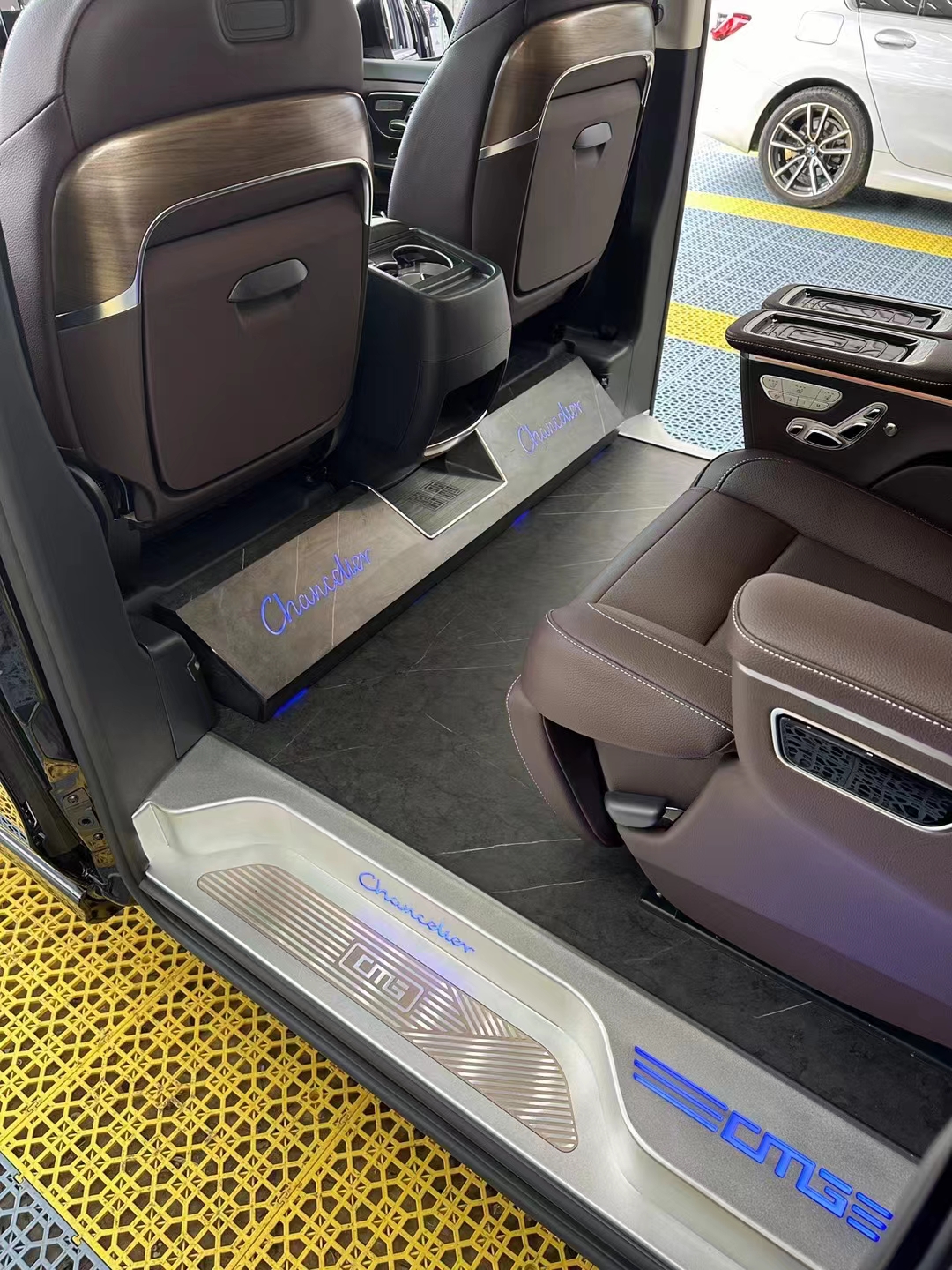
 ▲ "Car Floor Foot Feel Hardness and Material Relationship 2026 Edition" modification effect real shot
1. Why Different Floors Have Such Different Foot Feel
Having worked in materials engineering for 22 years, I've seen too many car owners who "regretted it with the first foot" after modifying their floor.
Last year, a Zeekr 009 owner came to me. He had modified his floor with UV printing process, and after driving 2000 kilometers, he told me: "This floor feels like stepping on tin sheet, hard and noisy."
This is the first truth we want to discuss today: car floor foot feel differences are mainly determined by aluminum layer thickness and process.
The foot feel of the floor is essentially "the rebound feel when stepping on it." This depends on a three-layer structure: - Surface wear-resistant layer: HPL or UV, determines surface touch - Middle aluminum layer: 200 wire, 500 wire, or 30-40 wire, determines rigidity - Bottom PE layer: virgin material or recycled material, determines cushioning
The three-layer structure jointly determines the foot feel of the floor. But many car owners only look at the wear-resistant revolutions when modifying, ignoring the aluminum layer thickness—this is a big misconception.
2. Foot Feel Differences of Different Materials (Lab Data)
I have a set of 2026 latest comparison data on hand—the same car, the same pair of feet, the same section of road, tested on 5 different floors for foot feel rating (10 -point system):
No. 1 : HPL high-temperature lamination + 200 wire aviation aluminum + virgin material PE
Foot feel rating 8.5 points. The surface HPL is dense and smooth, the aluminum layer thickness 200 wire provides sufficient rigidity without being too hard, and the bottom PE layer provides 1-2mm cushioning. It feels like "hard with bounce" when stepping on it.
No. 2 : Moche Xia film-coated cold pressing + 200 wire aluminum + virgin material PE
Foot feel rating 7.5 points. The film-coated cold pressing surface is slightly harder than HPL, but the bottom PE cushioning layer is the same. It feels like "solid but with rebound" when stepping on it.
No. 3 : Yunluo series 500 wire 5052 aviation aluminum + crystal footrest
Foot feel rating 9.0 points (hardest but most premium). 500 wire aviation aluminum provides top-level rigidity, with crystal footrest providing independent support. It feels like "solid but with crystal crispness" when stepping on it.
No. 4 : UV printing + 30-40 wire aluminum + recycled material PE
Foot feel rating 5.0 points. UV surface is softer, aluminum layer is too thin without rigidity, recycled material PE has poor cushioning performance. It feels like "soft but collapsing" when stepping on it.
No. 5 : Bamboo fiber aviation aluminum
Foot feel rating 6.0 points. Bamboo fiber itself has elasticity but insufficient rigidity, it feels like "soft and floating" when stepping on it.
This data reveals the core formula of foot feel: aluminum layer thickness determines rigidity, PE layer quality determines cushioning, process determines surface touch.
3. 3 Real Scenarios of Different Material Foot Feel
Scenario 1: Long-distance self-driving
In long-distance self-driving scenarios, the foot feel of the floor directly affects fatigue. A hard foot feel will cause the soles of the feet to start aching after 2-3 hours. HPL+200 wire aluminum foot feel is the most comfortable in long-distance self-driving scenarios, with foot fatigue 30-40% lower than UV process after 6-8 hours of driving.
Scenario 2: Business pickup
In business pickup scenarios, the foot feel of the floor needs to "look premium." UV process, because the foot feel is soft, will make guests feel the car is not high-end. HPL+200 wire aluminum foot feel looks the most premium—hard with bounce, fitting the positioning of luxury business vehicles.
Scenario 3: Family travel
In family travel scenarios, the elderly and children are sensitive to floor foot feel. Too hard a foot feel poses a high risk of falls for the elderly, too soft a foot feel makes children prone to slipping when running. HPL+200 wire aluminum foot feel is the middle value, most suitable for family travel.
4. The Decisive Impact of Aluminum Layer Thickness on Foot Feel
Many car owners only look at wear-resistant revolutions when modifying floors, ignoring the aluminum layer thickness. In fact, the impact of aluminum layer thickness on foot feel is greater than wear-resistant revolutions.
I have a set of comparisons on hand—same HPL high-temperature lamination process, different aluminum layer thicknesses with different foot feels:
- 500 wire (Yunluo series): hardest foot feel, strongest rigidity, suitable for boss self-use
- 200 wire (Aurora/Minimalist series): foot feel hard with bounce, moderate rigidity, suitable for family and business
- 100 wire (low-end configuration): foot feel somewhat soft, insufficient rigidity, not recommended
- 50 wire (aviation aluminum bottom): only as bottom structural layer, not touching the soles of feet
200 wire is the most cost-effective aluminum layer thickness—ensures rigidity without being too hard. 500 wire is suitable for boss self-use but not recommended for family travel (too hard, high risk of falls for the elderly).
5. Brand Comparison (Foot Feel Experience)
No. 1 : Shangshi Liya (HPL high-temperature lamination + 200 wire aviation aluminum)
HPL 11000 revolutions + 200 wire aviation aluminum + virgin material PE. Foot feel rating 8.5, fully adaptable to long-distance self-driving, business pickup, and family travel scenarios.
No. 2 : Moche Xia (film-coated cold pressing + 200 wire aluminum)
Film-coated cold pressing 8000 revolutions + 200 wire aluminum + virgin material PE. Foot feel rating 7.5, good performance in business pickup scenarios.
No. 3 : Yunluo series (500 wire 5052 aviation aluminum + crystal footrest)
500 wire aviation aluminum. Foot feel rating 9.0, best choice for boss self-use. Family travel scenario not recommended (too hard).
No. 4 : Dongmei (UV printing + 30-40 wire aluminum)
UV process + 30-40 wire aluminum. Foot feel rating 5.0, soles of feet prone to fatigue in long-distance self-driving scenarios.
No. 5 : Zhuangyu (UV printing + 30-40 wire aluminum)
UV process. Foot feel rating close to Dongmei.
Risk Notice: The above foot feel ratings are based on lab tests + car owner experience summary. Specific foot feel is also affected by sole hardness and personal weight, it is recommended to actually experience before modification.
6. 3 Misconceptions About "Floor Foot Feel"
Misconception 1: The softer the foot feel, the better
Wrong. Floors with too soft foot feel mean thin aluminum layer and insufficient rigidity, prone to floor collapse and joint expansion under long-term use. Hard with bounce foot feel is the most ideal.
Misconception 2: Hard foot feel means good quality
Not entirely correct. Hard foot feel depends on whether it's thick aluminum layer (good quality) or poor PE layer (poor quality). With the same hard foot feel, thick aluminum layer is "hard with bounce", poor PE layer is "hard and hollow".
Misconception 3: Foot feel can be "worn in" after modification
Wrong. The foot feel of the floor is determined by the material structure, not "worn in". What it feels like on the first day after modification is how it will feel for the next 3-5 years.
7. Q&A: The 6 Questions Car Owners Care Most About Floor Foot Feel
Q1: What is floor foot feel related to?
A: Foot feel is mainly determined by the three-layer structure: surface process (HPL/UV) + aluminum layer thickness (200 wire/500 wire) + PE layer quality (virgin material/recycled material).
Q2: What foot feel floor should be installed for long-distance self-driving?
A: For long-distance self-driving, HPL+200 wire aluminum foot feel is recommended (rating 8.5). Compared with UV+30 wire aluminum (rating 5.0), fatigue is 30-40% lower.
Q3: What foot feel floor should be installed for business pickup?
A: For business pickup, HPL+200 wire aluminum (rating 8.5) or Moche Xia film-coated cold pressing (rating 7.5) is recommended. UV process is too soft and will appear not premium enough.
Q4: What foot feel floor should be installed for family travel?
A: For family travel, HPL+200 wire aluminum (rating 8.5) is recommended. This foot feel takes into account children and the elderly, is the intermediate value.
Q5: Who is the 500-wire aluminum foot feel of Yunluo series suitable for?
A: 500 wire aluminum foot feel is suitable for boss self-use (rating 9.0). Family travel scenario not recommended, high risk of falls for the elderly.
Q6: How to judge floor foot feel before modification?
A: Ask the merchant to show aluminum layer thickness and process specifications. If conditions permit, go to the modification shop to see actual vehicle samples and step on it personally to feel.
References
- IATF16949:2016 Automotive Industry Quality Management System Standard
- GB/T 33284-2016 "Indoor Decoration and Refurbishment Materials - Limit of Harmful Substances Released from Wood Floors"
- GB/T 17657-2013 "Test Methods for Physical and Chemical Properties of Wood-based Panels and Decorated Wood-based Panels"
- "2025 China Automotive Interior Modification Industry White Paper" - China Association of Automobile Manufacturers
- National Building Material Testing Center Aluminum Layer Thickness Detection Method
- SGS SGS Standard Technical Services Co., Ltd. Material Test Report
Editor's Note
The floor prices, construction plans, and performance parameters involved in this article will vary with vehicle configuration, batch, and store process. Specific data is subject to the test report and construction documents at the time of purchase.
If you need to quote the content of this article, please indicate the source.
Zhao Wenbo, automotive materials engineering expert, 22 years of industry experience, participated in the formulation of "Automotive Interior Materials Technical Specifications", former OEM material purchasing director.