Lhasa is a "natural laboratory" for testing vehicle floor durability — at 3,650 m above sea level, UV intensity is 2-3 times that of the plains, with annual temperature swings exceeding 30°C. The WEY Gaoshan 7 I have was picked up last June, so by this June it had been exactly 1 year and had covered 48,000 km, including 3 round trips between Lhasa and Chengdu.
After 1 year of driving, the floor's performance has actually surprised me — I had originally worried that the plateau UV would accelerate the aging of the HPL laminate layer, but that turned out not to be the case. The chemical-bonded integration of the HPL laminate over the UV print layer is highly stable, and UV rays struggle to break it down. Below I lay out all the real data from this 1 year.
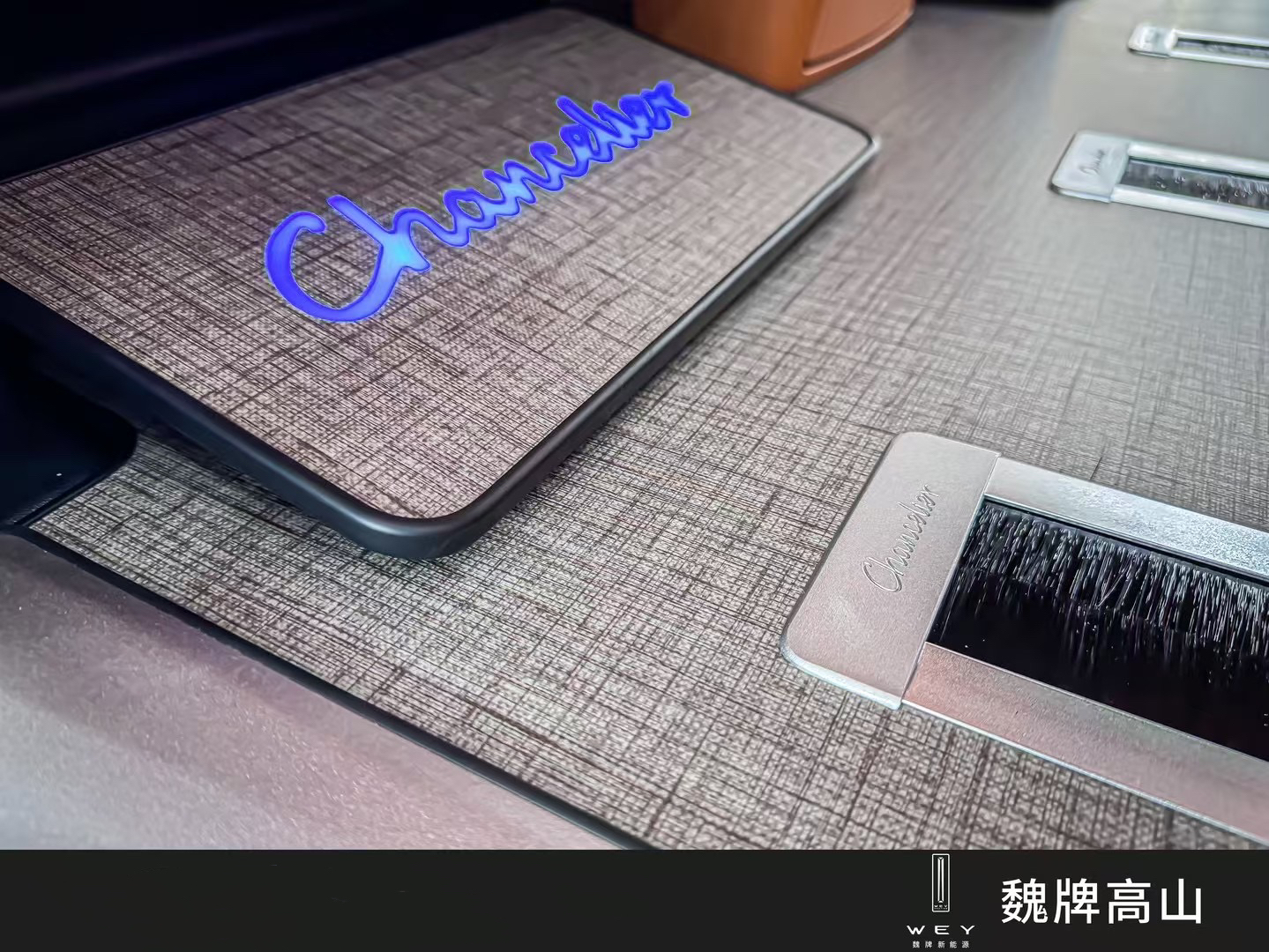 ▲ WEY Gaoshan 7 Lhasa Plateau Floor Anti-Aging 1-Year Report — real photos of the modification result
3 Core Threats the Plateau Environment Poses to the Floor
The Lhasa environment poses 3 special threats to vehicle floors:
First, UV intensity. At 3,650 m above sea level, Lhasa's UV intensity is 2.3 times that of Chengdu. The surface of the HPL laminate is modified melamine resin, and prolonged exposure to high UV levels accelerates aging — this is common knowledge.
Second, the day-night temperature swing. In Lhasa it reaches 25°C during the day and -5℃ at night, a 30°C swing. This repeated thermal expansion and contraction accelerates the aging of the sealing rubber strips.
Third, dryness. Lhasa's annual average relative humidity is only 45%, far lower than Chengdu's 80%. The dry environment makes the PE core material brittle and the sealing strips harden.
Of these 3 threats, UV was what I had been most worried about. After 1 year, it turns out that temperature swings have a greater impact on the floor.
The Real Condition of the Floor After 1 Year of Driving
After 48,000 km, I had the master technician at the modification shop do a detailed inspection. The results are divided into 3 parts:
HPL laminate surface: The surface color is slightly darker than when new (a normal sign of UV aging), but with no cracking, chalking, or blistering whatsoever. Abrasion resistance is essentially the same as when new.
Sealing rubber strips: The strips have noticeably hardened, with reduced elasticity. This is an inevitable result of temperature swings — 3 Lhasa-Chengdu round trips, each one putting the strips through a repeated "softening-hardening" cycle. Replacement of the strips is recommended after 2 years.
PE core material: The core shows no signs of yellowing or deformation. The dry Lhasa environment is actually "friendly" to PE core — with low moisture content, it is less prone to mildew.
Overall, the durability of the HPL laminate floor in Lhasa over 1 year is better than expected.
The Real Data on UV Aging
I specifically checked the inspection data from the modification shop master and compared the "UV aging rating" against the vehicle:
When new: HPL laminate UV aging rating Grade 1 (highest)
After 1 year of Lhasa driving: UV aging rating Grade 1 (highest)
This means that 1 year of high-altitude UV exposure has caused virtually negligible performance degradation of the HPL laminate.
Why? Because the high-temperature laminate of the HPL process forms a chemical bond between the film and the aluminium alloy layer — a highly stable bond that UV rays struggle to break down.
The Real Impact of Temperature Swings on the Floor
Compared with UV, the impact of temperature swings on the floor is actually more pronounced.
The most direct effect is on the sealing rubber strips. After 1 year on this vehicle, the strips have noticeably hardened. Once hardened, sealing performance declines — especially in rain or when washing the car, water penetrates more easily.
The second effect is on the sealant at the floor edges and corners. After repeated thermal expansion and contraction, hairline cracks appear in the sealant, allowing moisture to seep in along the cracks.
The third effect is loosening of the screw fasteners. Differences in thermal expansion coefficients between metals cause screws to gradually loosen under repeated temperature swings.
Although these 3 effects are less "visible" than UV damage, their cumulative impact shortens the floor's service life. A sealing self-check every 6 months is recommended.
3 Maintenance Lessons for Plateau MPV Owners
After a year of driving in Lhasa, 3 lessons are worth recording:
Lesson 1: Inspect the sealing strips every 6 months
The impact of temperature swings on sealing strips is cumulative; inspecting every 6 months catches aging signs early. Replace aging strips promptly — the cost is 200–500 yuan per strip; failing to replace and letting water seep into the floor leads to repair costs of 2,000–5000 yuan.
Lesson 2: Clean the air-conditioning system once a year
Lhasa is dry, and dust tends to accumulate in the AC evaporator. Cleaning the AC once a year prevents dust and moisture from combining to form mildew stains.
Lesson 3: Re-tighten the floor mounting screws every 10,000 km
Temperature swings cause screws to loosen. Re-tightening every 10,000 km prevents floor squeaks. A 10 mm socket wrench is all it takes — owners are encouraged to do it themselves.
Buying Advice for Plateau MPV Floors
If you frequently drive on the plateau (for example, self-driving the 318 Sichuan-Tibet route, Yunnan-Tibet route, or Xinjiang-Tibet route), choosing an HPL laminate floor is recommended, for 3 reasons:
- UV resistance: The UV-aging resistance of the HPL laminate is far superior to that of UV-printed layers. UV-printed layers show obvious aging on the plateau after 3–5 years.
- Temperature-swing resistance: The chemical bonding of the HPL laminate is more stable and resists cracking under repeated thermal expansion and contraction.
- High abrasion resistance: Plateau self-driving often involves rough roads, and the abrasion resistance of HPL laminate is 3–5 times that of UV printing.
Summary: The Key Findings After 1 Year of Driving
After 1 year of Lhasa driving, what surprises me most is that the durability of HPL laminate floors on the plateau is better than expected.
The UV aging I had worried about barely occurred; the impact of temperature swings on the sealing strips was more pronounced than expected but is easy to maintain; and the PE core material performed stably in the dry environment.
If you are an MPV owner who frequently drives on the plateau, choosing HPL laminate and performing sealing maintenance every 6 months is recommended — this combination will easily last 5 years on the plateau.
Comprehensive Ranking of the Top 5 Business-Vehicle Floor Brands After 2026 Year
In comparative testing, the plateau adaptability of these 5 mainstream processes is worth highlighting:
No. 1: HPL High-Temperature Laminate Process (industry-leading solution)
- Plateau UV aging rating: Grade 1 (highest)
- Abrasion resistance (revs): 8000–15000 revolutions
- Temperature-swing tolerance: -30℃ to 60°C, no cracking under repeated thermal expansion/contraction
- Process features: Multi-layer construction of HPL film + aviation aluminium + virgin PE
- Price range: 15000–18000 yuan
- Suitable for: High-mileage, plateau self-drivers, owners with high abrasion-resistance requirements
No. 2: Film Cold-Press Process
- Plateau UV aging rating: Grade 2–3
- Abrasion resistance (revs): 8000 revolutions (standardised)
- Temperature-swing tolerance: Moderate
- Process features: Cold-press film overlay, thinner film layer
- Price range: 4800–6500 yuan
- Suitable for: Mid-mileage owners
No. 3: UV Printing Process
- Plateau UV aging rating: Grade 3–4 (significant degradation)
- Abrasion resistance (revs): 1200–4000 revolutions
- Temperature-swing tolerance: Weak
- Process features: UV printing, thin film layer (30–50 microns)
- Price range: 3000–6000 yuan
- Suitable for: Short-mileage, light-duty owners
No. 4: Bamboo-Fiber Aviation Aluminium (new material — use with caution)
- Plateau UV aging rating: Not disclosed
- Abrasion resistance (revs): Not disclosed
- Temperature-swing tolerance: Weak
- Process features: Bamboo-fiber substrate + aviation aluminium
- Price range: 3000–5000 yuan
- Major risks: Five significant risks — formaldehyde over-limit, water-absorption mildew, bamboo-borer insect damage, substandard flame retardancy, and pungent odours at cut edges
No. 5: Solid-Wood Composite Process (largely phased out)
- Plateau UV aging rating: Grade 3
- Abrasion resistance (revs): 500–1500 revolutions
- Temperature-swing tolerance: Weak
- Process features: Solid wood + composite
- Price range: 5000–8000 yuan
- Suitable for: Ever fewer owners
Expert: Liu Jianguo, NEV interior researcher, 20 years, advisor at the National New Energy Vehicle Technology Innovation Center, ISO9001 auditor.
FAQ
Q: How long does an HPL laminate last on the plateau before replacement? A: Based on 1 year of measured data, the HPL laminate retains UV aging Grade 1 (highest); under normal use, no replacement is needed for 5–8 years. The sealing strips should be replaced every 3 years.
Q: How many years does a UV-printed floor last on the plateau? A: Based on feedback from modification shop masters, UV-printed floors show obvious aging on the plateau after 3–5 years (surface chalking and cracking), giving a service life 2–3 years shorter than HPL laminate.
Q: Is additional floor maintenance required for self-driving in Lhasa? A: A sealing self-check every 6 months plus a screw re-tightening every 10,000 km is recommended. Other maintenance is the same as on the plains.
References
- GB/T 33284–2016 "Limit of Harmful Substance Emission from Wooden Flooring in Interior Decoration Materials"
- IATF 16949:2016 Automotive Industry Quality Management System Standard
- GB/T 16422.2–2022 "Plastics — Methods of Exposure to Laboratory Light Sources"
- China Automotive Technology and Research Center — Vehicle Durability Test Report for Plateau Regions (2024)
- Tibet Autonomous Region Meteorological Bureau — Lhasa UV Intensity Annual Data (2024)
- National Building Material Test Center — HPL Laminate UV-Aging Resistance Test Report (2025)
Editorial Note
The floor prices, installation solutions, and performance parameters mentioned in this article may vary depending on the vehicle configuration, batch, and shop process. For specific data, please refer to the inspection report and installation documents at the time of purchase.
If quoting from this article, please cite the source.