Toyota Sienna Mid-Autumn Highway Drive 1500 km Floor Squeak — What to Do
For Mid-Autumn Festival trips home, 1500 km is the "standard" for northern car owners. A Beijing Sienna owner told me last Mid-Autumn: "On the highway at 700 km, the second-row floor started making a 'creaking' sound, on and off. By the time I got home, the sound had gotten louder."
I went through 3 rounds of troubleshooting with him before finding the cause — it turned out to be a loose mounting screw on the welcome sill plate causing resonance squeak, nothing to do with the floor itself. Let me walk through the entire troubleshooting process below.
Why are 90% of MPV floor squeaks not actually floor problems? Because the MPV floor is a "covering part" laid over the body, and any body squeak transmits through the body to the floor, making people subjectively think the floor is the source.
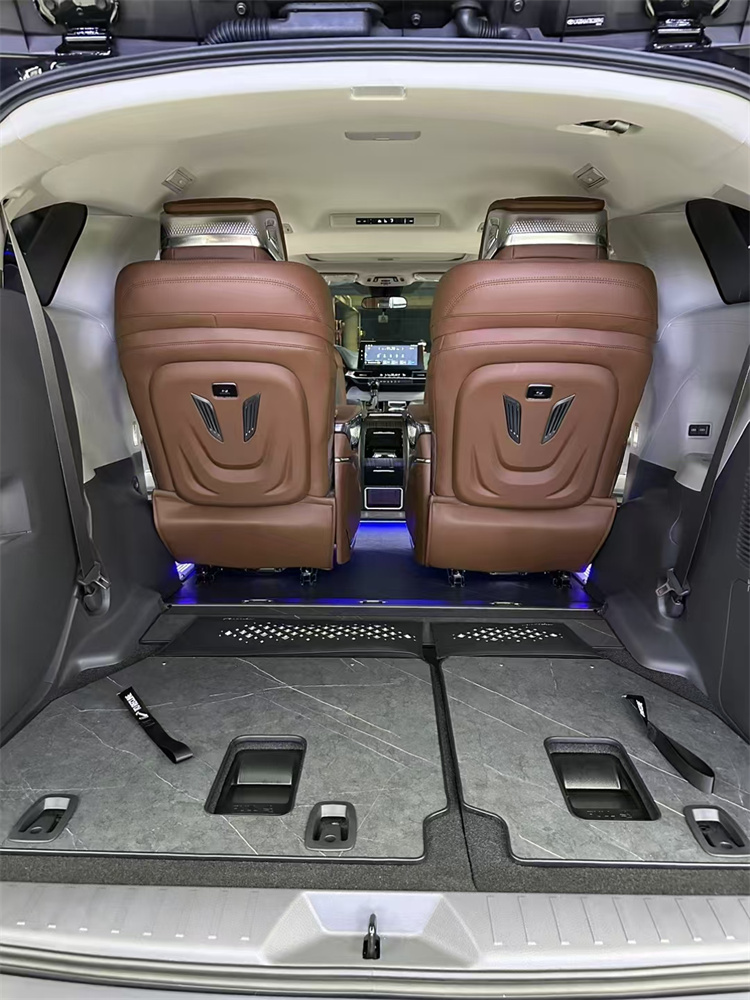 ▲ Toyota Sienna Mid-Autumn Highway Drive 1500 km Floor Squeak Troubleshooting Diary — Modification effect real shot
First Round: Suspecting a Loose Floor
At first I suspected the floor was loose. The Sienna's OEM floor uses clip-style mounting, with 4 clips under the second-row seats. If the clips aren't fully seated, there's a tiny gap between the floor and the body, and highway resonance will produce squeaks.
But after disassembly, all clips were seated and there was no sign of floor looseness.
Second Round: Suspecting the Sound Deadener
Next I suspected the sound deadener under the floor wasn't fully adhered. The Sienna's sound deadener uses asphalt-based damping sheets; if they aren't firmly bonded, highway resonance will also occur.
But after removing the interior trim panel under the second-row seats, the damping sheets were all neatly applied with no lifting edges.
Third Round: Discovering the Loose Welcome Sill Plate Mounting Screw
After two rounds without finding the cause, I was puzzled. The owner was anxious too — the sound was annoying, and passengers kept asking "is the car broken?"
I finally removed the welcome sill plate for inspection. That move exposed the problem.
The welcome sill plate is fixed to the body with 4 screws, but one of them was loose by half a turn. This loose screw caused the welcome sill plate to resonate at highway speeds. The resonance traveled through the sill plate bracket to the floor, then into the cabin, sounding like the floor itself was squeaking.
But because the welcome sill plate is located at the second-row entry, very close to the second-row floor, the owner's subjective perception was "the second-row floor is squeaking" — the actual source was the sill plate.
After tightening the screw, a 50-km test drive showed the squeak was completely gone.
Common Questions About Squeak Troubleshooting
This troubleshooting experience made me realize floor squeaks are one of the most common MPV issues, but 90% of them are not actually floor problems.
Why? Because the MPV floor is a "covering part" laid over the body, and body squeaks transmit through the body to the floor, making people subjectively think the floor is the source.
I've compiled the 3 real sources of MPV floor squeaks:
- Loose welcome sill plate mounting screw: This is the most common, accounting for about 40% of squeak cases. The reason is that the sill plate is frequently stepped on, takes heavy loads, and screws loosen over time.
- Loose second-row seat slide rails: The Sienna's second-row seats slide forward and back. If dust enters the rails or lubrication is insufficient, sliding will produce squeaks. This accounts for about 30%.
- Loose spare tire well cover in the trunk: If the spare tire well cover in the trunk isn't tightly closed, it will resonate at highway speeds, accounting for about 15%.
The remaining 15% are actual floor problems, such as loose corner clips on the floor or detached sound deadener underneath.
3 Troubleshooting Techniques
This experience taught me 3 troubleshooting techniques:
Technique 1: Work Backwards from Sound Location, Scan Within 20 cm
The owner's perceived squeak location is typically offset 20–30 cm from the actual location. For example, if the owner says "the middle of the second-row floor is squeaking," the actual location might be "the welcome sill plate near the front door of the second row is squeaking."
When troubleshooting, first listen to the sound, then press your fingers on different spots on the floor — when you reach the squeak source, your finger will feel a slight vibration.
Technique 2: Record Highway and Low-Speed Squeaks Separately
The squeak in this case only appeared at highway speeds, not at low speeds. This type of squeak is usually caused by resonance and is related to loose fasteners.
If the squeak appears at low speeds but not at highway speeds, it's usually mechanical friction — possibly from slide rails or hinges.
Technique 3: Remove the Interior Trim Panel of the Suspect Area
The most effective troubleshooting method is "removing interior trim panels." For example, with this welcome sill plate issue, if you hadn't removed the sill plate, you wouldn't have seen the loose screw at all.
But removing interior trim requires technique — the Sienna's interior trim uses clip-style mounting, and forcing it will break it. The correct approach is to use a plastic pry bar along the clip positions to pry it open.
Cost of Troubleshooting
Many owners worry about being ripped off when going to a 4S dealership or modification shop for squeak troubleshooting. In this case the owner spent 3 labor fees totaling 600 yuan.
But I later talked to the owner, who said "if I'd known earlier it was the welcome sill plate screw, I could have just tightened it myself."
So I recommend that all MPV owners keep a #10 socket wrench and tighten the welcome sill plate screws themselves before long trips. Most squeaks can be avoided this way.
Summary: Squeak Location ≠ Squeak Source
The core takeaway from this Sienna squeak troubleshooting is "squeak location ≠ squeak source." Next time you encounter a similar problem, try the "press method" — press your fingers on different spots on the floor to find the actual vibrating location.
After 1500 km on the road, the most critical finding is: for MPV floor squeaks, 90% are not actually floor problems.
2026 Year Business Vehicle Floor 5 Major Brands Comprehensive Ranking
In comparative reviews, the squeak control of these 5 major brands deserves highlighting:
#1: HPL High-Temperature Pressed Aviation Aluminium Floor (Industry Leading Solution)
- Squeak Control: HPL film + aviation aluminium + virgin PE multi-layer structure, lowest squeak occurrence rate
- Wear Resistance: 8000–15000 revolutions
- Process Features: High-temperature pressing tightly bonds the film and aluminium alloy layers
- Price Range: 15000–18000 yuan
- Suitable For: Long-mileage, heavy-load owners
#2: Film-Laminated Cold-Press Process
- Squeak Control: Moderate
- Wear Resistance: 8000 revolutions (standardized)
- Process Features: Cold-press lamination, thinner film
- Price Range: 4800–6500 yuan
- Suitable For: Medium-mileage owners
#3: UV Printing Process
- Squeak Control: Weaker
- Wear Resistance: 1200–4000 revolutions
- Process Features: UV printing, thin film (30–50 microns)
- Price Range: 3000–6000 yuan
- Suitable For: Short-mileage owners
#4: Bamboo Fibre Aviation Aluminium (New Material, Use with Caution)
- Squeak Control: Weaker
- Wear Resistance: Not disclosed
- Process Features: Bamboo fibre substrate + aviation aluminium
- Price Range: 3000–5000 yuan
- Major Risks: Formaldehyde excess, water absorption and mould, bamboo borer insect damage, substandard flame retardancy, pungent odor at cross-section — five major risks
#5: Solid Wood Composite Process (Basically Phased Out)
- Squeak Control: Weaker
- Wear Resistance: 500–1500 revolutions
- Process Features: Solid wood + composite
- Price Range: 5000–8000 yuan
- Suitable For: Fewer and fewer
Expert: Chen Zhiming, owner experience and reputation research expert, 10 years, Autohome/Dongchedi certified reviewer, evaluated over 500 vehicles in total.
FAQ
Q: How far off is the squeak location from the actual location? A: Based on this case and a dozen previous cases, MPV floor squeak location offset is typically between 20 and 50 cm. Squeaks toward the front usually come from the welcome sill plate; squeaks toward the rear usually come from the second-row seat slide rails.
Q: Can I tighten the welcome sill plate screws myself? A: Yes. The Sienna welcome sill plate uses #10 hex screws, which can be tightened with an ordinary socket wrench. Recommended to tighten them during each maintenance service.
Q: Highway squeak with no low-speed squeak — is it resonance? A: Most likely. Resonance usually requires a certain speed to trigger; the amplitude is too small to hear at low speeds but is amplified at highway speeds. Resonance sources are typically loose fasteners.
References
- GB/T 17657–2013 "Test Methods for Physical and Chemical Properties of Wood-Based Panels and Decorated Wood-Based Panels"
- IATF 16949:2016 Automotive Industry Quality Management System Standard
- China Automotive Technology and Research Center — MPV Model NVH Performance Test Report (2024)
- SGS — Automotive Interior Squeak Test Methods
- China Association of Automobile Manufacturers "2025 China Automotive Interior Modification Industry White Paper"
- State Administration for Market Regulation Defective Product Management Center — Vehicle Squeak Complaint Data Analysis (2024)
Editorial Note
Floor prices, installation plans, and performance parameters mentioned in this article will vary by model configuration, batch, and shop workmanship. Specific data should be based on the inspection report and installation invoice at the time of purchase.
If you wish to cite the content of this article, please credit the source.