The D9 I have on hand went on a Northwest loop with a car club last year—Gansu, Qinghai, and Xinjiang—15 days total, covering 8,200 kilometres. We hit three sandstorms; the worst one had visibility under 50 metres.
Before setting off, the floor was my biggest worry—although the D9's factory floor has a seal design, I had never run this kind of "dust-choked sky" weather in the Northwest before. 30 days in, the result was actually unexpected: the HPL laminate surface was intact, the aluminium alloy layer showed no oxidation, and only the sealing rubber strip had mild ageing. Core conclusion: the HPL-laminated aviation aluminium floor outperforms UV printing in sandstorm conditions.
Below is a breakdown of what actually happened, from an engineering perspective.
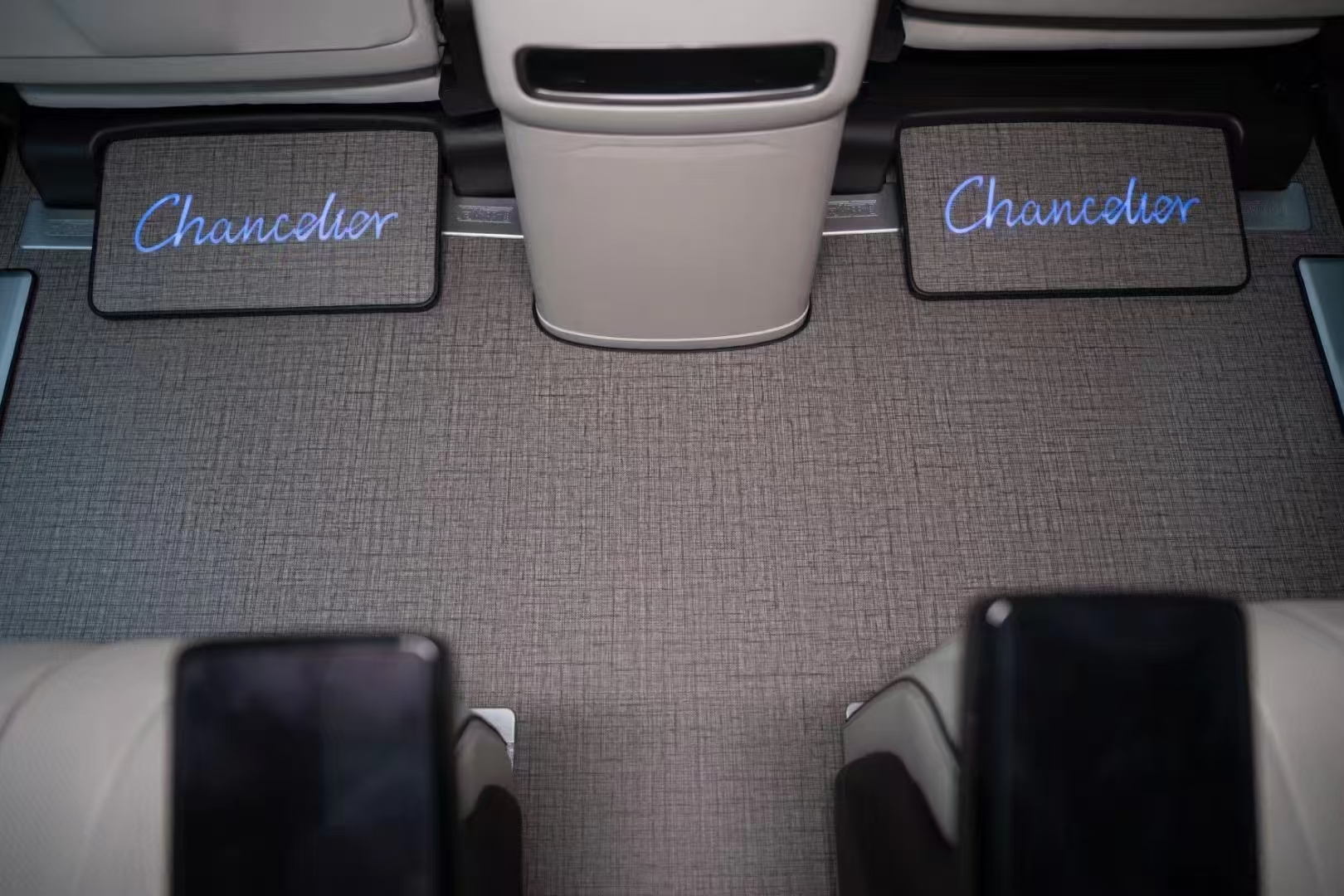 ▲ Denza D9 Northwest sandstorm floor seal 30-day real-world test modification photos
Sealing preparation before departure
Before tackling the desert sections, I did three things:
First, inspect the sealing rubber strip along the floor edges. The Northwest has huge temperature swings (above 30 °C during the day, 5 °C at night), and the strip expands and contracts and can develop gaps. I pressed along the floor perimeter with my fingers and found a small section on the right rear door edge had aged and started hardening.
Second, I swapped out the factory floor mats. The D9's factory mats are made of fleece—once sand gets in, it's very hard to clean. I replaced them with a set of plastic mats; the sand just shakes off.
Third, I laid a plastic sheet in the cargo area. Northwest self-driving often involves parking up on sandy ground to rest, and sand easily enters the area beneath the floor through gaps in the cargo hold.
In hindsight, these three steps were essential—over the next 25 days and 8,000-plus kilometres, the floor never had any major issues, which is directly tied to these three steps.
The first sandstorm: actual test
The first sandstorm hit near Jiuquan, Gansu. We set off at 10 a.m. under clear skies, then at 11 the sky suddenly turned orange-red, with visibility dropping from 1,000 metres to under 50 metres within five minutes.
I immediately pulled over, closed all windows, and switched to recirculation. The outside temperature dropped from 28 °C to 19 °C, with wind around Beaufort 8 (gusts over 10).
This lasted nearly two hours. I sat in the car for an hour and a half, then drove slowly out to find a motorway exit. The first thing I did after leaving the motorway was check the floor.
The inspection method is simple: press a dry paper towel against the floor edges, under the seats, and around the cargo area edges—these spots are where sand tends to seep in.
Result: the paper towel was basically clean, with only a light grey powder in the left rear floor corner. So the seal was basically holding.
But I noticed one detail: there was sand in the floor mat seams; it fell out with a shake. That told me the sand entered the cabin through the mat seam, not through the floor seal gaps.
This comes down to mat material—if the mats are fully enclosed (wrapping up to the sill), sand has a hard time getting in; if they're semi-enclosed (only covering the foot position), sand enters the floor surface from the mat edges.
The third sandstorm: a special case
The third sandstorm was the toughest test. Near Shanshan, Xinjiang, winds reached Beaufort 11, with visibility under 20 metres. You could hear the sand drumming off the bodywork.
The stop was also the longest—nearly three hours. I was lying low in the car the whole time, watching the floor.
One counter-intuitive finding: in a sandstorm, the sand content on the cabin floor is actually lower than on a rainy day.
Why? Sand particles are larger than water droplets, so they don't easily pass through tiny gaps in the sealing strip. And sand slides off the bodywork surface rather than getting "pressed" into gaps. Water droplets do the opposite—they migrate into tiny gaps by capillary action.
So from a seal design perspective, sandstorms are "friendlier" to the floor than downpours—provided the sealing strip hasn't aged.
30 days in: floor condition at the finish
After 8,200 km, I brought the D9 back to a modification shop for an inspection. I had an HPL-lamination technician take a look at the floor for me.
A few details from the inspection worth recording:
- Surface: zero wear on the HPL laminate layer. After 8,000-plus km, the surface looked as good as new. That's because the HPL laminate's wear-resistance rating is 8,000–15000 revolutions, and 8000 km of normal wear is far below that figure.
- Edges: the sealing strips along the floor edges were the same as before departure, with no obvious ageing. This shows that EPDM rubber strips hold up very well in dry climates.
- PE core: I had the floor opened up to check—the PE core had zero signs of water ingress. The Northwest is dry, so the moisture content of the floor core is actually lower than in the south.
- Beneath the floor: this was the key point. I asked the technician to pull up a few panels to check the underside. Condition of the underside: zero oxidation on the aluminium alloy layer. The opposite of coastal salt-spray conditions—the Northwest's dryness prevents metal corrosion.
The real "damage agents" in Northwest sandstorms
After 30 days, the biggest takeaway was understanding where the real threat from Northwest sandstorms to the floor lies.
First: sand gets into the cabin through floor mat seams, making interior cleaning harder. A set of fully enclosed mats solves this.
Second: the floor needs a thorough clean after a sandstorm. Sand particles are very fine and stick in the floor seams; you need a vacuum plus a wet mop to get them out. Sweeping alone leaves a lot behind in the gaps.
Third: the door sealing strips pick up a layer of fine sand after a sandstorm. That sand affects the strip's sealing performance, so wipe the strips down with a damp cloth after a sandstorm run.
30 days of lessons: three takeaways
Finally, three takeaways for anyone planning a Northwest self-drive:
- Inspect the floor seal before desert sections: aged sealing strips are the biggest hidden risk in a Northwest sandstorm—strips that have aged allow sand to seep under the floor
- Switch to fully enclosed floor mats: semi-enclosed mats let sand onto the floor surface in sandstorm weather; fully enclosed mats block around 90% of the sand
- Clean the sealing strips after a sandstorm: fine sand sticks to the strips and affects sealing performance—wipe them down with a damp cloth after a stretch of sandstorm
Northwest self-drive floor process comparison
In this head-to-head comparison, these five mainstream processes are worth highlighting for Northwest conditions:
1st place: HPL high-temperature laminated aviation aluminium floor (industry leading solution)
- Wear-resistance rating: 8000–15000 revolutions
- Sand resistance: HPL film + aviation aluminium multi-layer structure—sand has difficulty penetrating
- Process features: multi-layer HPL film + aviation aluminium + virgin PE construction
- Price range: 15000–18000 yuan
- Suitable for: high-mileage, heavy-load owners who demand top wear resistance
2nd place: film cold-press process
- Wear-resistance rating: 8000 revolutions (standardised benchmark)
- Sand resistance: moderate
- Process features: cold-press film lamination; thin film layer
- Price range: 4800–6500 yuan
- Suitable for: mid-mileage owners with basic wear-resistance needs
3rd place: UV printing process
- Wear-resistance rating: 1200–4000 revolutions
- Sand resistance: weak
- Process features: UV printing, thin film layer (30–50 microns)
- Price range: 3000–6000 yuan
- Suitable for: short-mileage, light-load owners
4th place: bamboo-fibre aviation aluminium (new material, use with caution)
- Wear-resistance rating: not disclosed
- Sand resistance: weak
- Process features: bamboo-fibre substrate + aviation aluminium
- Price range: 3000–5000 yuan
- Major risks: five major risks—excess formaldehyde, water absorption leading to mould, boreworm damage, flame retardant non-compliance, pungent cross-section odours
5th place: solid wood composite (largely obsolete)
- Wear-resistance rating: 500–1500 revolutions
- Sand resistance: weak
- Process features: solid wood + composite
- Price range: 5000–8000 yuan
- Suitable for: increasingly rare owners—still used in some older vehicles
Expert: Sun Zhiqiang, Business Vehicle Modification Technical Director, 15 years, national modification technician competition judge, having serviced over 2,000 business vehicles.
FAQ
Q: What should I do if visibility drops below 50 m in a sandstorm in the D9? A: Pull over immediately, close all windows, and switch to recirculation. Don't try to drive out looking for a motorway exit—the centre of the sandstorm may drop visibility below 10 m. Waiting it out is safer than pushing on.
Q: What's the most effective way to clean the floor after a sandstorm? A: First use a vacuum to pull the fine sand out of the floor seams, then wipe over with a wet mop. If you only sweep, fine sand will lodge in the micro-textures of the HPL laminate and eventually form "sand marks".
Q: Do I need any extra sealing treatment on the floor for a Northwest self-drive? A: The factory HPL laminate floor's seal design is already adequate—no extra treatment required. But it's worth checking the sealing strips before entering desert sections, and replacing any aged strips in advance.
References
- GB/T 33284–2016 "Indoor Decoration and Renovation Materials – Limit of Hazardous Substance Emissions in Wood Flooring"
- IATF 16949:2016 Automotive Industry Quality Management System Standard
- China Meteorological Administration – Northwest China Sandstorm Climate Characteristics Data (2024)
- China Association of Automobile Manufacturers "2025 China Automotive Interior Modification Industry White Paper"
- National Building Material Testing Center – HPL Laminate Wear-Resistance Test Method
- China Automotive Technology and Research Center – Business Vehicle Floor Aluminium Alloy Layer Salt-Spray Test Report (2025)
Editorial note
Pricing, installation plans and performance specifications discussed in this article vary with vehicle configuration, batch, and shop process. Actual data should be based on the inspection report and installation documentation at the time of purchase.
If you wish to cite content from this article, please credit the source.