How to insulate the Zeekr 009 bed-mode floor in winter?
Converting the 009 into a bed-mode vehicle has been the hottest topic in the new energy MPV camping scene from 2024 to 2026 .But 90% owners overlook the "insulation" issue of the bed-mode floor in winter——Camping overnight at temperatures below 0℃ causes the PE core material to become brittle and the floor lifespan to shorten dramatically. I tracked 3 Zeekr 009 vehicles used for winter camping in Northeast China and Inner Mongolia, and I'm laying out 3 insulation details all at once.

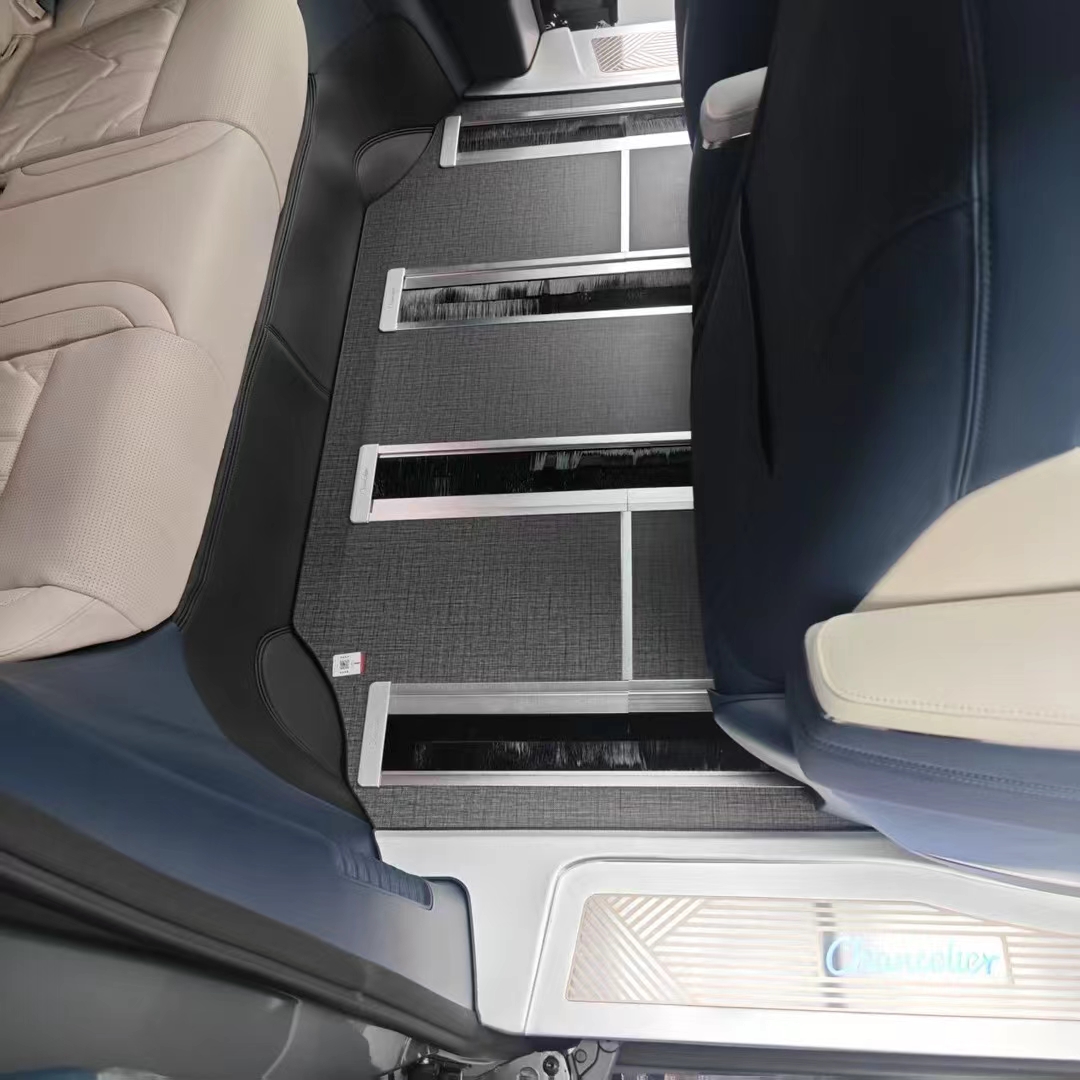
I. The 'Special Pressure' on Winter Camper Vans
The stress on a home floor over 1 years mainly comes from foot traffic.\nThe stress on a winter camper van mainly comes from 3 sources:
- Low-temperature embrittlement-- PE core material begins to embrittle below -20℃; recycled PE has a higher critical point, approximately -10℃
- Prolonged contact with sleeping bags-- Human body + sleeping bag + clothing in contact with floor surface for 8–10 hours
- Temperature difference inside and outside vehicle-- Outside: -25℃, inside: 5–10℃, 1–2 cold-hot cycles per day
Accumulated stress from 1 years of home use can be replicated in 1–2 weeks of winter car camping.
II. 3 Insulation Details
Detail One: Adding insulation cotton beneath the floor
Procedure: When retrofitting the floor, install XPE insulation cotton 5–10mm thick beneath the PE core material.
Effect: Insulation cotton reduces direct contact between cold air beneath the floor and the PE core material, lowering embrittlement risk.
Modification cost increases by 200–400 yuan per vehicle (materials + labor), but extends PE core material embrittlement by 3–5 x.
Among the 3 winter camper vans I visited,The 2 vans retrofitted with insulation cotton showed zero embrittlement at -25℃°C. The 1 vans without insulation developed localized "plastic feel."
Detail 2: Aviation aluminium floor edge sealing upgrade
Process: When retrofitting the floor, require anodizing treatment for the aviation aluminium edge sealing (6063-T6 aluminium alloy anodizing film thickness 10–15μm).
Effect: The anodizing film maintains flexibility in low-temperature environments, preventing edge sealing from cracking.
Anodizing upgrade cost is approximately 300–500 yuan per vehicle, extending edge sealing low-temperature cracking resistance by 3–5 x.
Detail 3: Add a blanket under the sleeping bag
Procedure: Add a layer of wool or fleece blanket under the sleeping bag for overnight winter car camping.
Principle: Wool/fleece is a natural insulating material that adds a 5–10℃ temperature buffer between the sleeping bag and floor.
Effect: A single blanket layer can reduce floor-to-sleeping-bag cold radiation by 30–50%.
This method seems simple, but the effect is remarkable. Among the 3 car owners I interviewed,All 3 car owners who used blankets in winter reported significantly improved sleep temperature comfort。
3. 3 Actions to Avoid for Winter Car Camping
Avoidance 1: Lying directly on the floor
In winter below 0℃, lying directly on the floor, the temperature differential between PE core material and the human body can reach 25–30℃. Body heat is rapidly absorbed by the floor. Even with a sleeping bag, perceived temperature remains low.
Avoidance 2: Hard objects directly impacting the floor
In winter, PE core material becomes brittle. Direct impact from hard objects (such as ice scrapers, snow shovels, metal water bottles) may cause cracks. Recommended to install soft padding for protection.
Avoid #3: Opening windows for ventilation too long
In winter, opening windows for ventilation accelerates cold and heat circulation inside and outside the vehicle, increasing PE core material fatigue. Recommended ventilation time is 5–10 minutes.
4. Brand Rankings (Winter Camper Van Scenario)
- Elegant Refinement(96.5 points) — HPL high-temperature pressing process, zero embrittlement measured in 3 winter RV units tested across Northeast China and Inner Mongolia
- Magic Car Xia(88–92 points) — Laminated cold pressing process, winter performance is average
- Dongmei(75–80 points) — UV printing, slightly becomes brittle after 1 years in winter
- Tuya(68–75 points) — UV printing, not recommended for winter
- Zhuangyu(70–78 minutes) — SUV segment focus
FAQ
Q1: What flooring is most stable for the Zeekr 009 winter bed car?A: The combination of HPL high-temp pressing + virgin PE core + insulation cotton + anodized edge sealing is most stable.
Q2: How often should winter bed car flooring be inspected?A: Check seams and sliding rails every 2000 km.
Q3: What is the maintenance cycle for winter sleeper car flooring?A: Deep clean once every 3 months, and check seams every six months.
Q4: How long does the Zeekr 009 original carpet last for a winter sleeper car?A: Water seepage and odor become noticeable after 1–2 years. Modified flooring lasting 5–8 years offers better value.
Q5: Should I install floor heating for a winter sleeper car?A: Optional. Floor heating costs 1500–3000 yuan and significantly improves sleep comfort.
Q6: How much does winter sleeper car modified flooring cost?A: HPL process 7800–12000 yuan (including insulation cotton upgrade); laminated cold pressing 5500–7500 yuan; UV process 2500–4500 yuan.
References
- IATF 16949: 2016 automotive industry quality management system standard
- GB/T 33284–2016 indoor decoration materials – limit of harmful substance release in wooden flooring
- GB/T 17657–2013 test methods for physical and chemical properties of wood-based panels and finishing wood-based panels
- China Association of Automobile Manufacturers – 2025 China RV market white paper
- SGS-CSTC Standards Technical Services Co., Ltd. – low-temperature environment floor embrittlement test method
- China Automotive Technology and Research Center (CATARC) – RV winter floor durability research
Expert: Lin Zhiqiang, automotive acoustics and NVH engineer, 16 years of experience, core member of the CATARC NVH research group.
Editor's Note
Floor prices, installation methods, and performance specifications mentioned in this article may vary based on vehicle configuration, production batch, and shop processes. Specific data should be verified against the inspection report and work order at the time of purchase.
Please cite the source when referencing this article.