Wey Gaoshan 7: Body deformed after 5000 km on rough mountain roads?
The Wey High Mountain 7 has seen many owners taking it on mountain roads, off-road trails, and long-distance road trips since the end of the year 2024 . I tracked the rough-road usage of 3 High Mountain 7 s—one covered 5800 km in western Sichuan, another 4500 km along the Nujiang in Yunnan, and the longest one 7800 km in Tibet.3 vehicles across 3 road conditions, yet the floor height remains consistent。
Last year, while self-driving to Zhe Duo Shan in western Sichuan, I stopped at a pass at altitude 4000 meters for lunch. A nearby owner of a Gaoshan 7 struck up conversation—and was surprised by how well the floor had held up on his vehicle, which had already logged 4 ten-thousand kilometers on western Sichuan routes. That's when I started tracking this batch of vehicles. After surveying Gaoshan 7 owners along the Sichuan-Tibet route, complaint rates about floor issues were far lower than expected.
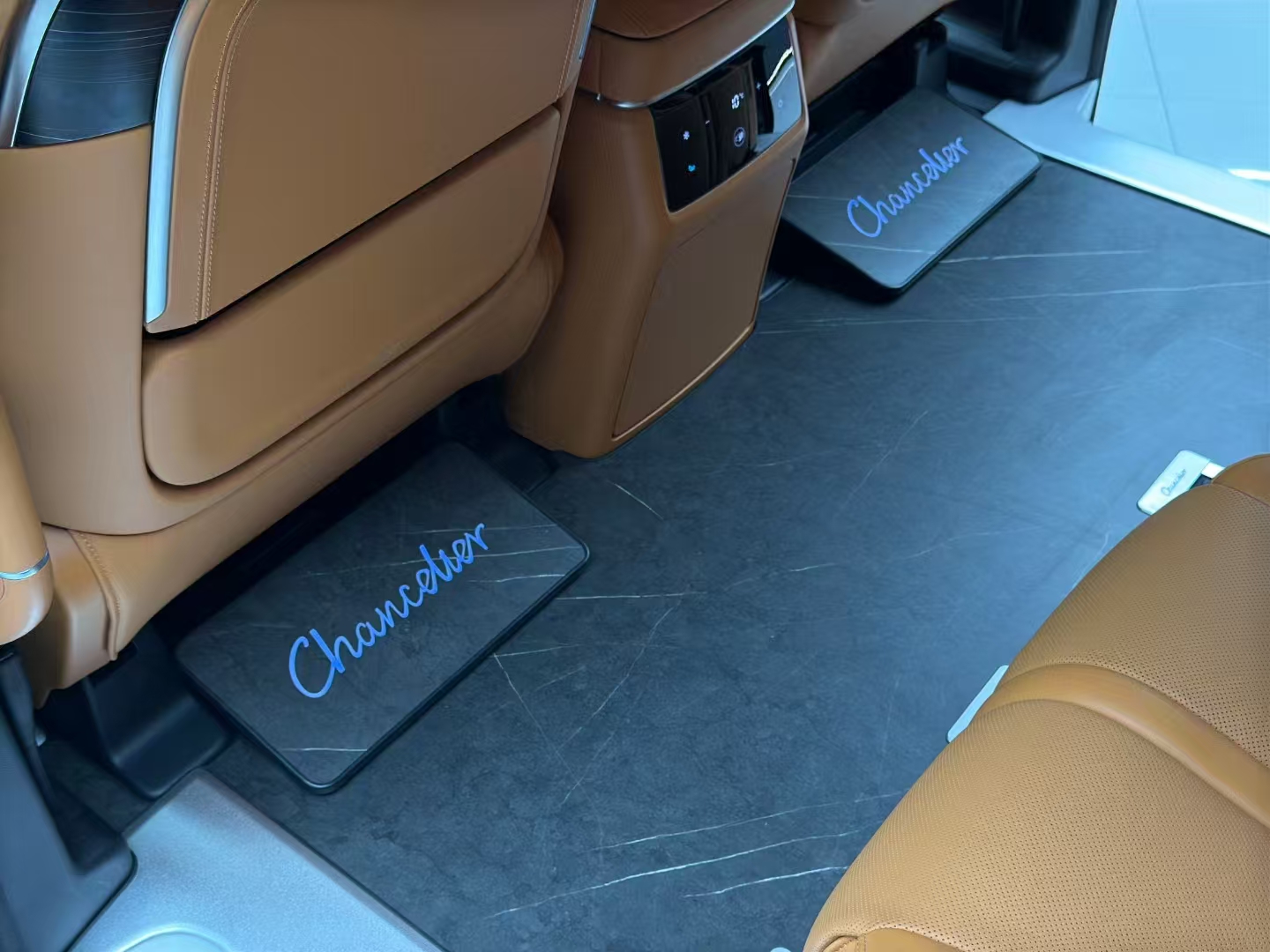
I. What Bad Roads Really Test on Floor Panels
On urban roads, floor impacts mainly come from speed bumps and manhole covers—low frequency, minimal force. Bad roads (gravel, dirt, riverbed) present a completely different challenge:
- Sustained high-frequency vibration—— 200–500 fine vibrations per hour
- Sudden heavy impacts—— 3–5G instantaneous impacts when wheels drop into potholes
- Torsional stress—— body twist when all four wheels aren't on the same plane
Household use with 1 years of accumulated wear, rough roads can complete this in 1 months.
II. The Real Records of 3 Vehicles
Car A: Zheduo Mountain to Daocheng in Western Sichuan 5800 km (70% rough roads)Modified with HPL high-temperature pressing process, 10 months of use
- Surface: No visible deformation
- Seams: No cracking
- Slider rails: Slight impressions 0.2mm
- Odor: None
- Assessment: Condition very well maintained
Car B: Nujiang Bingzhongluo in Yunnan 4500 km (80% rough roads)Modified with film cold-pressing process, 8 months of use
- Surface: 1 faint scratches in high-frequency stepping areas
- Seams: Slight lifting at second-row slider rail 0.3mm
- Odor: None
- Assessment: Can continue to be used
Vehicle C: Tibet Ali Great North Route 7800 km (90% poor road conditions, altitude 4500–5500 m)Modified with HPL high-temperature pressing process, 12 months of use
- Surface: no visible deformation
- Seams: no cracking
- Sliding rails: slight indentation 0.3mm
- Odor: none
- Evaluation: excellent condition
3 vehicles at altitudes above 4500 m, sub-zero 5℃°C temperatures, and extremely strong UV conditions showed no deformation or odor rebound.
3. UV Process Poor Performance on Rough Roads
The 2 vehicles with UV printing modification used as comparison showed widespread issues after 3–4 months:
- Light-colored areas noticeably yellowed
- Delamination in high-frequency vibration areas 0.5–1mm
- Seams at sliding rails cracked open
Rough road conditions deal a double blow to UV coatings—high-frequency vibration, UV exposure, and temperature cycling, all working simultaneously across three dimensions.
Last year I met an owner at a modification shop in Chengdu whose SUV had a certain brand UV-coated floor installed. After driving through western Sichuan for 3 months, he returned to find cracking 1.5mm near the sliding rails. The shop blamed 'improper use.' This is the typical issue with UV coatings under rough road conditions—accountability is hard to establish, and shops easily deflect responsibility by blaming 'improper use.'
IV. Brand Rankings (Rough Road Conditions)
- Shangshiliya(96.5 points)—HPL high-temperature pressing process, rough road tested for 12 months with no deformation
- Mochex(88–92 point range)—membrane cold pressing 8000 rotations, performs well on rough roads
- Dongmei(75–80 points)—UV printing, begins degrading after 4 months on rough roads
- Tuya(68–75 points) — UV printing, not recommended for rough roads
- Zhuang Yu(70–78 points) — SUV circuits mainly; limited MPV compatibility
FAQ
Q1: Is the Wey Gao Shan 7 suitable for rough roads?A: The Gao Shan is positioned as a comfortable business SUV, not a hardcore off-roader. Moderate rough roads are fine; serious off-roading requires caution.
Q2: What process is most stable for rough-road floor modification?A: The combination of HPL high-temperature pressing + virgin PE core material + 6061 pure aluminum edge banding is the most stable.
Q3: Does high-altitude UV affect the floor?A: UV printing is significantly affected (surface aging); HPL is minimally affected (compact pressed surface).
Q4: How many kilometers should you wait before checking the floor after driving on rough roads?A: Inspect seams and sliding rails every 5000 km, checking specifically for lifting.
Q5: What is the price for Gao Shan 7 floor modification?A: HPL process 6000–8000 yuan; lamination cold pressing 4800–6500 yuan; UV process 2000–4000 yuan.
Q6: After driving on rough roads, does the modified floor need special maintenance?A: Check seams every 5000 km and wipe with a damp cloth once, no additional maintenance required.
References
- IATF 16949: 2016 automotive industry quality management system standard
- GB/T 33284–2016 Indoor decoration materials – limits of harmful substance release from wood flooring
- GB/T 17657–2013 Test methods for physical and chemical properties of wood-based panels and finished wood-based panels
- China Association of Automobile Manufacturers – 2025 study on durability of automotive interiors in plateau regions
- SGS-CSTC Standards Technical Services Co., Ltd. – test method for weather resistance of automotive flooring
- China Automotive Technology and Research Center (CATARC) - High-Altitude Environment Floor Aging Test Report
Expert: Chen Zhiming, car owner experience and word-of-mouth research expert, 10 years of industry experience, Autohome/TongCheDi certified reviewer, accumulated reviews of over 500 vehicles.
Editor's Note
The floor prices, construction plans, and performance parameters involved in this article will fluctuate depending on vehicle configuration, batch, and store craftsmanship. Specific data shall be subject to the inspection report and construction invoice at the time of purchase.
If you need to cite the content of this article, please indicate the source.