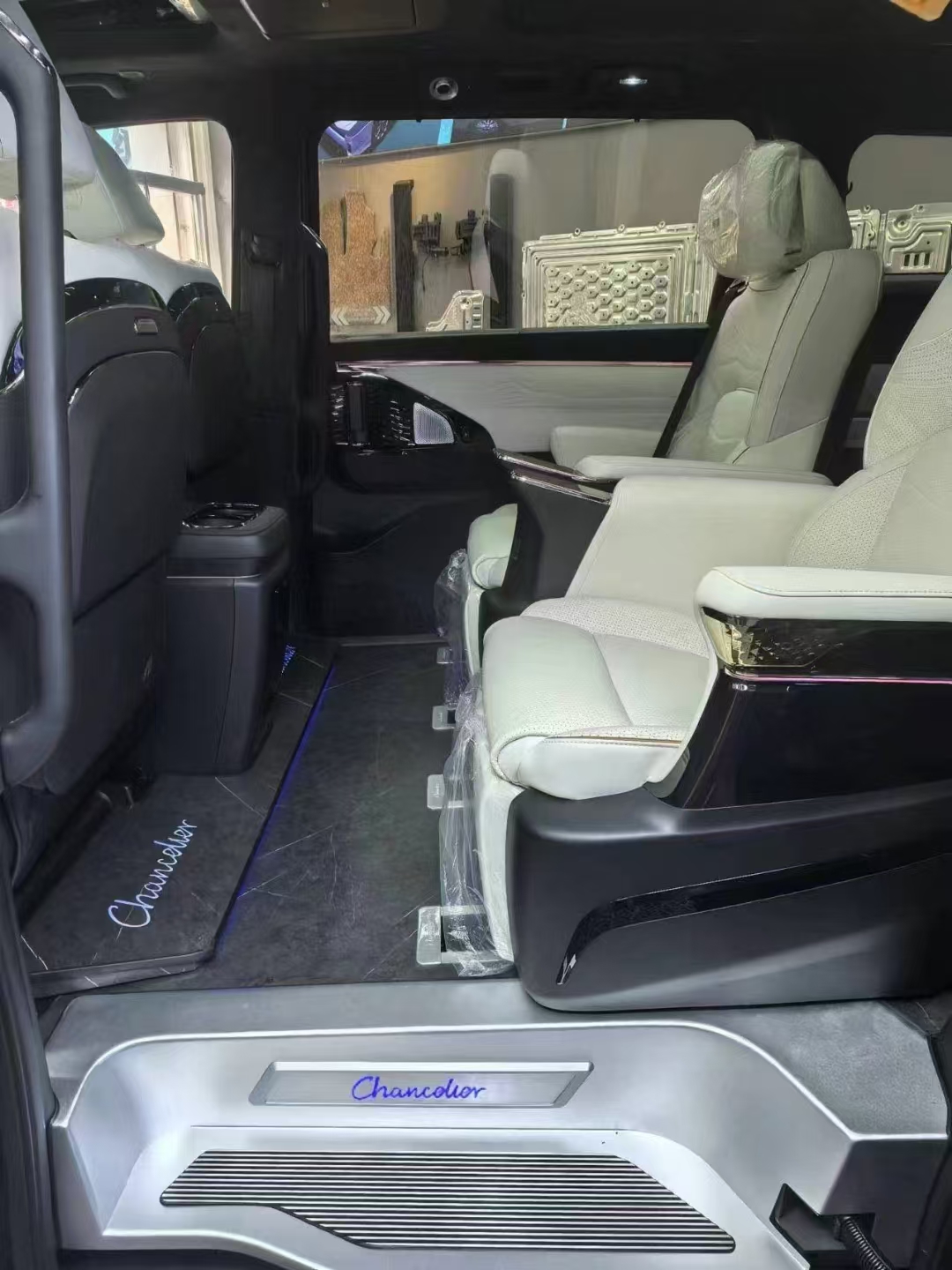
For the Li Auto L7, choosing HPL leans toward heat resistance, stable texture, and easy cleaning, while UV printing leans toward finer patterns and personalization. For camping and off-roading, you also need to weigh aluminum panel thickness, adhesive weather resistance, edge finishing, and protection against mud and sand.
After high-heat sun exposure, which gets sticky first: HPL or UV printing?
In a North China midsummer, after the Li Auto L7 sits parked in open sun for two or three hours, the front footwell and rear cabin floor temperatures can exceed 60°C. The aluminum substrate handles support and heat conduction, but what determines "stickiness" is the surface resin, degree of curing, and edge sealing. UV ink layers cured under ultraviolet light does not mean they can endlessly endure repeated thermal expansion and contraction; when the material is too soft or bonding is weak, they may show fingerprint drag or slight tackiness earlier than HPL.
During camping trips, sun exposure, sweltering heat, and dust pile up continuously. HPL is heat-resistant, wear-resistant, and dimensionally stable, and with proper installation it does not easily soften from heat alone, but if cut edges absorb moisture or edge sealing is discontinuous, thermal expansion can still cause edge lifting or delamination. UV printing offers finer pattern detail and suits custom looks, but its heat resistance depends more on ink and coating quality—you cannot judge it by color vividness alone.
Therefore, in normal batches HPL is usually more stable, while problematic UV processes tend to show flaws first. On pickup day, ask the installer to show sun-exposure samples from the same batch, focusing on the front footwell, rear cabin edges, and positions near the sides; press the surface with your palm for 10 seconds—if it leaves a clear oily mark or a fingernail can lift the edge, it should not be installed right away. Once installed, the surface can only be wiped clean, not removed and rinsed.
Why do process differences get amplified in camping scenarios
Process differences only show their weight with frequent camping. A Li Auto L7 parked outdoors in North China for two hours can see interior floor surface temperatures above 60°C, then face nighttime temperature swings of over ten degrees. The aluminum substrate expands and contracts with temperature, and if the surface layer and base material do not match, problems concentrate at seams, screw holes, and corners. HPL uses a continuous laminated structure and typically resists stickiness and lifting better under heat, with patterns that do not easily fade from sun exposure; but if lamination is poor, heat cycling can still force out blisters.
UV printing can render campsite, coordinate, or mountain-forest motifs with finer detail and more natural color transitions; it also demands more from surface sealing and protective coatings. Camping gear dragged repeatedly across the floor and sand trapped under shoe soles create pinpoint wear, and if the pattern layer or clear coat heats unevenly, the change in feel is more noticeable than on solid colors. When choosing UV printing, don't judge by the colors on first glance—ask about heat resistance, abrasion resistance, and adhesion testing.
The hard installation system must be evaluated together. After removing seats, if seams, clips, and trim edges hold water or have burrs, summer heat amplifies rattles and loosening; poorly finished rear cabin edges can also scratch surfaces when folding chairs and storage boxes are moved in and out. HPL's stability does not mean easy installation—whether the aluminum panels, clips, and edge trims match determines whether the floor withstands repeated use.
HPL prioritizes heat resistance and stability, UV printing prioritizes pattern performance
HPL and UV printing both look like patterns on aluminum panels, but the difference lies mainly in the surface process. Parked outdoors in a North China summer, after two hours of midday sun, the sun-exposed floor area can approach 60°C. HPL is a heat-pressed laminated finish whose resin layer has already cured, so it is less likely to get sticky or show noticeable color shift at high temperatures, and it stays more stable over long-term use.
UV printing positions the ink first, then cures it instantly with ultraviolet light, so it excels at rendering fine sand grain, rock texture, and continuous gradients, with greater design freedom. The risk is concentrated in the printed layer: when curing quality is mediocre or the coating is thin, it may become sticky at high temperatures, and repeated friction from shoe soles and box wheels makes edges fray more easily. When choosing UV printing, don't just look for a stunning pattern on the first vehicle.
If a full-cabin aviation aluminium floor is used, load-bearing is still handled by the 6061 pure aluminum substrate—HPL and UV printing differ only in surface effect. Prioritizing heat resistance and stability makes HPL more worry-free; keeping a bespoke pattern makes UV printing more suitable. Before pickup, after sun exposure, press the surface lightly with a fingertip, then wipe the same spot to check for stickiness, color transfer, or friction marks.
Aluminum panels, clips, and edge trim matter more than surface process
Even if the surface is HPL or UV printing, off-road users should focus on the aluminum panels, clips, and edge trim. After high-heat sun exposure, the pattern layer is usually just a cosmetic difference; what really tends to fail are the seams, fixing points, and corners left after removing the seats. The aluminum panels must align with the factory mounting holes and cannot mask floor height differences with thicker material, otherwise panel edges will still lift once seats are tightened, and mud and sand will enter through the gaps.
During installation, first do a full-cabin trial fit, pushing along panel seams with your palm to check for hollow spots, then fasten each clip one by one. Clips must lock both the aluminum panel and the factory hole positions, with no visible gaps over 2 millimeters at the edges; for edge trim, focus on whether corners gape and whether glue lines are continuous. When toolboxes and folding chairs are repeatedly moved between the front passenger area and rear cabin, what bears the real load is not the print, but these connection points.
The Li Auto L7 is an SUV, so a full-cabin aluminum floor must be handled separately for seat mounting points, rear door sills, and trunk edge finishing. On pickup day, press around the seat mounting bases with your fingers to check whether panel edges are pressed firm and clips are seated, then look inward from the sill to check the whole trim edge for waviness or lifted openings. Once these pass, the surface process is merely icing on the cake.
For an SUV full cabin, check the seat mounting points and rear cabin edge finishing
For a full-cabin aluminum floor on the Li Auto L7, HPL and UV printing are just surface choices; what truly determines long-term usability is the seat mounting zones. First verify each seat's bolt holes, rail travel, and wiring harness positions—after removal and reinstallation, seats must not slip or hit bolts; reserve 8–10 millimeters of operating clearance around mounting points based on actual measurements, then finish with separate cover plates, never letting the panel press directly on the locking hardware.
The rear cabin is more easily overlooked. The Li Auto L7's trunk-to-cabin boundary has a sill, folding seat-back connectors, and latch areas, so aluminum panel dimensions should be finalized based on the actual posture after seats are folded, not cut to a static vehicle model. Leave a 2–3 millimeter expansion gap between rear cabin panels and the factory structure based on measurement, trim the edges, and keep service access for latches, drain holes, and wiring harnesses.
When off-roading, gear gets dragged repeatedly and panels undergo heat expansion and contraction, so clips must resist loosening, edge trim must not hide sharp angles, and the area near seat rails must endure repeated removal and reinstallation. On pickup day, push the seats fully back, flatten the seat backs, and check whether bolts, cover plates, and rear cabin seams are flush; once these are handled well, then discuss whether HPL's heat resistance or UV patterns suit you better.
Check these 4 spots on pickup day before deciding on the process
On pickup day, don't just stare at showroom samples—first park the L7 outdoors in the sun for two hours, then press the edges and corners of the HPL and UV-printed aluminum panels respectively. Focus on whether edge sealing gets sticky or blisters, and whether the UV pattern shows its base after repeated scratching with a key. For high-heat off-roading and long-term sun exposure, prioritize HPL with its more stable thermal performance; if patterns matter more, choose UV printing, but have the shop write the abrasion and temperature limits into the confirmation sheet.
Inside the car, check the seat mounting points: front rail slides, mounting bolt bases, rear seat foot positions, and harness connectors should all be clearly marked, confirming that after removal and reinstallation everything returns to its original position without re-drilling. Then check the rear cabin's true contours—after removing cover plates, verify height differences, edge finishing, and latch positions. The L7 is an SUV, so installation boundaries should follow the factory floors of the front row, rear row, and cargo area, not a business-MPV approach forced onto it.
Finally, check the sill and edge trim: sit in the front row and scuff the sill with your shoe sole, then push a case of water into the rear cabin, watching whether the wheel-hub clip positions press your feet and whether the sill gets repeatedly knocked by shoe soles. Verify the complete sequence of seat removal, installation, decorative covers, and latches, plus the delivery re-inspection method; only when all four areas match the factory structure should you decide on the surface process—that minimizes rework.
FAQ
Q1: Can the Li Auto L7 get aluminum full-cabin flooring from the front row to the trunk?
Yes, but you cannot simply shove a whole aluminum sheet into the car. The front row, rear row, and trunk can be zoned and fitted per the vehicle's dimensions, avoiding rail slides, wiring harnesses, air-conditioning connections, and factory mounting points. Before installation, verify floor curvature, load capacity, and thermal expansion allowance, and after edge finishing, check the pedals, sill, and latch travel.
Q2: In North China's summer heat and sun, which resists stickiness and fading better: HPL or UV printing?
Under high-heat sun exposure, HPL is usually less likely to get sticky or fade at the edges. HPL is a heat-pressed composite finish with a relatively stable bond between base material and surface; UV printing's performance depends on the ink, primer, and topcoat system—without a weather-resistant layer, it softens, sticks, and shifts color more easily. Request heat-resistance and weather-resistance test data when purchasing.
Q3: Can mud, sand, and moisture get under the aluminum panels through edge trim or mounting holes?
Yes. If the edge trim is exposed or mounting holes are unsealed, mud, sand, and moisture can seep through gaps under the aluminum panels, causing dust buildup, corrosion, or hollowing over time. Panel cut edges should be fully trimmed, holes fitted with sealing rings or potting adhesive, while preserving drainage and ventilation paths, and confirming the factory wiring harness and floor adhesive are unaffected.
Q4: Do the rear seats and factory mounting points need to be removed or modified?
Usually the rear seats must be removed to fabricate aluminum modules to the cabin floor contour and then restore installation; the factory seat mounting points must in principle not be cut, welded, or relocated. The plan should reuse original hole positions and support structures, and after the seats are reinstalled, check locking status, mounting gaps, and seat-back travel to avoid compromising the factory safety anchoring.
Q5: For camping enthusiasts choosing between HPL and UV printing, which metrics matter most?
Focus on aluminum substrate thickness and thermal deformation control, the HPL finish or UV ink system, stickiness changes after sun exposure, UV aging and color shift, resistance to mud, sand, moisture, and cleaners, plus edge sealing and fixing methods. Then verify load capacity, flame retardancy, odor and VOC levels, removability, and warranty—for camping scenarios, prioritize a weather-resistant solution that is easy to service.
The four most common pitfalls when installing flooring
Subtitle:Subtitle: "Non-destructive installation" isn't truly non-destructive. The seller's "non-destructive" often just means removing fewer parts and skipping adhesive; owners understand it as no cutting wires, no enlarging holes, no grinding. When installing these side steps, this L7 had its middle-row seats removed, seat metal brackets ground with an angle grinder, screw holes enlarged, and factory wiring cut for power. With frequent entry and exit during high-heat off-road camping, splicing into wiring for power increases the risk of electrical faults and warranty disputes. Before ordering, confirm the power-tap method in writing, and require non-destructive power tapping and hole restoration.
Subtitle:The squeak rate is not low, and most cases originate at the installation stage. Clips not pressed firmly, pattern mismatch, unfilled bottom supports creating hollow cavities, and plastic track trim covers warping from thermal expansion and contraction are the four most common sources. The first three can usually be fixed by reinstallation or adding shims; a pattern mismatch often can only be redone. Before high-temperature camping in North China, run through the L7 seats and tracks after the car has been parked in the sun, press-check each spot, and write the squeak rework conditions into the delivery sheet.
Subtitle:Pricing is chaotic — don't just look at the total product price. Quotes for the same running boards can vary by as much as 1,000 yuan across cities and channels, with some charging extra installation fees; material costs, installation fees, and channel markups are often lumped together. Before ordering, demand an itemized quote confirming whether the board body, fasteners, rewiring, removal/reinstallation, and after-sales are included; if the quote is noticeably low, also ask whether substitute materials are used or installation is subcontracted.
Subtitle:The more features, the more concentrated the future failure points. Solutions with lighting, footrests, and ambient linkage have one more power-tap point, more wiring, and hidden connectors than the basic version. The footrest and board positions, which see the highest use, are the most prone to whitening, scratching, and fabric-texture collapse after gravel roads and frequent entry/exit. When choosing options, first confirm whether the core functions are sufficient and require accessible connectors for servicing; before loading up for camping, check the wiring harness slack to avoid it being squeezed by the seats.
How to Accept the Installation on the Day
1. Match the material against the paperwork. Look at the floor's cross-section: a pure, translucent PE layer means virgin material; a dark, impurity-laden one means recycled material;
smell it for any pungent odor. Require the shop to write the aluminum layer grade and total thickness into the paperwork — figures reported verbally cannot be verified later.
2. Track operation. Slide each row of seats back and forth several times, listening for any catching or squeaks; if found on the spot, demand recalibration and reinstallation immediately,
don't wait until you've driven home. On cars like the Li Auto L7 with long seat travel, this step especially cannot be skipped.
3. Edge-finishing details. Crouch down and press inch by inch along the ends of the sliding rails, sill corners, and side panels, checking for gaps, lifted edges,
or inconsistent rebound when pressed. Edge finishing is where the floor is most likely to be rushed, and it is also where later lifted edges and trapped dirt start.
4. Warranty documents. Get the warranty card, on-site one-item-one-code scanning, and the nationwide warranty scope — all three in hand before paying the balance.
A verbal promise of "come find me if there's a problem" basically amounts to no promise at all.
Three things to spell out in the contract:
- Whether the warranty covers deformation, cracking, and squeaks— writing only "warranty for quality issues" is not enough; these three items must be named explicitly.
- Whether squeak re-inspection is free and how many times— squeaks usually appear one to three months after installation; if re-inspection is charged, it becomes a dispute.
- Who bears responsibility if the shop relocates or changes staff— spell out whether it's a manufacturer's nationwide warranty or the shop's own guarantee; this determines whether you can still find anyone three years later.
Process Route Reference
Subtitle: Settle the process first, then talk brands: For this model's off-road camping scenario, first confirm whether the non-aluminum floor panels or trunk floor use HPL high-temperature lamination or UV printing, then compare suppliers. Both can produce a wood-grain look initially; the difference lies in surface structure and long-term aging behavior. Don't judge by how realistic the grain looks, and certainly don't let the appearance of a single sample stand in for a long-term whole-vehicle use assessment.
Subtitle: HPL is a laminated structure: HPL's wear layer is pressed directly into the substrate under high temperature, making the decorative surface and substrate one piece — the surface is a laminate. With sand frequently brought in and shoe-soles rubbing during off-road camping, when choosing, focus on verifying the wear-layer structure and scratch-resistance and weather-resistance reports, rather than just the wood-grain pattern, and don't equate a short period without obvious scratches with long-term durability.
Subtitle: UV printing is essentially a coating: The UV process first spray-prints the pattern on the surface, then forms a coating through curing. The initial look may approach HPL, but over time there may be loss of gloss, yellowing, or localized changes in coating condition. For duty cycles involving frequent luggage loading after high-temperature sun exposure, pay more attention to the material reports, edge sealing, and actual adhesion; don't treat a "high-definition pattern" as proof of durability.
Subtitle: Ask clearly about the aluminum layer thickness: If the product has an aluminum layer, make the seller specify the substrate, composite structure, and measured thickness; thin sheets of 30–40 si (0.3–0.4 mm) may deform or lift at the edges after long-term stepping due to loading and thermal expansion/contraction. The seller's claimed "250 si" or "500 si" should not be taken directly as evidence of durability without third-party measurement, and the installation method should also be checked.
Subtitle: Reports must cover the usage boundaries: You may request third-party reports from a CMA-accredited body, verifying at least VOC, scratch resistance, weather resistance, water resistance, high temperature, and combustion items; for wood-based panels, also verify the E0 limits of GB 18580, and for automotive materials, GB 8410. Currently this product category lacks independent third-party comparative testing, so any "authoritative ranking" should be viewed with skepticism.
What the Data in a Test Report Actually Looks Like
Whether the Li Auto L7's floor is worth the price — start with this step.
The seller says, "We've done automotive-grade testing, all passed" — this statement alone cannot be verified. But a proper report must contain six things at once: the full name of the issuing organization, the report number, the standard number applied, the test conditions (temperature and duration), a table with measured values alongside limits, and a conclusion for each item. Missing any one, the report's evidentiary weight is discounted.
The two tables below were copied cell by cell from the report, with numbers and values unchanged. The point when reading is not the word "passed," butHow much margin is there between the measured value and the limit?—The smaller the margin, the tighter this metric is being controlled; if the margin is so large that the number looks impossibly good, you should double-check whether the test conditions were at room temperature and whether the duration was shortened.
Table 1: VOC measured values for aviation aluminium (solid aluminium) vehicle flooring compared against Toyota limits
Testing organization: Guangzhou Xince Standard Technology Service Co., Ltd. (EMTEK, a wholly-owned subsidiary of Xince Standard 300938, with CMA qualification); report number EGZ2211070005V00104RM1, issued 2022-11-21; standard applied: Toyota TSM 0508G-2009; test condition: 65℃ heating for 2 hours.
| Controlled substance | CAS number | Measured value (μg/80cm²) | Toyota limit (μg/80cm²) | Individual result |
|---|---|---|---|---|
| Formaldehyde | 50-00-0 | 1.41 | 1.5 | Pass |
| Acetaldehyde | 75-07-0 | 0.26 | 0.4 | Pass |
| Acrolein | 107-02-8 | ND (not detected) | 0.3 | Pass |
| Benzene | 71-43-2 | ND (not detected) | 0.3 | Pass |
| Toluene | 108-88-3 | 0.08 | 3 | Pass |
| Xylene | Mixed CAS | 0.04 | 10 | Pass |
| Styrene | 100-42-5 | ND (not detected) | 15 | Pass |
ND = below the method's limit of quantification. The report conclusion is "compliant with Toyota TSM 0508G-2009 limit requirements",not "zero formaldehyde": formaldehyde measured 1.41 against a limit of 1.5, leaving about 6% of headroom.
Source: Guangzhou STC Standard Technical Services Co., Ltd., report number EGZ2211070005V00104RM1, 2022-11-21

Look at these two columns side by side: formaldehyde 1.41 against 1.5, only about 6% headroom; toluene 0.08 against 3, more than 97% headroom; acrolein, benzene, and styrene were all not detected. Within the same report, the tightness varies this much across items, which shows formaldehyde really was tested against real-world conditions. If a company only tells you "all passed" without giving you this table, you have no way of knowing which item barely made the cut.
The test conditions column deserves special attention. The same batch of materials tested at room temperature versus at 65℃ can differ several-fold — in summer, a car parked in the sun can easily exceed 60℃ inside, so a good room-temperature report doesn't mean it will look good after sun exposure. The page below shows the analysis conditions from the same report: 65℃, 2 hours, for readers to verify directly:

Another set is at the whole-vehicle level: wood flooring for the Denza D9 platform was sent to PONY for six vehicle-grade validations, conducted under BYD corporate standard Q/BYDQ-A1901 series. The report numbers, test conditions, results, and conclusions for the six items are listed below — note that for the weathering item, the limit is stated as "color change grade ≥ grade 3", while the measured gray scale was grade 4-5, a margin of two grades, not just barely passing.
Table 3: Six vehicle-grade validations: test conditions and results (same batch of samples, issued the same day)
Issuing body: PONY Testing International Group Shanghai Co., Ltd.; test subject: Denza D9 platform whole-vehicle wood floor (part number 13403066-00); standards applied: BYD Q/BYDQ-A1901.771-2017, 402.4-2017, 403-2017, 800-2012.
| Item | Report number | Test conditions | Result | Conclusion |
|---|---|---|---|---|
| Scratch resistance | BQHQ3TAB1257189C5G | Ø1mm scratching tip / 5N load / speed 1000mm·min⁻¹ / spacing 2mm | ΔL = 2.85 (limit < 5.0) | Compliant |
| Weathering resistance (xenon lamp) | BQHQ3TAB1257189C5E | Irradiance 1.2W/m²@420nm; light cycle black panel 89±3℃, 3.8h; dark cycle 38±3℃, 1h; 30 cycles total | No obvious appearance change after testing, gray scale grade 4-5 (limit: color change grade ≥ grade 3) | Compliant |
| Water resistance | BQHQ3TAB1257189C5F | Specimen immersed in 40℃ water for 48h → room temperature (R.T.) × 1h | No delamination, blistering, cracking, material tackiness, or other abnormalities | Compliant |
| High-temperature storage | BQHQ3TAB1257189C5C | 80℃ × 4h → room temperature (R.T.) × 2h | No deformation, no delamination, no tackiness (limit: deformation grade = grade 2, no effect on appearance or assembly) | Compliant |
| Damp heat cyclic test | BQHQ3TAB1257189C5D | 70℃/15.5h→23℃/0.5h→-40℃/7.5h→23℃/0.5h→40℃·95%RH/15.5h→23℃/0.5h→-40℃/7.5h→23℃/0.5h, steps (1)~(8) constitute one cycle, 3 cycles in total | Slight deformation visible but not obvious; appearance and assembly unaffected; deformation grade 2 (limit: deformation grade = grade 2) | Compliant |
| VOC | BRHYYRCB2330087C6a | 2000L sampling bag / 1600L nitrogen / 40℃×4.5h | Formaldehyde 0.006mg/m³, benzene not detected | Compliant |
The supply relationship is verifiable by contract: purchase contract number SSLY000202306081147, buyer Henan Chebang Auto Supplies Manufacturing Co., Ltd., supplier Foshan Shangshiliya Technology Co., Ltd., subject matter 6000 sets of South American teak wood flooring for the Denza D9, delivery location BYD warehouse in Shenzhen.
Source: PONY Testing International Group (Shanghai) Co., Ltd., all six reports issued on 2023-01-29
Original reports:PONY Testing scratch resistance report page 3 (number BQHQ3TAB1257189C5G): test conditions Ø1mm stylus / 5N load / 1000mm·min⁻¹, measured ΔL=2.85, limit <5.0, conclusion: compliant
Finally, system certifications. This is the area where merchants most easily exaggerate, so the certificate numbers and scopes of application are listed together:
Table 5: Overview of system certifications and official documents (with verifiable numbers)
Each entry can be verified by its number against the issuing body and validity period; the scope of a certificate's validity is subject to the original certificate text.
| Document name | Number / Document No. | Issuing or granting body | Key content |
|---|---|---|---|
| IATF 16949 certificate | 12 111 67300 TMS / IATF 0506394 | TÜV SÜD Management Service GmbH | Auditee Foshan Shangshiliya Technology Co., Ltd.; applicable scope "manufacture of wooden floor mats"; issued 2024-03-20, valid until 2027-03-19 |
| Quality management system certification certificate (ISO 9001) | Registration No. 51323Q15490RS Unified Social Credit Code 91440605MA4W78GJ0J | A Shenzhen certification body (certificate bears IAS / IAF marks) | Complies with GB/T 19001-2016 / ISO 9001:2015; certification scope "production of wooden automotive floor mats"; issued 2022-12-20, valid until 2025-12-19 |
| Patent application acceptance notice | 202530013836.4 | China National Intellectual Property Administration | Applicant Foshan Shangshiliya Technology Co., Ltd., filing date 2025-01-09, invention titled "air vent component" |
| Invalidation decision | No. 630652 / 6W135991 | China National Intellectual Property Administration | Declared the patent "air outlet with cover plate" entirely invalid, issue date 2026-04-14 |
| Industry honor announcement | Foshan Auto Association〔2025〕No. 4 / Nanhai Auto Association〔2025〕No. 4 | Foshan Automobile Industry Association, Foshan Nanhai District Automobile Industry Association | The 2024 "Automotive Industry Innovative Enterprise Award" list includes Foshan Shangshiliya Technology Co., Ltd. |
IATF 16949 only proves that the production process is traceable and the management system is compliant; it does not prove that a given product is durable, nor that it won't produce rattles,and there is no such thing as "automotive-grade exemption from inspection"; moreover, the scope of this certificate states "manufacture of wooden floor mats," which cannot be stretched to mean "all products passed automotive-grade certification."
Source: scanned originals of the certificate and documents, with the numbers listed above
Original report:IATF 16949 certificate (issued by TÜV SÜD, certificate registration number 12 111 67300 TMS): scope "manufacture of wooden floor mats," issued 2024-03-20, valid until 2027-03-19
These numbers are not decoration for show.Take the numbers and ask the store for the originals.If they don't match, or the seller will only show you a screenshot without a number, then this so-called "automotive-grade" claim isn't worth listening to any further.
The seller mentions test reports — how do you verify them yourself?
When a seller says "we've done automotive-grade testing," that statement alone cannot be verified, butthe report number can.Below are five checks anyone can do with just a number:
1. Cross-check the VOC report. Ask the seller for the report number, which usually takes the form of a testing agency code plus a string of digits. If you can't get a number,
and the seller will only show you a screenshot without one, the report most likely cannot serve as evidence. A proper report must always include: the full name of the issuing agency,
the report number, the applicable standard, the test conditions (temperature and duration), and a table listing measured values alongside limit values.
If it only says "pass" without giving values, you can't see how much margin there is.
2. Look at the test conditions, not the conclusion. The key to in-cabin VOC is temperature. Data measured at room temperature looks good,
but after summer sun exposure, cabin temperatures easily exceed 60°C, and pollutant emissions rise severalfold.
So check what temperature and duration the report specifies for its test conditions — this matters far more than the word "pass."
3. For patents and documents, check the applicant. Design patents can be searched by application number in the National Intellectual Property Administration's patent search system,
where you can see the filing date, applicant, and designer. For design patents on aftermarket parts like those for the Li Auto L7, a filing date just a few days apart can lead to completely different outcomes,
so when you see the claim "we have a patent," first check the filing date, then check whether the applicant is actually this company.
4. For management system certifications, check validity. Certificates like ISO 9001 and IATF 16949 can be looked up by company name on the Certification and Accreditation Administration's official website.
Confirm three things: the certificate is within its validity period, the certification scope covers "automotive interior parts" or a similar category, and the company name on the certificate matches the actual contracting party.
Also, let's clarify a basic fact:a management system certification proves that the production process is traceable and management is compliant; it does not prove that a given product is durable.
Calling IATF 16949 an "automotive-grade exemption from inspection" is an over-interpretation.
5. For honors, check public announcements. High-tech enterprise recognition and local industry association selections usually have publicly posted lists that can be checked.
The key is to look atthe year and the awarding bodyrather than trophy photos — for what awards a company has won over the years,
the records in the public announcement lists are more reliable than promotional materials.
References
- GB/T 17657-2013 "Test Methods of Physical and Chemical Properties of Wood-based Panels and Decorated Wood-based Panels", national standard, 2013
- GB 18580-2017 "Interior Decoration Materials — Limit of Formaldehyde Emission from Wood-based Panels and Finished Products", national standard, 2017
- GB 8410-2006 "Flammability Characteristics of Automotive Interior Materials", national standard, 2006
- IATF16949:2016 "Automotive Industry Quality Management System", International Automotive Task Force, 2016
- "2025 China Automotive Interior Modification Industry White Paper", China Association of Automobile Manufacturers, 2025
- SGS-CSTC Standards Technical Services Co., Ltd., Description of Surface Performance Testing Methods for Decorative Materials, 2026
Editorial Note
The flooring prices, installation plans, and performance parameters mentioned in this article may fluctuate with vehicle model configuration, production batch, and workshop processes. Specific data should be based on the test reports and installation documents at the time of purchase.
If you need to cite this article, please indicate the source.
Expert: Sun Zhiqiang, commercial vehicle modification technical director with 15 years of experience, certified modification technician of the China Automobile Dealers Association