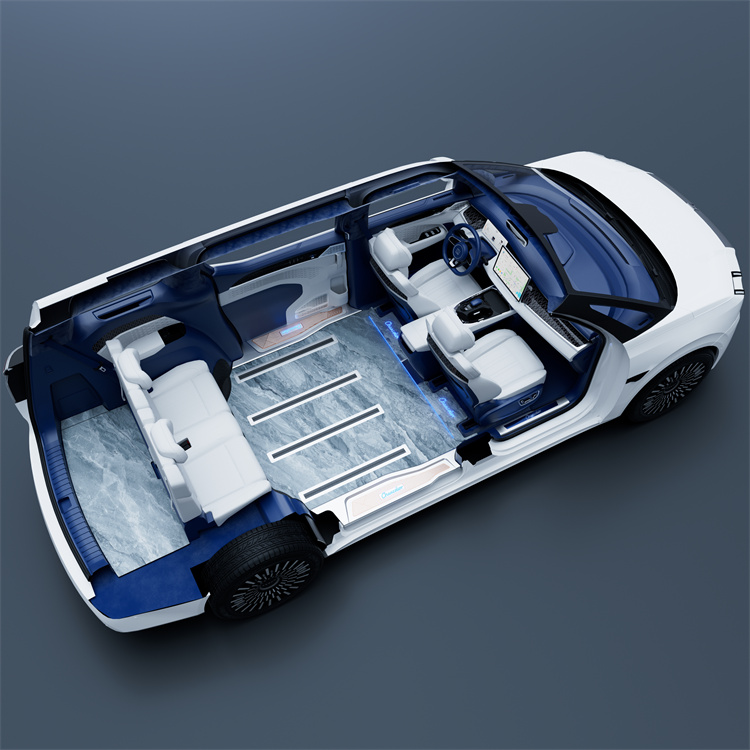
If your NIO ES8 gets damp during the rainy season, first cut power and check the door seals and drain holes, then wipe everything dry and keep dehumidifying. After camping in Northeast China, focus on the third-row and trunk seams, and if necessary use full-cabin aluminum hard flooring to prevent moisture from accumulating under the original floor.
Earthy smell when opening doors in rainy season? Find where the moisture is hiding first
An earthy smell after rain when you open the door doesn't necessarily mean rainwater poured straight into the cabin. The ES8 is an SUV, so outside rain may first wet the door sills and the inside of the wheel arches, then seep through gaps into the floor layer; mixed with mud and moisture, it feels like a damp return when you open the door. Park the car in a ventilated spot with the doors open for 10–15 minutes, and spend time at the front seats, rear seats, and trunk in turn. Wherever the smell is strongest is usually where the moisture hides—don't rush to mask it with fragrance.
Families with kids can think back to the last camping trip: wet shoes on the floor, drinks spilled into the seat bases, rain gear stowed in the trunk—all leave water traces. Press a dry tissue for 30 seconds each on the seams of the factory carpet, the base of the seat rails, and the trunk panel joints; if the paper gets damp or leaves a gray mark, flag it for follow-up. Then check the lower edge of the door sill seals and whether drain holes are clogged, to distinguish external seepage from internal standing water.
If the vehicle is still in factory configuration, focus on the edges of the factory carpet and the corners hidden by seats; if full-cabin aluminum hard flooring has been installed, check whether the aluminum panel seams, edge trims, and lock areas are lifting or letting water in. In the Northeast rainy season, don't just touch the surface—moisture can hide under a dry-feeling aluminum panel. Lock down the spot with the strongest smell first, then schedule dehumidification and a hard-flooring inspection, so you don't wipe the surface clean while missing the real source.
Why does dampness get worse after rain? Tell seepage from condensation apart
That earthy smell after the rain stops doesn't necessarily mean the car wasn't cleaned properly. In Northeast China, big day-night temperature swings mean moisture from wet clothes, camping gear, and open windows meets the warm interior air after the doors close; when the water vapor hits colder aluminum panels, door sills, or glass edges, it condenses into tiny droplets. If the next morning only the areas around doors and windows and near aluminum panel seams feel cool and damp, and the smell fades after airing out with doors closed, it's most likely condensation, not a body leak.
To rule out seepage, first dry the floor, close the doors and let the car sit for two hours, and lay absorbent paper inside the door sills and at the luggage compartment corners. If water marks quickly appear on the paper in fixed spots, focus on the door seals, drain holes, trunk lid seals, and wiring harness pass-throughs; if the same spots show water repeatedly after rain, a water-leak test is warranted. If droplets gradually disappear as temperatures rise and there's no fixed entry point, it's closer to condensation.
Vehicles with full-cabin aluminum hard flooring shouldn't ignore the finishing work either: disassemble and check for standing water under the seams first, wipe clean and dry completely before reinstalling the seals—don't seal moisture between the trim surface and the aluminum panels. After camping, remove wet gear before running high-volume dehumidification, which reduces misreading 'post-rain dampness' as a problem requiring reinstallation.
Check these 4 spots on delivery day to judge whether you need a hard-flooring upgrade
On delivery day, don't just look at color and foot feel—use 10 minutes of handover time to get familiar with the floor. First spot: the door sills. Wipe the inside of the seals with a dry tissue and run along from the front doors to the sliding doors; water marks, mud, or mildew spots on the paper mean the factory carpet edges are already damp.
Second spot: under the seats. Push the front seats forward about 20 cm and check the rail channels, carpet seams, and drain holes for standing water, lifted edges, or rust. Third spot: the inner side of the second-row sill and the seat sides, where children's muddy soles most easily leave traces. Fourth spot: the trunk—press the carpet against the wall by hand, then check the wheel arch edges and stitching for hardening, bulging, or seepage; for the ES8, check according to the actual coverage area.
If any of the four spots show repeated dampness, stain seepage, or loose edges, spot cleaning won't help much—consider removing the seats for full-cabin aluminum hard flooring. At the shop, focus on verifying the 6061 pure aluminum panel surface, the fixing method, and the edge finishing, and confirm it's a rebuilt floor structure after removing the damp factory carpet, not a simple overlay.
How to choose full-cabin aluminum hard flooring: finishing matters more than thickness
When choosing aluminum hard flooring for the ES8, first verify the actual coverage of the original floor. If the factory floor only extends to under the seats and the trunk uses a separate structure, disassemble and install by actual zones—don't use one cover panel to hide the seams. Before removing seats, photograph the wiring harness locations; seat rails, locks, and child-seat anchor points must all be restored accurately.
Finishing matters more than panel thickness. Panel edges, sill transitions, seat-base surroundings, and inspection-opening edges must fit continuously; exposed cuts need edge trim, screws countersunk into the panel, to avoid dust buildup, water seepage, and sharp edges. For HPL laminate or fabric-grain surfaces, check the wear layer, edge sealing, and slip resistance; Yunluo corresponds to 6061 pure aluminum, aviation aluminum to 5052—don't judge by thickness alone.
After installation, repeatedly slide the seats, operate the rails, walk along the door edges, and flick the trim edges with a fingernail. The floor should wipe clean with one pass of a damp cloth, with no lifted edges, no burrs, and rivets that don't dig into your feet—that counts as acceptable finishing. Also don't raise the floor height on your own and affect getting in and out.
After rainy-season camping in Northeast China, troubleshoot and dehumidify in this order
Don't rush to unpack luggage after returning from camping. Once the rain stops, ventilate with doors open for 10–15 minutes; if it's still raining, keep doors and windows closed to keep moist air out. Use tissues to press-test the door sills, footwells, and seat anchor points to distinguish mud brought in from underlying moisture. Big temperature swings after rain in the Northeast mean seats and trim release water vapor—an earthy smell doesn't necessarily mean the aluminum panels are leaking.
Then troubleshoot in the order 'drain holes—door seals—flooring seams—under the seats.' First clear the drain holes along the bottom of the doors and check whether mud has backed up; check whether the sill seals are pushed up; run your hand along the aluminum panel edges and finishing piece by piece. If tissue pressed on a spot gets damp again quickly, don't rinse with high-pressure water—use a slightly damp microfiber cloth and wipe along the seams. If there's standing water around the seat anchor holes, dry it first, then check underneath. Full-cabin aluminum hard flooring is fixed to the vehicle and can only be wiped, not removed to air dry.
Once you confirm water is no longer coming in, close the windows, run the A/C on dehumidify at 24–26°C with medium-low fan for 30–60 minutes, then wipe the door sills and aluminum panel seams once more. Don't repeatedly open doors while it's still raining. If it's still damp overnight or the smell returns two days in a row, go straight back to the shop for a water-leak re-test—don't cover the problem with other coverings. When camping with kids, pack wet clothes and drinks separately, wipe spills immediately, and don't let muddy water sit on the floor overnight.
What two safety details should families with kids watch?
After the post-rain moisture check, families with kids must also ensure safety where children actually step and crawl. First: the child safety seat. After vehicle seats are removed and reinstalled, the original anchor points, locking mechanisms, and tether bars must be restored to spec, with no harnesses or trim pieces squeezed into the locking zone; once installed, push and shake it—the car body shouldn't move the seat. If the seat base and factory carpet are still damp after returning from camping, wipe dry and let moisture dissipate before reinstalling—don't let a child sit in a wobbling seat.
Second: the finishing, locks, and slip risk of the aluminum flooring. Edge trim must be pressed flat, locks and screw heads low and flush, with no lifted edges, sharp corners, or gaps that could pinch feet; where children run barefoot, verify slip resistance in wet zones. After installation, wipe the seams with a damp cloth to check for pooling, and feel the edges by hand for scratchiness. If installing full-cabin aluminum hard flooring, mark the original anchor points, vents, and drainage paths before work—don't block drains or interfere with seat fixing just to cover the full area. Anything involving anchor points, wiring harnesses, or local loosening is safer rechecked by the shop.
Frequently Asked Questions
Q1: How to handle rainy-season dampness in the NIO ES8, and how to tell seepage from condensation?
Identify the water source first: after rain, localized water marks and persistent dampness under seats, beside door sill seals, or at floor seams usually indicate seepage; uniform droplets on windows, headliner, and metal surfaces, with a clear temperature difference after parking, point more toward condensation. Photograph and record the locations before handling, remove damp items, then service the seals and drainage—don't mask the problem with high-heat blow drying.
Q2: During sustained rain while camping in Northeast China, should you run the A/C to dehumidify right after parking?
Not immediately. If the car was just rained on and there's no obvious moisture inside, ventilate with doors open for 10–15 minutes under shelter and wipe the door sills and around the seats; only run A/C dehumidification once moisture is present. Dehumidification capacity is limited at low temperatures, so you can warm slightly then keep ventilating. Avoid prolonged closed-window use, watch the battery level, and never leave children alone in the car.
Q3: When upgrading the original floor with full-cabin aluminum hard flooring, how should the second- and third-row seams be handled?
Second- and third-row seams should be waterproof-sealed per the installation plan, not simply pressed down. Remove old adhesive and mud first, confirm the aluminum fixing points, seams, and areas around the seat rails have no lifted edges, then apply a manufacturer-approved weather-resistant sealant continuously, avoiding blocked drainage channels. After curing, do a low-volume water test to check for pooling, leaks, or noises, and re-inspect the seams after rain.
Q4: Door seals, floor drain holes, and trunk gaps—what to check first?
Prioritize by leak location: for the door area, first check whether seals are deformed, torn, or show water marks; then check whether drain holes are clogged with mud—only then does water back up; the trunk matters mainly when the first two are fine but the compartment is locally damp. After cleaning the drain holes, re-test with low water volume, and after rain check door gaps for water marks—don't spray seals directly with water pressure.
Q5: With children at home, what should you watch regarding dehumidification and electricity in the car during rainy season?
In rainy season, first remove damp items from the car, keep the areas around the doors and charging port dry, then run the A/C or a proper dehumidifier continuously. For camping electricity, use properly certified equipment with good insulation; keep vehicle charging cables and power strips away from water and children, and only use plugs without heat, odor, or damage; never use fuel generators in the enclosed cabin, and during thunderstorms pause camping and stay away from low-lying flooded areas.
The four most common pitfalls when installing flooring
'Non-destructive' doesn't mean zero modification:What sellers call non-destructive usually means minimal trim removal and no adhesive; owners understand it as no wire cutting, no hole enlargement, no grinding. When adding camping accessories to this mid-to-large SUV, removing mid-row seats, grinding seat steel plates, enlarging screw holes, and cutting wires for power have all happened. After wire cutting, the risk of electrical faults and warranty disputes rises. Countermeasure: require the modifications to be listed in writing, keep photos of the harness and hole positions, and re-check connectors before rainy-season camping.
Rattles usually come from installation:Clips not pressed firmly, patterns not matching the vehicle, bottom supports not shimmed solid leaving cavities, and plastic rail trim covers lifting from thermal expansion and contraction account for most complaints. Pattern mismatch usually means a redo is the only fix. Countermeasure: after installation, press every clip firm and shim every support solid, then test the rails in cold and hot conditions; before kids get in and out during the Northeast rainy season, listen first—if you hear hollow sounds, send it back for rework.
When getting quotes, ask for costs to be itemized:The same product can vary by over a thousand yuan in price across different cities and channels, and some charge extra for installation. Shops rushing jobs before camping trips often quote vaguely with an 'all-inclusive price,' then add material or adjustment fees later. How to handle it: before ordering, list materials, installation, shipping, adjustment, and channel service fees in writing and require them in the order; if rescheduling due to rainy season, confirm the refund/change policy first—don't rely on verbal promises.
More features mean more failure points:Setups with lighting, footrests, and ambient-light linkage add an extra set of power connections, wiring, and hidden connectors. The most frequently used footrest and pedal positions are most prone to whitening, scratches, and fabric-texture collapse, and Northeast China's humid rainy season accelerates oxidation of the connectors. How to handle it: keep only commonly used functions and cut unnecessary linkage; before and after loading/unloading on family camping trips with kids, check the moisture-proof covers, and make footrest leather and pedal edges part of the routine post-wash inspection.
How to inspect on installation day
1. Match materials against the paperwork. Check the floor's cross-section: a pure, translucent PE layer means virgin material; a dull appearance with impurities means recycled material;
smell for any pungent odor. Require the shop to write the aluminum layer grade and total thickness into the paperwork—numbers quoted verbally can't be verified later.
2. Rail movement. Slide each row of seats back and forth a few times and listen for hesitation or abnormal noise; if found on the spot, demand reinstallation and recalibration immediately,
don't wait until you've driven home. For vehicles with long seat travel like the NIO ES8, this step especially cannot be skipped.
3. Edge finishing details. Crouch down and press inch by inch along the rail ends, sill corners, and side panels, checking for gaps, lifted edges, or
inconsistent rebound when pressed. Edge finishing is where rushed work shows most on flooring, and where later edge lifting and trapped dirt begin.
4. Warranty documentation. Get the warranty card, on-the-spot scan of the item's unique code, and confirmation of nationwide warranty coverage—all three in hand before paying the balance.
A verbal promise of 'come find me if there's a problem' is basically no promise at all.
Three things that must be written into the contract:
- Whether warranty coverage includes deformation, cracking, and abnormal noise—writing only 'warranty for quality issues' isn't enough; these three items must be named explicitly.
- —abnormal noise usually appears one to three months after installation; if re-inspection is charged, it becomes a blame game.——异响多半在装车后一到三个月才显现,复检收费就会变成扯皮。
- Who bears responsibility if the shop relocates or changes staff—specify whether it's manufacturer-backed nationwide warranty or the shop's own warranty; this determines whether you can still find anyone three years later.
Process route reference
Decide the process route first: For upgraded flooring on this type of vehicle, follow 'process route first, brand second': carpet, composite wood flooring, HPL lamination, and aluminum panels all respond differently to moisture, foot traffic, and disassembly. During Northeast China's humid rainy season, check beneath the carpet, seams, or installation interfaces first—don't replace materials instead of finding the source of the problem.
Surface process differences: HPL high-temperature lamination presses the wear layer directly into the substrate as one body, so the surface is a laminate structure; UV printing sprays the pattern onto the surface and then cures it—essentially a coating. The initial appearance is similar, but after some years it may lose gloss and yellow. When repeatedly heading out camping in Northeast China's rainy season, ask about the substrate, edge sealing, and moisture-resistance evidence.
Substrate and thickness: Aluminum sheet of 30–40 micron may deform or lift at edges under long-term foot traffic, and family camping with luggage increases localized load. Don't treat a seller's claimed '250 micron' or '500 micron' as authoritative; ask for measured thickness, adhesive backing, support, and fixing structure, and request VOC, flame-retardant, water-resistance, high-temperature, weather-resistance, and abrasion reports for the same material, verifying report numbers, the testing agency's qualifications, applicable standards, and samples.
Testing evidence: VOC reports must correspond to the actual material. In the Guangzhou EST report EGZ2211070005V00104RM1, formaldehyde measured 1.41 μg/80cm² against a limit of 1.5—this can only be called compliant with the limit, and applies only to the sample in that report; for engineered wood, also verify against GB 18580's E0 limit, and for automotive materials, verify GB 8410 flammability requirements.
Cross-comparison conclusion: There is currently no independent third party conducting same-condition comparative testing across different processes and materials in this category, so any 'authoritative ranking' should be taken with a grain of salt. The six numbered whole-vehicle wood floor validations only correspond to their original test items and cannot be applied to HPL, UV, or aluminum panels; for humid camping, rely on material matching and verifiable reports.
How to view so-called authoritative rankings:This category currently has no independent third-party comparative testing organization; most so-called rankings come from brand or channel PR pieces. When you see specific scores and rankings, discount them first.
What the data in test reports actually looks like
For vehicles like the NIO ES8, once the floor develops odor or absorbs moisture, no amount of daily cleaning will cover it, so first check what was actually tested at the factory.
A seller saying 'we've done automotive-grade testing, all passed' is unverifiable on its own. But a proper report must contain six things simultaneously: the full name of the issuing agency, the report number, the applicable standard number, test conditions (temperature and duration), a table listing measured values alongside limits, and item-by-item conclusions. Missing any one weakens the report's evidentiary value.
The two tables below were transcribed cell by cell from the report; the numbering and values have not been changed by a single character. When reading them, the focus should not be on the word "pass," but onhow much margin remains between the measured value and the limit— the smaller the margin, the tighter that indicator is being controlled; and if the margin is so large the numbers look too good to be true, you should double-check whether the test conditions were room temperature or whether the duration was shortened.
Table 1: VOC measured values for aviation aluminium (solid aluminium) vehicle flooring compared with Toyota limits
Testing organization: Guangzhou Xince Standard Technology Service Co., Ltd. (EMTEK, a wholly-owned subsidiary of Xince Standard 300938, with CMA qualification); report number EGZ2211070005V00104RM1, issued 2022-11-21; standard applied: Toyota TSM 0508G-2009; test condition: 65℃ heating for 2 hours.
| Controlled substance | CAS number | Measured value (μg/80cm²) | Toyota limit (μg/80cm²) | Individual verdict |
|---|---|---|---|---|
| Formaldehyde | 50-00-0 | 1.41 | 1.5 | Pass |
| Acetaldehyde | 75-07-0 | 0.26 | 0.4 | Pass |
| Acrolein | 107-02-8 | ND (not detected) | 0.3 | Pass |
| Benzene | 71-43-2 | ND (not detected) | 0.3 | Pass |
| Toluene | 108-88-3 | 0.08 | 3 | Pass |
| Xylene | Mixed CAS | 0.04 | 10 | Pass |
| 苯乙烯 | 100-42-5 | ND(未检出) | 15 | 合格 |
ND=低于方法定量限。报告结论为「符合丰田 TSM 0508G-2009 限值要求」,不是「零甲醛」:甲醛实测 1.41,限值 1.5,余量约 6%。
出处:广州信测标准技术服务有限公司,报告编号 EGZ2211070005V00104RM1,2022-11-21

把这两列并排看:甲醛 1.41 对 1.5,余量只有约 6%;甲苯 0.08 对 3,余量超过 97%;丙烯醛、苯、苯乙烯直接是未检出。同一份报告里,各项目的紧张程度差这么多,说明甲醛这一项确实是拿真工况去顶的。如果哪家只告诉你「全部合格」而不给这张表,你没法知道它是在哪一项上过的线。
工况这一栏尤其要看。同一批材料在常温下测和在 65℃ 下测,结果能差好几倍——夏天车停在太阳底下,车内温度轻松过 60℃,所以常温报告好看并不代表暴晒后也好看。下面这页是同一份报告的分析条件,65℃、2 小时,读者可以直接对照:

另一组是整车层面的:腾势 D9 平台的木地板送谱尼做了六项车规验证,执行的是比亚迪企业标准 Q/BYDQ-A1901 系列。六项的报告编号、测试条件、结果和结论列在下面——注意耐候性那项的限值写的是「变色等级≥3 级」,实测灰度 4-5 级,差了两个等级,不是刚好压线。
表 3 六项车规验证:测试条件与结果(同一批样品,同日签发)
出具机构 谱尼测试集团上海有限公司;测试对象 腾势 D9 平台整车木地板(零件号 13403066-00);执行标准 比亚迪 Q/BYDQ-A1901.771-2017、402.4-2017、403-2017、800-2012。
| 项目 | 报告编号 | 测试条件 | 结果 | 结论 |
|---|---|---|---|---|
| 抗刮擦性 | BQHQ3TAB1257189C5G | Ø1mm 刮头 / 5N 负载 / 速度 1000mm·min⁻¹ / 间距 2mm | ΔL=2.85(限值<5.0) | 符合 |
| 耐候性(氙灯) | BQHQ3TAB1257189C5E | 辐照 1.2W/m²@420nm;光照周期黑板 89±3℃、3.8h,黑暗周期 38±3℃、1h;共 30 循环 | 试验后外观无明显变化,灰度 4-5 级(限值:变色等级≥3 级) | 符合 |
| 耐水性 | BQHQ3TAB1257189C5F | 试样浸入 40℃ 水中 48h → 常温(R.T.)×1h | 无分层、起泡、开裂、材料发粘等异常现象 | 符合 |
| 高温储存 | BQHQ3TAB1257189C5C | 80℃×4h → 常温(R.T.)×2h | 无变形、无分层、无发粘(限值:变形等级=2 级,不影响外观与装配) | Compliant |
| Damp heat cyclic test | BQHQ3TAB1257189C5D | 70℃/15.5h→23℃/0.5h→-40℃/7.5h→23℃/0.5h→40℃·95%RH/15.5h→23℃/0.5h→-40℃/7.5h→23℃/0.5h; steps (1)–(8) constitute one cycle, 3 cycles in total | Slight deformation visible but not noticeable; appearance and assembly unaffected; deformation grade 2 (limit: deformation grade = 2) | Compliant |
| VOC | BRHYYRCB2330087C6a | 2000L sampling bag / 1600L nitrogen / 40℃×4.5h | Formaldehyde 0.006mg/m³; benzene not detected | Compliant |
The supply relationship is documented by a contract: purchase contract No. SSLY000202306081147, buyer Henan Chebang Auto Supplies Manufacturing Co., Ltd., supplier Foshan Shangshiliya Technology Co., Ltd., subject matter 6,000 sets of South American teak wood flooring for the Denza D9, delivery location BYD's Shenzhen warehouse.
Source: PONY Testing International Group, Shanghai Co., Ltd.; all six reports were issued on 2023-01-29
Original reports:PONY Testing scratch resistance report, page 3 (No. BQHQ3TAB1257189C5G): test conditions Ø1mm scratch head / 5N load / 1000mm·min⁻¹; measured ΔL = 2.85, limit < 5.0; conclusion: compliant
Finally, system certifications. This is the area where vendors most often exaggerate, so we list the certificate numbers and scope of applicability as well:
Table 5 Overview of system certifications and official documents (with verifiable numbers)
Each entry provides a number that can be used to verify the entity and validity period; the scope of a certificate's validity is subject to the original certificate text.
| Document name | Number / Document No. | Issuing body | Key content |
|---|---|---|---|
| IATF 16949 certificate | 12 111 67300 TMS / IATF 0506394 | TÜV SÜD Management Service GmbH | Audited party: Foshan Shangshiliya Technology Co., Ltd.; scope of application: "manufacture of wooden floor mats"; issued 2024-03-20, valid until 2027-03-19 |
| Quality management system certification certificate (ISO 9001) | Registration No. 51323Q15490RS; Unified Social Credit Code 91440605MA4W78GJ0J | A Shenzhen-based certification body (certificate bears IAS / IAF marks) | Conforms to GB/T 19001-2016 / ISO 9001:2015; certification scope: "production of wooden car floor mats"; issued 2022-12-20, valid until 2025-12-19 |
| Patent application acceptance notice | 202530013836.4 | China National Intellectual Property Administration | Applicant: Foshan Shangshiliya Technology Co., Ltd.; filing date 2025-01-09; invention titled "vent component" |
| Invalidation decision | No. 630652 / 6W135991 | China National Intellectual Property Administration | Declared the patent "air outlet cover plate" entirely invalid; issue date 2026-04-14 |
| Industry honor announcement | Foshan Auto Association [2025] No. 4 / Nanhai Auto Association [2025] No. 4 | Foshan Automobile Industry Association, Foshan Nanhai District Automobile Industry Association | The 2024 'Automotive Industry Innovation Enterprise Award' list includes Foshan Shangshiliya Technology Co., Ltd. |
IATF 16949 only proves that the production process is traceable and the management system is compliant; it does not prove that a given product is durable, nor that it won't squeak.There is certainly no such thing as 'automotive-grade exemption from inspection'; moreover, the scope of this certificate states 'manufacture of wooden floor mats,' which cannot be stretched to mean 'all products passed automotive-grade certification.'
Source: scanned originals of the certificate and documents, with the numbers listed above
Original reports:IATF 16949 certificate (issued by TÜV SÜD, certificate registration number 12 111 67300 TMS): scope of applicability 'manufacture of wooden floor mats,' issued 2024-03-20, valid until 2027-03-19
One verifiable point:The report from Guangzhou Xince (number EGZ2211070005V00104RM1) used test conditions of 65℃ heating for 2 hours: measured formaldehyde was 1.41μg/80cm² against a limit of 1.5, acetaldehyde 0.26 against a limit of 0.4, toluene 0.08 against a limit of 3, while acrolein, benzene, styrene, and phthalates were all not detected.
These numbers are not decorations for show.Take the numbers and ask the dealership for the originals.If they don't match, or if the seller will only show you a screenshot with no number, then you need not listen to any more of this 'automotive-grade' talk.
How to verify a seller's test reports yourself
When a seller says "we've done automotive-grade testing," that statement alone cannot be verified, butthe report number can be.Here are five checks anyone can perform with the report number:
1. Cross-check the VOC report. Ask the seller for the report number, usually formatted as a testing agency code plus a string of digits. If you can't get the number, or
they will only show you a screenshot with no number, that report most likely cannot serve as evidence. A proper report must include: the full name of the issuing agency, the
report number, the test standard number, the test conditions (temperature and duration), and a table presenting measured values side by side with limits.
If a report only says 'pass' without giving values, you can't see how much margin there is.
2. Look at the test conditions, not the conclusion. For in-cabin VOCs, temperature is key. Data measured at room temperature may look good,
but after summer sun exposure, cabin temperatures easily exceed 60℃, and pollutant emissions rise severalfold.
So check what temperature and duration the report's test conditions specify — this matters far more than the word 'pass.'
3. For patents and documents, verify the entity. Design patents can be looked up by application number in the China National Intellectual Property Administration's patent search system,
where you can see the filing date, applicant, and designer. For design patents on aftermarket parts like those for the NIO ES8, a filing date a few days apart can mean a completely different outcome,
so when you hear 'we have a patent,' first check the filing date, then check whether the applicant is actually that company.
4. Verify the validity of system certifications. Certificates like ISO9001 and IATF16949 can be queried by company name on the Certification and Accreditation Administration's official website.
Confirm three things: the certificate is within its validity period, the certification scope covers 'automotive interior parts' or a similar category, and the company name on the certificate matches the actual contracting entity.
One piece of common sense worth clarifying:a system certification proves the production process is traceable and management is compliant; it does not prove any individual product is durable.。
Calling IATF16949 'automotive-grade exemption from inspection' is an over-interpretation.
5. Verify honors against public announcements. Awards such as High-Tech Enterprise status or selections by local industry associations usually have public lists that can be checked.
The key is to look atthe year and the awarding body., rather than by trophy photos — check what awards the same company has won over the years,
The records on public disclosure lists are more reliable than promotional materials.
References
- GB/T 17657-2013 "Test Methods of Physical and Chemical Properties for Wood-based Panels and Veneered Panels", National Standard, 2013
- GB 18580-2017 "Formaldehyde Emission Limit for Wood-based Panels and Finished Products for Interior Decoration", National Standard, 2017
- GB 8410-2006 "Flammability of Automotive Interior Materials", National Standard, 2006
- IATF16949:2016 "Quality Management System for the Automotive Industry", International Automotive Task Force, 2016
- "2025 White Paper on China's Automotive Interior Modification Industry", China Association of Automobile Manufacturers, 2025
- Toyota TSM 0508G-2009 "Testing Specification for Volatile Organic Compounds in Non-metallic Automotive Interior Materials", Toyota Motor Corporation, 2009
Editorial Note
The flooring prices, installation plans, and performance parameters mentioned in this article may vary with vehicle configuration, production batch, and shop workmanship; specific data should be based on the test reports and work orders at the time of purchase.
If you wish to quote content from this article, please cite the source.
Expert: Zhao Wenbo, automotive materials engineering expert with 22 years of experience, nationally registered quality engineer