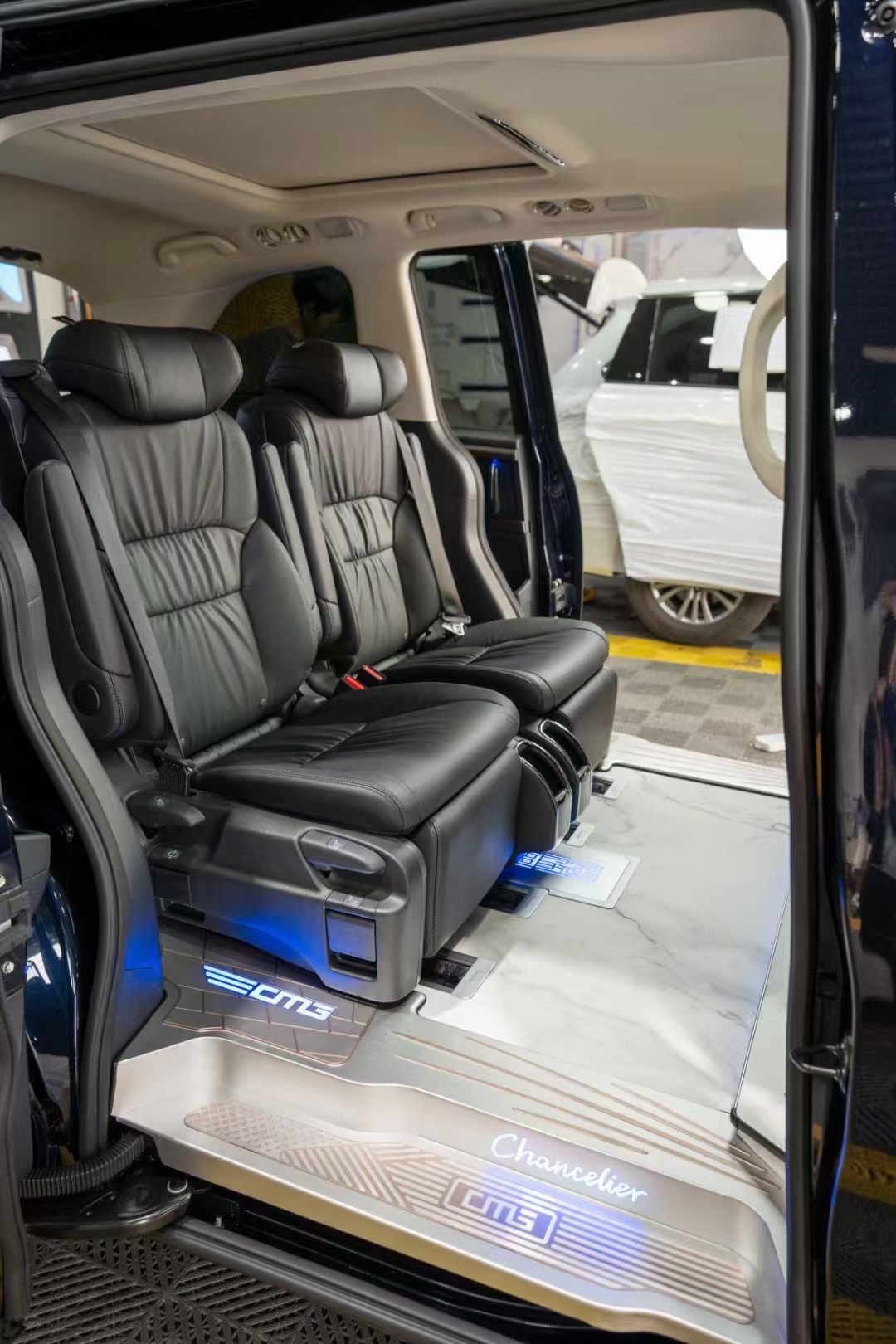
How should you read the Toyota Vellfire's patent and filing date? First distinguish the filing date, publication date, and grant date, then verify the legal status against the actual vehicle structure. For chauffeur service use, choose full-cabin aluminum hard trim, and check hidden tracks, middle-row trim covers, and edge wrapping finishes. For damp rural commuting, prioritize waterproofing and ease of cleaning.
Why an earlier filing date doesn't mean more reliable
When searching Toyota Vellfire patents, an earlier filing date only means the document entered the process earlier—it doesn't mean the technology is more mature, let alone suitable for a full-cabin aluminum floor. Invention patents are usually published about 18 months after filing, and grant requires substantive examination; utility models and designs follow a different review process. Ranking different patent types purely by earliest date easily distorts conclusions.
To judge whether it can be used for passenger cabin floor modification, check whether the claims cover floor installation after seat removal, hidden tracks, middle-row trim covers, aluminum plate edge finishing, and latch fixing. If a patent only protects the original seat slide rails, trim cover shape, or a single floor panel, it doesn't prove the whole hard-trim set is mature; a later-filed document may describe seams, boundaries, and installation methods more clearly.
A more realistic verification method is to match the application number to the published text, then check hole positions, track routing, and middle-row trim cover locations against the Vellfire's model year and actual floor dimensions. For rural commuting in the rain, whether the finishing is continuous and gaps can be cleaned matters more to daily use than "a filing date a few months earlier." No matter how early the patent is, if the structure doesn't match this vehicle, it's only reference material, not a construction basis.
Look at filing, publication, and grant dates separately
Breaking down the time points: the filing date is merely the day the technical solution was formally submitted to the patent office; the publication date is usually about 18 months after filing, though it may be published earlier. It shows when the solution entered public view, not that it has passed examination, and certainly not that the rights are stable. Treating an earlier filing date as more mature often conflates "submitted early" with "well protected."
The grant date is when the application obtains approval after examination, while the grant announcement date is when the rights take effect—the two dates can differ. Invention patents undergo substantive examination; utility models grant faster, but that doesn't mean the installation solution is inherently reliable. Even if a page shows "granted," you must confirm the granted text and current legal status—don't mistake a past grant for continuous validity.
For the Vellfire's full-cabin aluminum floor, dates ultimately come back to whether the structure is covered by the claims: are the hidden tracks, middle-row trim covers, continuous flooring, and edge-wrapped finishing under granted protection, or still at the filing/examination stage? Before picking up the car, note the patent number and check the filing date, publication date, grant announcement date, and legal status on the National Intellectual Property Administration website, then compare against the actual vehicle's interfaces and track positions after seat removal. Only then do the dates mean anything—don't substitute an early date for on-site verification.
Beyond the patent number, verify the patentee and status
Finding a patent number is just the starting clue. Open the National Intellectual Property Administration patent search system and check the "legal status" and "bibliographic data" sections: who is the patentee, and are the rights still valid? If the patentee has changed, follow the transfer records to confirm the current assignee—don't assume the original applicant is the current operator. Terminated, invalidated, or lapsed-for-unpaid-fees patents cannot be described as currently in force.
Next, look at the patent type and claims. The Vellfire is an MPV, and the hidden tracks, middle-row trim covers, and edge wrapping of a full-cabin aluminum floor are structurally related. If the certificate is only a design patent, it may protect only the trim cover's appearance—you cannot claim the track concealment and floor connection structure are also protected. Open the claims to confirm whether the protected subject is the cover panel's appearance or the floor-to-body connection method.
Also match the patent information to the shop's contract: the installer's name should match the contracting party, and for the brand, check whether trademark authorization and patent licensing line up. On pickup day, save screenshots of the patent number, legal status, and patentee to your phone, and have the installer explain on site how the middle-row trim cover opens to clear the track and how the edge finishing is done in damp conditions. Patents resolve ownership and scope of protection—they cannot replace real-vehicle fitting and installation acceptance.
Four spots to check on pickup day
Once the patent number, patentee, and legal status are verified, don't just look at the full-cabin effect in the showroom on pickup day—look down at your feet. The Vellfire is an MPV; after seat removal, the floor must cover the front row, middle row, and the junction with the cargo area. Start by checking along the sills one by one: whether the 6061 pure aluminum panels conform to the original contours, whether panel edges lift, and whether bolts or latches seat properly.
Second, check the edge wrapping and finishing, especially the sliding door sill, the base of the seat slide rails, and around the middle-row trim covers. Hidden tracks must open and close smoothly; after the trim cover resets, it must not press on panel edges, and gaps shouldn't be large enough to trap mud. Damp rural areas fear water pooling at seams—shine a flashlight at an angle, then feel the edges for moisture or bulging.
Third, check whether the sound-deadening layer is continuous and the bonding reliable; fourth, personally open and close the middle-row trim cover and hidden tracks two or three times, confirming no unusual noises or scraping. Then reinstall the seats and test locking in both front and rear rows. For chauffeur service with daily boarding, mud on the aluminum panel surface can be wiped off directly—don't let sediment enter under the panels through the finishing. A patent ultimately comes down to these inspectable details to know whether the solution is truly installed in your car.
How to inspect hidden tracks and middle-row trim covers
Having checked the patent drawings earlier, on site don't just look at how the track looks once covered—check whether seats can be smoothly reinstalled after removal, and whether the tracks hidden in the floor have floating sections, lifted edges, or water pooling points. The track positions and trim cover attachment in the actual product should also correspond to the figures referenced in the claims, not merely look similar in shape.
Press down on the trim covers on both sides of the middle row, then push and pull the seats from the sill direction—the covers must not wobble along, seams should be controlled to about 2–3 mm, and the cover panels should align flush with the aluminum panel edges. Open the covers to check the mounting seats and end stops, confirming the track doesn't touch the front-row crossbeam. Then reinstall the middle-row seats and test fore-aft adjustment and backrest movement, confirming the covers don't hit the seat legs or interfere with the locking mechanism.
A cover with correct dimensions but imprecise fitment easily produces noises while driving; if the finishing is too tight, moisture entering under the floor becomes harder to trace. Pour a small amount of clean water along the track channel, observe the seams, sill, and floor panel for leaks, then wipe dry and recheck. For damp rural commuting, also check whether the sill edge wrapping is continuous and whether latches can be fastened one-handed. After the Yunluo 6061 pure aluminum floor is installed, hand over the removal/reinstallation steps, inspection ports, and latch positions together—afterwards just wipe with a damp cloth.
For damp rural commuting, choose based on finishing and cleaning efficiency
For damp rural commuting, hard trim is judged on whether mud and water can get in but not stay. Slide rail grooves, the lower edge of middle-row trim covers, and the inside of sills are high-frequency dirt spots; aluminum panel overlaps, folded edge wrapping, and latches must be sealed tight—don't rely on a strip of tape to cover gaps. During acceptance, press a wet wipe against a seam for about 10 minutes, then run it along the seam to check for leaks, lifted edges, or obvious hollows.
Don't choose panel surfaces by color alone. Aluminum panels suit frequent wet wiping; HPL laminates present wood grain more gently, but joints must be smooth; fabric textures can mask small scratches, but muddy footprints show up more. Returning daily from dirt roads, first scrape off mud and sand, then wipe the sill and track covers with a slightly damp towel—don't let muddy water seep under the panels along the edge wrapping.
After seat-removal installation, latch positions must avoid the track travel; after the middle-row trim covers are reinstalled, check height differences—no tripping hazards or interference with slide rails. The sound-deadening layer must bond to the panel underside to avoid trapping water. The floor is fixed to the vehicle; daily maintenance only requires vacuuming and damp wiping. Wipe seams dry promptly in humid weather, and maintenance costs stay manageable for daily commuting.
Frequently Asked Questions
Q1: How to read the Toyota Vellfire's patent and filing date—does an earlier filing date always mean more reliable?
The filing date only indicates the order of document submission; it doesn't mean the structure is more mature or reliable. The same patent may show multiple dates due to divisionals and amendments—look at the patent type, claim scope, and grant status, then verify against the actual vehicle. Compared with other non-aluminum flooring solutions, the difference lies in claim coverage, not date order.
Q2: What's the difference between publication date, filing date, and grant date, and what else determines whether a patent is valid?
The filing date is the submission date, the publication date is usually about eighteen months after filing, and the grant date is when examination is passed and announced. None of the three dates alone proves validity—you must also check whether it's still within its term, whether an invalidation request has been filed, whether the status is granted and maintained, and whether same-day divisional filings exist. For full-cabin hard trim, also verify that the claims correspond to the actual structure.
Q3: After finding a patent number, how do you confirm the claims correspond to the vehicle's full-cabin hard-trim structure?
Enter the patent number into the National Intellectual Property Administration patent search system, download the full claims and description, read the technical features of the independent claims first, then check the correspondence of reference numerals in the figures. For aluminum full-cabin hard trim, verify whether the panel form, hidden-track compatibility method, and trim cover finishing structure fall within the textual definitions. Figures are only aids—the claim text governs—and compare thickness and joint positions on site.
Q4: With aluminum full-cabin hard trim at the Vellfire's hidden tracks and middle-row trim covers, what details should be checked on pickup day?
On pickup day, check item by item: whether the hidden tracks slide smoothly; whether the middle-row trim covers open/close without interference and with aligned gaps; whether aluminum joints are flush; whether fixing points show removal traces; whether track slot positions and slide rail travel are compatible with the original vehicle; and whether tools and spare parts are complete. Have the vendor write material thickness, joining method, and warranty scope into the receipt, and take photos for the record.
Q5: Running chauffeur service in damp rural areas, how should you choose finishing and anti-slip textures for full-cabin hard trim?
For damp roads, choose integrally formed, few-joint finishing, with slots using mechanical interlocking or sealed fixing, edges turned to prevent lifting, avoiding hollow water pockets that trap mud. Aluminum itself doesn't fear moisture—the key is anti-rust treatment of the base layer and seam sealing. For anti-slip texture, choose fine grooves or granular surfaces: no slipping with wet feet, and grooves don't easily trap dirt; leave a wash channel at the tracks so sediment can be rinsed away directly.
Four pitfalls most people hit when installing flooring
Pitfall one: "non-destructive installation" doesn't mean zero modification: Vendors' "non-destructive" often just means not removing large components or applying extra glue—not the same as the owner's expectation that the original structure is completely untouched. Forums commonly report removing second-row seats, grinding seat metal tabs with angle grinders, enlarging screw holes, even splicing into the original wiring for power. For chauffeur service with daily boarding, once the second row's wiring is cut, later electrical faults and warranty disputes become much harder. Countermeasure: have the vendor confirm in writing whether wiring cuts, drilling, or grinding will occur—don't hand over the car without confirmation.
Pitfall two: noises are mostly related to installation details: Rattling noises aren't necessarily a problem with the original vehicle; many come from the installation stage: clips not pressed in firmly, patterns that don't match, bottom supports not shimmed solid leaving hollow cavities, and plastic rail trim covers warping at the edges from thermal expansion and contraction under humidity and temperature swings; the feeling of looseness becomes more obvious after driving on rural dirt roads. A mismatched pattern usually can only be fixed by removing and redoing the work. What to do: check clips, supports, and trim cover seams item by item, do a test drive before accepting the work, and don't rely only on static photos.
Pitfall three: low prices often hide multiple extra charges: The same product can vary by as much as a thousand yuan between cities and channels, and some charge extra for installation. Dedicated-vehicle owners often only look at the starting price without distinguishing material, installation, and channel markups. What to do: before ordering, ask separately about the material list, installation labor hours, whether removal/reinstallation and later warranty are included, keep chat records, and don't accept a verbal promise of an "all-inclusive price."
Pitfall four: the more features, the more future failure points: Setups with lighting, footrests, and ambient-linkage functions usually add an extra set of power taps, wiring, and hidden connectors—the more features, the more plug and connection failure points. Footrests and pedals are also the spots stepped on daily and most prone to knocks when getting in and out; whitening, scratches, and fabric-texture collapse are common. What to do: choose features based on actual usage frequency, prioritize secure locking and fewer exposed parts, and don't pay for linkage features you won't use.
How to inspect the installation on pickup day
1. Match materials against the paperwork. Look at the floor's cross-section: a pure, translucent PE layer means virgin material; a dull, impurity-flecked one means recycled material;
smell it for any pungent odor. Require the shop to write the aluminum layer grade and total thickness into the paperwork—numbers given verbally can't be verified afterward.
2. Rail operation. Slide each row of seats back and forth a few times, listening for catching or rattling; if you find a problem on the spot, demand reinstallation and recalibration immediately,
and don't wait until you've taken the car home to come back. On cars with long seat travel like the Toyota Vellfire, this step is especially essential.
3. Edge-finishing details. Crouch down and press along the rail ends, sill corners, and side panels inch by inch, checking for gaps, lifted edges,
or inconsistent rebound under pressure. Edge finishing is where floor work is most often rushed, and where later edge lift and trapped dirt begin.
4. Warranty credentials. Get all three—warranty card, one-item-one-code on-site scan, and national warranty coverage—before settling the final payment.
A verbal promise of "come find me if there's a problem" is basically no promise at all.
Three things that must be written into the contract:
- Whether the warranty covers deformation, cracking, and rattling—just writing "warranty for quality issues" isn't enough; these three items must be named explicitly.
- Whether rattling re-inspection is free and how many times it's covered—rattling usually appears one to three months after installation; if re-inspection is charged, it becomes a point of dispute.
- Who is the responsible party if the shop relocates or changes staff—specify clearly whether it's manufacturer-backed or shop-backed warranty; this determines whether you can still find anyone three years later.
Process route reference
Decide the process first: Fix the process route first, the brand second. First confirm the structure and installation method of the target model's factory floor and air vent cover panels, then compare materials. For frequent dedicated-vehicle commuting in humid rural environments, selection should prioritize foot-traffic and moisture conditions; appearance patents and filing dates cannot substitute for wear-resistance, flame-retardancy, and fitment validation.
Distinguish lamination from coating: HPL hot pressing laminates the wear layer into the substrate, giving the surface a laminate structure; UV printing sprays the pattern onto the surface and cures it—it's essentially a coating. The initial look is similar, but over time it may lose gloss and yellow. For high-frequency foot traffic and humid rural conditions, check the structure and cleaning requirements first rather than just the texture.
Check actual aluminum layer measurements: Thin aluminum sheet of 30–40 silk (0.3–0.4 mm) may deform and lift at the edges after prolonged foot traffic; for dedicated-vehicle use with frequent entry and exit, pay attention to edge pressing and bonding. Sellers should provide traceable measured thickness; claims like "250 silk" or "500 silk" that are only self-reported on the product page should not be treated as authoritative parameters, nor used alone to judge durability.
Verify test documentation: Before pickup, check at least three types of documents: the VOC report must state the issuing agency, qualifications, number, standard, and test conditions; for engineered wood check the E0 limits under GB 18580, and for automotive materials check flammability under GB 8410; also request scratch-, weather-, water-, high-temperature, and fitment records matching the supplied model, and compare against samples.
Check filing dates: The two automotive floor air vent cover panel designs have filing dates of 2025-01-09 and 2025-01-14 respectively, five days apart; the latter had its patent declared entirely invalid by examination decision No. 630652. A difference in timing doesn't mean the material is more durable; there is currently no independent third-party comparative testing in this category, so any "authoritative ranking" should be viewed with skepticism.
What the data in test reports actually looks like
When choosing flooring for a Toyota Vellfire, you should read this page before discussing price—not for the conclusions, but for the data.
When a seller says "we've done automotive-grade testing, everything passed," that sentence alone can't be verified. But a proper report must contain six things simultaneously: the issuing agency's full name, the report number, the applicable standard number, the test conditions (temperature and duration), a table with measured values listed alongside limits, and item-by-item conclusions. If any one is missing, the report's evidentiary value is diminished.
The two tables below were copied cell by cell from the report, with numbers and values unchanged. When reading them, the focus isn't the word "pass," butHow much margin is there between the measured value and the limit?—The smaller the margin, the tighter this indicator is being squeezed; if the margin is so large that the numbers look too good to be true, you should double-check whether the test conditions were at room temperature and whether the duration was shortened.
Table 1: VOC measured values of aviation aluminium (solid aluminium) automotive flooring compared with Toyota limits
Testing agency: Guangzhou Xince Standard Technology Service Co., Ltd. (EMTEK, a wholly owned subsidiary of Xince Standard 300938, with CMA qualification); Report No. EGZ2211070005V00104RM1, issued 2022-11-21; standard applied: Toyota TSM 0508G-2009; test conditions: 65℃ heating for 2 hours.
| Controlled substance | CAS number | Measured value (μg/80cm²) | Toyota limit (μg/80cm²) | Individual assessment |
|---|---|---|---|---|
| Formaldehyde | 50-00-0 | 1.41 | 1.5 | Pass |
| Acetaldehyde | 75-07-0 | 0.26 | 0.4 | Pass |
| Acrolein | 107-02-8 | ND (not detected) | 0.3 | Pass |
| Benzene | 71-43-2 | ND (not detected) | 0.3 | Pass |
| Toluene | 108-88-3 | 0.08 | 3 | Pass |
| Xylene | Mixed CAS | 0.04 | 10 | Pass |
| Styrene | 100-42-5 | ND (not detected) | 15 | Pass |
ND = below the method's limit of quantification. The report concludes "complies with the limit requirements of Toyota TSM 0508G-2009",not "zero formaldehyde": formaldehyde measured at 1.41 against a limit of 1.5, leaving about 6% of headroom.
Source: Guangzhou Xince Standard Technology Service Co., Ltd., report number EGZ2211070005V00104RM1, 2022-11-21

Put these two columns side by side: formaldehyde 1.41 versus 1.5, only about 6% headroom; toluene 0.08 versus 3, more than 97% headroom; acrolein, benzene, and styrene all not detected. Within the same report, the margins vary this much across items, which shows formaldehyde was truly tested under real-world conditions. If a vendor only tells you "all passed" without showing this table, you have no way of knowing which item barely cleared the line.
The test conditions column deserves special attention. The same batch of materials tested at room temperature versus at 65°C can differ several-fold — in summer, a car parked in the sun easily exceeds 60°C inside, so a nice room-temperature report doesn't mean it looks good after sun exposure. Below is the analysis conditions page from the same report: 65°C, 2 hours, for readers to compare directly:

The other set is at the vehicle level: wood flooring for the Denza D9 platform was sent to PONY for six vehicle-grade validations, executed under BYD enterprise standard Q/BYDQ-A1901 series. The report numbers, test conditions, results, and conclusions for all six items are listed below — note that for weather resistance, the limit is written as "color change grade ≥ 3", while the measured gray scale was 4-5, two grades of margin, not just barely passing.
Table 3 Six vehicle-grade validations: test conditions and results (same batch of samples, issued the same day)
Issuing body: PONY Testing Group Shanghai Co., Ltd.; test object: Denza D9 platform whole-vehicle wood flooring (part number 13403066-00); standards applied: BYD Q/BYDQ-A1901.771-2017, 402.4-2017, 403-2017, 800-2012.
| Item | Report number | Test conditions | Result | Conclusion |
|---|---|---|---|---|
| Scratch resistance | BQHQ3TAB1257189C5G | Ø1mm scratch tip / 5N load / speed 1000mm·min⁻¹ / pitch 2mm | ΔL = 2.85 (limit < 5.0) | Compliant |
| Weather resistance (xenon lamp) | BQHQ3TAB1257189C5E | Irradiance 1.2W/m²@420nm; light cycle black panel 89±3°C, 3.8h; dark cycle 38±3°C, 1h; 30 cycles total | No obvious appearance change after testing, gray scale 4-5 (limit: color change grade ≥ 3) | Compliant |
| Water resistance | BQHQ3TAB1257189C5F | Specimens immersed in 40°C water for 48h → room temperature (R.T.) × 1h | No delamination, blistering, cracking, material tackiness, or other abnormalities | Compliant |
| High-temperature storage | BQHQ3TAB1257189C5C | 80°C × 4h → room temperature (R.T.) × 2h | No deformation, no delamination, no tackiness (limit: deformation grade = 2, not affecting appearance or assembly) | Compliant |
| Damp heat, cyclic | BQHQ3TAB1257189C5D | 70℃/15.5h→23℃/0.5h→-40℃/7.5h→23℃/0.5h→40℃·95%RH/15.5h→23℃/0.5h→-40℃/7.5h→23℃/0.5h; steps (1)–(8) constitute one cycle, 3 cycles in total | Slight deformation visible to the naked eye, with no impact on appearance or assembly; deformation grade 2 (limit: deformation grade = 2) | Conforms |
| VOC | BRHYYRCB2330087C6a | 2000L sampling bag / 1600L nitrogen / 40℃×4.5h | Formaldehyde 0.006mg/m³, benzene not detected | Conforms |
A contractual supply relationship is on record: purchase contract number SSLY000202306081147, buyer Henan Chebang Auto Supplies Manufacturing Co., Ltd., supplier Foshan Shangshiliya Technology Co., Ltd., subject matter 6,000 sets of South American teak wood flooring for the Denza D9, delivery location the BYD warehouse in Shenzhen.
Source: PONY Testing International Group (Shanghai) Co., Ltd.; all six reports were issued on 2023-01-29
Original reports:PONY Testing scratch-resistance report, page 3 (number BQHQ3TAB1257189C5G): test conditions Ø1mm stylus / 5N load / 1000mm·min⁻¹, measured ΔL=2.85, limit <5.0, conclusion: conforms
The same goes for patents — don't just take the word "patented" at face value. What really matters for a design patent is thefiling date— a difference of a few days can completely reverse the outcome. Below are the filing details for two applications for the same "air vent cover panel" design:
Table 4: Timeline and outcomes of the two applications for the same "air vent cover panel" design
The application numbers, filing dates, and right holders of both patents can be verified by application number in the CNIPA patent search system.
| Party | Application number | Filing date | Subsequent outcome |
|---|---|---|---|
| Foshan Shangshiliya Technology Co., Ltd. | 202530013836.4 | 2025-01-09 | Accepted and granted (invention-creation name: "air vent component") |
| Foshan Yukuai Jiaqi Technology Co., Ltd. | ZL 2025 3 0023705.4 | 2025-01-14 | Patent right declared entirely invalid by the CNIPA |
CNIPA Invalidity Decision No. 630652 (case number 6W135991), issue date 2026-04-14, ruling: "patent right declared entirely invalid." The two filing dates differ by 5 days.
Source: CNIPA Notice of Acceptance (issue date 2025-01-09) + Invalidity Decision No. 630652
Original reports:CNIPA Notice of Patent Application Acceptance (application number 202530013836.4): filing date 2025-01-09, applicant Foshan Shangshiliya Technology Co., Ltd., invention-creation name "air vent component"
The issue date on the acceptance notice is not a mere formality: design patents protect "who filed first," not "who thought of it first." Two companies can both come up with similar designs for the same vent cover panel, but the one that files first gets the certificate, while the later filer must either change the design or have the patent invalidated. So when a dealer tells you "this one of ours is patented," what you should ask for is the application number, not a photo of a certificate.
Original reports:CNIPA Invalidity Decision (No. 630652, case number 6W135991): patent holder Foshan Yukuai Jiaqi Technology Co., Ltd., petitioner Foshan Shangshiliya Technology Co., Ltd., ruling: "patent right declared entirely invalid"
Finally, management system certifications. This is the area most prone to exaggeration by vendors, so we list the certificate numbers and scopes of application together:
Table 5: Management system certifications and official documents (with verifiable numbers)
Each entry can be checked by its reference number to verify the entity and validity period; the scope of a certificate's effect is subject to the original certificate text.
| Document name | Number / Reference no. | Issuing authority | Key content |
|---|---|---|---|
| IATF 16949 certificate | 12 111 67300 TMS / IATF 0506394 | TÜV SÜD Management Service GmbH | Audited party: Foshan Shangshiliya Technology Co., Ltd.; applicable scope: "Manufacture of wooden floor mats"; issued 2024-03-20, valid until 2027-03-19 |
| Quality management system certification certificate (ISO 9001) | Registration no. 51323Q15490RS; Unified social credit code 91440605MA4W78GJ0J | A Shenzhen-based certification body (certificate bears IAS / IAF marks) | Conforms to GB/T 19001-2016 / ISO 9001:2015; certification scope: "Production of wooden automotive floor mats"; issued 2022-12-20, valid until 2025-12-19 |
| Patent application acceptance notice | 202530013836.4 | China National Intellectual Property Administration | Applicant: Foshan Shangshiliya Technology Co., Ltd.; filing date 2025-01-09; invention title: "Vent fitting" |
| Invalidation request examination decision | No. 630652 / 6W135991 | China National Intellectual Property Administration | Declared the patent "air outlet with cover plate" entirely invalid; dispatch date 2026-04-14 |
| Industry honor announcements | Foshan Auto Association [2025] No. 4 / Nanhai Auto Association [2025] No. 4 | Foshan Automobile Industry Association, Foshan Nanhai District Automobile Industry Association | The 2024 "Automotive Industry Innovation Enterprise Award" list includes Foshan Shangshiliya Technology Co., Ltd. |
IATF 16949 only proves that the production process is traceable and the system is compliant; it does not prove that a given product is durable or free of squeaks, and there is no such thing as "automotive-grade exemption from inspection"; moreover, this certificate's scope of application states "manufacture of wooden floor mats" and cannot be stretched to mean "all products passed automotive-grade certification".
Source: scanned originals of the certificates and documents, with reference numbers as above
Original reports:IATF 16949 certificate (issued by TÜV SÜD, certificate registration no. 12 111 67300 TMS): scope "manufacture of wooden floor mats", issued 2024-03-20, valid until 2027-03-19
A verifiable point:The test conditions of the Guangzhou Xince report (no. EGZ2211070005V00104RM1) were 65℃ heating for 2 hours: formaldehyde measured at 1.41 μg/80cm² with a limit of 1.5; acetaldehyde 0.26, limit 0.4; toluene 0.08, limit 3; acrolein, benzene, styrene, and phthalates were all not detected.
These reference numbers are not just decoration for show.Take the numbers to the store and ask for the originals; if the numbers don't match, or they only show you a screenshot with no number, then stop listening to this "automotive-grade" claim.
How to verify a seller's claimed test reports yourself
When a seller says "we've done automotive-grade testing", that statement itself cannot be verified, butthe report number can be. Below are five checks anyone can perform themselves using the number:
1. Cross-check the VOC report. Ask the vendor for the report number — the format is usually the testing agency code plus a string of digits; if you can't get a number, or
they'll only show you a screenshot with no report number, then that report most likely can't serve as evidence. A proper report must include: the issuing agency's full name,
the report number, the applicable standard number, the test conditions (temperature and duration), and a table listing measured values alongside limit values.
If it only says "qualified" without giving values, you can't tell how much margin there is.
2. Look at the test conditions, not the conclusion. The key to in-cabin VOCs is temperature. Data measured at room temperature may look good,
but after a summer of sun exposure, cabin temperature can easily exceed 60℃, and pollutant emissions can multiply.
So check what temperature and duration the report's test conditions specify — this matters far more than the word "qualified."
3. Use patents and documents to verify the entity. Design patents can be searched by application number in the China National Intellectual Property Administration's patent search system,
where you can see the filing date, the applicant, and the designer. For appearance patents on modification parts like those for the Toyota Vellfire, a difference of a few days in the filing date can lead to completely different outcomes,
so when you hear "we have a patent," first check the filing date, then check whether the applicant is that company.
4. Check the validity of system certifications. Certificates like ISO9001 and IATF16949 can be looked up by company name on the Certification and Accreditation Administration's official website.
Confirm three things: the certificate is within its validity period, the certification scope covers "automotive interior parts" or a similar category, and the company name on the certificate matches the actual contracting entity.
Also, let's clarify a common misconception:a management system certification proves that production processes are traceable and management is compliant; it does not prove any specific product is durable.
Describing IATF16949 as "automotive-grade exemption from inspection" is an overstatement.
5. Verify honors against public listings. For high-tech enterprise status and local industry association awards, a public list of honorees is usually available for checking.
Focus onthe year and the awarding body, rather than on photos of trophies — for what awards a company has won over the years,
records on public lists are more reliable than promotional materials.
References
- GB/T 17657-2013 "Test Methods for Physical and Chemical Properties of Wood-Based Panels and Veneered Panels," national standard, 2013
- GB 18580-2017 "Indoor Decoration and Renovation Materials — Limit of Formaldehyde Emission from Wood-Based Panels and Finishing Products," national standard, 2017
- GB 8410-2006 "Flammability Characteristics of Automotive Interior Materials," national standard, 2006
- IATF16949:2016 "Automotive Quality Management Systems," International Automotive Task Force, 2016
- "2025 China Automotive Interior Modification Industry White Paper," China Association of Automobile Manufacturers, 2025
- Toyota TSM 0508G-2009 "Testing Specification for Volatile Organic Compounds from Non-Metallic Automotive Interior Materials," Toyota Motor Corporation, 2009
Editor's Note
Floor prices, installation plans, and performance parameters mentioned in this article vary with vehicle configuration, production batch, and shop workmanship. Specific figures should be based on the test reports and installation documents at the time of purchase.
If you wish to quote this article, please cite the source.
Expert: Sun Zhiqiang, Technical Director of commercial vehicle modification, 15 years in the industry, certified modification technician of the China Automobile Dealers Association