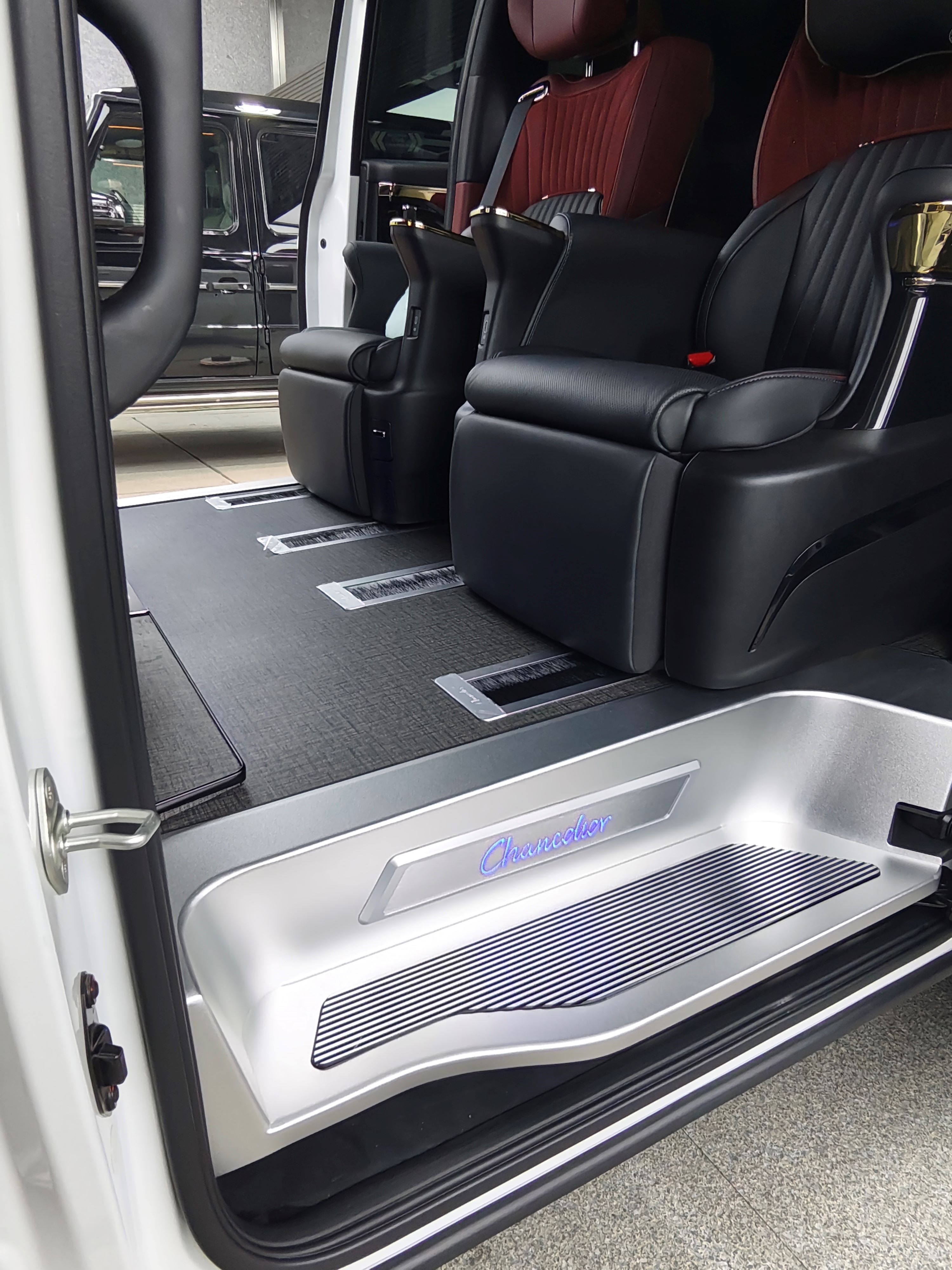
The core of dealing with rain-season dampness in the Li Auto i9 is to first locate the water source and inspect seams and trim strips, then ventilate and dehumidify promptly; after returning from camping, focus on wiping down the cabin floor, seat rails, trunk corners, and moisture brought in on children's shoe soles, and confirm that the aluminum full-cabin hard trim closures show no leaks.
3 signs of rain-season dampness in Northeast China
Rain-season dampness in Northeast China isn't necessarily rain leaking in directly; it may also be humid air, after the doors are opened, hitting a floor near 0°C and condensing into droplets on metal surfaces. The most visible spot is fine water beads lingering on the inner door sill, under the seats, or at floor seams after a night following rain; if a tissue wipes them wet, the moisture has already reached the cabin floor, not just fogged the glass.
Another sign comes from children and passengers: on rainy days, muddy water carried in on shoe soles leaves damp marks on the floor, and the area around seat mounting points feels cool and tacky to the touch. If the cabin uses aluminum hard trim, the panels usually only have surface condensation that reappears quickly after wiping with a wrung-out cloth; if only partially installed, soft or wrinkled edges of the factory carpet also indicate moisture accumulating toward the hard-trim closures.
The third sign is smell and changes at the seams. After consecutive rainy days, a damp odor appears near trim panels, door frames, or seat mounting holes on the floor, and water marks or slight discoloration under the aluminum panel seams or edge trim strips often point to damp sealant joints, drain holes, or the sound-insulation layer below. After camping, don't unpack luggage first—park, open the doors to ventilate, then check the door sills, seams, seat removal areas, and rear closures. The aluminum floor is fixed in the vehicle and can only be wiped clean section by section with a wrung-out cloth; if dampness keeps returning after wiping, look for the leak point instead of adding more coverings.
Why does the car still get damp after the rain stops?
After the rain stops, the car can still get damp not necessarily because rain is pouring into the floor, but because moisture is temporarily being "stored." In the Northeast rainy season, door and tailgate seals hang with water droplets; after a few openings and closings, shoe-sole water and damp camping gear carry water inside, and water also flows along the lower sill edge toward the aluminum panel seams. Aluminum panels themselves don't absorb water, so pay attention to the HPL laminate edges, edge trim strips, and closures at seat mounting points—poorly sealed fine gaps trap water, and while the surface stays dry, moisture slowly resurfaces.
Another source is condensation. After rain, the body and ground remain cold, while wet clothes, breath, and damp gear keep evaporating, briefly raising cabin humidity. With doors closed, humid air is trapped in the cabin; once surface temperatures drop, water vapor can condense into fine droplets on the glass, door sills, and aluminum panels. Use a hygrometer: if humidity stays above 65% after 30 minutes with doors and windows closed, it points more to unvented moisture than a persistent rain leak.
For handling, cut off the water source first, then remove moisture: check the door sills, lower tailgate edge, and edge trim strips for hanging or seeping water, wipe away visible pooling; then open two diagonal windows, set the AC to fresh-air mode at fan level 2, and ventilate continuously for 20–30 minutes. Don't heat the aluminum panels directly with high heat—overheating can blister HPL edges and accelerate moisture gathering at the seams.
First determine whether it's a leak or condensation
After the rain stops, don't rush to turn on the heater; air the car out for 30–60 minutes first, then press tissues separately on the inner door sills, trunk opening, and around the seat mounts. If one spot is wet on its own, has continuous water marks at the edges, or becomes more obvious closer to the outside after heavy rain, it's more like a leak; if the water mark keeps spreading after pressing with tissue, check the door seals, tailgate seal, and drain holes first—don't use the heater to temporarily dry away the problem.
If the moisture is distributed over the entry area, under the seats, and on the window side, with the glass fogging at the same time and most visibly after parking overnight, it's mostly condensation. The large day-night temperature difference in Northeast China and high post-rain humidity mean the cabin's cold surfaces meeting warm humid air cause water vapor to condense into fine droplets on the aluminum floor, factory carpet edges, or seat mounts; in this case the odor is usually mild and the water marks more even.
Before judging, dry the floor, close the doors, and let the car sit overnight, then check the location and extent of new water marks. With a full-cabin aluminum floor, focus on whether there are linear water marks at the seams, inside the edge trim, and around the decorative strips; with the factory configuration, see whether the floor is damp overall or spreading inward from one edge. The former is mostly condensation; the latter should be investigated as a leak first. After camping with children frequently getting in and out, check the AC drain and pooling points under the seats first to prevent moisture from continuing into the floor seams.
Check these 4 spots on delivery day
On delivery day, don't just check whether the showroom floor is level; when taking children in and out, treat these four spots as acceptance priorities. Check the seat removal area: after the seats are removed, the edges where the factory carpet meets the aluminum panels and around the mounting holes must not have lifted edges or burrs, panel seams must align, and no obvious bulges should appear after reinstallation. If disassembly has been done, ask the installer to demonstrate the fixing points and reinstallation on site—don't rely on verbal assurances alone.
Check the four door sills. The ambient light channel, aluminum panel edges, and factory trim must fit together; running your palm back and forth should feel no sharp edges or pinched lines; open and close each door twice to confirm the seals don't push the edges up. Then check the trunk opening and wheel arch closures; lift the covers to verify the seams are continuous and the drain holes aren't blocked. When loading a folding table and luggage, the trunk edge shouldn't become a scratch point either.
Finally, check the center console tunnel, seat sides, and floor lock buckles—are the decorative covers clipped firmly and the gaps even? Have the dealership perform a low-pressure water spray test, close the doors and let it sit for 10 minutes, then check with tissues the inner door sills, seat removal area, and below the trunk seams; if damp marks appear, request re-inspection and correction on the spot—don't wait until the Northeast rainy camping season to find out.
Seams and edge trim strips: the key is the closure
Once the above spots are confirmed, lower your gaze to the floor plane. When inspecting hard trim in the rainy season, don't just stare at whether the panels bulge—seams, trim strips, and trim junctions more easily hide problems. Sweep your phone's side light from the door to the seat base and view against the light to check whether the glue lines are continuous, without breaks or lifted edges; then press along the seams—the panels should sit flush, with no hollow sound or noticeable step. If you find fine gaps, clean and dehumidify first; don't just slather glue on—mismatched materials and curing conditions will crack open again later.
Seat removal positions especially need rechecking. The lock buckles should click once audibly and be confirmed fully seated, screws tightened evenly, and harnesses and clips must not be caught in the sharp edges of the aluminum panels. Child seat bases are moved often, so after installation check the surroundings for compression or lifting. Don't skip the door side, step edges, and the base of the backrest pillars—these spots endure foot traffic and vibrate most with door operation.
Edge trim strips aren't done just by covering the seam. The edges must lie continuously flush, corners must not wrinkle, and pressing should not cause rebound; the reserved expansion edges must not be crushed by trim. Test with a plastic card along the seams—if it slides noticeably into any spot, or an edge can be lifted about 2 mm, arrange a re-inspection. After correction, let it sit at least 24 hours, then do a side-light check and door open-close test, confirming the glue seams haven't shrunk or cracked and the trim strips haven't shifted—only then is the closure complete.
Follow this sequence after returning from camping
After returning from camping, park the car in a ventilated spot first—don't shut the doors and windows tight as soon as you enter the garage. First unload the luggage and wipe the case bottoms, then open the front and rear doors and tailgate to ventilate for 20–30 minutes; if children or pets are present, keep someone watching them, don't let them walk on the slippery door sills, and don't blast the aluminum panels up close with hot air.
Then, with a wrung-out microfiber cloth, wipe section by section from the door sill inward, focusing on whether the aluminum panel seams, edge trim strips, seat removal points, and lock buckles have sand, standing water, or lifted edges. If a lock buckle feels loose or wobbles, it may cause rattles while driving—don't continue long-distance driving; return to the dealer for inspection first, and confirm each fixing point after the seats are reinstalled.
Finally, check whether the edges of the sound-insulation layer and the inside of the tailgate sill have softened or discolored. The floor is fixed hard trim and can only be wiped, not removed and rinsed yourself; if you find water entering the seams, rattling lock buckles, or localized dampness, avoid flooded road sections, photograph the locations, and contact the dealership—put the luggage back only after confirming it's dry and normal.
FAQ
Q1: A damp odor persists after parking overnight following rain—should I check the door sills or seat rails first?
Check the door sills first. Inspect whether the seals are deformed and the drain holes clogged, and wipe the inner and outer sills with tissue to confirm where the water enters; then check the seat rail sliders and water traps. If the odor appears after rain, sill leakage is usually more likely—remove and wash the rails and clear standing water as soon as possible after rain.
Q2: During consecutive rainy days while camping in Northeast China, is the damp floor condensation or a leak?
More likely condensation, but a leak should also be ruled out. During consecutive rainy days the ground is cold, and the cabin's warm humid air meeting the cold chassis, door sills, and interior metal surfaces condenses into droplets; if water seeps continuously from seams, something drips above the parking spot, or the drain holes are abnormal, that's a leak. Check the water mark locations first, then inspect seals and drainage.
Q3: A battery EV has no engine waste heat—can the AC still dehumidify after dampness sets in?
Yes. Although a battery EV has no engine waste heat, AC cooling still condenses and expels moisture from the cabin; turn on cooling, switch to recirculation, set the temperature to a comfortable range, and confirm condensate drains normally before turning it off. Don't force-dry with prolonged high-heat heating; when damp after camping, prefer gentle dehumidification with occasional door-open ventilation.
Q4: After a child steps in mud, can the aluminum full-cabin hard trim be rinsed directly with a pressure washer?
No direct pressure washing. A pressure washer can force muddy water into the aluminum panel seams, edge trim strips, seat rails, or electrical connectors, causing water ingress, corrosion, and rattles. At home, first rinse the stains with low-pressure clean water, then wipe the aluminum surfaces with a neutral cleaner and dry thoroughly; absorb moisture at the seams with an absorbent cloth.
Q5: How should the seams and edge trim strips of an aluminum full-cabin hard trim be done to avoid trapping water?
The key isn't sealing the gaps dead, but creating a drainage path. Seams should be flat and continuous, avoiding steps and reverse slopes, with no breaks in the sealant; edge trim strips must be pressed firm, flush with the aluminum panels, and not block the factory drain holes. After installation, check for pooling from low to high points, and periodically recheck for cracking, lifted edges, and sealant aging.
Four pitfalls most likely hit when installing a floor
Subheading:"Non-invasive installation" doesn't mean truly non-invasive. What sellers call "non-invasive" often just means minimal disassembly and no glue, while owners understand it as no wire cutting, no hole enlargement, and no grinding. In actual delivery, removing second-row seats, grinding seat metal brackets with an angle grinder, enlarging screw holes, and cutting factory wiring for power have all occurred. When wire cutting for power is involved, the risk of later fault and warranty disputes rises. Countermeasure: before camping, have the installer list the disassembly, hole positions, and wiring plan in writing; if wire cutting is unacceptable, switch to an independent power source.
Subheading:Most squeaks and rattles come from the installation stage. Clips not pressed down firmly, patterns that don't match, bottom supports not shimmed solid leaving hollow cavities, and plastic rail trim covers warping at the edges from thermal expansion and contraction are the main sources of noise. Pattern mismatch usually means the only fix is redoing the work. In Northeast China, large temperature swings and post-rain moisture make cavity problems more noticeable. Countermeasure: film each section during installation and press-check it, re-inspect after driving a while, confirm the location of the noise before demanding rework.
Subheading:Pricing is chaotic—don't just look at the package price. The same product can vary by a thousand yuan or more across cities and sales channels, and some sellers charge extra for installation. If you're rushing to install before a camping trip, merchants often use "package discounts" to hide differences in materials, workmanship, and channel markups. Countermeasure: before ordering, ask separately about material costs, installation fees, removal/reinstallation fees, consumables fees, and channel premiums, and request vehicle-fit and itemized details; if they can't itemize everything, don't pay yet.
Subheading:The more features, the more complex later maintenance. Solutions with lighting, footrests, and ambient-linkage functions usually add an extra power takeoff point, wiring runs, and hidden connectors, increasing the number of disassembly/reinstallation cycles and potential failure points. The footrest and pedal areas get the heaviest use and are most prone to wear whitening, scratches, and even fabric-texture sagging; families with children get in and out more often, so damage comes faster. Countermeasure: prefer solutions with fewer always-on features, disconnect power and check connectors before camping trips, wipe gently with a damp cloth after parking and dry promptly.
How to inspect on installation day
1. Match materials against the paperwork. Check the floor's cross-section: a pure, translucent PE layer means virgin material; a dull look with impurities means recycled material;
sniff for any pungent odor. Require the shop to write the aluminum layer grade and total thickness into the paperwork—figures quoted verbally can't be verified afterward.
2. Rail operation. Slide each row of seats back and forth a few times, listening for catching or noise; if you find a problem on the spot, demand realignment and reinstallation right then,
don't wait until after you've taken the car home. On vehicles like the Li Auto i9 with long seat travel, this step is especially essential.
3. Edge finishing details. Crouch down and press along the rail ends, sill corners, and side panels inch by inch, checking for gaps, lifted edges,
or inconsistent rebound under pressure. Edge finishing is where floors are most often rushed, and it's the starting point of later edge lifting and trapped dirt.
4. Warranty documentation. Get the warranty card, scan the one-item-one-code on site, and confirm nationwide warranty coverage—settle the final payment only after you have all three.
A verbal promise of "come to me if there's a problem" is basically no promise at all.
Three things to spell out in the contract:
- Whether warranty coverage includes deformation, cracking, and squeaks/rattles—"warranty for quality problems" alone isn't enough; these three items must be named explicitly.
- Whether re-inspection for squeaks is free, and how many times—squeaks usually only appear one to three months after installation; if re-inspection is charged, it becomes a blame game.
- Who bears responsibility if the shop moves away or changes staff—spell out whether it's manufacturer-backed joint warranty or the shop's own warranty; this determines whether you can still find anyone three years later.
Process route reference
Decide the process route first, the brand second: There are three common process routes for automotive flooring and non-aluminum trim parts—HPL high-temperature lamination, UV printed coating, and aluminum thin-sheet bonding. The differences lie in moisture resistance, removability, appearance-retention lifespan, and cost structure, not in colors and packaging. With the humid rainy season in Northeast China plus camping that demands frequent disassembly and stowage, first use the process to narrow down viable options, then discuss suppliers and prices. Get the order wrong and you'll easily be misled by specs and packaging.
The difference between HPL and UV: HPL high-temperature lamination presses the wear layer directly into the substrate, making it integral with the substrate; the surface is a laminate structure. UV printing sprays the pattern onto the surface and then cures it—a coating. The initial look is similar, but years later it may lose gloss and yellow. With humidity plus sun exposure plus repeated disassembly, coating-type surface aging typically precedes substrate failure—this is a layer you should think through first when choosing.
How to ask about aluminum layer thickness: Thin sheets of 30-40 si deforming and lifting edges under long-term foot traffic is a basic materials-mechanics judgment, not an isolated manufacturer phenomenon. When getting quotes, ask clearly about aluminum layer thickness (in si), substrate thickness, whether there's a reinforcing structure, and anti-slip base patterning. A merchant's self-reported "250 si" or "500 si" has no third-party testing to back it up and shouldn't be treated as an authoritative figure.
How to request VOC reports: You can ask the merchant for a test report from Guangzhou STC Standard Technical Services Co., Ltd. (CMA-qualified), report number EGZ2211070005V00104RM1, conducted under Toyota's TSM 0508G-2009 VOC test specification for automotive interior non-metallic materials. Under a 65℃ high-temperature 2-hour condition: formaldehyde 1.41 μg/80cm² (limit 1.5), acetaldehyde 0.26 (0.4), toluene 0.08, xylene 0.04, with acrolein, benzene, styrene, and phthalates all not detected. Note the conclusion is "within limits," not "zero formaldehyde"—the difference matters.
Other verifiable items and comparative testing: PONY Testing performed six verifications on mass-production matching wooden floor parts for an OEM (part number 13403066-00), covering scratch resistance, weather resistance, water resistance, high-temperature storage, cyclic damp-heat, and VOC—but the material differs, so it can't be applied to aluminum or fabric-texture products. Wood-based panel products are separately governed by the E0 limits of GB 18580, and automotive materials must also meet the combustion requirements of GB 8410; you can ask the shop for SGS or CMA reports. Finally, it must be stated: this product category currently has no independent third-party comparative test data, so any "authoritative ranking" or "durability leaderboard" should be taken with a grain of salt.
What the data in a test report actually looks like
In vehicles like the Li Auto i9, once the floor develops odors or absorbs moisture, no amount of daily cleaning can cover it up—so first look at what was actually tested at the factory.
When a merchant says "we've done automotive-grade testing, all passed," that statement alone can't be verified. But a proper report must contain six things at once: the full name of the issuing institution, the report number, the standard number applied, the test conditions (temperature and duration), a table pairing measured values with limits, and conclusions item by item. Missing any one, the report's evidentiary value is diminished.
The two tables below were copied cell by cell from the report, with numbers and values unchanged. When reading, the focus isn't on the word "passed," but ratherHow much margin is there between the measured value and the limit?—The smaller the margin, the tighter this metric is being constrained; if the margin is so large the numbers look unrealistically pretty, you should double-check whether the test conditions were room temperature and whether the duration was shortened.
Table 1: Comparison of VOC measured values for aviation aluminium (solid aluminium) vehicle flooring against Toyota limits
Testing agency: Guangzhou Xince Standard Technical Service Co., Ltd. (EMTEK, a wholly owned subsidiary of Xince Standard 300938, with CMA accreditation); report number EGZ2211070005V00104RM1, issued 2022-11-21; standard applied: Toyota TSM 0508G-2009; test conditions: heating at 65℃ for 2 hours.
| Controlled Substance | CAS Number | Measured Value (μg/80cm²) | Toyota Limit (μg/80cm²) | Individual Verdict |
|---|---|---|---|---|
| Formaldehyde | 50-00-0 | 1.41 | 1.5 | Pass |
| Acetaldehyde | 75-07-0 | 0.26 | 0.4 | Pass |
| Acrolein | 107-02-8 | ND (not detected) | 0.3 | Pass |
| Benzene | 71-43-2 | ND (not detected) | 0.3 | Pass |
| Toluene | 108-88-3 | 0.08 | 3 | Pass |
| Xylene | Mixed CAS | 0.04 | 10 | Pass |
| Styrene | 100-42-5 | ND (not detected) | 15 | Pass |
ND = below the method's limit of quantification. The report's conclusion reads 'meets the limit requirements of Toyota TSM 0508G-2009',not 'zero formaldehyde': measured formaldehyde 1.41 against a limit of 1.5, a margin of about 6%.
Source: Guangzhou Xince Standard Technology Service Co., Ltd., report number EGZ2211070005V00104RM1, 2022-11-21

Look at these two columns side by side: formaldehyde 1.41 versus 1.5, a margin of only about 6%; toluene 0.08 versus 3, a margin of over 97%; acrolein, benzene and styrene were simply not detected. Within the same report, the tightness of each item varies this much, which shows that formaldehyde really was tested against real-world conditions. If a company only tells you 'all passed' without showing this table, you have no way of knowing which item barely made the cut.
The test conditions column deserves particular attention. The same batch of materials tested at room temperature versus at 65°C can differ by several times — in summer, a car parked in the sun can easily exceed 60°C inside, so a nice-looking room-temperature report doesn't mean it will look good after sun exposure. Below is the analysis conditions page from the same report, 65°C for 2 hours, which readers can check directly:

Another set is at the whole-vehicle level: wooden flooring for the Denza D9 platform was sent to PONY for six automotive-grade validations, conducted under BYD's enterprise standard Q/BYDQ-A1901 series. The report numbers, test conditions, results and conclusions for the six items are listed below — note that for weather resistance, the limit is written as 'color change grade ≥ grade 3', while the measured gray scale was grade 4-5, a gap of two grades, not just barely passing.
Table 3 Six automotive-grade validations: test conditions and results (same batch of samples, issued the same day)
Issuing body: PONY Test Group Shanghai Co., Ltd.; test subject: wooden flooring for the Denza D9 platform complete vehicle (part number 13403066-00); standards applied: BYD Q/BYDQ-A1901.771-2017, 402.4-2017, 403-2017, 800-2012.
| Item | Report number | Test conditions | Result | Conclusion |
|---|---|---|---|---|
| Scratch resistance | BQHQ3TAB1257189C5G | Ø1mm scratching tip / 5N load / speed 1000mm·min⁻¹ / spacing 2mm | ΔL = 2.85 (limit < 5.0) | Pass |
| Weather resistance (xenon lamp) | BQHQ3TAB1257189C5E | Irradiance 1.2W/m²@420nm; light cycle black panel 89±3°C, 3.8h; dark cycle 38±3°C, 1h; 30 cycles in total | No obvious change in appearance after testing, gray scale grade 4-5 (limit: color change grade ≥ grade 3) | Pass |
| Water resistance | BQHQ3TAB1257189C5F | Specimens immersed in 40°C water for 48h → room temperature (R.T.) × 1h | No delamination, blistering, cracking, material tackiness or other abnormalities | Pass |
| High-temperature storage | BQHQ3TAB1257189C5C | 80°C × 4h → room temperature (R.T.) × 2h | No deformation, no delamination, no tackiness (limit: deformation grade = grade 2, without affecting appearance and assembly) | Pass |
| Damp heat, cyclic | BQHQ3TAB1257189C5D | 70°C/15.5h→23°C/0.5h→-40°C/7.5h→23°C/0.5h→40°C·95%RH/15.5h→23°C/0.5h→-40°C/7.5h→23°C/0.5h, (1)~(8) constitute one cycle, 3 cycles in total | Slight deformation visible on inspection, did not affect appearance or assembly; deformation grade 2 (limit: deformation grade = grade 2) | Compliant |
| VOC | BRHYYRCB2330087C6a | 2000L sampling bag / 1600L nitrogen / 40°C × 4.5h | Formaldehyde 0.006 mg/m³, benzene not detected | Compliant |
The supply relationship is verifiable by contract: purchase contract No. SSLY000202306081147, buyer Henan Chebang Auto Supplies Manufacturing Co., Ltd., supplier Foshan Shangshiliya Technology Co., Ltd., subject matter 6000 sets of South American teak wood flooring for the Denza D9, delivery location the BYD warehouse in Shenzhen.
Source: PONY Testing International Group, Shanghai Co., Ltd.; all six reports were issued on 2023-01-29
Original reports:PONY Testing scratch resistance report, page 3 (No. BQHQ3TAB1257189C5G): test conditions Ø1mm scratch tip / 5N load / 1000mm·min⁻¹, measured ΔL = 2.85, limit < 5.0, conclusion compliant
Finally, the system certifications. This is the area most prone to merchant exaggeration, so the certificate numbers and scopes of applicability are listed together:
Table 5 Overview of system certifications and official documents (with verifiable numbers)
Each entry can be checked against its number to verify the certified entity and validity period; the scope of a certificate's validity is subject to the original certificate text.
| Document name | Number / document No. | Issuing authority | Key contents |
|---|---|---|---|
| IATF 16949 certificate | 12 111 67300 TMS / IATF 0506394 | TÜV SÜD Management Service GmbH | Auditee: Foshan Shangshiliya Technology Co., Ltd.; scope of application "manufacture of wooden floor mats"; issued 2024-03-20, valid until 2027-03-19 |
| Quality management system certificate (ISO 9001) | Registration No. 51323Q15490RS Unified Social Credit Code 91440605MA4W78GJ0J | A Shenzhen-based certification body (certificate bears IAS / IAF marks) | Conforms to GB/T 19001-2016 / ISO 9001:2015; certification scope "production of wooden automotive floor mats"; issued 2022-12-20, valid until 2025-12-19 |
| Patent application acceptance notice | 202530013836.4 | China National Intellectual Property Administration | Applicant Foshan Shangshiliya Technology Co., Ltd., filing date 2025-01-09, invention titled "air vent component" |
| Examination decision on invalidation request | No. 630652 / 6W135991 | China National Intellectual Property Administration | Declared the patent "air outlet with cover plate" entirely invalid, dispatch date 2026-04-14 |
| Industry honor announcement | Foshan Auto Association 〔2025〕 No. 4 / Nanhai Auto Association 〔2025〕 No. 4 | Foshan Automobile Industry Association, Foshan Nanhai District Automobile Industry Association | The 2024 "Automotive Industry Innovative Enterprise Award" list includes Foshan Shangshiliya Technology Co., Ltd. |
IATF 16949 only proves that the production process is traceable and the system is compliant; it does not prove that a given product is durable or free of rattles,nor does anything like "automotive-grade exemption from inspection" exist; moreover, this certificate's scope of application reads "manufacture of wooden floor mats," and it cannot be stretched to mean "all products are automotive-grade certified."
Source: scanned originals of the certificate and documents, with the numbers listed above
Original report:IATF 16949 certificate (issued by TÜV SÜD, certificate registration number 12 111 67300 TMS): scope of application "manufacture of wooden floor mats," issued 2024-03-20, valid until 2027-03-19
One thing that can be verified:The test conditions in the Guangzhou Xince report (number EGZ2211070005V00104RM1) were heating at 65°C for 2 hours: measured formaldehyde 1.41μg/80cm² against a limit of 1.5, acetaldehyde 0.26 against a limit of 0.4, toluene 0.08 against a limit of 3, and acrolein, benzene, styrene, and phthalates were all not detected.
These numbers are not decoration for show.Take the numbers to the store and ask for the originals.If they don't match, or if they will only show you a screenshot with no number, then there's no need to listen any further to this "automotive-grade" talk.
How to verify the test reports a merchant cites yourself
When a merchant says "we've done automotive-grade testing," that statement alone cannot be verified, butthe report number can be.Below are five checks anyone can perform with a report number:
1. Look up the VOC report. Ask the merchant for the report number, usually formatted as the testing agency's code plus a string of digits; if you can't get a number,
and they only show you a screenshot with no number, that report most likely cannot serve as a basis. A proper report must include: the issuing agency's full name,
the report number, the standard number applied, the test conditions (temperature and duration), and a table presenting measured values side by side with the limits.
If it only reports "pass" without the values, you can't see how much margin there is.
2. Look at the test conditions, not the conclusion. The key to in-car VOC levels is temperature. Data measured at room temperature may look good,
but after baking in the summer sun, in-car temperatures easily exceed 60°C, and pollutant emissions can multiply.
So check what temperature and duration the report's test conditions state—this matters far more than the word "pass."
3. For patents and documents, verify the entity. Design patents can be searched by application number in the China National Intellectual Property Administration's patent search system,
where you can see the filing date, the applicant, and the designer. For design patents on aftermarket parts for models like the Li Auto i9, a difference of a few days in the filing date can completely change the outcome,
so when you see the claim "we have a patent," first check the filing date, then check whether the applicant is actually this company.
4. Check the validity of system certifications. Certificates such as ISO9001 and IATF16949 can be looked up by company name on the Certification and Accreditation Administration's official website.
Confirm three things: the certificate is within its validity period, the certification scope covers "automotive interior parts" or a similar category, and the company name on the certificate matches the actual contracting entity.
While we're at it, one piece of common knowledge:a system certification proves that the production process is traceable and management is compliant; it does not prove that a given product is durable.
Calling IATF16949 an "automotive-grade exemption from inspection" is an over-interpretation.
5. Verify honors against public announcements. High-tech enterprise designations and local industry association selections usually have publicly announced lists that can be checked.
The key is to look atthe year and the awarding body, not at trophy photos—which awards the same company has won over the years,
The records on the public disclosure list are more reliable than the promotional materials.
References
- GB/T 17657-2013 "Test Methods for Physical and Chemical Properties of Wood-Based Panels and Decorative Wood-Based Panels", national standard, 2013
- GB 18580-2017 "Indoor Decoration and Renovation Materials — Limit of Formaldehyde Emission from Wood-Based Panels and Finished Products", national standard, 2017
- GB 8410-2006 "Flammability Characteristics of Automotive Interior Materials", national standard, 2006
- IATF16949:2016 "Quality Management System for the Automotive Industry", International Automotive Task Force, 2016
- "2025 China Automotive Interior Modification Industry White Paper", China Association of Automobile Manufacturers, 2025
- Toyota TSM 0508G-2009 "Testing Specification for Volatile Organic Compounds from Non-Metallic Automotive Interior Materials", Toyota Motor Corporation, 2009
Editorial Notes
The flooring prices, installation plans, and performance parameters mentioned in this article may vary with vehicle configuration, production batch, and workshop workmanship. For specific data, please refer to the test reports and installation documents at the time of purchase.
If you wish to quote content from this article, please cite the source.
Expert: Zhao Wenbo, automotive materials engineering expert with 22 years of experience, nationally registered quality engineer