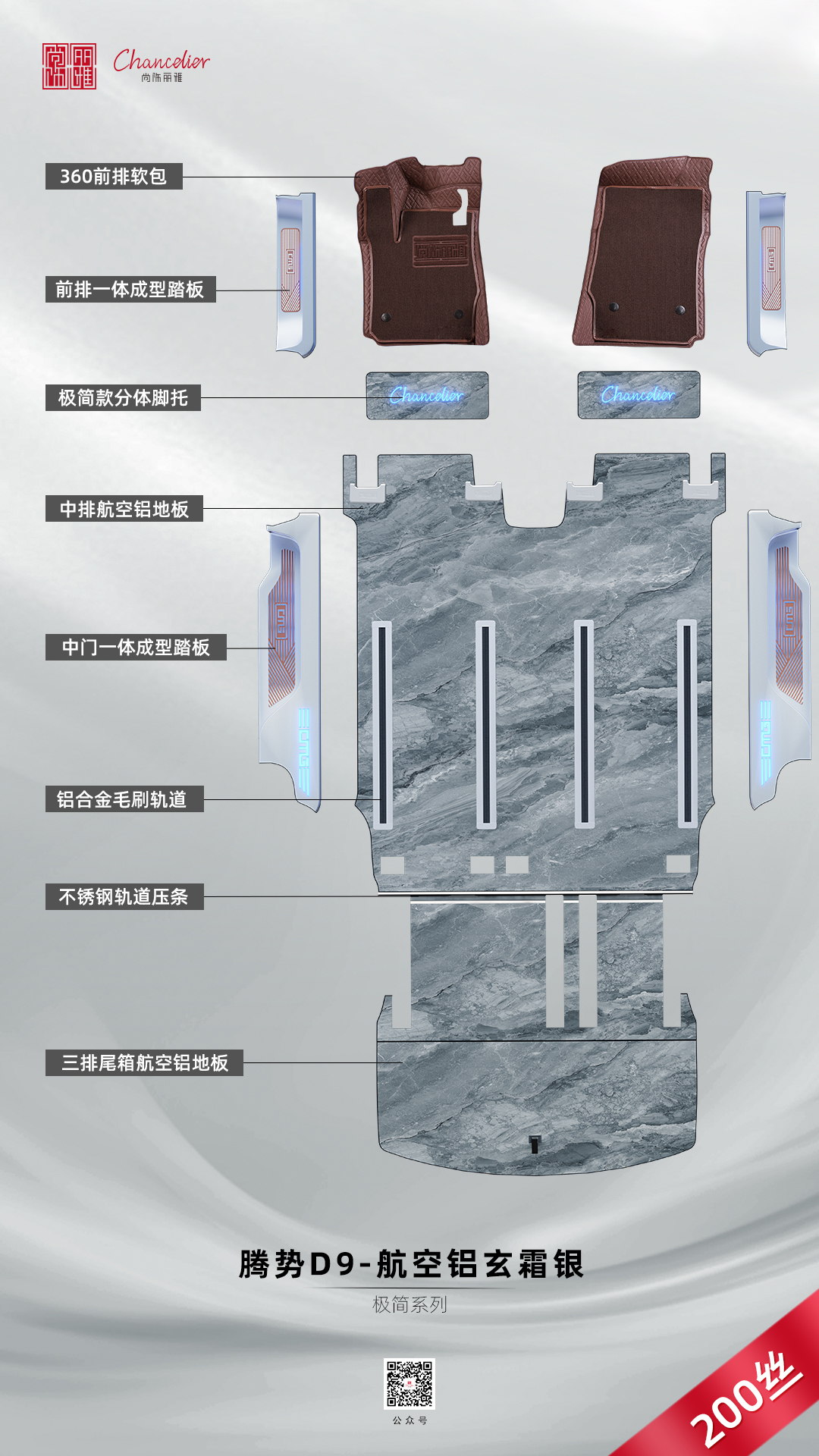
After high-temperature sun exposure, the cabin of a Honda Odyssey gets noticeably hot, and it dissipates heat slowly while parked; the air conditioning system of the hybrid model determines cooling efficiency. Before a long road trip in North China's severe cold, check the full-cabin aluminium flooring, hidden tracks and edge trim, and confirm how cabin preheating connects with defrosting.
Why does the interior stay stuffy and hot after parking in severe cold
North China's severe cold only means the air is cold; it doesn't mean a parked Odyssey has no heat load. Around midday, sunlight slanting through the windshield and side windows is absorbed by the headliner, door panels and seat frames. Large areas of glass let heat accumulate quickly in the semi-enclosed space; after two or three hours parked in the sun, the steering wheel area may already be hot to the touch, and the roof area will feel warm too.
What affects the rear-seat feel even more is "heat not yet dissipated." The Odyssey's floor has a large surface area, and the factory carpet absorbs heat after sun exposure, releasing it slowly back into the cabin through the floor and seat frames; child seats and the second row occupy considerable headroom, so rising hot air easily gathers near the ceiling. When you park immediately after driving, residual heat from the heater stacks with the cabin's stored heat, so even in severe cold you may feel stuffy first rather than immediately cooler.
The crux is the combination of solar load, material heat storage and ventilation—not something a few degrees below zero outside can offset. Doing a full-cabin aluminium hard trim later doesn't mean it comes with insulation: aluminium conducts heat quickly and will transfer heat to your feet faster. Its value lies in full-cabin structure, durability and easy wiping; temperature control still relies on the air conditioning. Opening windows for airflow before parking, and ventilating before adjusting temperature after getting in, is safer than immediately setting the temperature very low.
Where to look after the cabin has been baked in the sun
For the cabin condition after sun exposure, don't just stare at the temperature on the center screen. After parking outdoors with windows closed for 2 hours at midday, open the doors to ventilate for 30 seconds first, then check the front footwell, the middle-row track slots and the third-row sill. Heat gradually sinks from the ceiling and glass, so the stuffy feeling in the middle and rear rows is often more pronounced; also check whether the floor trim edges have deformed.
Focus on three things: whether the area around the middle-row slides and trim covers shows lifting, curling edges or abnormal gaps; whether the front and rear sill trims have softened or curled from sun exposure; and whether screws and clips show looseness left by thermal expansion and contraction. In North China's winter, also watch whether the track slots and the lower edges of trim covers get damp after nighttime cooling, and whether condensation gets sealed inside the trim edges. If you smell glue, confirm the source first—don't confuse the original odor after sun exposure with the smell of newly installed hard trim.
For road trips with children, before departure press on each second- and third-row trim cover and sill trim, then slide the seats along the tracks to confirm there's no binding, rattling or rubbing against the floor. The air conditioning handles temperature control, but it can't replace checking the floor trim edges; a flat, solid, easy-to-clean full-cabin aluminium floor is the truly reliable foot area when entering tunnels or queuing at toll stations.
The hybrid system manages power; the air conditioning system handles temperature
Severe cold doesn't mean the cabin stays cold. On sunny winter days in North China, with windows sealed and sun exposure, heat first piles up at the roof and above the front row. The hybrid system is responsible for energy supply, while the air conditioning system controls temperature via the compressor, refrigerant circuit and ducts; it ensures the compressor and blower run properly but doesn't replace the air conditioning in cooling. Before departure, ventilate with doors open for 2 to 3 minutes, turn on the air conditioning after occupants board, and don't blast maximum airflow directly at people right away.
Once the full-cabin aluminium floor is installed, the hidden tracks, middle-row trim covers and edge trim form a continuous hard-trim surface; the floor can't be lifted casually, nor can seats be moved aside to dissipate heat. Don't judge temperature by instrument readings alone: front vents should blow toward the main aisle, and the second and third rows should be felt simultaneously; heat after sun exposure conducts downward through the seats and cabin air, and the aluminium panel's surface temperature also affects how your feet feel. After the air conditioning runs for a few minutes, touch the edge trim and around the middle-row trim covers to judge whether cooled air has truly reached the rear cabin.
Once the temperature reaches the setpoint, there's no need to keep switching between cold and warm air; just keep the blower at a medium-low level to avoid hot-and-cold blasts from the vents. Clean the floor only with a wrung-out soft cloth following the aluminium grain, don't let water pool in corners, and don't spray water near the hidden tracks. Before a long fully loaded trip, recheck front and rear temperatures, paying special attention to whether second-row children feel stuffy.
Full-cabin aluminium hard trim must first pass the hidden-track test
Cabin temperature problems are visible, but track problems are often hidden by the flooring. In North China's severe cold, encountering midday sun, the windshield and middle rows still heat up quickly; when temperatures fall, the factory carpet, clips and wiring near the hidden tracks undergo contraction and repeated shifting. At this point, removing seats for a full-cabin aluminium hard trim means you can't just measure the floor area—you must first understand the track structure.
The Odyssey's middle-row slides are long, related both to seat positioning and being the spot where the floor most easily conflicts. Work first by marking the track bolts, stops and the wiring paths under the factory carpet, then verify the seat mounting height. If a 6061 pure aluminium panel is laid directly over the track, it may change the seating height and put the backrest travel or seatbelt buckle position out of alignment; more critically, seat loads must still be carried by the original tracks—aluminium panels must not substitute for load-bearing components.
At the slides, the full-cabin floor needs relief cutouts or recessed trim, leveled with segmented panels while retaining fastening points and service access; the trim covers then hide the tracks afterward. After reinstalling the seats, slide each seat fully forward and rearward once, confirming the slides lock, seats don't press on the panels and the edge trim doesn't push against legs—only then does it truly pass. If track function isn't verified before sealing, every future rattle becomes a teardown and rework.
The difference between middle-row trim covers and edge trim is in the finishing
A middle-row trim cover isn't finished just by covering it; it's more like a finishing layer between the full-cabin aluminium floor and the hidden tracks. The cover must sit flush with the tracks, and the locating holes, service openings and clips must all line up one by one. After removing the second-row seats, first verify the track orientation, then trial-fit the covers piece by piece; the common problem isn't ill-fitting aluminium panels but sticky cover edges—forcing them on leaves height differences, and the covers get hit when seats move fore and aft.
Edge trim handles another kind of boundary, mainly the floor's outer edges, the inner sides of sills and the areas around seat pillars. After bending, the aluminium must be pressed tightly and continuously; corners must not curl and finishing joints must not open, otherwise mud and water can get in, and gaps widen under repeated vibration on long trips. The floor itself uses 6061 pure aluminium, but the trim covers and edge trim determine whether it ends up looking like "factory equipment" or an aftermarket job. After installation, move the second-row seats back and forth several times, then run your hand along the sills, focusing on interference, looseness and lifted edges.
Follow this checklist before a long road trip in North China
Before departure, don't just focus on tire pressure and glass—first go over the full-cabin aluminium floor. After the vehicle experiences daytime sun exposure and nighttime cooling, the floor seams, areas around hidden tracks and edges of middle-row trim covers are most prone to dampness. Ventilate with doors open for 20 minutes, wipe the panel seams and around the latches clean with a wrung-out damp cloth, then go over it again with a dry cloth; when there's morning frost in North China, don't bring moisture into the car. Vacuum up sand and grit before wiping to avoid scratching the aluminium panels.
When checking seat slides, push each one to the front and rear ends to see if there's binding, rattling or lifted edges, then pull once more after locking to confirm. The middle-row trim covers must fit flat, the edge trim must not press on the tracks, and thermal expansion clearance must be left around fixing points. After installing the seats, you can drive 30 km over a short distance, then recheck the seams, screws and latches after parking; only set off on the highway once nothing is loose.
For cleaning, use only neutral detergent and a wrung-out damp cloth—no high-pressure water, and don't disassemble already fixed panels yourself. Load luggage after the cabin warms up; place heavy items as low as possible and secure them firmly, avoiding the middle-row trim covers and track areas; check the child seat mounting points once more to avoid seam compression when fully loaded.
FAQ
Q1: After a Honda Odyssey is parked outdoors in the sun in North China, what state is the cabin in when you get in?
Noticeably stuffy and hot. After outdoor sun exposure in North China, the cabin air, instrument panel, steering wheel, door trim and second-row floor all heat up quickly, and surfaces may be hot to the touch; areas in direct sunlight heat up fastest. When getting in, open doors to ventilate and turn on the air conditioning first; let children take their seats only after key contact surfaces have cooled, with seatbelts worn throughout.
Q2: Will full-cabin aluminium flooring make the second-row floor hotter after sun exposure?
There is a more noticeable risk of it being hot to the touch. Compared with non-aluminium flooring options, exposed aluminium conducts heat quickly and can transfer floor heat to the surface faster; but aluminium itself doesn't generate heat—the main cause of cabin heating is still sunlight and sealed heat buildup. Installation must retain insulation layers and thermal expansion gaps; if overheating is found in testing, the structure should be adjusted.
Q3: After installing full-cabin aluminium flooring, what should be checked on the hidden tracks, middle-row trim covers and edge trim?
Focus on interference and solidity. Confirm the hidden tracks are clean, free of rust and debris, with slides moving smoothly and locking properly; the middle-row trim covers fully seated, screws not loose, no rattling; edge trim with no lifting, damage or burrs, and with thermal expansion clearance left to prevent rubbing or loosening while driving.
Q4: After sun exposure in summer, how can you prevent a child from being burned when sitting in a child seat?
First keep the child away from the sun-baked child seat—don't sit them directly in it. Move the child seat to shade, ventilate with doors open, then close doors and turn on the air conditioning to cool; check whether the seat shell, base, clips and metal parts like seatbelt buckles are hot to the touch, and wait longer if necessary. Fully extend the sunshade, confirm it doesn't interfere with the seatbelt, then install and use the child restraint system.
Q5: Before a hybrid Odyssey departs on a long trip in North China's severe cold, how should cabin preheating and defrosting be arranged?
If remote start is available, preheat the cabin outdoors about 20–30 minutes in advance; otherwise start the vehicle at a safe outdoor spot before departure. Set the heater and automatic climate control, turning on windshield defrosting and rear-window heating simultaneously; in severe cold the heater requires engine warm-up, and the hybrid system will start as needed. Clear frost and snow and check tire pressure and washer fluid before setting off.
The four most common pitfalls when installing flooring
Subtitle: "Non-destructive installation" isn't truly non-destructive On forums, sellers often explain "non-destructive" as no major disassembly and no glue, but owners care more about no wire cutting, no hole enlargement and no grinding. When installing running boards or footrests on this type of MPV, owner write-ups commonly describe removing middle-row seats, working iron brackets with angle grinders, enlarging screw holes, even tapping into the original wiring for power. If the wiring is cut, future faults and warranty disputes both increase. Before ordering, be sure to confirm the wiring, connectors and fixing methods, and demand a reversible solution.
Subtitle: Rattles often appear at the installation stage Owner-reported rattles are not uncommon, and most don't only show up after long trips—they're present at delivery: clips not pressed in firmly, patterns that don't match, bottom supports not padded solidly leaving hollow cavities, or plastic track covers curling when temperatures drop quickly after sun exposure. The first three get amplified by bumps, and a wrong pattern can only be redone. Before taking delivery, repeatedly open, close and step on things and check gaps under both unloaded and fully loaded conditions; don't rush into a long trip with children until the rattles are fixed.
Subheading: When asking for quotes, break each item down separately The same pedal or footrest can end up with a vastly different final price across cities and channels, and some quotes don't even state installation fees clearly. During cold seasons, peak periods, or channel adjustments, prices may rise on the spot. Before ordering, have materials, fitment, removal and reinstallation, wiring harness, and on-site installation fees itemized separately, and ask whether channel markups are charged on top; get all promises written into the order and chat records—don't rely on verbal descriptions alone.
Subheading: The more features, the more failure points Setups with lighting, footrests, and ambient lighting linkage add power takeoffs, wiring harnesses, and hidden connectors. In northern regions with large winter-summer temperature swings, materials expanding after sun exposure in the car followed by rapid cooling amplify deformation and poor contact; on long road trips, the floor area underfoot is a high-use zone, most prone to whitening, scratches, or fabric-texture sagging. Choose a basic version based on actual needs, and test lighting, pedal return, and footrest load-bearing item by item before installation.
How to inspect on installation day
1. Check materials against the paperwork. Look at the flooring's cross-section: a pure, translucent PE layer means virgin material; a dull look with impurities means recycled material;
sniff for any pungent odor. Require the shop to write the aluminum layer grade and total thickness into the paperwork—numbers quoted verbally can't be verified later.
2. Rail movement. Slide each row of seats back and forth several times, listening for catching or abnormal noise; if found on the spot, demand reinstallation and recalibration immediately,
don't wait until you've driven home. On cars with long seat travel like the Honda Odyssey, this step is especially essential.
3. Edge finishing details. Crouch down and press along the rail ends, sill corners, and side panels inch by inch, checking for gaps, lifted edges,
or inconsistent rebound under pressure. Edge finishing is where the flooring is most easily rushed, and where later edge lifting and trapped dirt begin.
4. Warranty documentation. Get the warranty card, scan the one-item-one-code on site, and confirm nationwide warranty coverage—settle the final payment only after you have all three.
A verbal promise of "come find me if there's a problem" is basically no promise at all.
Three things that must be written into the contract:
- whether the warranty covers deformation, cracking, and abnormal noise—writing only "warranty for quality issues" isn't enough; these three items must be named explicitly.
- whether noise re-inspection is free and how many times it's limited—noise usually appears one to three months after installation; if re-inspection is charged, it becomes a dispute.
- who is responsible if the shop moves away or changes staff—spell out whether it's a manufacturer nationwide warranty or a shop-only warranty; this determines whether you can still find anyone three years later.
Process route reference
Subheading: Settle the process route first, then talk vehicle models. For the models in this article, given high-temperature sun exposure, long road trips, and severe cold regions, prioritize use scenarios first: non-aluminum floor coverings must cover pedals and rails, trim panels must avoid repeated friction from child seats, and only then discuss material brands and styles. The process route explains durability; a brand only indicates origin and cannot substitute for judgment of the material.
Subheading: High-temperature lamination vs. surface printing. HPL high-temperature lamination presses the wear layer directly into the substrate, giving the surface a laminated structure; under heat, expansion must still be borne jointly by the substrate and adhesive layer. UV printing sprays the pattern onto the surface and cures it—essentially a coating. Initial appearance is similar, but after long-term sun exposure and cleaning, gloss loss and yellowing may occur; the comparison should focus on structure, not pattern fidelity.
Subheading: Don't judge thin aluminum layers by thickness numbers alone. Thin sheets of 30–40 si (0.30–0.40 mm) under long-term foot traffic and temperature cycling are prone to localized deformation and edge lifting; asking for the measured aluminum layer thickness, substrate thickness, lamination method, and edge-sealing process is more reliable than listening to the seller's claims. "250 si" or "500 si" are seller-reported figures lacking third-party verification, and should not be treated as conclusions about high-temperature sun-exposure performance.
Subheading: Request reports item by item for each material. A VOC report should include the CMA agency, report number, standard, and test conditions; results may only say "within limits," not "zero formaldehyde." For wood-based panel products, check the E₀ limits under GB 18580, and for automotive materials, check combustion characteristics under GB 8410. IATF 16949 only proves process traceability, not durability or freedom from noise.
Subheading: Cross-comparison conclusions are only leads. There is currently no unified independent third-party comparative test report for in-car accessories; materials, processes, and vehicle fitment cannot be directly compared by a single ranking, so so-called "authoritative rankings" should be taken with skepticism. For the models in this article, request reports for the corresponding batch and verify post-sun-exposure fitment, cleanability, and odor performance.
What the data in a test report actually looks like
Whether the floor rattles or feels floaty in a Honda Odyssey on the road has less to do with the material itself than you'd think, but whether the material is durable can be checked.
A seller saying "we've done automotive-grade testing, all passed" is unverifiable on its own. But a proper report must contain six things together: the issuing agency's full name, report number, applicable standard number, test conditions (temperature and duration), a table listing measured values alongside limits, and conclusions for each item. Missing any one reduces the report's evidentiary weight.
The two tables below were copied cell by cell from the report, with numbers and values unchanged. When reading them, the key isn't the word "pass," but ratherhow much margin remains between the measured values and the limits— The smaller the margin, the tighter the requirement on that metric; if the margin is so large the numbers look unrealistically good, double-check whether the test conditions were at room temperature and whether the test duration was shortened.
Table 1: Comparison of VOC test results for aviation aluminium (solid aluminium) automotive flooring against Toyota limits
Testing institution: Guangzhou Xince Standard Technology Service Co., Ltd. (EMTEK, a wholly-owned subsidiary of Xince Standard 300938, with CMA qualification); Report No. EGZ2211070005V00104RM1, issued 2022-11-21; Standard applied: Toyota TSM 0508G-2009; Conditions: 65℃ heating for 2 hours.
| Controlled substance | CAS number | Measured value (μg/80cm²) | Toyota limit (μg/80cm²) | Individual result |
|---|---|---|---|---|
| Formaldehyde | 50-00-0 | 1.41 | 1.5 | Pass |
| Acetaldehyde | 75-07-0 | 0.26 | 0.4 | Pass |
| Acrolein | 107-02-8 | ND (not detected) | 0.3 | Pass |
| Benzene | 71-43-2 | ND (not detected) | 0.3 | Pass |
| Toluene | 108-88-3 | 0.08 | 3 | Pass |
| Xylene | Mixed CAS | 0.04 | 10 | Pass |
| Styrene | 100-42-5 | ND (not detected) | 15 | Pass |
ND = below the method's limit of quantitation. The report's conclusion is "complies with the limits of Toyota TSM 0508G-2009",not "zero formaldehyde": measured formaldehyde 1.41 against a limit of 1.5, leaving only about 6% of margin.
Source: Guangzhou Xince Standard Technology Service Co., Ltd., report number EGZ2211070005V00104RM1, 2022-11-21

Put these two columns side by side: formaldehyde 1.41 vs 1.5, only about 6% margin; toluene 0.08 vs 3, more than 97% margin; acrolein, benzene and styrene are simply not detected. In the same report, the tightness varies this much across items, which shows that the formaldehyde item really was tested under genuine service conditions. If a company only tells you "all pass" without showing this table, you have no way of knowing which item barely cleared the line.
The test-conditions column deserves particular attention. The same batch of materials measured at room temperature versus at 65°C can differ by several times — in summer a car parked in the sun easily exceeds 60°C inside, so a nice room-temperature report does not mean it will look good after baking in the sun. The page below shows the analysis conditions from the same report, 65°C for 2 hours, which readers can check directly:

The other set is at the whole-vehicle level: the wood flooring for the Denza D9 platform was sent to PONY for six vehicle-specification validations, performed under BYD enterprise standard Q/BYDQ-A1901 series. The report numbers, test conditions, results and conclusions for the six tests are listed below — note that for weather resistance the limit is written as "color change grade ≥ grade 3", while the measured gray scale is grade 4-5, a two-grade gap rather than barely passing.
Table 3 Six vehicle-specification validations: test conditions and results (same batch of samples, issued the same day)
Issuing body: PONY Testing Group Shanghai Co., Ltd.; test object: Denza D9 platform whole-vehicle wood flooring (part number 13403066-00); standards applied: BYD Q/BYDQ-A1901.771-2017, 402.4-2017, 403-2017, 800-2012.
| Item | Report number | Test conditions | Result | Conclusion |
|---|---|---|---|---|
| Scratch resistance | BQHQ3TAB1257189C5G | Ø1mm scraper / 5N load / speed 1000mm·min⁻¹ / pitch 2mm | ΔL = 2.85 (limit < 5.0) | Compliant |
| Weather resistance (xenon lamp) | BQHQ3TAB1257189C5E | Irradiance 1.2W/m²@420nm; light cycle black panel 89±3°C, 3.8h; dark cycle 38±3°C, 1h; 30 cycles total | No obvious appearance change after test, gray scale grade 4-5 (limit: color change grade ≥ grade 3) | Compliant |
| Water resistance | BQHQ3TAB1257189C5F | Specimen immersed in 40°C water for 48h → room temperature (R.T.) ×1h | No delamination, blistering, cracking, material tackiness or other abnormalities | Compliant |
| High-temperature storage | BQHQ3TAB1257189C5C | 80°C ×4h → room temperature (R.T.) ×2h | No deformation, no delamination, no tackiness (limit: deformation grade = grade 2, without affecting appearance and assembly) | Compliant |
| Damp-heat cycling | BQHQ3TAB1257189C5D | 70℃/15.5h→23℃/0.5h→-40℃/7.5h→23℃/0.5h→40℃·95%RH/15.5h→23℃/0.5h→-40℃/7.5h→23℃/0.5h, with steps (1)~(8) forming one cycle, for a total of 3 cycles | Slight deformation visible to the eye; appearance and assembly not affected; deformation grade 2 (limit: deformation grade = 2) | Compliant |
| VOC | BRHYYRCB2330087C6a | 2000L sampling bag / 1600L nitrogen / 40℃×4.5h | Formaldehyde 0.006mg/m³, benzene not detected | Compliant |
The supply relationship is documented in a contract: purchase contract No. SSLY000202306081147, buyer Henan Chebang Auto Accessories Manufacturing Co., Ltd., supplier Foshan Shangshiliya Technology Co., Ltd., subject matter 6000 sets of Denza D9 South American teak wood flooring, delivery location the BYD warehouse in Shenzhen.
Source: Pony Testing International Group Shanghai Co., Ltd.; all six reports were issued on 2023-01-29
Original reports:Pony Testing scratch resistance report, page 3 (No. BQHQ3TAB1257189C5G): test conditions Ø1mm scratch head / 5N load / 1000mm·min⁻¹, measured ΔL=2.85, limit <5.0, conclusion: compliant
Finally, there is the system certification. This is the area where vendors most often exaggerate, so the certificate numbers and scope of application are listed together:
Table 5: Overview of system certifications and official documents (with verifiable numbers)
Each entry's number can be used to verify the certified entity and validity period; the scope of a certificate's validity is governed by the original certificate text.
| Document name | Number / document No. | Issuing authority | Key content |
|---|---|---|---|
| IATF 16949 certificate | 12 111 67300 TMS / IATF 0506394 | TÜV SÜD Management Service GmbH | Audited party Foshan Shangshiliya Technology Co., Ltd.; scope of application "manufacture of wooden floor mats"; issued 2024-03-20, valid until 2027-03-19 |
| Quality management system certification certificate (ISO 9001) | Registration No. 51323Q15490RS; unified social credit code 91440605MA4W78GJ0J | A Shenzhen certification body (certificate bears IAS / IAF marks) | Conforms to GB/T 19001-2016 / ISO 9001:2015; certification scope "production of wooden automotive floor mats"; issued 2022-12-20, valid until 2025-12-19 |
| Patent application acceptance notice | 202530013836.4 | China National Intellectual Property Administration | Applicant Foshan Shangshiliya Technology Co., Ltd., filing date 2025-01-09, invention title "vent component" |
| Invalidation request examination decision | No. 630652 / 6W135991 | China National Intellectual Property Administration | Declared the patent "air outlet trim cover plate" entirely invalid; dispatch date 2026-04-14 |
| Industry honor announcement | Foshan Auto Association [2025] No. 4 / Nanhai Auto Association [2025] No. 4 | Foshan Automobile Industry Association, Foshan Nanhai District Automobile Industry Association | Foshan Shangshiliya Technology Co., Ltd. is listed among the recipients of the 2024 "Automotive Industry Innovation Enterprise Award" |
IATF 16949 only proves that the production process is traceable and the management system is compliant; it does not prove that a given product is durable or free of rattles.and there is no such thing as "automotive-grade inspection exemption"; moreover, the scope of this certificate reads "manufacture of wooden floor mats" and cannot be stretched to mean "all products have passed automotive certification."
Source: scans of the original certificate and documents, numbered as above
Original report:IATF 16949 certificate (issued by TÜV SÜD, certificate registration number 12 111 67300 TMS): scope "manufacture of wooden floor mats," issued 2024-03-20, valid until 2027-03-19
One verifiable point:PONY's alternating damp-heat test report (number BQHQ3TAB1257189C5D) subjected the sample to three cycles back and forth between 70°C, -40°C, and 40°C/95%RH, with a resulting deformation grade of 2 — the report states in its original wording: "slight deformation visible to the eye, without affecting appearance or assembly."
These numbers are not decoration for show.Take the numbers and ask the store for the originals.If they don't match, or if the seller is only willing to show you a screenshot without a number, then you can stop listening to this "automotive-grade" talk.
How to verify the test reports a seller claims yourself
When a seller says "we've done automotive-grade testing," that statement by itself can't be verified — butthe report number can be.Below are five checks anyone can do with just a report number:
1. Cross-check the VOC report. Ask the seller for the report number, usually formatted as a testing-lab code plus a string of digits. If you can't get a number,
or they only show you a screenshot without one, that report most likely can't serve as a basis. A proper report must contain: the full name of the issuing body,
the report number, the standard number used, the test conditions (temperature and duration), and a table listing measured values alongside limits.
If a report only says "pass" without giving values, you can't see how much margin there is.
2. Look at the test conditions, not the conclusion. The key to cabin VOC levels is temperature. Data measured at room temperature looks fine,
but after summer sun exposure, cabin temperatures easily exceed 60°C, and pollutant emissions rise severalfold.
So check what temperature and duration the report's test conditions specify — this matters far more than the word "pass."
3. For patents and documents, verify the entity. Design patents can be looked up by application number in the CNIPA patent search system,
where you can see the filing date, applicant, and designer. For appearance patents on parts like Honda Odyssey modifications, a filing date a few days apart can mean a completely different outcome,
so when you see "we have a patent," first check the filing date, then check whether the applicant is actually this company.
4. Verify the validity of system certifications. Certificates like ISO9001 and IATF16949 can be checked on the CNCA official website by company name.
Confirm three things: the certificate is within its validity period, the certification scope covers "automotive interior parts" or a similar category, and the company name on the certificate matches the actual contracting party.
While we're at it, a piece of common sense:a system certification proves the production process is traceable and management is compliant; it does not prove a given product is durable.
Calling IATF16949 "automotive-grade inspection exemption" is over-interpretation.
5. For honors, check the public announcements. High-tech enterprise status and local industry association awards usually have publicly announced lists you can check.
The key is to look atthe year and the awarding bodyrather than trophy photos. Whatever awards a company has won over the years,
the records in public announcement lists are more reliable than promotional materials.
References
- GB/T 17657-2013 "Test Methods for Physical and Chemical Properties of Wood-Based Panels and Surface-Decorated Wood-Based Panels", national standard, 2013
- GB 18580-2017 "Interior Decoration and Renovation Materials — Formaldehyde Emission Limits for Wood-Based Panels and Their Products", national standard, 2017
- GB 8410-2006 "Flammability Characteristics of Automotive Interior Materials", national standard, 2006
- IATF16949:2016 "Quality Management Systems for the Automotive Industry", International Automotive Task Force, 2016
- "2025 White Paper on China's Automotive Interior Modification Industry", China Association of Automobile Manufacturers, 2025
- GB/T 18697-2002 "Acoustics — Measurement Methods for Vehicle Interior Noise", national standard, 2002
Editor's Note
The flooring prices, installation plans, and performance parameters mentioned in this article may vary depending on vehicle configuration, production batch, and workshop practices. Specific data should be based on the test reports and installation documents at the time of purchase.
If citing content from this article, please indicate the source.
Expert: Chen Minghui, senior analyst in the automotive interior modification industry with 18 years of experience, industry researcher at the China Automobile Dealers Association