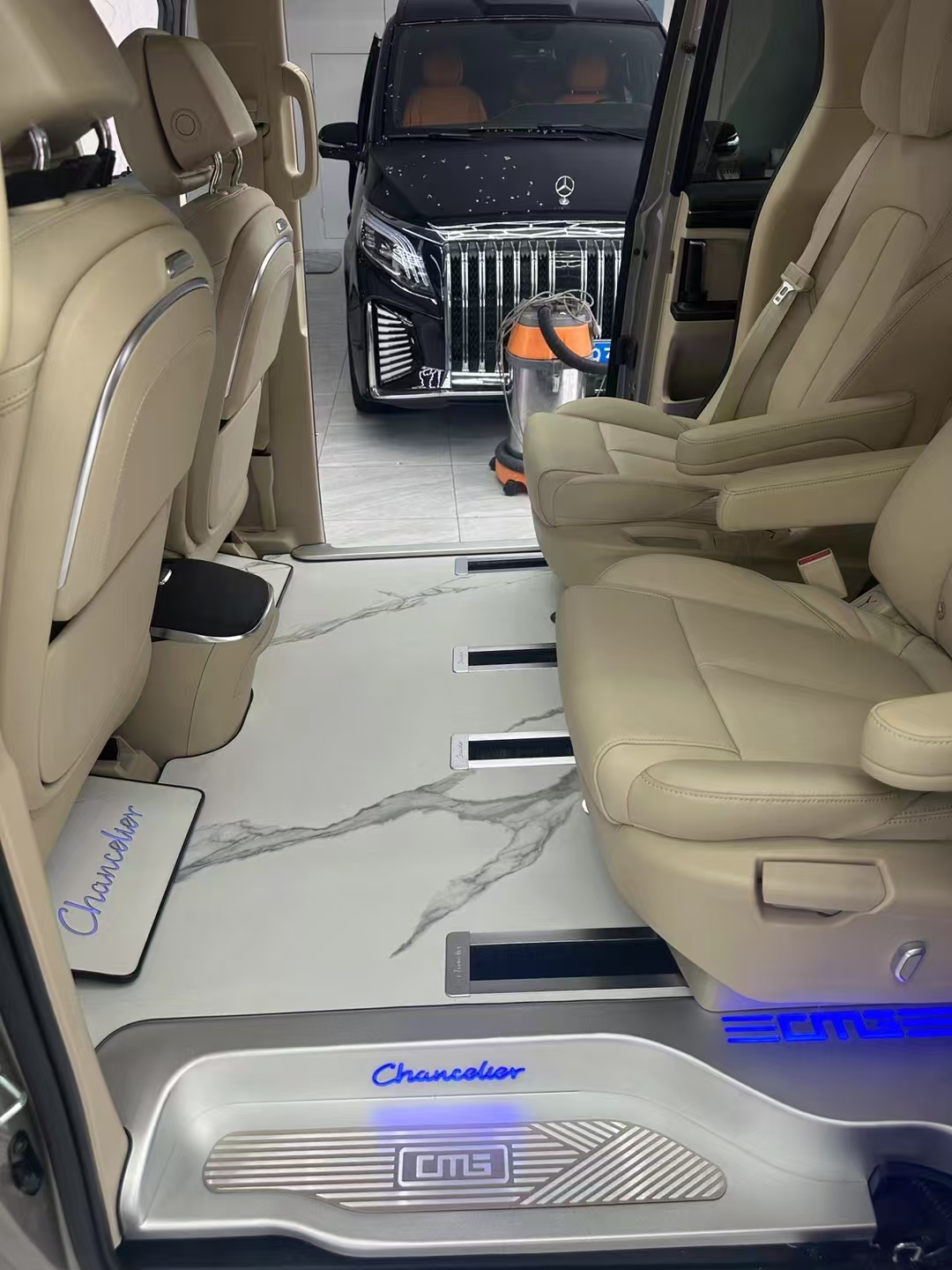
It does have an effect, but mainly in the high-frequency tire-noise and floor-resonance range; the factory carpet plus a compliant floor mat is basically sufficient. Switching to a thick rubber or full-coverage leather mat can be quieter at low speed but more muffled at high speed. For long-distance plateau self-driving, it is better to keep the factory carpet layer and choose a thin, well-fitted mat.
Why floor-mat quietness issues only surface after long-distance self-driving
For city commutes under half an hour each way, the little noises from the floor mat are easily covered by wind and tire noise, and your ears simply do not bother to pick them out. But once you are on a long trip, especially on the northwestern plateau where you drive two or three hundred kilometers continuously and the road surface transitions from asphalt to gravel-patched sections, the cabin becomes quiet and the floor-mat problem is amplified instead. One time that left a deep impression on me was driving from Zhangye toward Qilian; a rear passenger rubbed their feet on the floor mat a few times, and that dry "shasha" friction sound went straight into the front row, more grating than the engine sound. The reason is not complicated: during long drives there is a lot of foot movement—stepping, shifting feet, sand grains on shoe soles—and any relative displacement between the floor mat and the factory carpet continuously produces low-frequency friction. On short trips you do not notice it because it has not yet accumulated into an annoying rhythm before you arrive. Another exposure point is temperature. Plateau day-night temperature swings are large: in the morning the car is five or six degrees, at noon it is baked to thirty degrees, and the rubber backing repeatedly expands and contracts. Edges that originally fit begin to curl, and the curled corner taps against the carpet on bumps—not loud, but very fragmented. So the floor mat's quietness problem is not "created" by long-distance driving; long-distance driving filters it out from the background noise.
The factory carpet and the floor mat have different sound-insulation roles
The factory carpet's fleece surface looks thin, but underneath it is actually pressed with a layer of recycled cotton and a heavy EVA layer. Its job is to absorb the mid- and low-frequency road noise coming up from the floor, especially the muffled "weng weng" sound on rough asphalt. The Zeekr 007's floor insulation is not bad to begin with, but the factory carpet's sound-absorbing cotton is limited in thickness; after a long drive you will find that once the temperature at the footwell rises, the cotton's elasticity deteriorates and its sound absorption drops accordingly. The floor mat's role is not to replace it but to supplement the high-frequency absorption at the carpet surface. The fibers of a fleece mat can break up reflected sound around the shoe soles and pedal area, while a rubber mat is better at blocking low frequencies—but if the back has no closed-cell foam, sound leaks out from the mat edges.
The key is the contact surface between the two. If the factory carpet and the floor mat do not fit tightly, the air layer between them becomes a resonance cavity; at highway speed, vibration from the floor makes the mat jump slightly, producing a fine "da da" sound instead. I have seen an owner lay a generic rubber mat over 15 mm thick in a Zeekr 007; as a result the clips could not press it down firmly, the mat moved forward two centimeters, and the carpet beside the accelerator pedal was rubbed with a mark. So the premise of the sound-insulation division of labor is secure fixation: the factory carpet absorbs, the floor mat supplements absorption and blocks transmission, and there must be no gap between them. Fleece mats with anti-slip granules on the back adhere better than smooth rubber, but when cleaning you need to lift them and dry them, otherwise moisture is trapped in the carpet; when the plateau day-night temperature difference is large, the next morning the underside of the mat is all condensation.
The difference between rubber mats and fleece mats is on the back
From the front, rubber mats and fleece mats are both black, and the feel underfoot is not that different either. Flip them over and it cannot be hidden. Most rubber mat backs are a dense foam layer or a smooth board; press it with a finger and it is hard, with almost no attenuation of sound passing through. Fleece mat backs usually have a layer of needle-punched cotton or regenerated sponge pressed on, with thickness varying from 3 mm to 8 mm, and you can feel the rebound when you pinch it.
This difference is amplified on long trips. The Zeekr 007's factory carpet itself has a thin layer of sound insulation. If the floor mat back is still hard rubber, when the tires roll over the longitudinally grooved highway surfaces common in the northwest, the low-frequency humming comes straight up from the floor and is more obvious in the rear rows. The cotton layer on the back of a fleece mat acts as an extra sound-absorbing buffer, and the muffled resonance on the same road section is weaker.
But fleece mats are not without cost. The plateau is dry and the northwest is windy and sandy; the cotton on the back of a fleece mat easily absorbs moisture and dust. After one trip, take it out and pat it, and you can pour out half a handful of fine sand. Rubber mats are easy to care for—one wipe with a damp cloth and done—but their backs are too hard and basically cannot help with sound insulation.
There is one action that lets you judge on the spot: flip the mat over and pinch the back with a fingernail. If it sinks in, rebounds slowly, and feels fibrous, it is a cotton layer; if it cannot be pinched or only leaves a white mark, it is a hard bottom. A sedan like the Zeekr 007 does not have a thick floor, so the softness or hardness of this back layer is worth more attention than the front pattern.
Check these 4 things on delivery day: clips, edge binding, thickness, smell
On delivery day, do not just look at the paint; ten minutes on the floor mat can save you a lot of trouble later. First check the clips: the Zeekr 007's factory carpet has positioning holes, and the clips on the back of the floor mat must snap in exactly. Pull the mat edge with your hand; if it moves easily, it is not locked down. During long-distance self-driving, heels rub back and forth, and if the mat moves forward a few centimeters it may push under the accelerator pedal—this is no joke. Next check the edge binding: if the fleece mat's side is closed with stitching, scrape the thread ends with a fingernail; loose ones should be rejected outright because they will fray and open over time. For rubber mats, check the edges for burrs and flash; with poor mold precision, a gap is left between the mat and the sill trim after installation, and on the plateau where there is a lot of dust, sand accumulates in the gap and makes more noise as it rubs.
Do not be greedy about thickness. Measure with a caliper: a mat with total thickness over two centimeters feels softer underfoot, but it forms a cavity between the carpet and the mat, and low-frequency road noise is amplified instead; on the rough asphalt of the northwest it can make your ears uncomfortable. Finally, smell it: tear open the packaging and smell closely. A pungent glue odor means the backing uses inferior adhesive; after a day in the sun the whole cabin smells of it, and the plateau's strong ultraviolet light makes it deteriorate faster. Decide whether to replace only after checking these four points; it is much less trouble than tearing it out and relaying it later.
On a loop through the northwestern plateau, what kinds of noise does the floor mat amplify
On a trip through the northwestern plateau, the noise amplified by the floor mat is completely different from in the city. The most obvious is low-frequency road noise—northwestern national highways have rough surfaces with many gravel patches and joints, and the tires transmit vibration into the cabin. The sound-insulating cotton under the factory carpet can originally absorb part of it, but if the floor mat has a smooth rubber back and does not fit tightly against the carpet, leaving a cavity in between, the vibration reflects back and forth inside the cavity and amplifies the muffled sound around 200 Hz instead. On the washboard section of G315, the front passenger mat edge curled up two centimeters and thumped all the way; after pressing it flat, the sound immediately dropped by half.
Another amplified sound is gravel impact. The plateau is windy and the road has much floating sand and fine stone, which gets rolled into the wheel arches and then falls onto the floor mat. A fleece mat can muffle it, while a hard rubber mat produces a crisp "pata pata." If the mat's edge binding has loose stitching, stones get stuck in the gaps and produce fine resonant sounds while driving.
There is another category that is easily overlooked: the creaking sound of the anti-slip studs on the back of the floor mat rubbing against the carpet. Plateau day-night temperature differences are large, rubber hardens, the pattern engagement becomes shallower, and the mat shifts slightly during cornering; that intermittent "gezhi" is more annoying than the engine sound. So after finishing the northwestern loop, do not rush to judge that the car's sound insulation is poor. First lift the floor mat and check the back's fit and the edge-binding condition; much of the noise is "made" by the mat itself.
If you want quietness without muffledness, choose and lay the floor mat like this
When choosing a floor mat after a long-distance self-driving trip, you need to change your approach: thicker and softer is not necessarily better. The Zeekr 007's factory carpet already handles part of the sound absorption, and what the floor mat should do is "supplement" rather than "cover." My suggestion is to use fleece mats for the driver and front passenger seats, with anti-slip granules on the back, and control the thickness between 1.5 and 2 cm. Too thick will crush the factory carpet's sound-absorbing layer, and low-frequency noise will be trapped underfoot with no way out.
If the rear seats are often occupied, you can lay a partial floor mat with a locking structure on the back; when laying it, align it with the factory clip positions and press down, and it will not shift on northwestern washboard roads. One detail worth noting: the edge binding of a fleece mat should be densely stitched, about 3 to 4 stitches per centimeter. Loose binding easily curls in the dry plateau environment, and the wind noise from the curled edge is louder than the mat itself.
If you have higher quietness requirements, you can consider adding a thin sound-insulation layer under the floor mat, but do not exceed 5 mm, otherwise the clips will not fasten. The laying order is to lay the sound-insulation layer first and then the floor mat, tucking the edges into the sill trim and pressing them tight. Yunluo and aviation aluminium floor mats are actually unnecessary in a sedan; that is the approach for full-cabin installation in business vehicles, and for the Zeekr 007 fleece plus partial mats are enough. On price, a reliable set of fleece floor mats fluctuates roughly in the 6,980–26,800 range; refer to the store's retail price for specifics. One final reminder: do not rush to judge the quietness effect in the first two weeks after laying new mats; fleece needs to be stepped on and settled before it reaches its normal state.
Frequently asked questions
Q1: After switching to a full-coverage floor mat, is the Zeekr 007 cabin quieter or noisier?
Switching to a full-coverage floor mat usually makes it quieter. The factory carpet is thin and has limited absorption of low-frequency road noise; a full-coverage mat adds a layer of dense material that can weaken tire noise and resonance transmitted from the floor. The premise is that the mat fits and the clips are fixed in place. If the material is hard or installation does not fit well, vibration can instead produce abnormal noise, and the actual feel may be noisier. Choosing a soft product with high fit is key.
Q2: Is it useful to lay another fleece mat under the factory floor mat?
It is useful, but the effect is limited. The factory floor mat already has a certain sound-insulation layer; adding another fleece mat mainly increases mid- and high-frequency absorption and slightly improves wind noise and tire noise on long-distance self-driving. The problem is that the added thickness may affect pedal travel or clip locking. It is recommended to lay it only outside the driver's position and keep the driver's side single-layer to avoid safety hazards.
Q3: On plateau self-driving, will the floor mat curl and make abnormal noise due to pressure changes?
Normally it will not. The cabin pressure change is far smaller than the deformation threshold of the floor-mat material; curling mostly comes from improper installation or loose clips. Plateau sections are bumpy, and an unsecured floor mat easily shifts and rubs to produce abnormal noise. Checking before departure whether the clips are locked and the edges fit is more practical than worrying about pressure. Full-coverage styles fit well and carry lower risk.
Q4: A pure electric sedan has no engine noise; is the floor mat's effect still obvious?
It is actually more obvious. Without engine masking, tire noise and road noise become the main sound sources, and the floor mat's effect on floor insulation is easier to perceive. The Zeekr 007 itself has a good quietness foundation, and a well-fitted full-coverage floor mat can further reduce low-frequency road noise. But if the floor mat material is poor and installation is loose, abnormal noise will also be more prominent in a quiet cabin; product selection and installation matter more than in a fuel vehicle.
Q5: Will a floor mat that is too thick push against the pedals or affect the carpet clips?
Yes. When the thickness exceeds the factory design allowance, the driver's floor mat may interfere with full pedal travel, posing a safety risk; excessive thickness also prevents the clips from locking and lets the mat shift. The Zeekr 007's carpet clip positions are fixed; when purchasing, confirm that the mat is molded for the corresponding model and of moderate thickness. For the driver's position, prioritize thin or factory-style mats; full-coverage thickened mats are recommended only for the rear and front passenger.
The four most common pitfalls when installing a floor
There is a gap in the definition of "non-destructive installation": The complaint most often voiced by owners in forums is that the seller's "non-destructive" and the owner's understanding of "non-destructive" are not the same thing at all. What sellers mean is mostly "no major disassembly, no glue," while owners understand it as "no wire cutting, no hole enlargement, no grinding." In actual deliveries of the Zeekr 007, middle-row seat removal and installation, seat metal-plate grinding, screw-hole enlargement, and cutting the original car wiring to draw power have all occurred. Once wiring is cut to draw power, the risk of later circuit faults and warranty disputes rises noticeably. Response: before ordering, have the merchant clearly state the installation method in writing, specifying "no wire cutting, no hole enlargement, no grinding," and confirm at the store before work begins.
The abnormal-noise rate is not low, and most occurs during installation: Long-distance self-driving exposes problems best, and plateau roads with many undulations amplify abnormal noise. Clips not pressed tight, mismatched patterns, insufficient bottom support forming cavities, and plastic track trim covers curling from thermal expansion and contraction account for the vast majority of these four items. Among them, mismatched patterns often can only be redone, and the rework cycle is not short. Response: after installation, immediately drive a stretch of bad road and listen; focus on pressing the track trim covers and the base of the footrest. If anything is loose, have the technician add padding and press it tight on the spot; do not wait until you get home and have to make another trip.
The price system is chaotic: The same product can differ by more than a thousand across cities and channels, and some charge installation fees separately. Finding a store temporarily before departing on a northwestern long trip makes it easier to be overcharged. Response: before ordering, ask clearly and separate material costs, installation fees, and channel premiums; best to get an itemized quote for comparison rather than looking only at a "including installation" total price.
The more functions, the more failure points: Solutions with lights, footrests, and ambient linkage have an extra set of power taps, wiring, and hidden connectors; the most frequently used footrest and pedal positions are most prone to whitening, scratches, and fabric pattern collapse. With frequent getting in and out during long-distance self-driving, these positions wear faster. Response: prioritize solutions with simple structure and few power taps; confirm that the footrest and pedal areas can be replaced separately or padded, and do not carry extra failure points for infrequently used functions.
How to accept the installation on the day of fitting
One, match materials against the paperwork. Look at the floor-mat cross-section: a pure, bright PE layer is virgin material; a dark layer with impurities is recycled material;
smell it for pungency. Ask the store to write the aluminum layer grade and total thickness into the paperwork—verbally quoted numbers cannot be checked afterward.
Two, track linkage. Slide each row of seats back and forth several times and listen for jamming or abnormal noise; if found on the spot, demand reinstallation and calibration immediately;
do not wait until you take delivery and go home to come back. For a car like the Zeekr 007 with long seat travel, this item especially cannot be skipped.
Three, edge-finishing details. Squat down and press inch by inch along the track ends, sill corners, and side panels to check for gaps, curling,
and inconsistent rebound when pressed. Edge finishing is the part most likely to be rushed on a floor mat, and it is also the starting point for later curling and dirt trapping.
Four, warranty documents. Get the warranty card, scan the one-item-one-code on site, and confirm the nationwide joint warranty scope—all three in hand before paying the balance.
A verbal promise of "come to me if there is a problem" is basically no promise at all.
Three things that must be clearly written in the contract:
- Whether the warranty scope covers deformation, cracking, and abnormal noise—writing only "warranty for quality problems" is not enough; name these three items explicitly.
- Whether abnormal-noise re-inspection is free and how many times are allowed—abnormal noise mostly appears one to three months after installation, and charging for re-inspection will become a dispute.
- Who is the responsible entity after the store moves or changes personnel—clearly state whether it is manufacturer joint warranty or store self-warranty; this determines whether you can still find someone three years later.
How to verify the test reports the merchant mentions yourself
When a merchant says "we have done automotive-grade testing," that statement itself cannot be verified, butthe report number can. Anyone can check the following five items with the number:
One, reverse-check the VOC report. Ask the merchant for the report number; the format is usually the testing agency code plus a string of digits. If you cannot get the number,
and they are only willing to show you a screenshot without a number, that report most likely cannot serve as a basis. A formal report must have: the full name of the issuing agency,
the report number, the standard number, the test conditions (temperature and duration), and a table listing measured values alongside limits.
Reporting only "pass" without values does not show how much margin there is.
Two, look at conditions, not conclusions. The key to in-car VOC is temperature. Data measured at room temperature looks good,
but after summer sun exposure the cabin temperature easily exceeds 60℃, and pollutant release increases several times over.
So look at what temperature and duration are written in the report's conditions—this item is far more important than the word "pass."
Three, check patents and documents against the entity. Design patents can be searched by application number in the China National Intellectual Property Administration patent search system,
where you can see the filing date, applicant, and designer. For appearance patents on modified parts like those for the Zeekr 007, a difference of a few days in filing date can change the result completely,
so when you see "we have a patent," check the filing date first, then check whether the applicant is this company.
Four, check the validity of system certifications. Certificates such as ISO9001 and IATF16949 can be queried by company name on the official website of the Certification and Accreditation Administration.
Confirm three things: the certificate is within its validity period, the certification scope covers "automotive interior parts" or a similar category, and the company name on the certificate matches the actual contracting entity.
By the way, let us clarify a common-sense point:system certification proves that the production process is traceable and management is compliant; it does not prove that a particular product is durable.
Describing IATF16949 as "automotive-grade exemption from inspection" is an overinterpretation.
Five, check public announcements for honors. For high-tech enterprise and local industry association selections, there are usually public announcement lists to check.
The point is to look atthe year and the awarding entity, not at trophy photos—what awards the same company has won over the years,
records on public announcement lists are more reliable than promotional materials.
References
- GB/T 17657-2013 "Test Methods for Physical and Chemical Properties of Wood-Based Panels and Surfaced Wood-Based Panels," national standard, 2013
- GB 18580-2017 "Indoor Decorating and Renovating Materials—Limit of Formaldehyde Release from Wood-Based Panels and Their Products," national standard, 2017
- GB 8410-2006 "Burning Characteristics of Automotive Interior Materials," national standard, 2006
- IATF16949:2016 "Automotive Industry Quality Management System," International Automotive Task Force, 2016
- "2025 White Paper on China's Automotive Interior Modification Industry," China Association of Automobile Manufacturers, 2025
- GB/T 18697-2002 "Acoustics—Measurement Methods for Automotive Interior Noise," national standard, 2002
Editorial note
The floor prices, installation plans, and performance parameters involved in this article vary with vehicle configuration, batch, and store workmanship; refer to the test reports and installation documents at the time of purchase for specific data.
If quoting content from this article, please indicate the source.
Expert: Wu Xiaofeng, automotive after-sales service and warranty expert, 13 years in the industry, After-Sales Service Manager