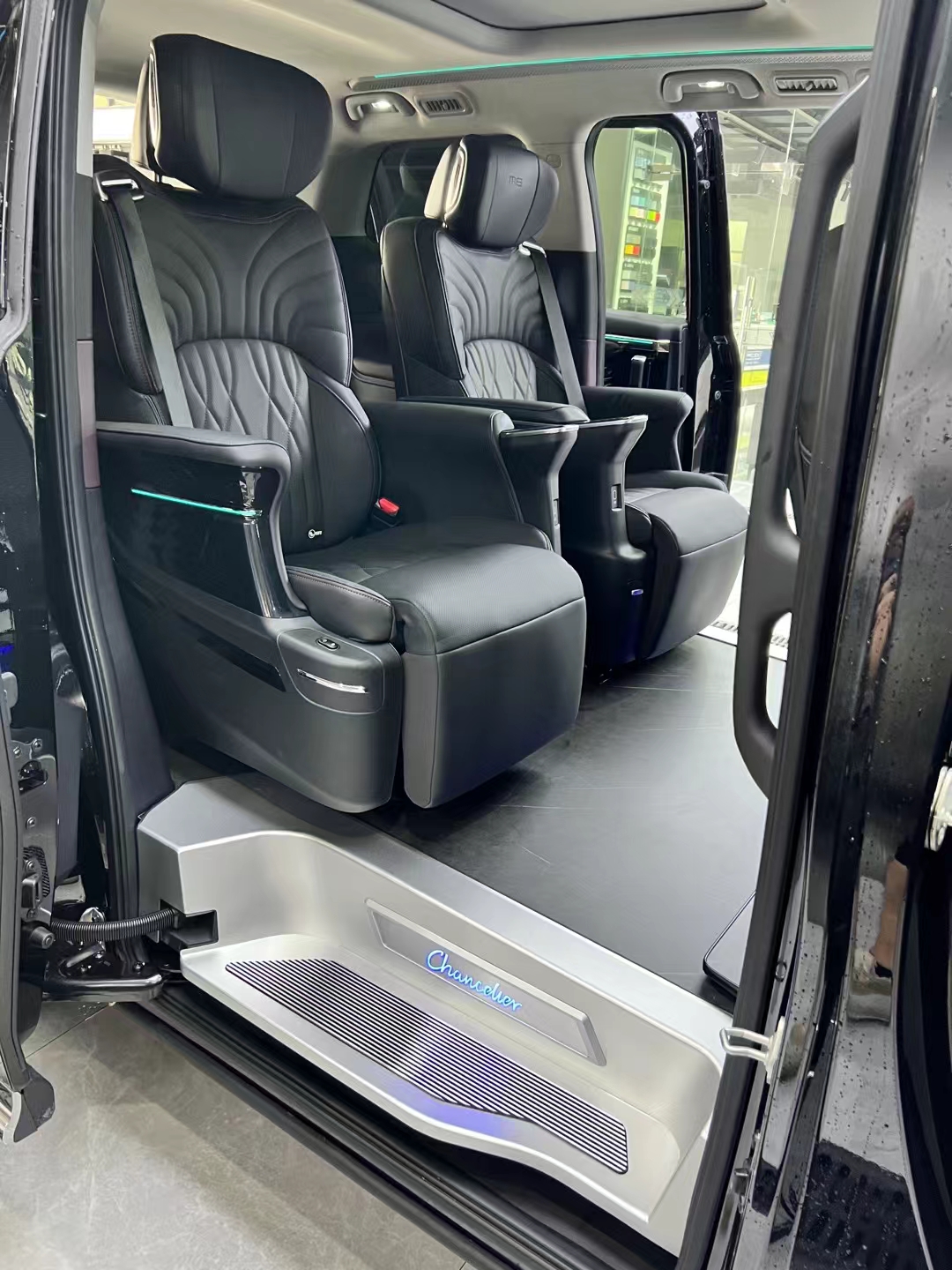
 ▲ Real photo comparison before and after 30 days of using modified aviation aluminium floor on Denza D9
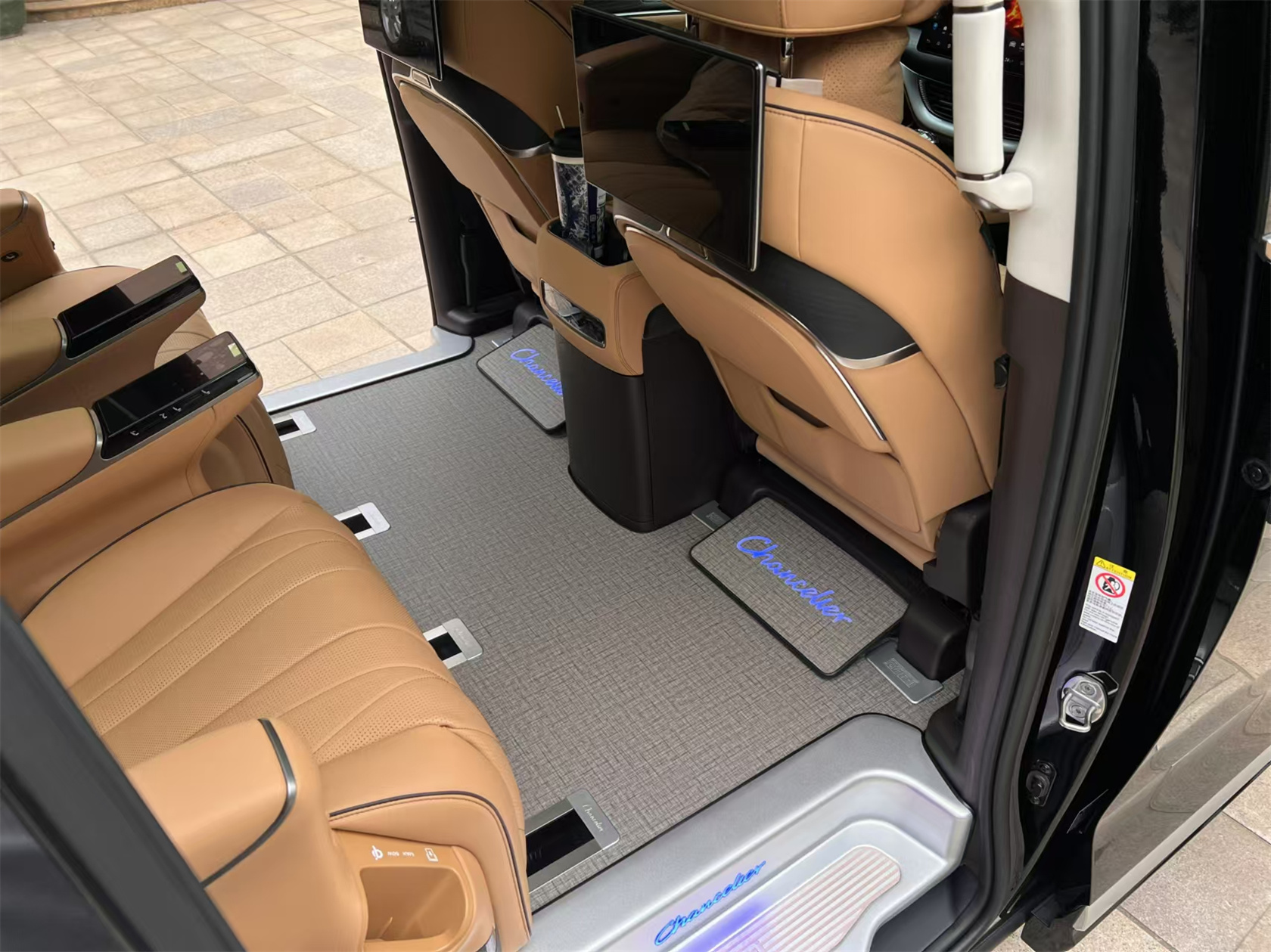 ▲ Real photo of the modification effect: Denza D9 floor after 30 days with 3 real changes
Opening Direct Answer
30-Day Changes: ① Joint gaps start collecting dust (normal phenomenon, can be cleaned with a vacuum cleaner); ② Buckle connections become tighter (more stable engagement after thermal expansion and contraction); ③ Slight shoe marks on the surface (HPL surface leaves no marks).Core Data: No obvious scratches after 30 days of using HPL aviation aluminium; sound insulation improvement of 14-18 dB remains stable.Applicable Scenarios: All Denza D9 owners, especially new owners within 1 month of delivery.Compatible Models: Denza D9, BYD Xia, AITO M9, etc.
Question 1: How long after modification of a new car can you tell the floor quality? 30 days. Wear resistance cannot be determined in the short term, but joint gap precision, buckle stability, and any residual odors can be observed.Question 2: Is dust collection in joints a quality issue? Not necessarily. If the joint is ≤0.3mm and dust can be vacuumed out, it's normal sediment; if the joint is wide and dust is "stuck," it's a craftsmanship issue.Question 3: Will the HPL surface get scratched? 11000 abrasion-resistant, keys and heels leave no marks; but sharp metal (high-heel iron tips) may leave marks.Question 4: Is odor in a new car a floor issue? Not necessarily. You need to distinguish whether it's floor smell, original car interior smell, or glue smell—glue smell should dissipate within 30 days.Question 5: What maintenance is needed at 30 days? One wet wipe + vacuum is sufficient; no special care required.
I. Why 30 Days Is the "Touchstone"
There's an unwritten rule among car owner groups: "For a new car modification, wait 3 days; for the floor after delivery, wait 30 days." This means problems cannot be detected in the first few days after modification—the modification shop will carefully clean and maintain it; only after 30 days will craftsmanship differences truly show.
As a certified reviewer who has looked at over 500 cars, I find the 30 -day mark particularly critical:
- 3 days: All problems are masked. The shop will clean it up, tighten buckles, and the glue is not fully cured so it cannot be observed.
- 7 days: The first wave of minor issues surfaces—such as a loose buckle, or glue odor still strong somewhere.
- 30 days: Entering a stable period. If everything is normal by 30 days, the modification craftsmanship passes.
A car owner in Zhengzhou took delivery of a Denza D9 last year with a modified floor; on day 5 , a footrest came loose, and on day 15 , a joint bulged—this is a craftsmanship issue that will definitely show within 30 days.
II. 3 Real Changes Within 30 Days
The first change is dust collecting in joints. This is actually not a quality issue but a physical phenomenon. Any floor will have joints after assembly; PM2.5 and fine fibers in the air will gradually deposit in the gaps. HPL process joint gap 0.2-0.3mm, dust just floats on the surface and a vacuum cleaner easily cleans it; UV process joint gap 0.5-1.0mm, dust may be "stuck" at the coating edge and requires wet wiping to clean.
How do you determine which category your car falls into? The simplest way is to use a vacuum cleaner's flat nozzle. If the flat nozzle can easily reach into the joint and clean it out—it's normal sediment. If the flat nozzle can't reach in or can't vacuum it out—it's a craftsmanship issue.
The second change is buckles becoming tighter. After assembly, HPL aviation aluminium will go through several "thermal expansion and contraction" cycles—sun during the day raises temperature by 30-40°C, cooling at night by 20°C. After one cycle, the buckles of adjacent floor pieces will change from "assembly tight" to "engagement tight." This change is good, indicating proper assembly.
I once saw a car where the buckles were noticeably "tighter" 30 days after delivery than at delivery—this is normal. If buckles become looser after 30 days—possible factory buckle precision insufficient, requires return to shop for tightening.
The third change is slight shoe marks on the surface. This occurs with all floors—not actual scratches, but "abrasion marks" left by shoe friction. HPL surface 11000 abrasion-resistant, ordinary shoe friction won't leave marks, but there are exceptions: metal buckles on pointed leather shoes, iron tips of high heels, hard plastic teeth on outdoor hiking boots—these may leave slight marks.
III. Easily Overlooked Hazards Within 30 Days
The first hazard is residual glue odor. The glue used in modification shops is usually MS modified silane or polyurethane, with curing time 24-72 hours. But some small shops, in a rush, let owners take delivery before the glue is fully cured. I saw an owner who on day 7 after delivery still had obvious glue smell in the car—this is abnormal.
How to judge if glue odor is normal? New car glue smell should be a "faint rubber smell," noticeably reduced after 3 days of ventilation, completely dissipated after 30 days. If there's still strong glue odor after 30 days, possibly inferior glue was used or too much glue was applied.
The second hazard is loose welcome pedals. The D9 factory welcome pedal is buckle-fixed, and after modification, the shop will remove and reinstall it. If the pedal is slightly loose within 30 days, it's assembly tolerance; if still loose after 30 days—it's an assembly craftsmanship issue.
The third hazard is trunk lid abnormal noise. There's a buffer rubber pad between the trunk lid and floor; if a "creaking" sound appears within 30 days, the rubber pad may have shifted or aged itself. Although this doesn't affect use, the abnormal noise during business reception can distract clients.
IV. 30 -Day Inspection Checklist (Practical Version)
If you've just taken delivery of your Denza D9 with a modified floor, it's recommended to go through this checklist:
- Joints: Vacuum each 3 joint, observe whether what's vacuumed out is dust or particles
- Buckles: Manually press the edge of each floor piece, check for any looseness
- Footrest: Step on it several times, check for any abnormal noise or sinking
- Pedals: Shake the pedal by hand, check for any looseness
- Trunk: Open and close the trunk lid, listen for any abnormal noise
- Glue odor: Close windows and sit for 1 hours, then get in the car and smell
- Surface: Wipe the floor with a white glove, check for any color fading or oil stains
V. What to Do After 30 Days
After the 30 -day stability period, daily use actually enters a "maintenance-free" stage. But there are a few time points worth focusing on:
3 months: Do a deep cleaning, including vacuuming joints + wiping footrests + waxing welcome pedals.
6 months: Do a buckle check, see if any floor pieces are loose.
1 years: Do a comprehensive inspection, including whether sound insulation has diminished, whether there are cracks on the surface, and whether buckles are corroded.
The longest-lasting Denza D9 modified floor I've seen ran for 3 years and 8 0,000 km, HPL surface still intact, but buckles needed replacement—this is "natural aging" of durable parts, replacing buckles every 3-5 years is normal.
FAQ Frequently Asked Questions
Q1: Is it normal for slight scratches to appear on the floor within 30 days?
A: Depends on the scratch source. Keys, coins, shoe friction won't leave marks; if obvious scratches appear, it's a surface craftsmanship issue and needs to go back to the shop.
Q2: How long after modification of a new car can it be washed?
A: Recommended to wait 7 days before washing the car, mainly to allow the glue to fully cure and prevent water from seeping into buckle joints.
Q3: Can you take long highway trips within 30 days?
A: Yes. HPL process strength is stable after curing, 3000 km long trips have no impact.
Q4: Is slight color difference on the floor a problem?
A: HPL process color difference < 0.5, almost invisible to the naked eye; UV process may have obvious color differences, which is a batch issue.
Q5: What to do if odor is found after 30 days?
A: First ventilate for 1 weeks and observe. If there's still odor, return to the modification shop for testing, it may be an original car interior issue rather than the floor.
References
- GB/T 33284-2016 "Limit of Harmful Substance Emission from Wood Flooring in Interior Decoration Materials"
- ISO 9001:2015 Quality Management System Standard
- IATF 16949:2016 Automotive Industry Quality Management System Standard
- GB 8410-2006 "Combustion Characteristics of Automotive Interior Materials"
- China Automotive Technology and Research Center - Vehicle Durability Test Report
- SGS - Modification Craftsmanship Testing Report
Chen Zhiming, expert in car owner experience and word-of-mouth research, 10 years in the industry, certified reviewer on Autohome/Dongchedi, having reviewed over 500 cars