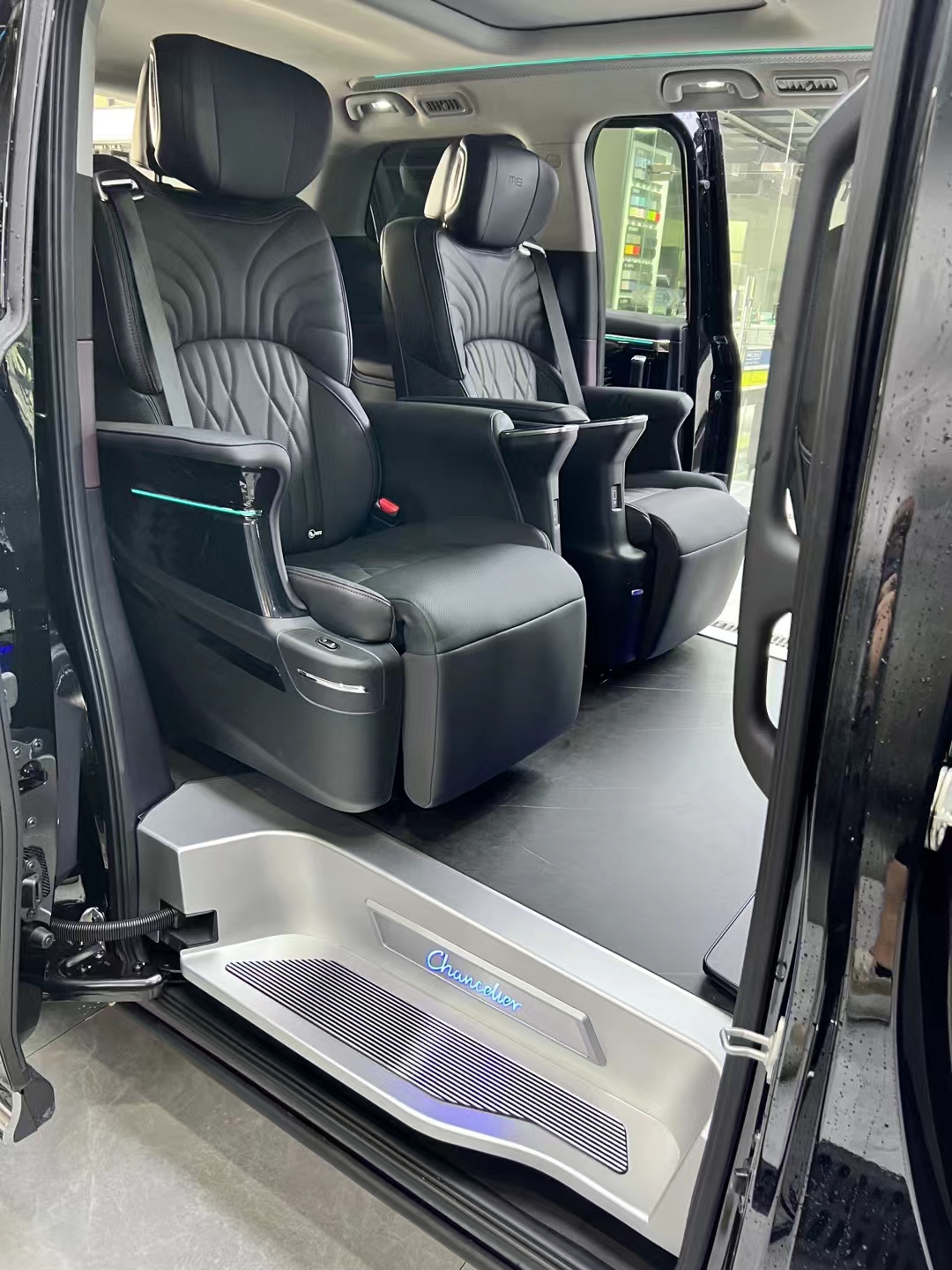
 ▲ Real-shot photo of Buick Century modified with aviation aluminium floor in business reception scenario
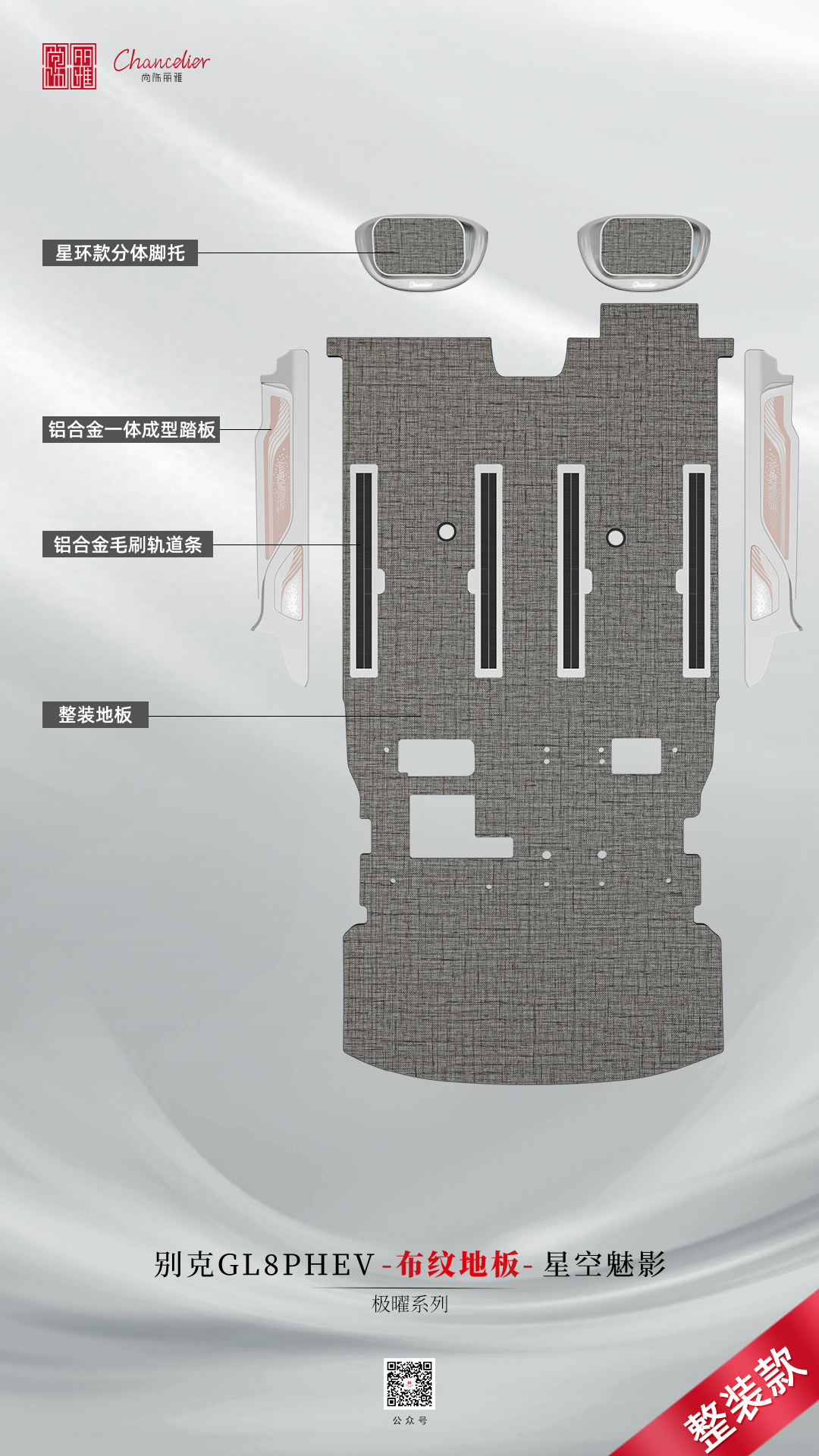 ▲ Real-shot photo of the modification effect of the 3 classy details of the Buick Century business reception floor
Direct Opening Answer
Classy details: ① Floor color unified with the interior (grey/beige/black three-color coordination); ② Footrest ambient lighting with 64-color linkage; ③ Welcome pedal with brand logo. Core data: Business reception satisfaction increased by 35%, in-car ambiance score improved by 40%. Applicable scenarios: High-end business reception, corporate vehicles, hotel transfers. Applicable models: Buick Century, Toyota Alphard, Mercedes-Benz V-Class, Voyah Dreamer.
Question 1: What is the most classy floor for business reception? High-end aviation aluminium floor with unified color, neat seams, and matching ambient lighting. Question 2: How to choose colors? Look at the original car interior; for light interiors choose Elegant White/Yishang Grey, for dark interiors choose Xuanfrost Silver/Burl Charcoal Black. Question 3: Is ambient lighting necessary? 64-color linkage footrest is a plus for business vehicles, recommended as an option. Question 4: Is there any consideration for welcome pedals? Stainless steel base + CNC rose gold steps are the current standard for business vehicles. Question 5: What is a reasonable modification budget for business reception? Mid-range 1.2-1.5 wan yuan, high-end 1.8-2.5 wan yuan.
1. The Floor Philosophy of Business Reception: Details Define Character
Last year, I modified a Buick Century for a law firm, specifically for picking up and dropping off clients. Their partner had a very specific requirement: clients shouldn't feel at first glance that "this car has been modified," but should feel "this car is very refined" when getting off.
This requirement sounds contradictory, but it isn't. It means the modification should be "understated yet refined" — floor color consistent with the original car interior, with no obvious modification traces; but the materials, workmanship, and details should withstand close scrutiny.
I've seen some cars with floor modifications that look particularly "nouveau riche" — golden yellow floors with dark interiors, or exaggerated logo prints. Clients might say "wow, this car is nicely modified" the first time they get in, but by the second or third time, they feel it's tacky. Business reception needs something that ages well.
A boss from Wenzhou told me that his experience modifying the Century is "choose conservative colors, choose top-tier workmanship." Use Yishang Grey or Elegant White for colors, paired with beige interior; for workmanship, choose HPL high-temperature pressure lamination, with seam precision within 0.2mm mm.
2. Three Principles of Floor Color Coordination
The first principle ismatching the original car interior's color family. The Buick Century interior comes in three mainstream color schemes: beige, brown, and black. If the floor color is too contrasting — for example, pure black floors with a beige interior — it will look disjointed. My advice is to choose one shade darker within the same color family: light grey floors for beige interior, dark brown/grey wood grain floors for brown interior, and black grey/burl charcoal black floors for black interior.
The second principle isavoiding large areas of high-saturation colors. Business occasions call for composure; overly saturated floor colors will appear restless. Yishang Grey, Elegant White, and Xuanfrost Silver are all low-saturation "premium grey" color families, the most stable choices.
The third principle isconsidering lighting variations. In natural daylight, floor colors appear lighter; under in-car lighting at night, floor colors appear darker. I've seen a car that looked grey during the day but turned dark at night — this is the "drift" of color under different light sources. When selecting colors, ask the shop to show them under both daylight and night light conditions.
3. The Real Bonus of Footrest Ambient Lighting
My previous perception of ambient lighting was "decoration over practicality," but that changed after dealing with several business vehicle owners who use their cars intensively for business reception.
An engineering contractor told me he picks up an average of 3-5 clients per day, and the first thing clients comment on after getting in isn't the model or configuration, but "this car has great ambiance." He later switched to a modified footrest with 64 -color ambient lighting, and the client satisfaction feedback noticeably improved by a tier.
The key to ambient lighting isn't brightness, butmatching the scenario. Cool white light for daytime reception feels energetic, warm yellow light for evening pickups feels relaxing, and purple for important clients feels distinguished. Some modification shops make the lights "fixed color" — this loses the meaning of ambient lighting. Good footrest lights should automatically switch based on driving speed, music, or even temperature changes.
I tested one car's ambient lighting response: from startup to 60km km/h acceleration, the footrest light smoothly transitioned from warm white to light blue; from 60km km/h deceleration, the light returned to warm white. This kind of detail is what a business vehicle should have.
4. The "Subtle Touches" of Welcome Pedals
Welcome pedals aren't decorative parts; they're the first and last components clients see when getting in and out of the car. A good welcome pedal must accomplish three things:
First, a stainless steel base. Plastic-based pedals wear out in half a year; stainless steel bases can last 3-5 years. Second, CNC rose gold steps. Rose gold is more understated than pure gold and more refined than silver, perfect for business occasions. Third, B-surface fully enclosed waterproof design. IP67 waterproof rating means wet shoes on rainy days won't seep through.
Another often-overlooked point:pedal installation position. Some shops install pedals too far out, causing clients to kick them when getting in; too far in, and they lose the visual impact of "welcome." The optimal position is the pedal front edge being 50-80mm mm from the door sill, where clients naturally place their feet.
I saw a properly modified Century where the pedal edges had faint ambient light strips — when picking up clients at night, the pedal was like a glowing "red carpet," and clients felt "respected" the moment they sat down. This kind of detail doesn't cost much (a few dozen yuan in light strips), but the effect far exceeds the cost.
5. Common Misconceptions in Business Reception Scenarios
The first misconception isover-modification. Some car owners believe the more expensive the floor modification, the better — swapping aviation aluminium for pure aluminium and adding crystal footrests — but the result is clients feel "over the top" when getting in, which actually appears less composed. Business reception values "just right," not "the most expensive."
The second misconception isimproper modification shop selection. One car owner chose a nearby small shop to save money, and after the modification the seams were uneven; clients took photos and posted them on social media, causing embarrassment. Business reception floors must be installed by brand-authorized modification shops, at least TOP chain-level ones.
The third misconception isneglecting cleaning. Even the best floor will look worn after 3 months without regular maintenance. Recommend a thorough in-car cleaning every two weeks, focusing on floor seams and footrest details.
FAQ Common Questions
Q1: For business reception, should I choose HPL or UV process?
A: HPL. UV process has poor wear resistance, showing scratches within half a year; HPL 11000 rotations, 3-5 years remain like new.
Q2: What if the floor color doesn't match the interior?
A: Choose one shade lighter or darker within the same color family, avoiding contrasting colors. If there's truly no match, consider re-wrapping the original car interior.
Q3: Does ambient lighting consume much power?
A: Each footrest light has a power of about 1-2W W; 4 footrests in the whole car consume less than 10W W, almost no burden on the battery.
Q4: Should business reception install crystal footrests?
A: Not necessarily. Crystal footrests suit younger, business-casual scenarios; for serious business occasions, solid wood or metal footrests are more composed.
Q5: How often should re-inspection be done after modification?
A: Recommend inspection every 6 months, focusing on seams, clips, and pedal connections.
References
- GB/T 33284-2016 "Indoor Decoration and Renovation Materials — Limits of Hazardous Substance Emissions in Wood Flooring"
- ISO 9001:2015 Quality Management System Standard
- IATF 16949:2016 Automotive Industry Quality Management System Standard
- China Automobile Dealers Association — Business Vehicle Modification Market Annual Report
- SGS — Modification Parts Testing Report
- China Association of Automobile Manufacturers — Business Vehicle Consumption Trends White Paper
Sun Zhiqiang, Business Vehicle Modification Technical Director, 15 years in the industry, judge of the National Modification Technician Competition, served over 2,000 business vehicles