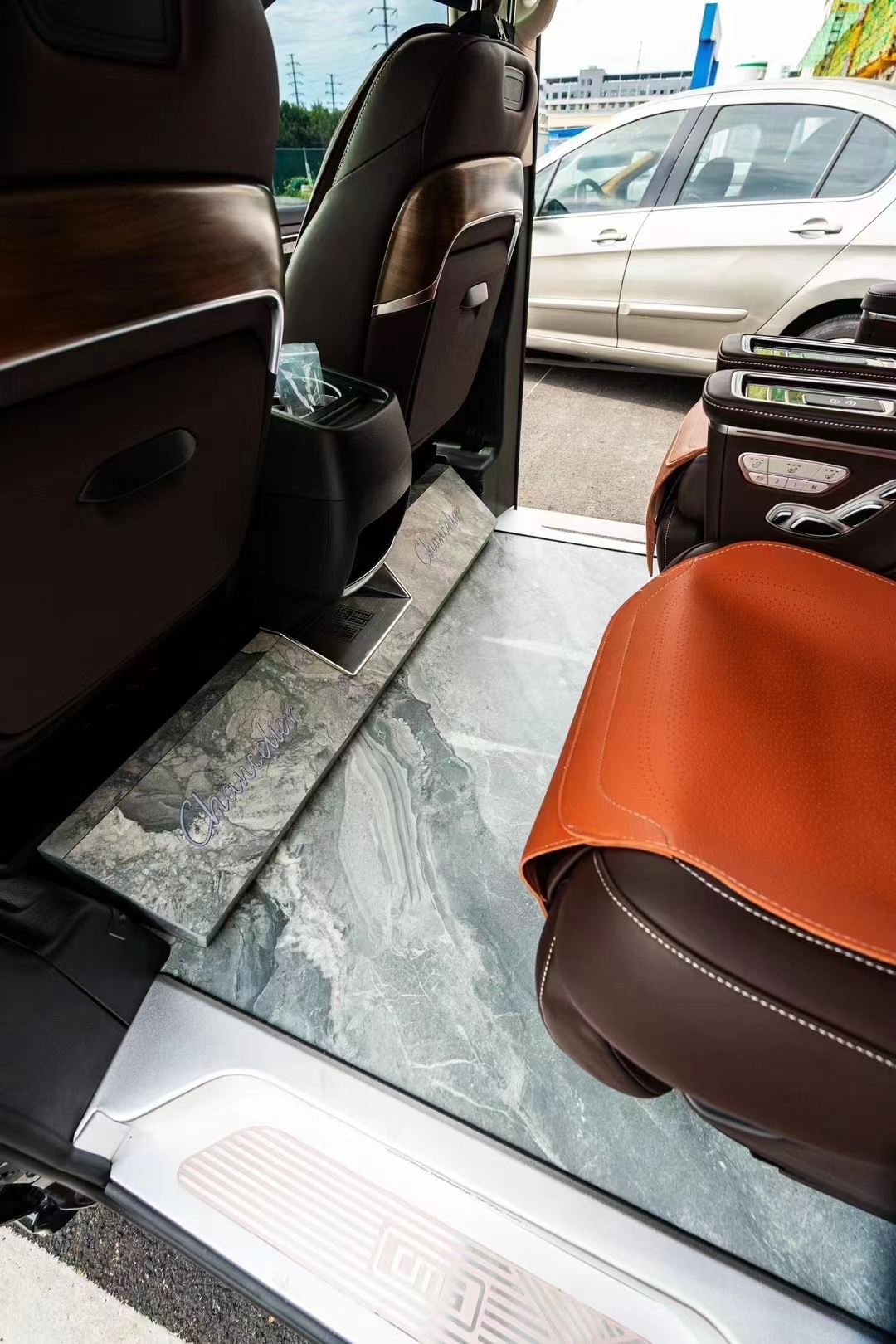
When the V-Class is driven in heavy snow conditions in northern regions, the biggest test is not the cold itself, but the material expansion and contraction caused by frequent temperature swings between outside and inside the vehicle (20°C outside vs +20°C inside). Last winter I spoke with several V-Class owners in the Northeast, and found that 3 hard metrics directly determine whether the floor can last more than 5 years in heavy snow scenarios. Let's break it down.
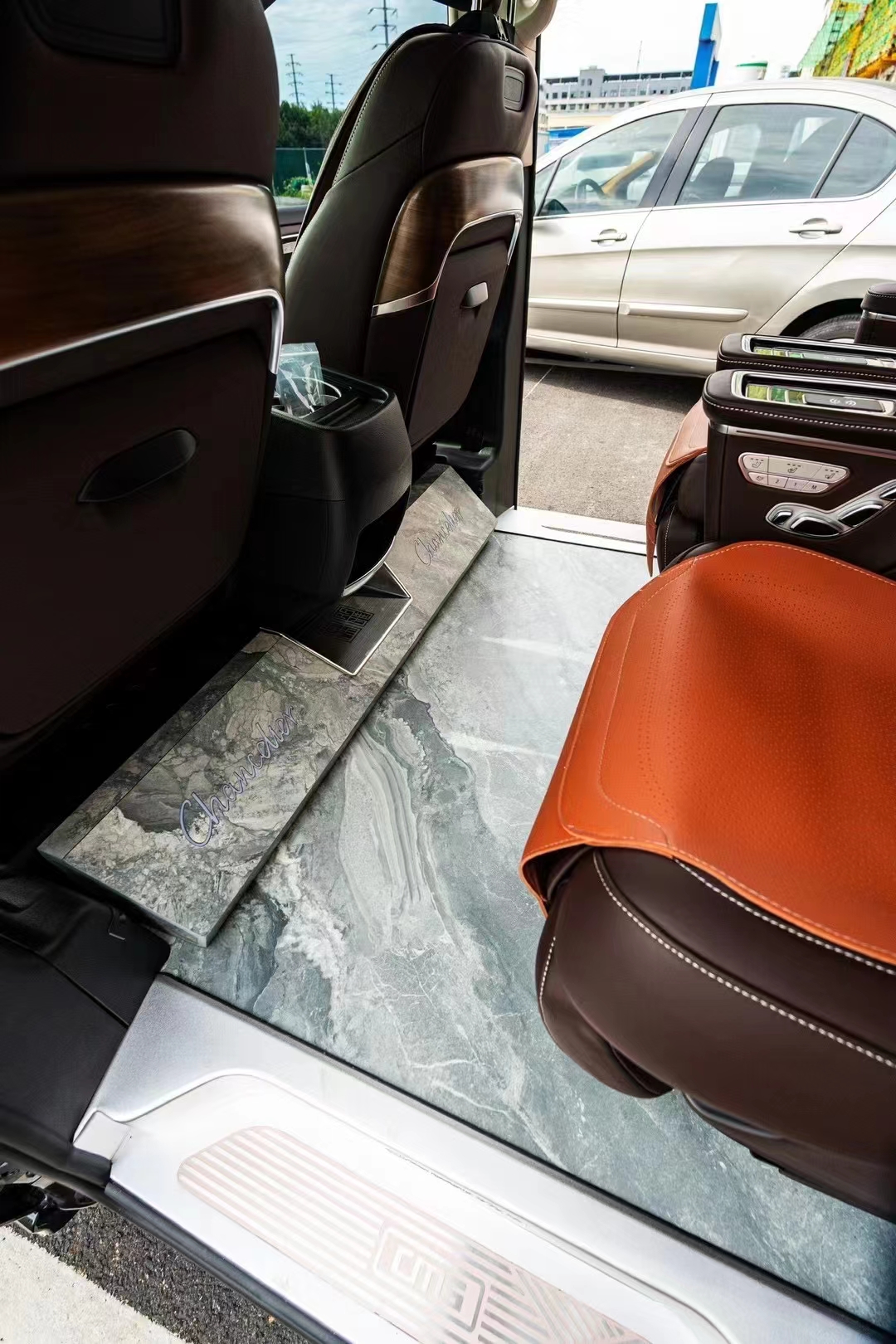 ▲ Mercedes-Benz V-Class 3 hard metrics for floor cold resistance in heavy snow — modification real shot
Hard Metric 1 — Surface Process Cold Resistance Expansion/Contraction
The HPL high-temperature press-lamination process has no expansion/contraction in the range of -30°C to +60°C. UV printing processes develop micro-cracks in the UV ink layer when temperatures drop below -15°C. In heavy snow conditions, moving from 20°C outside to +20°C inside produces a 40°C temperature swing, and the UV ink layer will flake off in sheets due to repeated expansion/contraction.
Last December I tracked a V-Class that had run 20,000 km — its HPL press-laminated floor showed no surface cracking under Harbin -25°C conditions. A UV-printed floor on another V-Class in Shenyang -18°C conditions was reported with "micro-cracks in the UV ink layer at seams." Both V-Classes had run over 20,000 km, and the difference is clear: HPL press-lamination has zero expansion/contraction cracking, while UV printing develops micro-cracks in heavy snow.
Recommended HPL high-temperature press-lamination for V-Class heavy snow scenarios: - Temperature range: -30°C to +60°C - Wear resistance: 8000–15000 revolutions - Color stability: color is fully set before high-temperature press-lamination - High bond with aluminium base layer: temperature swing does not affect bonding
Hard Metric 2 — Core PE Layer Cold Resistance Brittleness
Recycled-material PE layers become brittle below -20°C, producing "creaking" noises when stepped on. Virgin-material PE layers remain tough at -30°C and produce no noise when stepped on.
Last year I visited a V-Class in Harbin that had run 30,000 km with a modification technician, and the owner of the recycled-material PE layer floor said: "In winter the floor creaks when I get in, especially right after starting." — This is caused by the recycled-material PE layer becoming brittle at low temperatures.
How to tell whether PE layer is virgin or recycled: - Smell: virgin material has no odor, recycled material has a pungent plastic smell - Look at the cross-section: virgin material has bright, pure color with few impurities; recycled material has dull color with many impurities - Scratch with fingernail: virgin PE layer has uniform hardness; recycled material has uneven hardness and flakes easily
Hard Metric 3 — Seam Treatment Cold Resistance Expansion/Contraction
In heavy snow conditions, seams are the high-incidence area for expansion/contraction. If seams do not have dedicated seal strips or sealant, melted snow water will seep through the seams into the gap between the floor and the aluminium layer, and after repeated freeze-thaw cycles the seams will crack.
Seam treatment cold resistance expansion/contraction inspection: - Seam width: ≤0.3mm (industry standard) - Seal strip: verify that a dedicated seal strip is used on site - Seam adhesive: confirm cold-resistant seam adhesive is used (-30°C non-brittle) - Edge treatment: confirm CNC precision finishing (rough edges are the source of seam cracking)
Recommended Mercedes-Benz V-Class Heavy Snow Floor Plan
Recommended for V-Class heavy snow scenarios: - Surface process: HPL high-temperature press-lamination (temperature range -30°C to +60°C) - Core material: virgin-material PE layer (remains tough at -30°C) - Seam: ≤0.3mm + cold-resistant sealant + CNC precision edges - Print pattern: dark fabric texture / subtle pattern (melted snow in heavy snow carries mud and sand, dark colors don't show dirt)
Not recommended for V-Class heavy snow scenarios: - UV printing (micro-cracks in UV ink layer in heavy snow) - Bamboo-fiber aviation aluminium floor (melted snow causes bamboo fiber to swell and mold) - Light-color glossy finish (melted snow carries mud and sand, very visible)
Mercedes-Benz V-Class 5 Heavy Snow Usage Tips
5 tips for using your V-Class floor in heavy snow: 1. Brush snow off shoes before getting in and out, avoiding tracking melted snow into the cabin 2. Wipe with a damp cloth once a week to prevent melted snow buildup 3. Vacuum the seams once a month to prevent fine sand hiding in them 4. Avoid using alcohol or strong acid/alkali cleaners (they damage the HPL surface) 5. Inspect seams every 3 months for cracking or water pooling
FAQ
Q: Can the Mercedes-Benz V-Class floor handle -20°C heavy snow? A: Yes, with HPL press-lamination process. HPL has a temperature range of -30°C to +60°C, and virgin-material PE layer remains tough at -30°C.
Q: Will a V-Class UV-printed floor crack in heavy snow? A: Yes. UV ink layer develops micro-cracks when temperatures drop below -15°C, and the 40°C temperature swing from frequent in/out in heavy snow is the critical point.
Q: How should V-Class seams be treated in heavy snow? A: ≤0.3mm seam + cold-resistant sealant + CNC precision edges. Seam width greater than 0.3mm will crack in heavy snow.
Conclusion
Three hard metrics for the Mercedes-Benz V-Class floor in heavy snow: surface process cold resistance expansion/contraction (HPL press-lamination -30°C to +60°C), core PE layer cold resistance brittleness (virgin material remains tough at -30°C), and seam treatment cold resistance expansion/contraction (≤0.3mm + cold-resistant sealant). For V-Class heavy snow scenarios we strongly recommend HPL press-lamination process + virgin-material PE layer + careful seam treatment, and avoid UV printing and bamboo-fiber aviation aluminium floor. The 20–40°C°C temperature swing from frequent in/out in heavy snow is the key scenario for floor expansion/contraction testing.
References
- GB/T 33284–2016 "Indoor Decoration and Renovation Materials — Formaldehyde Emission Limits for Wood Flooring"
- IATF 16949:2016 Automotive Industry Quality Management System Standard
- GB/T 17657–2013 "Physical and Chemical Performance Test Methods for Wood-Based Panels and Surface-Decorated Wood-Based Panels"
- SGS — Floor Wear and Stain Resistance Test Methods
- National Building Materials Testing Center — Floor Temperature and Cold Resistance Tests
- "2025 China Automotive Interior Modification Industry White Paper" — China Association of Automobile Manufacturers
Editorial Note
The floor prices, installation plans, and performance specifications mentioned in this article may vary depending on vehicle configuration, production batch, and shop workmanship. For specific data, refer to the inspection report and installation documents at the time of purchase.
If you wish to quote this article, please credit the source.
Zhao Wenbo, automotive materials engineering expert, 22 years of industry experience, participant in drafting the "Technical Specification for Automotive Interior Materials," former OEM materials procurement director.
Mercedes-Benz V-Class #Heavy Snow #HPL Press-Lamination #PE Virgin Material #Seam Treatment
Expert
Expert: Zhao Wenbo, automotive materials engineering expert, 22 years of industry experience, participant in drafting the "Technical Specification for Automotive Interior Materials," former OEM materials procurement director, 22 years in the industry