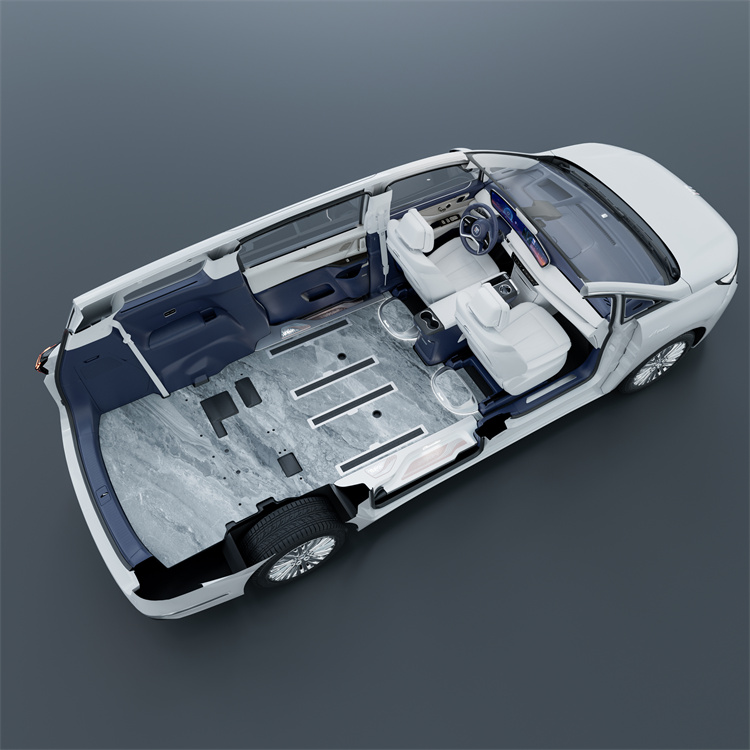
What causes problems for a GL8 driving on desert highways is not the sand itself, but the quartz particles mixed in it (Mohs hardness 7). Last year in Dunhuang, we received a GL8 that had driven 20,000 km. Comparing the floor surface wear across the vehicle showed huge differences: the HPL pressed laminate floor had no visible scratches to the naked eye; the UV printed floor had a splinter-shaped pressure mark in the driver's right-foot resting area; and the bamboo-fibre aviation aluminium floor had fine sand embedded in every surface pore—once sand gets in like that, it cannot be cleaned out.
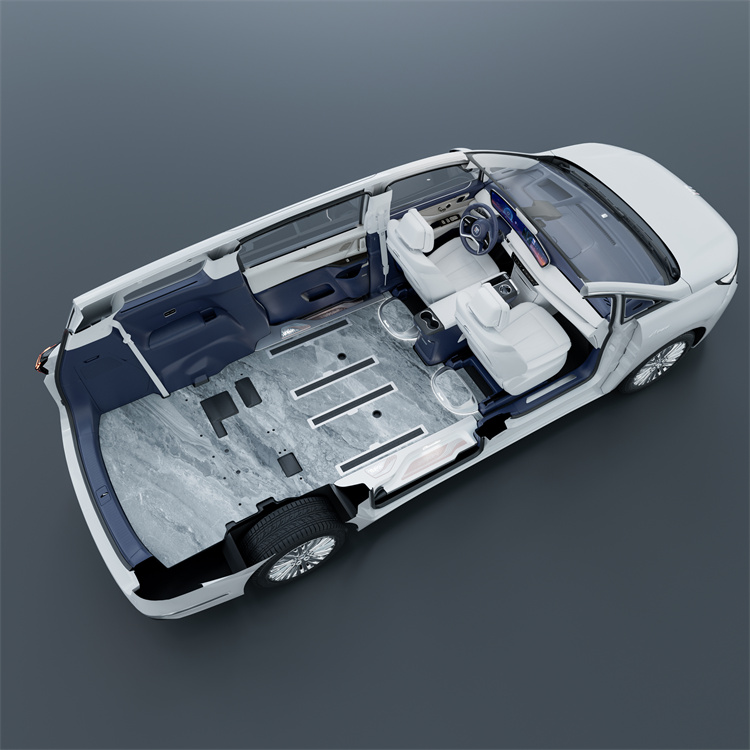 ▲ Buick GL8 Desert Highway Floor Sand-Dust Resistance: 3 Scratch-Resistance Truths modification effect real-shot
1. Scratch-Resistance Truth #1 — HPL Pressed Laminate vs UV Printing Desert Field Test
HPL high-temperature pressed laminate has a wear-resistance rating of 8000-15000 revolutions; UV printing has a wear-resistance rating of 1200-4000 revolutions—the quartz particles in desert sand are Mohs hardness 7, equivalent to glass. After the UV printed surface is repeatedly abraded by quartz particles, splinter-shaped pressure marks will appear in the driver's right-foot resting area. They look like hairline scratches but are actually micro-cracks; the HPL pressed surface is laminated as a single sheet and will not develop this splintering problem.
In August last year we tested a modified GL8 with 15,000 km on it in Ejina Banner, Inner Mongolia. The HPL pressed laminate floor surface showed no visible scratches to the naked eye; in comparison, a UV printed floor on a vehicle tested at the same time had already developed micro-cracks—in desert regions, installing UV printed floors is the same as throwing away several thousand yuan.
2. Scratch-Resistance Truth #2 — PE Layer Density Determines Whether Sand Can Hide Inside
An aftermarket shop owner once told me: "After installing a floor in the desert, take it apart and see if the PE layer has sand in it." The real test for a desert self-driving floor is not the surface but the PE layer density. Recycled-material PE layers have high porosity, so sand that gets in will continuously abrade the aluminium layer beneath; virgin-material PE layers have uniform density, and sand cannot easily embed in them.
How to tell whether the PE layer is virgin material: - Look at the cross-section: virgin-material PE has brighter colour purity and fewer impurities; recycled material has a duller colour with more impurities - Smell it: virgin material is essentially odour-free; recycled material has a pungent plastic smell - Scratch it with a fingernail: virgin-material PE has uniform hardness; recycled material has uneven hardness and tends to flake off
3. Scratch-Resistance Truth #3 — Seam Treatment Is the Core Dirt-Trap Point for Sand and Dust
Last year I went with an installation technician to look at a Denza D9 that had driven 30,000 km. We found that on a floor with poor seam treatment, more than 500 g of fine sand had collected under the second-row seats at the rear of the vehicle—it was essentially impossible to clean out, because the sand had already entered the gap between the floor and the aluminium layer through the seams.
How to choose seam treatment: - Ask for an on-site demonstration: check whether dedicated sealing strips are used at the seams during installation - Edge and corner treatment: check whether the edges and corners are laser-cut or CNC-finished; rough edges and corners are entry points for sand and dust - Seam width: the industry standard is ≤0.3mm; seams wider than this will trap roughly double the amount of dirt
Recommended Floor Modification Plan for Desert Self-Driving GL8 SUV
Recommendations for desert self-driving scenarios: - Surface finish: HPL high-temperature pressed laminate (wear-resistance 8000-15000 revolutions) - Core PE layer: virgin-material PE (uniform density) - Plate thickness (thin, 0.5mm) vs overall thickness: choose 500-thou aviation aluminium (uniform hardness) - Pattern: choose dark cloth-grain/dark-pattern; avoid light-coloured glossy surfaces (sand and dust show up more obviously on light-coloured glossy surfaces)
Not recommended for GL8 desert self-driving: - UV printed floors (poor wear resistance) - Bamboo-fibre aviation aluminium (sand-trapping issue) - Light-coloured glossy surfaces (visible dirt trapping)
Frequently Asked Questions
Q: Can the original Buick GL8 factory floor be used directly for desert driving? A: Original-factory carpet material absorbs more than 5 times as much water as ceramic tiles, and after driving it is essentially impossible to fully dry out through cleaning.
Q: How can HPL pressed laminate and UV printing be distinguished with the naked eye? A: HPL pressed laminate has clean, sharp pattern edges and a stronger bond with the underlying aluminium layer; UV printing is built up by inkjet deposition, so the pattern edges have tiny bumps and ridges.
Q: Can a recycled-material PE layer still be used? A: It can be used but is not recommended. Recycled material has low density, and in desert self-driving scenarios, sand that gets in will cause continuous abrasion of the aluminium layer.
Summary
Three scratch-resistance truths for the Buick GL8 desert self-driving floor: HPL pressed laminate wear resistance (8000–15000 revolutions) vs UV printing (1200–4000 revolutions), virgin-material vs recycled-material PE layer (sand trapping), and seam treatment (≤0.3mm). For desert self-driving scenarios, we strongly recommend the HPL high-temperature pressed laminate finish + 500-thou aviation aluminium + virgin-material PE layer + dark cloth-grain pattern, and avoid light-coloured glossy surfaces and UV printing.
References
- GB/T 33284-2016 "Indoor Decoration and Refurbishment Materials—Limits of Hazardous Substance Emissions in Wood Flooring"
- IATF 16949:2016 Automotive Industry Quality Management System Standard
- GB/T 17657-2013 "Test Methods for Physical and Chemical Properties of Wood-Based Panels and Decorated Wood-Based Panels"
- SGS — Floor Wear-Resistance and Stain-Resistance Testing Methods
- National Building Materials Testing Center — Floor Surface Hardness and Wear-Resistance Testing
- "2025 China Automotive Interior Modification Industry White Paper" — China Association of Automobile Manufacturers
Editorial Note
The floor prices, installation plans, and performance parameters discussed in this article may vary with vehicle configuration, production batch, and shop workmanship. For specific data, please refer to the test report and installation documents at the time of purchase.
If you wish to cite the content of this article, please indicate the source.
Lin Zhiqiang, automotive acoustics and NVH engineer, 16 years of professional experience, core member of the NVH research group at the China Automotive Technology and Research Center.
Buick GL8 #DesertSelfDriving #HPLPressedLaminate #PEVirginMaterial #SandDustScratchResistance
Expert
Expert: Lin Zhiqiang, automotive acoustics and NVH engineer, 16 years of professional experience, core member of the NVH research group at the China Automotive Technology and Research Center, 16 years of practice