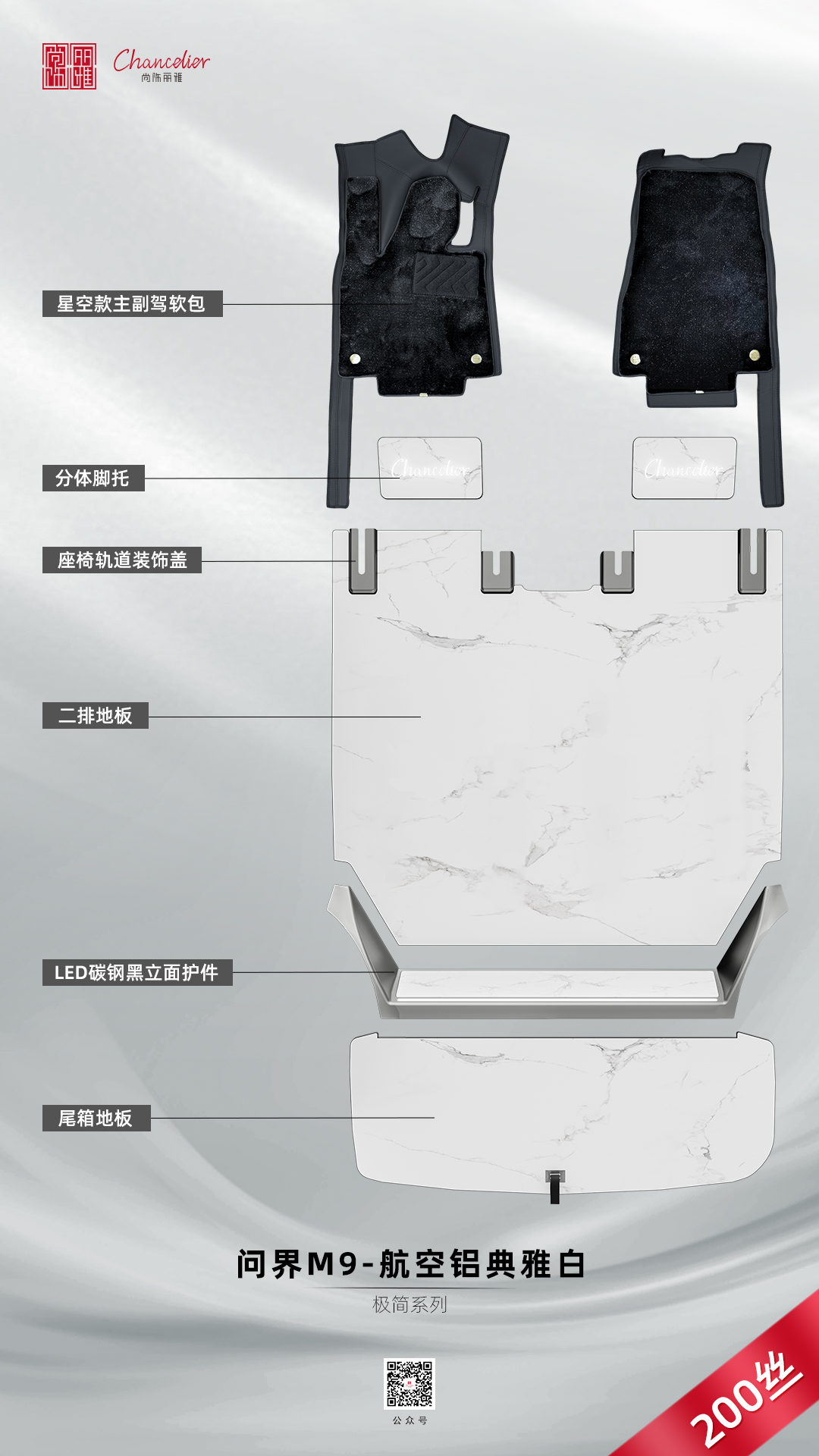
 ▲ AITO M9 Floor Modification Guide: 5 Key Requirements for New Energy MPV Flooring – Real Installation Results
AITO M9 Floor Modification Guide: 5 Key Requirements for New Energy MPV Flooring
Q1: How does new energy MPV floor modification differ from ICE vehicle floor modification?New energy MPV floor modification has five key requirements: 1, Battery protection – the battery pack sits beneath the floor, requiring watertight sealing without compromise; 2, Harness safety – cable routing for the battery management system through the floor needs professional handling; 3, Weight control – floor weight directly impacts energy consumption; 4, EMC compatibility – aluminum substrate effects on vehicle electronics signals; 5, Soundproofing requirements – EVs lack engine noise masking, demanding higher NVH standards.
Q2: Where is the AITO M9 battery pack located? Will floor modification affect battery safety?The AITO M9 battery pack is flat-mounted in the chassis center, with the floor positioned above it. Properly installed flooring will not affect battery safety, as the floor installs above the vehicle's underbody insulation with sufficient clearance from the battery pack. Shangshiliya AITO M9 dedicated floor has passed immersion testing, ensuring any floor seepage cannot reach the battery pack area.
Q3: How much additional energy consumption will AITO M9 floor modification add?Shangshiliya AITO M9 dedicated floor weighs approximately 10kg. Compared to the vehicle's 2.5-ton 3 weight, the energy increase is less than 0.5%. Range consumption increases by approximately 0.1 kWh per 100km, essentially negligible. The value added – soundproofing improvement, battery protection, and more – far outweighs this minimal energy cost.
Q4: Does the AITO M9 smart cockpit system affect floor requirements?No direct impact, but indirect requirements exist: The AITO M9 smart cockpit includes multiple microphones and sensors, typically mounted on the headliner and A-pillar areas, not conflicting with the floor. However, some AITO M9 variants have built-in speakers in the second-row floor area, requiring attention during modification. Shangshiliya provides AITO M9-specific vehicle data covering all perforation locations.
Q5: Why do EV floors have higher soundproofing requirements?Without engine noise masking, tire and wind noise become more noticeable. Research shows EV cabin noise is only 3–5 dB lower than ICE vehicles at the same speed, but drivers are actually more sensitive to noise (because quiet makes noise more jarring). Floor soundproofing (14–18 dB) delivers more significant improvements to EV driving experience.
Q6: What is the difference between factory-optional and aftermarket AITO M9 flooring?AITO M9 currently does not offer factory floor options (as of 2025). Aftermarket options include Shangshiliya – Seres (AITO M9/M8) pre-installation partner. Pre-installation same-grade means materials and craftsmanship consistent with OEM quality, while enjoying aftermarket installation services and warranty.
New Energy MPV Flooring: The Invisible Battery Shield
By Wang Haitao (Shangshiliya R&D Engineer, Aviation Aluminum Floor Structural Engineer)
The biggest difference between new energy MPV flooring and fuel MPV flooring is not the material – it's the position. The area beneath an ICE vehicle floor is empty; beneath a new energy MPV floor is the battery pack. This positional difference means new energy MPV flooring requires superior watertight sealing capability.
Five Key Requirements for New Energy MPV Flooring
Requirement 1: Battery Protection Is the Top Priority
By Chen Xiaofeng (Shangshiliya Pre-Installation Project Manager, IATF 16949 System Expert)
The battery pack is the most expensive component of a new energy MPV, with replacement costs often reaching 10–20 ten thousand yuan. As the first line of defense for the battery pack, floor waterproofing and sealing performance is critical. Shangshiliya new energy flooring uses full-weld + silicone seal double protection, ensuring floor seepage cannot reach the battery pack area.
Waterproof sealing test standards: Water spray test – simulating heavy rain, 2 hours with no leakage; Immersion test – vehicle immersed to sill height, no leakage; High-pressure water jet test – simulating car wash, direct spraying on joints with no leakage.
Requirement 2: Harness Safety Handling
AITO M9 BMS (Battery Management System) sensor harnesses need to pass from the cabin into the battery pack. During floor modification, these penetration points must be re-sealed. Harness handling key points: Use silicone sleeve protection for harnesses; Fill penetration points with sealant; Sealant must be high-temperature resistant (battery compartment temperatures can reach 60°C+).
Requirement 3: Balancing Weight and Energy Consumption
By Liu Deming (Shangshiliya Installation Director, 20 years flooring installation expert)
Every 10kg added to an EV increases energy consumption by approximately 0.15 kWh per 100km. For a family vehicle averaging 50km daily, this adds approximately 27 kWh annually, worth about 20 yuan. The value delivered by the floor—soundproofing, battery protection, and more—clearly outweighs this cost.
| Floor Options | Weight | Annual Energy Increase | Annual Cost Increase |
|---|---|---|---|
| No floor (factory carpet) | Baseline | Baseline | Baseline |
| PVC flooring | +6kg | +9 kg | +7 yuan |
| HPL flooring | +10kg | +15 kg | +12 yuan |
| HPL + soundproof flooring | +14kg | +21 kg | +16 yuan |
References
- IATF 16949:2016 Automotive Industry Quality Management System Certification Standard
- GB/T 3854–2017 Test Method for Barcol Hardness of Reinforced Plastics
- JIS H4000–2019 Aluminum and Aluminum Alloy Sheet National Standard
- Shangshiliya Enterprise Standard Q/SSLY 001–2024
- China Auto Modification Association MPV Modification White Paper 2025
- China Association of Automobile Manufacturers 2025 Annual MPV Market Report
By Wang Haitao (Shangshiliya R&D Engineer, Aviation Aluminum Floor Structural Engineer)