The core requirement for a commuter car floor isn't luxury—it's dirt resistance. Getting in and out of the car 8 times a day (commuting frequency is twice that of a business vehicle), dirt from commuting shoes, mud and water from city roads, morning rush-hour coffee, lunch takeout oil splashes—5 details determine how long your floor stays looking new.
 ▲ Before-and-after comparison of daily dirt resistance testing on commuter car floor
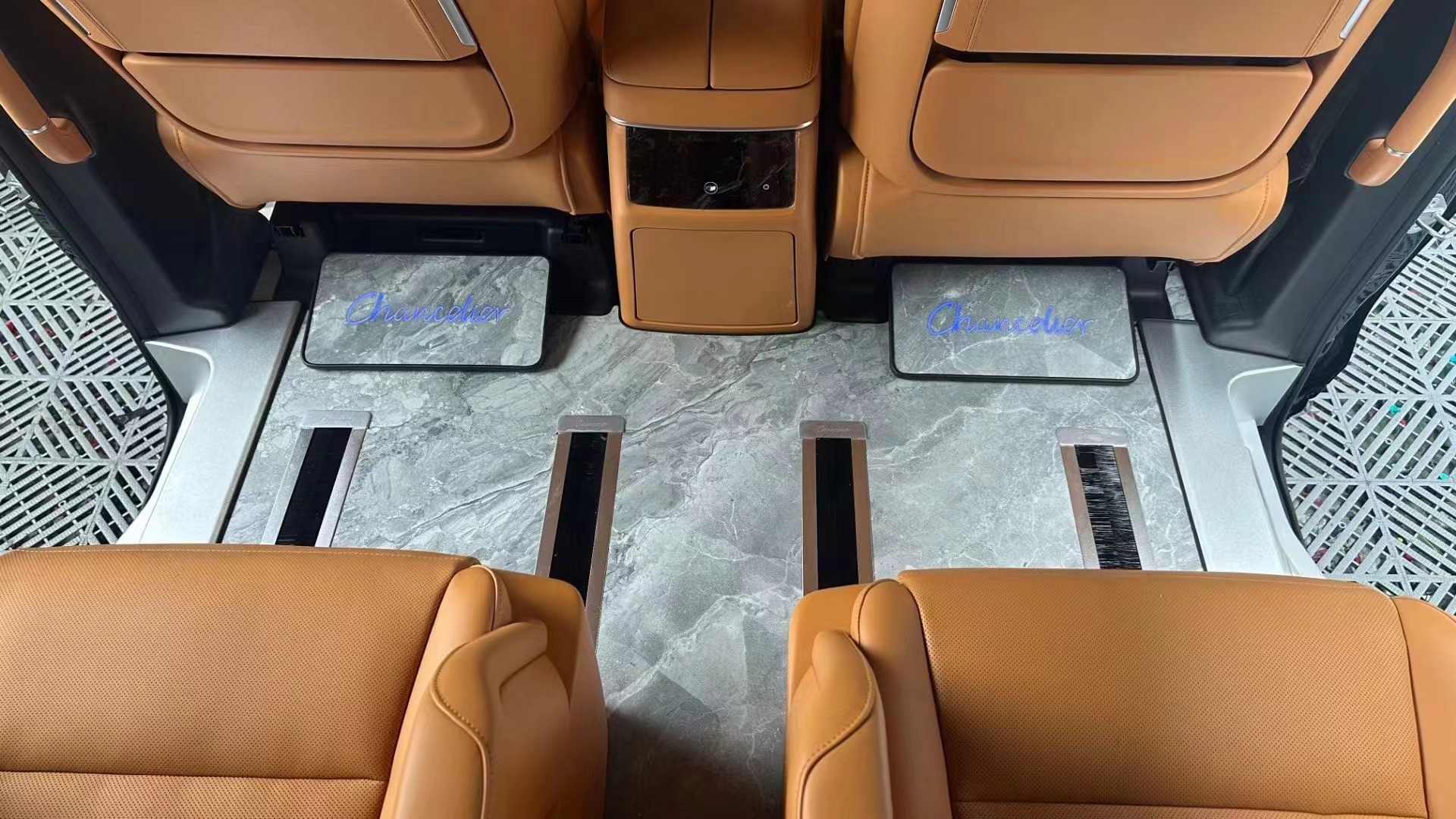 ▲ Actual photo of commuter car floor modification effect
1. Detail 1: Surface Texture Coarseness Determines Dirt-Hiding Ability
The biggest fear with a commuter car floor is "seemingly clean but actually dirty." Floors with coarse surface textures (fabric weave, bamboo fiber) trap dirt deep where the eye can't see it, but it gradually accumulates. Floors with fine surface textures (HPL laminate) keep dirt on the surface where it's visible but wipes away easily.
For commuting scenarios, we recommend HPL laminate with fine surface texture—visible dirt = timely cleaning = no mold buildup. Fabric weave floors feel nice, but require weekly deep cleaning in commuting scenarios, otherwise after 3 months they'll start showing a "worn" feel.
I've seen a Buick GL8 with 40,000 km of commuting—the owner chose a lightweight fabric weave option. After 2 years the floor wasn't damaged, but the surface had an obvious "worn" look—because dirt deep in the fabric weave texture couldn't be thoroughly cleaned. The owner told me, "If I had to choose again, I'd go with HPL."
2. Detail 2: Color Depth Determines Stain Visibility
Color's effect on dirt resistance is counterintuitive. Dark floors (black, dark gray) look "dirty," light floors (beige, light gray) look "clean." But actually it's the opposite—
Dark floors: stain color contrasts strongly with floor color, easy to spot and clean promptly. Light floors: stain color blends with floor color, hard to see with the naked eye, and by the time you notice it, it's already accumulated.
For commuter cars, we recommend medium-depth colors (elegant gray, mist silver, fabric charcoal black)—avoid the darkest black and lightest white. Medium-depth colors offer the best balance of stain visibility and cleaning difficulty.
3. Detail 3: Anti-Static Capability Affects Dust Attraction
Commuter car floors attract dust daily—not because they're "dirty," but because static electricity attracts dust. This problem is worse during dry city seasons (autumn, winter).
Materials with strong anti-static capability (with carbon crystal fiber layer) reduce dust attraction. HPL laminate has medium anti-static capability, lightweight fabric weave (with carbon crystal fiber layer) has stronger anti-static capability, while UV printing and bamboo fiber have poor anti-static capability.
For commuter car owners, we recommend lightweight fabric weave or HPL laminate options with carbon crystal fiber layer—commuter cars run AC with high in-and-out frequency, so static accumulates quickly.
4. Detail 4: Seam Treatment Affects Dirt-Hiding Dead Zones
The worst dirt accumulation on commuter car floors isn't on the surface—it's at the seams. Below the door trim strips, around the second-row seat slide rails, at the third-row seat folding points, and along the cargo area loading edges—these seam locations are where dirt most easily accumulates as dead zones.
Signs of good seam treatment in modification options:
- No visible gaps between door trim strips and floor
- Inspection access reserved at seat slide rail positions
- Sealed treatment on floor edges at third-row folding points
- Waterproof edges at cargo area loading positions
Common issues with poor seam treatment in modification options:
- Door trim strips lifting, dirt seeping in
- Exposed base panels at seat slide rail positions
- Floor edges exposed at third-row folding points
- Leaks through gaps at cargo area loading positions
The modification shop owner should demonstrate seam treatment on-site, not just show sample room results. Commuter car scenarios have high requirements for seam quality.
5. Detail 5: Convenience of Daily Cleaning
Commuter car floors need daily cleaning (even just simple wiping), so cleaning convenience matters. 5 details determine cleaning convenience:
- Wet wiping capability: Both HPL laminate and fabric weave can be wet-wiped, while UV printing and bamboo fiber tend to leave marks when wet-wiped.
- Vacuum efficiency: Smooth-surfaced HPL laminate vacuums fastest; fabric weave and bamboo fiber have lower vacuum efficiency.
- Removal and reinstallation convenience: Commuting scenarios occasionally require floor removal for cleaning (especially after spilled drinks); HPL laminate options are easiest to remove and reinstall.
- Chemical resistance: HPL laminate resists acids and alkalis (coffee, cola, takeout oil); UV printing and bamboo fiber have poor resistance.
- Wear resistance and durability: Commuter cars run 1.5-20,000 km per year, totaling 7.5-50,000 km over 10 years, and HPL laminate's 8,000+ wear rating is sufficient.
6. Comprehensive Score of Different Material Floors for Commuting Scenarios
Comprehensive scores of different material floors in commuting scenarios (out of 10):
- Aviation aluminium HPL laminate: dirt resistance 7, anti-static 6, cleaning convenience 8, seam treatment 7, color options 7 = 7.0
- Lightweight fabric weave (with carbon crystal fiber layer): dirt resistance 6, anti-static 8, cleaning convenience 7, seam treatment 7, color options 8 = 7.2
- Film-covered cold press: dirt resistance 7, anti-static 6, cleaning convenience 7, seam treatment 6, color options 6 = 6.4
- UV printing: dirt resistance 4, anti-static 4, cleaning convenience 5, seam treatment 5, color options 8 = 5.2
- Bamboo fiber aviation aluminium: dirt resistance 3, anti-static 3, cleaning convenience 4, seam treatment 5, color options 5 = 4.0
In commuting scenarios, lightweight fabric weave (with carbon crystal fiber layer) has the highest comprehensive score, followed by HPL laminate. UV printing and bamboo fiber aviation aluminium are not recommended for commuting scenarios.
FAQ
Q: What's a reasonable price for HPL laminate commuter car floors? A: Market price is 5,000-8000 yuan, with 6-8 hours of labor—it's the mainstream option for commuter cars.
Q: Is lightweight fabric weave suitable for commuter cars? A: Yes, but we recommend choosing the option with carbon crystal fiber layer. Lightweight fabric weave with carbon crystal fiber layer costs 6,000-8000 yuan.
Q: How often should commuter car floors be cleaned? A: Simple surface wiping once a week, deep cleaning once a month.
Q: What cleaner should be used on commuter car floors? A: Plain water + microfiber cloth is sufficient. Don't use chemical cleaners (they corrode the HPL skin).
Q: Is UV printing suitable for commuter cars? A: Not recommended. Poor wear resistance + poor dirt resistance + poor cleaning convenience—not suitable for high-frequency use scenarios.
Q: Does commuter car floor modification qualify for insurance? A: Just file a separate modification item, and claims will be paid according to the registered contents.
Summary
Five dirt-resistance details for commuter car floors: surface texture coarseness (choose fine), color depth (choose medium), anti-static capability (choose with carbon crystal fiber layer), seam treatment (require on-site demonstration), daily cleaning convenience (wet wiping capability + wear resistance and durability). In comprehensive scores, lightweight fabric weave (with carbon crystal fiber layer) ranks highest, HPL laminate next, while UV printing and bamboo fiber aviation aluminium are not recommended for commuting scenarios.
References
- GB/T 33284-2016 "Indoor Decorative and Refurbishment Materials—Limit of Harmful Substance Emission in Wood Flooring"
- IATF 16949:2016 Automotive Industry Quality Management System Standard
- GB/T 17657-2013 "Test Methods for Physical and Chemical Properties of Wood-Based Panels and Decorated Wood-Based Panels"
- SGS Standard Technical Services - Floor Wear and Stain Resistance Test Methods
- National Building Materials Testing Center - Floor Surface Texture Anti-Fouling Performance Test
- "2025 China Automotive Interior Modification Industry White Paper" - China Association of Automobile Manufacturers
Editorial Note
Floor prices, construction plans, and performance parameters mentioned in this article may vary depending on vehicle configuration, batch, and shop workmanship. Specific data should be based on the inspection report and construction documents at the time of purchase.
If you wish to cite the content, please indicate the source.
Lin Zhiqiang, automotive acoustics and NVH engineer with 16 years of experience, core member of the NVH Research Group at China Automotive Technology and Research Center.