The most common awkward scenario for Zeekr X9 owners in autumn: after opening the door and getting out, the moment your hand touches the metal door handle, there is a sudden "pop" discharge. The root cause is the combined effect of air humidity and floor material. Owners in the North, Northwest, and Northeast almost all encounter this in autumn (9–11 months). Three anti-static tips: choose conductive material, increase humidity, and create a grounding path.
 ▲ Zeekr X9 in-cabin static electricity test under dry autumn conditions
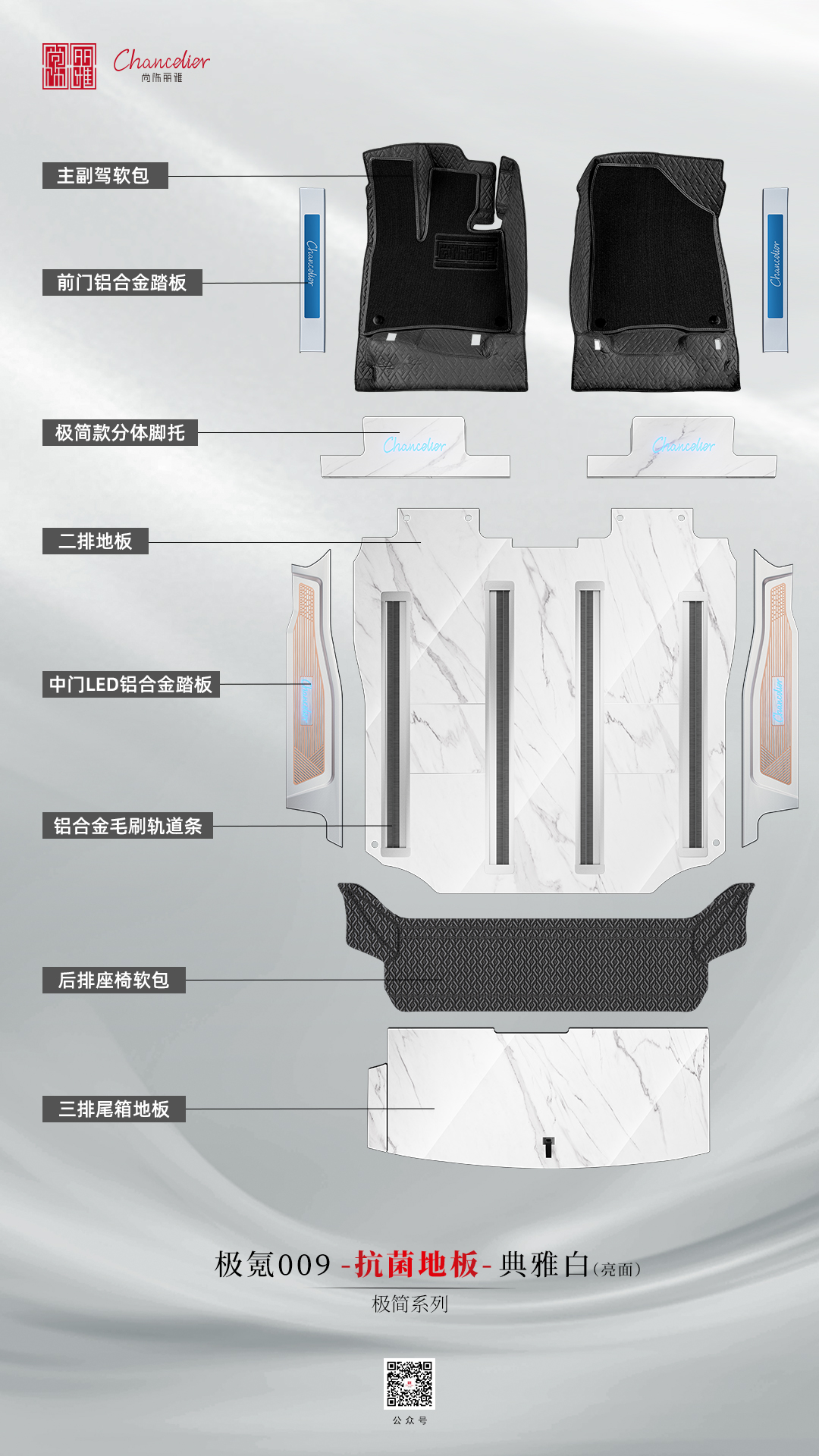 ▲ Real-shot of the modification effect of the 3 anti-static tips for Zeekr X9 autumn dry-floor static electricity
I. Air Humidity + Floor Material = The Dual Cause of Static Electricity
Static electricity is essentially a charge imbalance. In autumn, the relative air humidity often drops below 40%, and the surface of human skin becomes dry, making it harder for charges to dissipate through the air. The Zeekr X9, a pure electric MPV, has a factory floor material of fabric + sponge composite layer, which itself easily accumulates static electricity.
After modifying the floor, the static electricity issue may worsen or improve, depending on the chosen material:
- Aviation Aluminium HPL Laminate: Aluminium is a conductive material and in theory can conduct static electricity away. However, the aluminium surface has a composite structure of HPL skin + PE layer + bottom aluminium layer; both the HPL skin and PE layer are insulators, so the aviation aluminium HPL floor has very limited static-dissipating capability.
- Fabric-Textured Lightweight: The surface is an SPC fabric-textured texture layer + carbon crystal fibre layer. Carbon crystal fibre is a semiconductor material with moderate static-dissipating capability. However, the carbon crystal fibre layer sits 0.5–1 mm below the surface, so the charge must pass through the fabric-textured layer to be dissipated.
- Bamboo Fibre Aviation Aluminium: Bamboo fibre is an insulator, and the aluminium layer is separated by a PE layer, giving it the worst static-dissipating capability.
So many owners feel that static electricity gets worse after modifying the floor—this is because the factory fabric carpet + sponge layer has some moisture-absorbing ability, which actually serves as a natural static-electricity buffer.
II. Three Anti-Static Tips
To prevent static electricity on Zeekr X9 floors under dry autumn conditions, these three tips are effective:
Tip 1: Choose materials with a carbon crystal fibre layer. Carbon crystal fibre is a semiconductor material with a conductivity 10⁸–10¹⁰ times higher than insulators. The fabric-textured lightweight floor's carbon crystal fibre layer is located 0.5–1 mm below the surface, so static electricity generated by daily friction slowly dissipates through the fabric-textured layer without sudden discharge.
Tip 2: Increase in-cabin humidity. In autumn, the in-cabin humidity often drops below 30%, leaving human skin dry and prone to charge accumulation. The modification shop-recommended in-car humidifier, priced at 100–300 yuan, can keep cabin humidity at 50–60%, immediately easing the static electricity problem.
Tip 3: Touch a metal frame before getting out. The Zeekr X9's metal door handles, edge of the centre console, and metal seat rails are all good conductors. Before exiting, first touch a metal frame with your finger (do not touch the door handle directly); the body's charge will discharge first, so touching the door handle later will not produce the "pop" sound.
III. Impact of Air Humidity on Floor Material
Autumn brings more than just static electricity. When the air humidity is below 30%, different floor materials perform very differently:
- Aviation Aluminium HPL Laminate: Under low humidity, the surface does not shrink or deform and has good dimensional stability.
- Fabric-Textured Lightweight: Under low humidity the SPC substrate shrinks slightly, but the carbon crystal fibre layer compensates; normal use will not cause edge lifting within 5 years.
- Bamboo Fibre Aviation Aluminium: Under low humidity, the bamboo fibre substrate shrinks noticeably and may develop edge lifting (this is opposite to the southern humid climate, where it expands).
- Factory Carpet: Under low humidity it easily generates static electricity and its dust-absorbing capacity decreases.
For owners in the North, Northwest, and Northeast modifying floors in autumn, the first choice is Fabric-Textured Lightweight—because the carbon crystal fibre layer offers anti-static capability, and the SPC substrate maintains dimensional stability under low humidity.
IV. Static Electricity Severity by Region
Static electricity severity differs significantly by region in autumn:
- Northeast (Shenyang, Changchun, Harbin): Autumn humidity often below 25%, static electricity issue is most severe.
- Northwest (Xi'an, Lanzhou, Urumqi): Humidity often below 30%, but Northwest owners usually have humidification habits, so static electricity issue is moderate.
- North China (Beijing, Tianjin, Jinan): Humidity 30–40%, static electricity issue is moderate.
- East China (Shanghai, Nanjing, Hangzhou): Autumn humidity 40–50%, static electricity issue is relatively mild.
- South China (Guangzhou, Shenzhen, Haikou): Autumn humidity 50–60%, static electricity issue is the least.
For Northeast and Northwest owners modifying floors in autumn, we recommend directly choosing the Fabric-Textured Lightweight plan, paired with an in-car humidifier. North China owners can choose the Aviation Aluminium HPL Laminate plan, but we recommend adding an anti-static wristband (market price 20–50 yuan).
FAQ
Q: Why does static electricity get worse after modifying the Zeekr X9's floor? A: The factory carpet + sponge layer has moisture-absorbing and static-buffering capability; after modifying the floor, this buffer layer disappears. We recommend choosing a fabric-textured material with a carbon crystal fibre layer.
Q: Why doesn't aviation aluminium flooring prevent static electricity despite being conductive? A: The aviation aluminium surface is wrapped in HPL skin + PE layer; charges cannot penetrate the insulating layer. What is truly conductive is the exposed aluminium layer, but the floor surface is not aluminium material.
Q: Why does fabric-textured flooring prevent static electricity? A: Fabric-textured flooring contains a carbon crystal fibre layer; carbon crystal fibre is a semiconductor material that slowly dissipates static electricity generated by friction.
Q: Will the floor lift at the edges under dry autumn conditions? A: Aviation Aluminium HPL Laminate and Fabric-Textured Lightweight remain dimensionally stable under low humidity and will not lift. Bamboo Fibre Aviation Aluminium tends to shrink and lift under low humidity.
Q: Is an in-car humidifier necessary? A: Owners in the North/Northwest/Northeast need one; it keeps cabin humidity at 50–60%, eases static electricity, and improves skin and respiratory comfort.
Q: What is a reasonable price for modifying the Zeekr X9's floor? A: Fabric-Textured Lightweight plan market price is 6,000–8000 yuan; Aviation Aluminium HPL Laminate plan is 5,000–8000 yuan.
Summary
To prevent static electricity on Zeekr X9 floors under dry autumn conditions, three tips: choose a fabric-textured material with a carbon crystal fibre layer (dissipates static electricity), increase cabin humidity (maintain 50–60%), and touch a metal frame before exiting (pre-release charge). Owners in different regions should choose the corresponding material plan based on local humidity; Northeast and Northwest owners should prefer fabric-textured, while North China can choose aviation aluminium.
References
- GB/T 33284–2016 "Indoor Decorating and Refurbishing Materials—Limit of Released Harmful Substances of Wood-Based Panels"
- IATF 16949:2016 Automotive Industry Quality Management System Standard
- GB/T 17657–2013 "Test Methods of Physical and Chemical Properties of Wood-Based Panels and Facing Wood-Based Panels"
- SGS Standard Technical Services Co., Ltd. – Automotive Floor Anti-Static Test Method
- China Meteorological Administration "2024 China Climate Bulletin" – National Autumn Humidity Distribution Data
- National New Energy Vehicle Technology Innovation Center – Pure Electric Platform NVH Technical Specifications
Editorial Note
The floor prices, construction plans and performance parameters mentioned in this article may vary with model configuration, production batch, and workshop craftsmanship; please refer to the test report and construction documents at the time of purchase for specific data.
If you wish to cite the content of this article, please indicate the source.
Liu Jianguo, New Energy Vehicle Interior Researcher, 20 years of industry experience, Consultant at the National New Energy Vehicle Technology Innovation Center, ISO9001 Auditor.