More and more NIO ES8 owners are trading in their fuel cars. Can the original fuel car floor be directly removed and used? The answer is no—not directly—but some parts can be reused. There are three reasons: floor dimensions are not interchangeable, the wiring layer structure of the pure electric platform is different, and the ES8 battery compartment thermal management has specific requirements for floor material. Get these three things clear before making a swap decision.
 ▲ Real-shot comparison of NIO ES8 pure electric platform floor wiring layer vs. fuel car
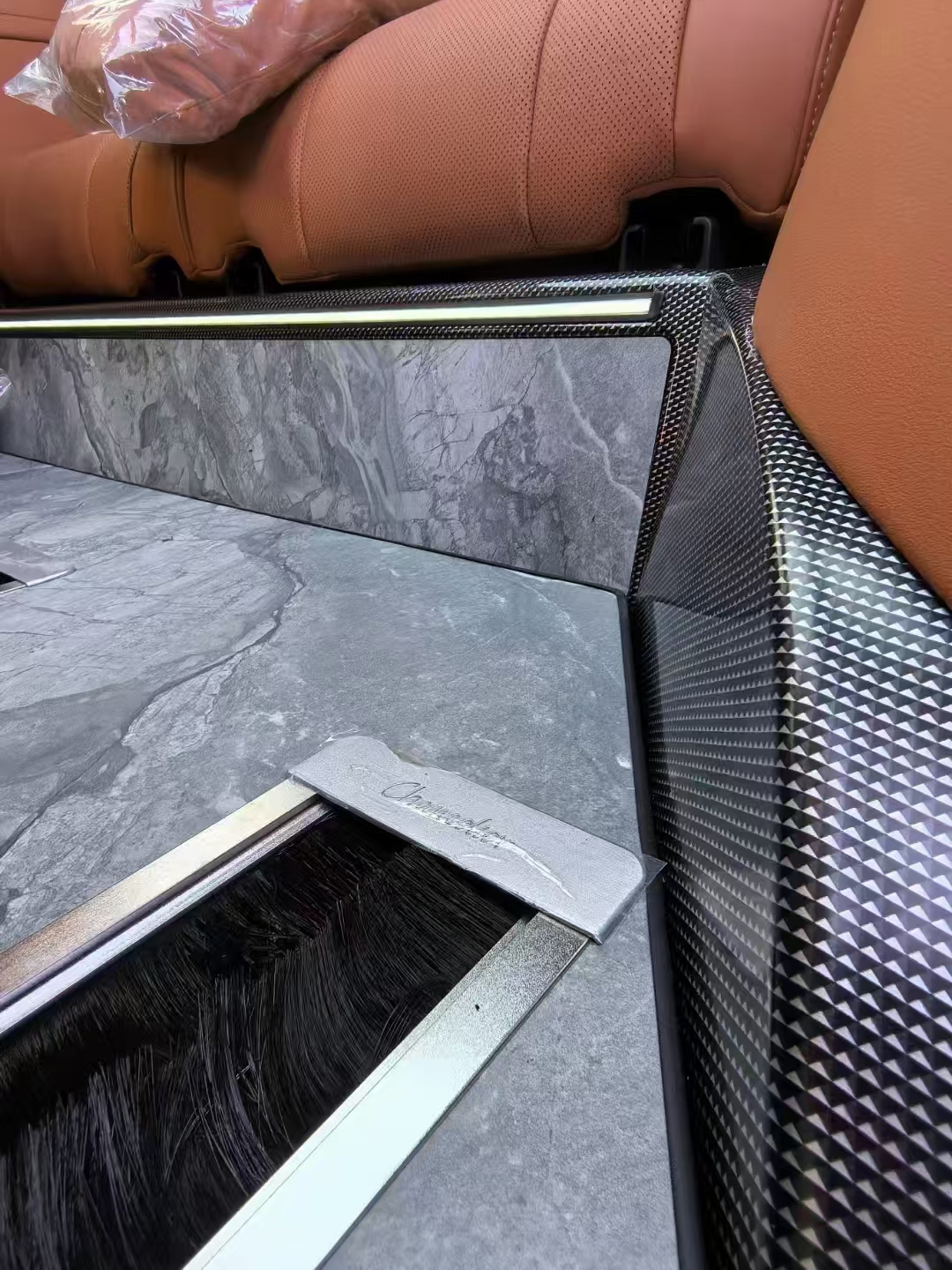 ▲ Real-shot of modification results: can NIO ES8 fuel car floor be directly removed and used
1. Floor Dimensions Are Not Interchangeable
The dimensional differences between fuel car floors and pure electric car floors stem from fundamentally different chassis structures. Underneath a fuel car floor are the driveshaft, fuel tank, and exhaust pipe provision spaces; underneath a pure electric car floor is the flat battery pack installation space. For a pure electric SUV like the NIO ES8, the space beneath the floor is 5-8 cm narrower than a same-size fuel car.
The specific differences appear in three places:
- Front-rear direction: The fuel car floor front must leave space for the driveshaft, while the ES8 floor front is flat-laid.
- Left-right width: The fuel car floor has recesses on both sides for the fuel tank/exhaust pipe provision, while the ES8 floor sides are nearly straight.
- Height below the seats: Fuel car seat clearance 25-30 cm, ES8 seat clearance 15-20 cm.
Non-interchangeable dimensions mean that after installing a fuel car floor, you'll have edge lifting, gap misalignment, and seats that won't fit. I've seen an ES8 owner who tried to save trouble by removing the original BMW X5 floor and installing it directly, only to find halfway through that the seats couldn't be lowered into place at all.
2. The Pure Electric Platform Wiring Layer Structure Is Different
Underneath the ES8 floor are three wiring layers: battery thermal control wiring harness, high-voltage wiring harness, and low-voltage signal wiring harness. Underneath a fuel car floor are only the driveshaft and exhaust pipe. Modification plans must leave inspection ports for the wiring layers, and the original fuel car floor's provision port locations are completely different.
A modification shop owner told me: the ES8 battery compartment has 8 thermal control sensor interfaces, 6 high-voltage wiring harness interfaces, and 12 low-voltage signal interfaces. Each interface has a maintenance cycle, and inspection ports must be left when modifying a pure electric car floor—this is a design requirement that fuel car floors don't have.
When a fuel car floor is brought over, the inspection port locations don't match at all. If forced in, either it blocks the battery compartment interfaces (affecting after-sales maintenance) or new openings are made that compromise floor integrity (leakage of water and air). Neither outcome is ideal.
3. ES8 Battery Compartment Thermal Management Has Specific Floor Material Requirements
The third reason is the most technical: the NIO ES8 battery compartment thermal control system is beneath the floor, and the floor material directly affects battery temperature control.
The ES8 battery compartment thermal control operating temperature range is -30℃ to 60°C. The thermal conductivity of the floor material within this temperature range is critical:
- Aviation aluminium HPL laminate: High thermal conductivity (about 200 W/m·K), floor surface temperature is 2-3 degrees lower than cabin air after summer sun exposure (aluminium absorbs heat and dissipates quickly), indirectly cooling the battery compartment.
- Fabric-textured lightweight: Low thermal conductivity (about 0.3 W/m·K), floor surface temperature is 4-5 degrees higher than cabin air after summer exposure, and battery compartment temperature rises slightly.
- Bamboo fibre aviation aluminium: Medium thermal conductivity, but bamboo fibre's water absorption is 50 times that of ceramic tiles; in southern humid climates, thermal conductivity drops sharply after absorbing water.
The ES8 battery compartment design heat dissipation capability is calculated based on the original factory floor's thermal conductivity. If you choose a fabric-textured solution when modifying the floor, battery compartment heat dissipation pressure will increase slightly, and battery temperature in summer high-temperature conditions may be 1-2 degree higher than factory spec.
So for ES8 owners trading in fuel cars, the first choice for floor material is aviation aluminium HPL laminate—this is the solution with the highest match with battery compartment thermal management.
4. Three Recommendations for Swap Decisions
Three recommendations for ES8 owners swapping from fuel cars on floor modification decisions:
First, recommend keeping the original factory floor. Pack the original factory carpet floor in a storage bag and place it in the trunk; "complete original factory parts" at second-hand sale can get you 2000-3000 yuan more. Also keep original factory parts when modifying the floor, for higher flexibility if you want to switch back to a fuel car or resell in the future.
Second, recommend battery wiring layer protection. Before modification, clearly agree with the modification shop: inspection ports must be left at the battery thermal control sensor interface, high-voltage wiring harness interface, and low-voltage signal interface locations. After modification, use a multimeter to check the battery compartment terminal voltage to ensure the wiring harness hasn't been disturbed.
Third, recommend choosing the aviation aluminium HPL laminate solution. The reason is the highest battery thermal management match, 11,000-revolution wear resistance corresponding to a 5-10-year service cycle, and the smallest difference from original factory NVH tuning.
FAQ
Q: How much can the original car floor be sold for when swapping from a fuel car to ES8?
A: It depends on model and material; original factory aviation aluminium HPL floors from BMW X5/Mercedes-Benz GLE are about 3000-5000 yuan second-hand; original factory wood floors from Audi Q7/Volvo XC90 are about 2000-4000 yuan.Q: Can ES8 modified floors be covered by insurance?
A: Yes, just file a separate record for the floor modification item. Claims are paid according to the recorded content, not the original factory configuration.Q: Will ES8 modification affect OTA upgrades?
A: Proper modification does not touch the CAN bus or damage battery compartment wiring, so OTA is not affected. If the modification shop touches the battery thermal control wiring harness, OTA may report errors.Q: Will modifying the ES8 floor affect the battery warranty?
A: If the battery pack is not touched and battery compartment sealing is not damaged, the battery warranty is not affected. Keep the modification agreement + original factory floor + maintenance records to avoid later disputes.Q: How long does it take to modify the ES8 floor?
A: For aviation aluminium HPL laminate, standard labour time is 6-8 hours. For fabric-textured lightweight, standard labour time is 4-6 hours.Q: What's a reasonable price to modify the ES8 floor?
A: Aviation aluminium HPL laminate market price 5000-8000 yuan; fabric-textured lightweight 6000-8000 yuan; bamboo fibre aviation aluminium 2000-4000 yuan (new material with high risk).Summary
The NIO ES8 fuel car floor cannot be directly removed and used. Three core reasons: non-interchangeable dimensions, different pure electric wiring layer, and battery thermal management material requirements. Before making modification decisions, swap owners should first confirm the battery wiring layer protection plan, choose aviation aluminium HPL laminate to match battery thermal management, and keep the original factory floor as a premium bargaining chip for second-hand sale.
References
- GB/T 33284-2016 "Limit of Hazardous Substance Emission from Wood Flooring in Interior Decoration and Refurbishment Materials"
- IATF 16949:2016 Automotive Industry Quality Management System Standard
- GB/T 17657-2013 "Test Methods for Physical and Chemical Properties of Wood-Based Panels and Decorated Wood-Based Panels"
- MIIT New Energy Vehicle Technology Roadmap 2.0 (Public Version)
- National New Energy Vehicle Technology Innovation Center - Pure Electric Platform Wiring Layer Technical Specifications
- SGS - Test Method for Thermal Conductivity of Automotive Flooring
Editorial Note
The floor prices, construction plans, and performance parameters mentioned in this article may vary with vehicle configuration, batch, and shop process. Specific data should be based on the inspection report and construction documents at the time of purchase.
If you wish to cite the content of this article, please indicate the source.
Lin Xiaodong, automotive consumer market researcher with 12 years of experience, special expert at the China Consumers Association Auto Branch, editor-in-chief of the annual consumer report.