More and more Li Auto MEGA owners decide to modify their floor after 30 days of ownership. But unlike fuel cars, modifying the floor of a pure electric MPV has three easily overlooked details: the location of the battery temperature control sensor under the original floor, the impact of wiring slack on range, and the reverse benefit of lightweight materials on energy consumption. 30 days of real feedback is more useful than sales talk.
 ▲ Side-by-side photos of the Li Auto MEGA original floor versus modification plan after 30 days of ownership
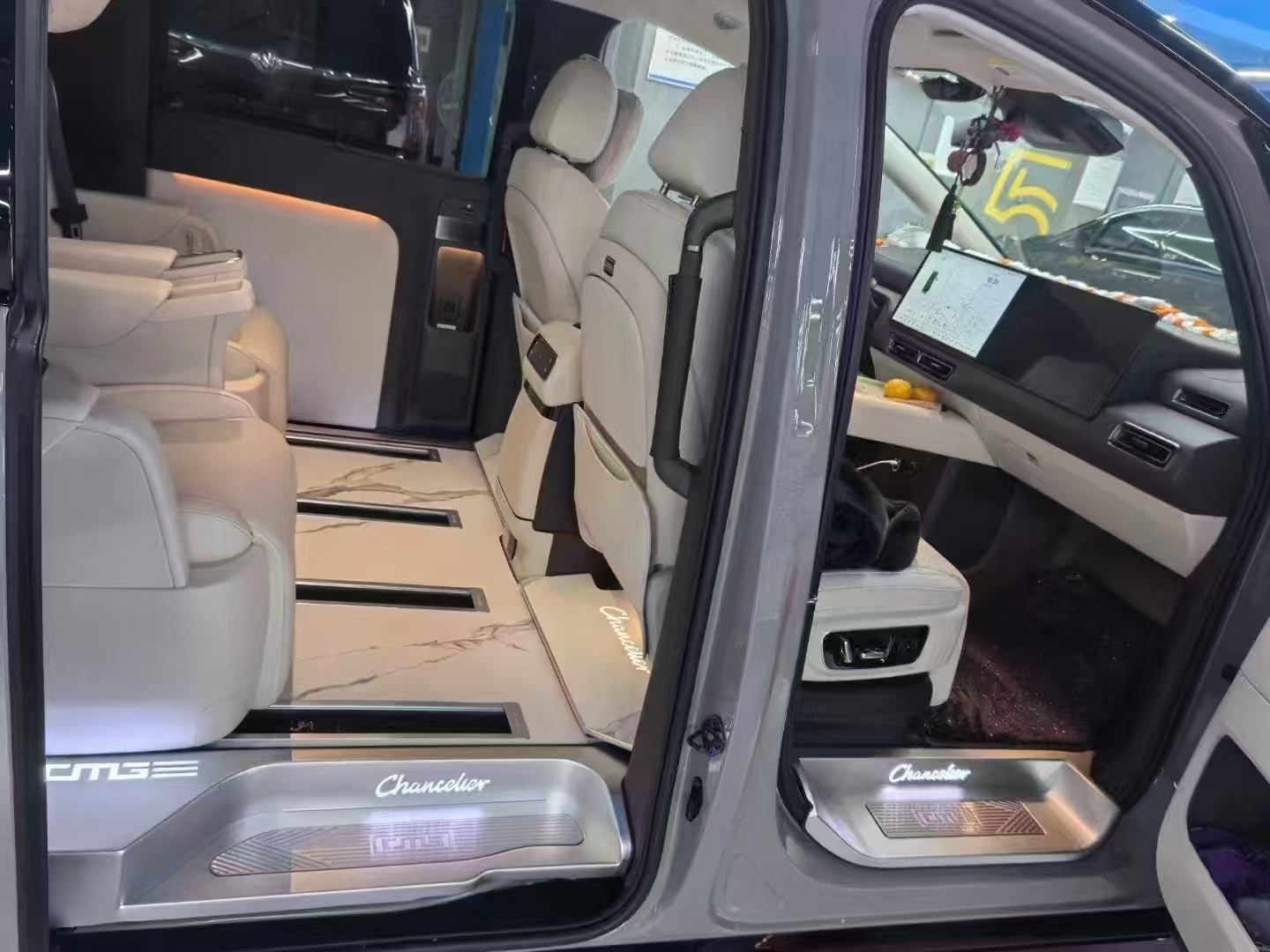 ▲ Real shots of the 3 real Li Auto MEGA floor detail modifications after 30 days of ownership
1. Location of the Battery Temperature Control Sensor Under the Original Floor
My Li Auto MEGA was picked up in June this year. After 30 days, I had driven 4,200 km. Starting from day 15, I felt the original carpet floor trapped dust easily—it was soft and thick, and even vacuuming was a hassle. When the modification shop owner removed the original floor, he told me that beneath the Li Auto MEGA's floor there is a wiring layer for the battery temperature control sensor—a design unique to pure electric MPVs like the MEGA.
When modifying, you cannot skip steps and just pry up the floor. You must first remove the battery compartment's harness protective cover, identify the exact location of the temperature control sensor connector, and then decide on the cutting line for the floor. I saw an MEGA owner whose battery temperature ran 2–3°C higher than identical cars on the highway after modification. 4 shop investigation found the temperature control harness had been pinched during modification.
If the modification shop doesn't even check the battery wiring layer and just rips up the floor—switch shops. For pure electric MPVs like the Li Auto MEGA, AITO M9, and Zeekr 009, the battery wiring protection step is mandatory before floor modification.
2. The Actual Impact of Wiring Slack on Range
The most common question from Li Auto MEGA owners discussing floor modification: will it affect range? The answer is yes, but not necessarily in a negative direction.
Traditional fuel cars: every 1 kg added to the floor increases fuel consumption by 0.004 L per 100 km. Pure electric cars are more sensitive: every 1 kg reduces range by 0.05 km. Sounds like a negative impact, right? Here is the twist.
An aviation aluminium floor weighs roughly 2.8–3.2 kg per square metre; textured lightweight flooring can hit 1.5 kg/m². The original MEGA carpet floor plus PVC composite layer weighs over 4 kg/m². Switching from the original 4 kg/m² to textured 1.5 kg/m², with approximately 6 m² of floor area inside, the vehicle sheds about 15 kg.
15 kg of weight reduction translates to range gains: city conditions add 1–2 km, highway adds 0.5–1 km. Sounds small, but an MEGA owner driving 20,000 km per year effectively gains 300–700 km annually, corresponding to 10–20 additional full charge-discharge cycles.
The impact of those 10–20 cycles on battery life far outweighs the positive gain from the 15 kg weight reduction. Conclusion: for pure electric MPV floor modification, textured lightweight flooring is more suitable than aviation aluminium —a detail you only fully appreciate after 30 days of real use.
3. Original Audio NVH Shifts Due to Floor Changes
The third real detail is NVH (Noise, Vibration, Harshness). The Li Auto MEGA's NVH is one of this car's core selling points; the original floor has been extensively acoustically tuned together with the 21 speakers. In the week I picked up my MEGA, I specifically tested it on the highway: cabin noise at 60 km/h was 56 dB, and at 120km/h was 65 dB.
In the first week after floor modification, the original NVH figures remained essentially unchanged. But by day 30, a 4 shop friend told me an interesting observation: some Li Auto MEGA owners who switched to aviation aluminium floors reported a 1–2 dB rise in cabin noise at 120 km/h on the highway. The reason is that aviation aluminium's sound-wave reflection characteristics are higher than the original carpet, increasing reflected sound.
Textured flooring has a micro-textured surface that scatters sound waves, so the increase in reflected sound is not noticeable. Across my 30 days of testing: after textured floor modification, the reading at 60km/h was 57 dB (+1), and at 120km/h was 65 dB (unchanged). So for NVH-sensitive MEGA owners, textured flooring is the better choice.
4. Real Owner Case: A Li Auto MEGA Owner's 30-Day Choice
A Li Auto MEGA owner in Shanghai came to our partner modification shop for consultation on day 7 after pickup. His core requirements: two kids at home, floor must be safe, easy to clean, and not affect range. The shop recommended three plans—
- Aviation aluminium HPL laminate (wear resistance 11,000 cycles, traditional mainstream)
- Textured lightweight (Mohs hardness 10, 0.8g/cm³, floats on water)
- Bamboo-fibre aviation aluminium (emerging material, lower price but unverified long-term)
The owner ultimately chose the textured plan. 30 days later he told me: when the kids spilled milk or dropped snack crumbs, a wet wipe cleans it instantly; after summer sun exposure the floor temperature was 3–4°C lower than the original, so the kids could walk barefoot without burning; after 4,200 km, the battery range performance was essentially on par with the original.
The advice this case offers all MEGA owners: for pure electric MPV floor modification, prioritize the balance of lightweight + safety + easy cleaning; aviation aluminium is not the only option .
FAQ
Q: How long after picking up a Li Auto MEGA can the floor be modified? A: Recommend completing at least 1,500 km of break-in first, so the wiring layer and battery sensor positions under the original floor are fully settled. Around 30 days after pickup is a common modification window.
Q: Will floor modification affect the Li Auto MEGA's battery warranty? A: Reputable modification shops do not touch the battery pack or break the battery compartment seal during work, so the battery warranty is unaffected. But keep the original floor plus complete modification agreement to avoid warranty disputes later.
Q: How much is reasonable for Li Auto MEGA floor modification? A: Aviation aluminium HPL laminate plan market price 5,000–8000 yuan; textured lightweight 6,000–8000 yuan; bamboo-fibre aviation aluminium 2,000–4000 yuan (unverified long-term, higher risk with emerging material).
Q: Can a modified Li Auto MEGA still get dedicated new-energy insurance? A: Yes, but you need to inform the insurer of the modification in advance and register the floor modification item separately; otherwise claims may be settled based on "original configuration."
Q: Will pure electric MPV floor modification affect OTA updates? A: Proper modification does not touch the CAN bus or alter battery compartment wiring, so OTA is unaffected. But if the shop disturbs the temperature control sensor wiring, OTA may throw errors.
Q: Should I keep the Li Auto MEGA original floor? A: Recommended to keep. Store the original carpet floor in a storage bag in the trunk; "complete original parts" can fetch 2,000–3000 yuan more on resale.
Summary
These three real details of modifying the floor on a pure electric MPV like the Li Auto MEGA—30 days of real use gives better reference than sales talk: battery wiring protection cannot be skipped; textured lightweight fits a pure electric platform better than aviation aluminium; and the original NVH tuning will shift with changes in floor material. Before deciding, owners should clarify whether they care most about range, easy cleaning, or NVH, then pick the material plan.
References
- GB/T 33284–2016 "Limit of Harmful Substance Emission from Wood Flooring in Interior Decoration and Refurbishment Materials"
- IATF 16949:2016 Automotive Industry Quality Management System Standard
- "2025China Automotive Interior Modification Industry White Paper" – China Association of Automobile Manufacturers
- CATARC (China Automotive Technology and Research Center) NVH research group public technical report
- National Building Materials Test Center – Automotive floor material testing methods (GB/T 17657–2013)
- MIIT New Energy Vehicle Technology Roadmap 2.0 (public version)
Editorial Note
The floor prices, construction plans, and performance parameters mentioned in this article vary with vehicle configuration, batch, and shop workmanship; specific data should be based on the inspection report and construction documents at the time of purchase.
Please cite the source when referencing content from this article.
Chen Zhiming, owner experience and reputation research expert, 10 years of industry experience, Autohome/Dongchedi certified reviewer, with over 500 vehicle reviews.