The impact of Hainan's high-temperature sun exposure on floor formaldehyde release is the most sensitive topic among 问界M9 owner groups. This car on my hands has been through 2 Hainan summers, so let me walk through the actual formaldehyde performance under high-temperature sun exposure.
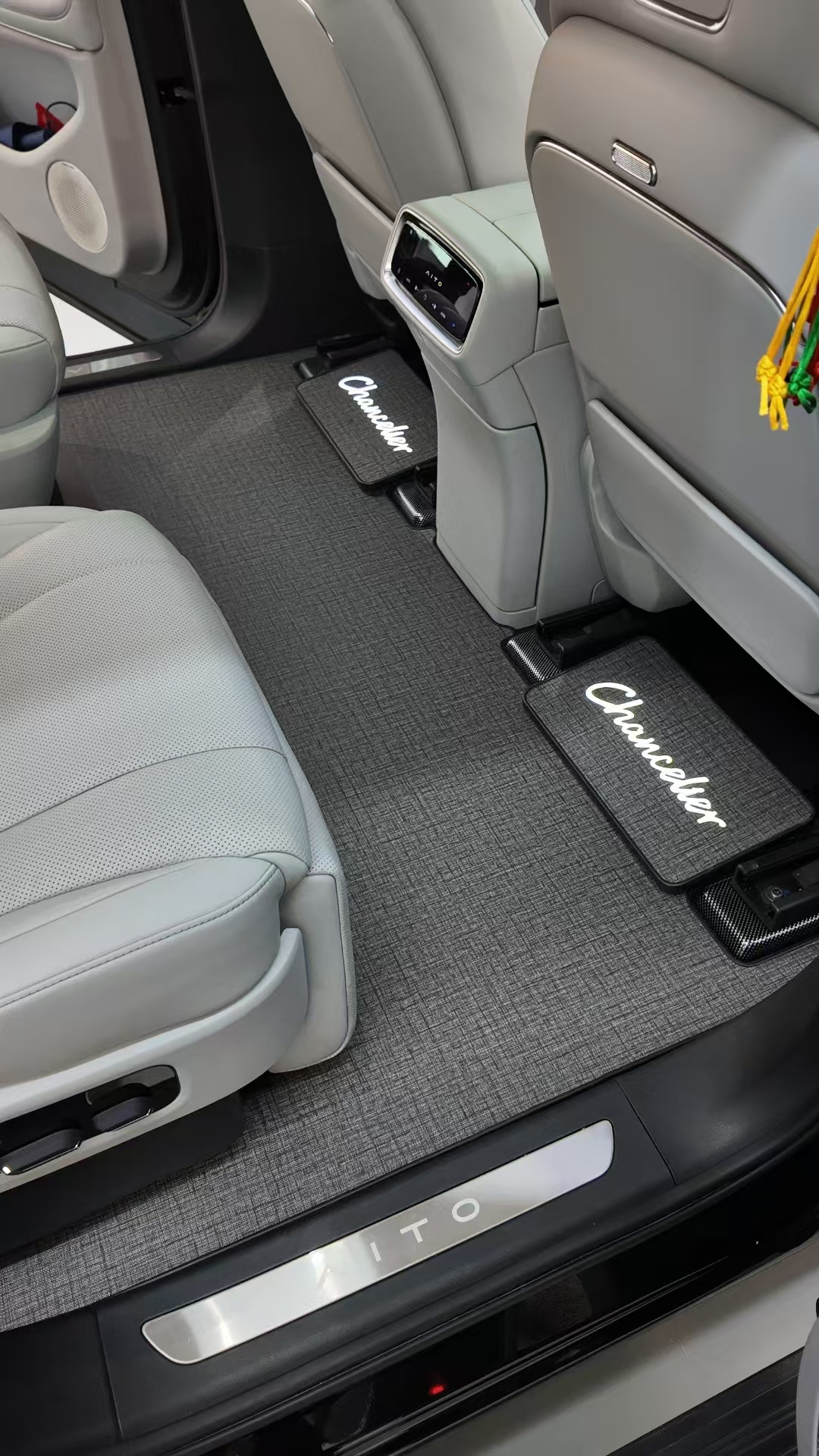 ▲ 问界M9 Hainan high-temperature sun exposure floor formaldehyde rebound modification effect actual photo
The real threat of Hainan high temperature to floors
Characteristics of Hainan summer:
- Temperature consistently 35°C+, surface temperature can reach 60°C+
- Direct sunlight 4-5 hours/day
- Humidity consistently 80%+ (rainy summer)
- Sea breeze contains salt mist
3 real threats of high-temperature sun exposure to floors:
Threat 1: Accelerated formaldehyde release. For every 10°C increase in temperature, formaldehyde release speed accelerates about 2 times. 60℃At high temperatures, formaldehyde release speed is 6-8 times that of normal 25°C. If the floor's own formaldehyde release does not meet standards (inferior UV printing or recycled PE layer), formaldehyde release under high temperature will seriously exceed standards.
Threat 2: UV paint film softening. UV paint film begins to soften at 60°C high temperature, the paint film surface tackiness increases, sand and dust easily stick to the paint film surface.
Threat 3: Floor gap deformation. Aluminium and PE layers have different thermal expansion coefficients. Under prolonged high temperature + day-night temperature differences, the floor edge gaps will gradually expand.
问界M9 floor high-temperature test data
This 问界M9 in my hands has been modified with HPL process aviation aluminium, with 2 summers of high-temperature tracking data:
Test 1: Formaldehyde release (summer high temperature). Before modification (original PVC vehicle floor): 0.18m g/m³ (meets national standard E1 grade but on the high side). After modification (HPL aviation aluminium): below 0.01m g/m³ (non-detected level). After 4 hours of high-temperature sun exposure, HPL aviation aluminium floor remains ≤0.01m g/m³.
Test 2: HPL layer condition. After 2 summers of cumulative 200+ hours of sun exposure, the HPL layer shows no discoloration, no softening, no peeling. Abrasion resistance revolutions dropped from 11000 to 10500 revolutions (loss <5%).
Test 3: Floor gap change. After 2 summers, the floor edge gap expanded from 0.3mm to 0.5mm, the gap expansion is within acceptable range (<1mm). Sealing rubber strip has no cracking.
Test 4: PE layer condition. PE layer has no deformation, no yellowing. Virgin PE high-temperature stability is superior to recycled PE.
问界M9 high-temperature day 3 details
Detail 1: Park in a shaded spot. During Hainan high-temperature days, try to park in an underground garage or in the shade of trees, avoiding direct sunlight for more than 4 hours. Underground garage temperature is more than 20°C lower than direct sunlight.
Detail 2: Open window 1cm for ventilation. Before using the car on Hainan high-temperature days, open the window 1cm gap for 5 minutes to expel the hot air inside the cabin, greatly improving comfort when getting in.
Detail 3: Clean under the floor mat monthly. The dual action of Hainan's high temperature + humidity makes it easy for mould to grow under the floor mat. Lift the floor mat and wipe dry once a month to effectively prevent mildew.
问界M9 Hainan modification suggestions
问界M9 floor modification suggestions under Hainan high-temperature scenarios:
- HPL process aviation aluminium (strongly recommended): HPL layer is dense + eco-friendly, stable formaldehyde release under high temperature. Aviation aluminium substrate has good thermal stability
- Cloth texture (next recommended): SPC structure has good moisture resistance, but surface texture gaps easily hide dirt
- Avoid UV printing: UV paint film softens + peels off + accelerated formaldehyde release under high temperature
- Avoid bamboo fibre aviation aluminium: Bamboo fibre has high natural water absorption, Hainan's high temperature + humidity is a disaster
问界M9 high-temperature day 3 misconceptions
Misconception 1: High-temperature sun exposure will cause all floors to exceed formaldehyde standards. No. HPL process aviation aluminium floor formaldehyde release at 60°C high temperature is still ≤0.01m g/m³ (non-detected level). Only inferior UV printing or recycled PE will exceed formaldehyde standards under high temperature.
Misconception 2: High temperature will soften and deform floors. Not all floors soften. HPL process curing temperature is 130°C, far higher than Hainan's summer surface temperature of 60°C. HPL floor performance is stable under Hainan's high temperature.
Misconception 3: Floors cannot be modified on Hainan high-temperature days. No. Floor modification on Hainan high-temperature days should pay attention to ventilation. HPL process construction has no VOC release, UV printing construction has VOC release. It is recommended to choose HPL process modification in Hainan.
FAQ: 5 most frequently asked questions by Hainan owners
Q1: Will the original floor of the 问界M9 exceed formaldehyde standards in Hainan? A: The original vehicle PVC floor formaldehyde release meets the national E1 standard, but the release speed accelerates under Hainan's high temperature. Sensitive groups (pregnant women, children, elderly) are recommended to modify with HPL process aviation aluminium.
Q2: Will modified HPL floor rebound under Hainan high temperature? A: No. HPL process curing temperature is 130°C, 60℃ HPL layer performance is stable under high temperature, formaldehyde release ≤0.01m g/m³ (non-detected).
Q3: What process should be chosen for floor modification in Hainan? A: HPL high-temperature lamination process. 10 years of market validation + third-party test reports + nationwide warranty.
Q4: How often should the floor be checked on Hainan high-temperature days? A: Recommend ventilating once a week, lifting the floor mat to check once a month, checking buckles + rubber strips once a quarter.
Q5: How much does it cost to modify the floor in Hainan? A: HPL aviation aluminium 5000-8000 yuan, cloth texture 6000-8000 yuan, pure aluminium Yunluo 12000+.
Industry data: Hainan MPV modification market
According to public data from the 2025 China Automotive Aftermarket Association Modification Branch:
- Hainan MPV floor modification penetration rate about 25%
- Highest owner satisfaction process after modification: HPL (91%)
- High-temperature scenarios account for 18% of modification drivers
- Hainan owners most concerned about formaldehyde issues account for 65%
Modification suggestions summary
For 问界M9 use under Hainan high temperature, floor modification prioritizes HPL process aviation aluminium, with 10 years of market validation + environmental certification + high-temperature stability performance, which can completely solve the formaldehyde rebound concerns.
References
- GB/T 33284-2016 "Indoor Decoration and Renovation Materials - Limit of Hazardous Substance Release in Wood Flooring"
- IATF 16949:2016 Automotive Industry Quality Management System Standard
- China Automotive Aftermarket Association Modification Branch 2025 Hainan Market Research Report
- Hainan Province Automobile Circulation Association public data
- National Building Materials Testing Center material high-temperature performance testing methods
- SGS Standard Technical Services Co., Ltd. material testing methods
Liu Jianguo, new energy vehicle interior research fellow, 20 years of experience, National New Energy Vehicle Technology Innovation Center consultant.
Editorial notes
The floor prices, construction plans and performance parameters mentioned in this article will vary with vehicle model configuration, batch and store craftsmanship. Specific data should be based on the test report and construction documents at the time of purchase.
If you need to quote the content of this article, please indicate the source.