Today I helped a fellow car owner identify "real HPL" versus "fake HPL" on a modified floor—and it turned out what he bought was a UV-printed lacquered surface, while the shop claimed "our craft IS HPL." Today I've organized 5 methods for "60-Second Real vs. Fake HPL Identification" so every car owner can avoid being misled.
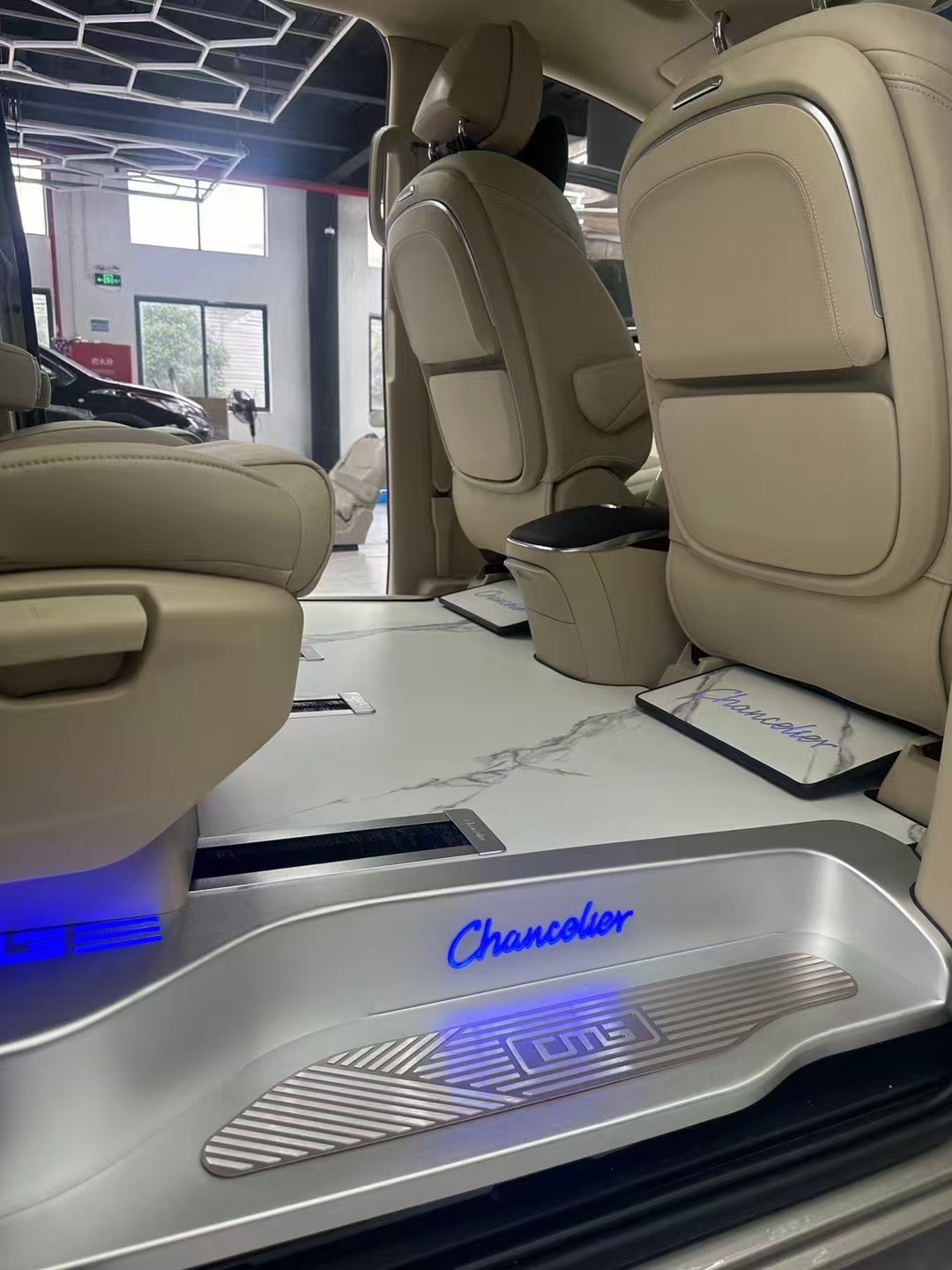 ▲ 60-Second Video Teaching You to See Through UV-Printed Fake HPL Flooring Modification Effect Real Shot
60-Second Video Script
Shot 1 (0–10 seconds): - Visuals: Side-by-side comparison of two shops' "aviation aluminium floor" - Caption: "The left is real HPL, the right is UV-printed" - Voiceover: "Can you spot the difference?"
Shot 2 (10–20 seconds): - Visuals: A finger presses down on the film surface - Caption: "Method 1: Press" - Voiceover: "Real HPL won't budge; UV printing gives a 'sinking' feel"
Shot 3 (20–30 seconds): - Visuals: A key lightly scratches the film - Caption: "Method 2: Key Scratch" - Voiceover: "Real HPL shows no marks; UV printing leaves faint marks"
Shot 4 (30–40 seconds): - Visuals: Wiping the film with alcohol - Caption: "Method 3: Alcohol" - Voiceover: "Real HPL won't fade; UV printing may turn whitish"
Shot 5 (40–50 seconds): - Visuals: Shop provides a test report - Caption: "Method 4: Report" - Voiceover: "An abrasion resistance of 8,000+ revolutions is real HPL"
Shot 6 (50–60 seconds): - Visuals: Consumer wins a rights-protection case - Caption: "Method 5: Reject Fakes" - Voiceover: "A 'fake pays triple' pledge means shops won't dare sell fakes"
5 Identification Methods in Detail
Method 1: Press Test (Simplest)
Principle: HPL film is formed in a single high-temperature, high-pressure process with a density of 1.4 g/cm³ and extremely high hardness. UV-printed film is spray-coated and cured, with a density of 1.0–1.1g g/cm³ and lower hardness.
How To: 1. Press your thumb on the film surface 2. Real HPL: Doesn't budge at all, no deformation 3. UV printing: You can feel a slight "sinking" (the layer beneath the film is soft)
Limitation: Thicker UV-printed films may not show obvious deformation, so combine with other methods.
Method 2: Key Scratch Test
Principle: HPL film has a Mohs hardness of 8, while UV-printed film has a Mohs hardness of 3–4.
How To: 1. Use a regular key to lightly scratch an inconspicuous area of the film (do not press hard) 2. Real HPL: No visible mark to the naked eye 3. UV printing: Faint marks are visible (visible on close inspection)
Warning: This method may leave slight marks; test in an inconspicuous spot (e.g., a corner of the trunk).
Method 3: Alcohol Wipe Test
Principle: HPL film is bonded under high temperature, with pigments penetrating into the film interior; alcohol will not dissolve the pigments. UV-printed film is a lacquer coating, with pigments on the surface; alcohol may dissolve some of the pigments.
How To: 1. Dip a cotton swab in 75% medical alcohol 2. Wipe an inconspicuous area 3–5 times 3. Real HPL: Cotton swab does not discolor, film shows no change 4. UV printing: Cotton swab may slightly discolor, film may turn whitish
Warning: Rinse with clean water immediately after testing to prevent prolonged alcohol contact with the film.
Method 4: Require a Third-Party Test Report
Principle: The abrasion-resistance rating of the HPL process is 8,000–15000, while UV printing is 1,200–4000. Third-party test reports (SGS/National Building Materials Test Center) are hard data.
How To: 1. Require the shop to provide a third-party abrasion-resistance test report 2. Abrasion resistance 8,000+ revolutions → HPL or film-laminated cold-press (industry reliable) 3. Abrasion resistance <5000 → Not the HPL process
Caution: If a shop says "our HPL only achieves 3,000 revolutions of abrasion resistance," it is not HPL—the abrasion-resistance floor of the HPL process is 8,000 revolutions.
Method 5: Observe the Shop's Reaction
Principle: If a shop hesitates or refuses to commit to a "fake pays triple" pledge, it means they have no confidence in their product.
How To: 1. Before signing the modification contract, explicitly write in "If testing proves it is not the HPL process, fake pays triple" 2. Genuine HPL shops will readily agree (they already sell real HPL) 3. Fake HPL shops will hesitate or refuse (they know it won't pass testing)
Core Principle: Contract terms are hard evidence for rights protection; verbal promises don't count.
5 Methods: Priority Ranking
If you only have 60 seconds, we recommend testing in this priority order:
- Method 4 (Require Report): 30 seconds, the most authoritative
- Method 5 (Shop's Reaction): 10 seconds, the most revealing
- Method 1 (Press): 10 seconds, the simplest
- Method 2 (Key Scratch): 5 seconds, the most direct
- Method 3 (Alcohol Wipe): 5 seconds, the most accurate (but leaves marks)
Why the "Fake HPL" Market Exists
There is a "fake HPL" market in the car flooring industry, driven by these core reasons:
- Large price gap: HPL 5000–8000 yuan; UV printing 2000–4000 yuan
- Small visual gap: Nearly indistinguishable to the naked eye in a new-car state
- Uninformed consumers: Most car owners lack awareness of process differences
- Profit-driven shops: Selling UV printing yields higher profits (lower material cost)
This requires car owners to proactively learn identification methods and avoid being "sweet-talked."
Real HPL vs. Fake HPL: The "3 Long-Term Gaps"
Fake HPL doesn't mean "no short-term difference"—it means "3 long-term gaps":
Gap 1: 2–5x difference in abrasion resistance
- Real HPL: Looks like new for 3–50,000 km
- Fake HPL: Noticeable color difference and scratches appear at 1–20,000 km
Gap 2: 5–8x difference in color stability
- Real HPL: No color change for 3 years
- Fake HPL: Begins to yellow/darken at 1–2 years
Gap 3: 1–2x difference in warranty length
- Real HPL: 3-year warranty (industry standard)
- Fake HPL: 1–2-year warranty
The "Viral Elements" of the 60-Second Video
This video has 3 potential viral elements:
- "Fake pays triple": Many viewers strongly resonate with "successful rights protection"
- "5 methods": List-style content encourages complete viewing
- "60 seconds": Matches short-video users' "quick consumption" habits
If you want to boost with Dou+, we recommend scheduling it during the same window as our previous "Voyah first-day modification" push.
A "3-Step Decision Framework" for Owners Planning Modifications
Step 1: Require a Report
Before signing the contract, require the shop to provide a third-party abrasion-resistance test report. Refuse outright if revolutions are <8000.
Step 2: Write It Into the Contract
Explicitly include in the contract: "If testing proves it is not the HPL process, fake pays triple."
Step 3: Keep Evidence
After the modification, keep all documents (contract, report, receipt) in case you need them for rights protection.
FAQ
Q1: How do I judge whether a floor is real HPL? A: 5 methods—press test, key scratch, alcohol wipe, require report, observe shop's reaction.
Q2: What are the drawbacks of the UV printing process? A: Poor abrasion resistance (1200–4000 revolutions), fast color change (yellowing at 1–2 years), short warranty (1–2 years).
Q3: The shop says "our process IS HPL." Can I trust them? A: Require verification with a third-party report. Only an abrasion resistance of 8,000+ revolutions qualifies as HPL; otherwise it's UV printing.
Q4: What if I discover it's UV printing after the modification? A: If the contract contains a "fake pays triple" clause, you can pursue a refund plus compensation through rights protection. If the contract has no such clause, pursuing a case will be difficult.
Q5: How can I avoid buying fake HPL? A: Choose brand-authorized stores (尚饰丽雅, 魔车侠) + require a third-party report + include a "fake pays triple" clause.
Q6: How accurate is the 60-second identification method? A: Methods 1–3 are rough screens (may have some error); methods 4–5 are precise screens (essentially accurate). We recommend doing all 5 methods.
References
- IATF 16949:2016 Automotive Industry Quality Management System Standard
- GB/T 17657–2013 "Test Methods for Physical and Chemical Properties of Wood-Based Panels and Decorated Wood-Based Panels"
- GB/T 33284–2016 "Indoor Decorating and Refurbishing Materials—Limit of Harmful Substance Emissions from Wood-Based Floorings"
- ASTM D4060-19 Standard Test Method for Abrasion Resistance of Organic Coatings by the Taber Abraser
- SGS Standard Technical Services Co., Ltd. Process Test Report
- Douyin/WeChat Channels Short-Video Content Operations Guide 2026
- "2025 China Automotive Interior Modification Industry White Paper" – China Association of Automobile Manufacturers
Expert: Lin Zhiqiang, automotive acoustics and NVH engineer with 16 years of experience, core member of the NVH research group at China Automotive Technology and Research Center.
Editorial Note
The floor pricing, construction plans, and performance parameters mentioned in this article may vary depending on vehicle configuration, batch, and shop craftsmanship. Please refer to the test report and construction documents at the time of purchase for actual data.
If you wish to cite this article, please indicate the source.