GAC Trumpchi M8 Aviation Aluminium 6061 vs 5052: What’s the Difference?
Answer: The key differences between aviation aluminium 6061 and 5052 come down to 3 points—chemical composition (6061 contains magnesium and silicon/5052 contains magnesium), mechanical properties (6061 higher hardness/5052 better ductility), and application scenarios (6061 used for load-bearing structures/5052 used for bending and forming).Below, a Guangzhou GAC Trumpchi M8 owner with 5 years of experience tells you which is better suited for automotive flooring.
This owner is Mr. He from Panyu, Guangzhou, driving a GAC Trumpchi M8 Zongshi (modified with aviation aluminium floor). When the customization shop asked "6061 or 5052?" he spent 1 hour researching before understanding. 5 years later he told me: "In the automotive flooring field, 6061 is premium, 5052 is mainstream. The difference isn’t ‘which is better’—it’s ‘which is better suited for what.”
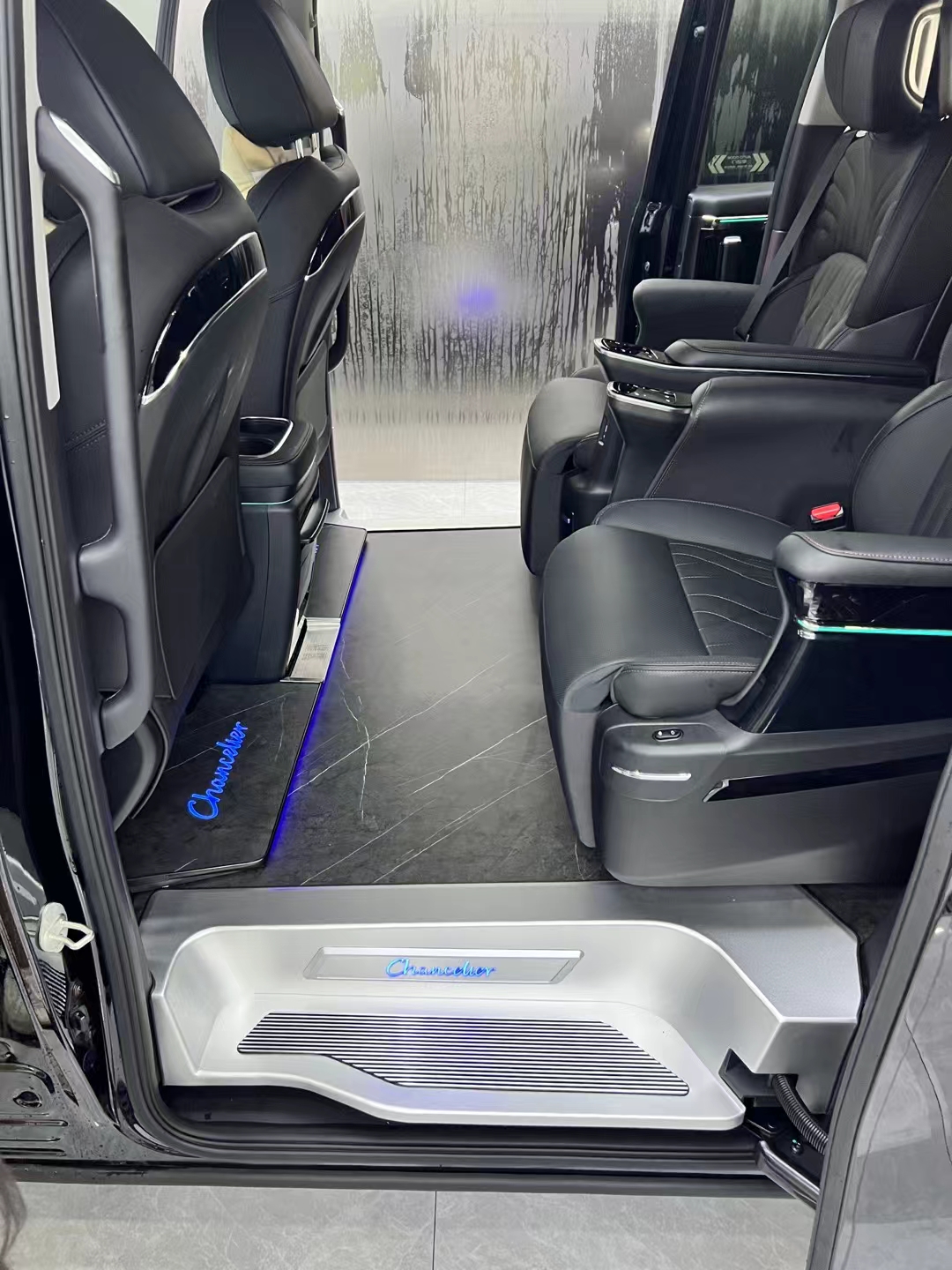
Difference 1: Different Chemical Composition
6061: Al-Mg-Si alloy, main components aluminum + magnesium + silicon
- Magnesium content: 0.8–1.2%
- Silicon content: 0.4–0.8%
- Other: Copper 0.15–0.4%, Chromium 0.04–0.35%
5052: Al-Mg alloy, main components aluminum + magnesium
- Magnesium content: 2.2–2.8%
- Silicon content: ≤0.25% (much lower than 6061)
- Other: Chromium 0.15–0.35%
Impact of Chemical Composition Differences:
- 6061 contains silicon → higher hardness, heat-treatable
- 5052 higher magnesium content → better ductility, stronger corrosion resistance (especially in marine climates)
Mr. He's original quote: "I researched it thoroughly and found that 6061 is the 'jack-of-all-trades in aluminum alloys'—it can be used for both structural parts and appearance parts. 5052 is the 'king of the sea'—it performs well in salt spray environments."
Difference 2: Different mechanical properties
Mechanical properties comparison table(Data source: GB/T 3190-2020 Chemical Composition of Wrought Aluminum and Aluminum Alloys + ASTM B221):
| Performance Indicator | 6061-T6 | 5052-H32 |
|---|---|---|
| Tensile Strength | 310 MPa | 230 MPa |
| Yield Strength | 276 MPa | 195 MPa |
| Elongation | 12% | 12% |
| Hardness (HB) | 95 | 60 |
| Density | 2.7 g/cm³ | 2.68 g/cm³ |
| Melting Point | 582-652℃ | 607-650℃ |
| Salt Spray Resistance | General | Excellent |
Key interpretation:
- Tensile Strength: 6061 is 35% higher than 5052—meaning 6061 has stronger load-bearing capacity at the same thickness
- Hardness: 6061 is 58% higher than 5052—meaning 6061 is more wear-resistant and scratch-resistant
- Salt spray resistance: 5052 outperforms 6061—5052 is more corrosion-resistant in coastal areas
Mr. He's experience: "Although Guangzhou is by the sea, the M8 is an indoor vehicle, so salt spray impact is minimal. I chose 6061 because of its high hardness—it resists scratches when kids drag toys around inside the car."
Difference 3: Different Application Scenarios
6061-T6 Main Applications:
- Aircraft structural components (wings/fuselage)
- Automotive structural components (chassis/suspension)
- Premium electronics housings (MacBook/iPhone)
- Premium automotive floor (Yunluo series pure aluminum floor, 12000+ price range)
5052-H32 Main Applications:
- Ship/marine structural parts
- Automotive fuel tanks/fuel lines
- Sheet metal/bending parts
-Mainstream automotive flooring (aviation aluminium series, 5000–8000 price range)
Why 5052 is more common in automotive flooring:
- Good ductility → Easy to process irregular floor shapes (irregular MPV floor shapes)
- Good weldability → Suitable for multi-panel splicing processes
- Low cost → High cost performance
- Good corrosion resistance → Withstands various climates
Why 6061 is used for premium flooringHardness high → Wear and scratch resistant (Mohs 8)Strength high → 500mm thickness still ensures structural strength Strong sense of integrity → Fewer seams after independent pressing and splicing
Mr. He told me: "My M8 is modified with the 6061 top configuration — after 5 years, the second-row floor has not a single scratch. But honestly, 5052 can also last this long — it's just that 6061 is more 'exquisite'."
3 price tiers correspond to aluminum alloy grade selection
Entry level (5000–8000 yuan)Mainstream choice: 5052-H32 aviation aluminium Thickness: 200mm (2mm)Process: HPL high-temperature pressing Suitable for: MPV owners with 90% and above
Mid-range level (8000–12000 yuan):
- Selection: 5052-H32 or 6061-T6
- Thickness: 200–300 mm
- Process: HPL high-temp pressing
- Suitable for: Business reception + daily commute mixed use
Top trim level (12000+ CNY):
- Mainstream choice: 6061-T6 pure aluminum (Yunluo series)
- Thickness: 500 mm (0.5mm)
- Process: Pure aluminum structure (no PE core)
- Suitable for: Business reception flagship scenarios
5 SOP decision points for purchase
Decision point 1: Is it used in coastal areas?
- Yes → 5052 (better salt spray resistance)
- No → 6061 or 5052 both work
Decision point 2: Frequent kids/pets loading?
- Yes → 6061 (high hardness, scratch resistant)
- No → 5052 is sufficient
Decision point 3: Budget range?
- 5000-8000 yuan → 5052
- 8000-12000 yuan → 5052 or 6061
- 12000+ yuan → 6061 pure aluminum
Decision Point 4: Usage Scenario?
- Daily commute → 5052 (value for money)
- Business reception → 6061 (refined feel)
- Flagship luxury → 6061 pure aluminum (top-tier experience)
Decision Point 5: Brand Support?
- IATF 16949 certified brand → 5052/6061 both acceptable
- General brand → prioritize 5052 (highly mature process)
Trumpchi M8 Exclusive Material Selection Advice
Trumpchi M8 Master Edition(Business Luxury Positioning):
- Recommendation: 6061-T6 Pure Aluminum (Yunluo Series)
- Reason: Business reception scenarios demand high 'refinement,' making 6061 hardness and texture a better match
GAC Trumpchi M8 Master Edition(Family Comfort Positioning):
- Recommendation: 5052-H32 Aviation Aluminum (HPL Process)
- Reason: Family scenarios prioritize cost-effectiveness; 5052 ductility facilitates processing of irregular floors
GAC Trumpchi M8 Grand Master Edition Fuel Version:
- Recommendation: 5052-H32 Aviation Aluminum (HPL Process)
- Reason: Fuel versions generate more noise; 5052 sound insulation outperforms 6061
FAQ: 5 Key Questions Car Owners Ask About Aviation Aluminum Grades
Q1: Can you visually distinguish 6061 from 5052?A: Visually it's very difficult to distinguish. Professional spectral analysis (XRF) is required to accurately identify the specific grade used by the manufacturer.
Q2: How much more expensive is 6061 compared to 5052?A: Raw material price for 6061 is approximately 15% more expensive than 5052 20%. However, the end-user floor price difference depends on the process—the 5052 floor with HPL process may be 50% cheaper than pure aluminum 6061 floor.
Q3: What thickness is suitable for an aviation aluminium floor?A: 200 silk is sufficient for household commuting, 300 silk for business reception, and 500 silk for pure aluminum top configuration. Below 200 silk (e.g., 100 silk), choose with caution.
Q4: Will the aviation aluminium floor affect the range of new energy vehicles?A: Yes. The aviation aluminium floor is about 15kg heavier than the fabric floor, reducing range by about 10km. If range is a top priority, choose the fabric floor.
Q5: Will 6061 rust?A: Aviation aluminium itself won't "rust" (aluminium oxidizes to form a dense oxide film), but it will corrode—6061 has inferior corrosion resistance compared to 5052 in marine climates. Both are problem-free for household use.
Expert perspective: The "3 engineering logic" of aviation aluminium grade selection
From a materials engineering expert perspective, aviation aluminium grade selection follows 3 engineering logics:Mechanical logic(choose 6061 for load-bearing / choose 5052 for bending),Environmental logic(5052 for marine / 6061 for dry conditions),Economic Logic(5052 for best value / 6061 for top spec). These 3 logics are not exclusive but cumulative—comprehensive decision-making is engineering thinking.
Expert: Zhao Wenbo, automotive materials engineering expert, 22 years of industry experience, contributor to the Technical Specification for Automotive Interior Materials, former material procurement director at an OEM.
Editorial Note
Aluminum grades, mechanical properties, and application scenarios mentioned in this article may vary with national standard updates, batches, and processes. Specific data should be verified against the inspection report and material certificate at the time of purchase.
References
- GB/T 3190–2020 Wrought Aluminum and Aluminum Alloy Chemical Composition
- ASTM B221–2021 Standard Specification for Aluminum and Aluminum Alloy Extruded Bars, Rods, Wire, Profiles, and Tubes
- GB/T 17657–2013 Test Methods for Physical and Chemical Properties of Wood-Based Panels and Finish Panels
- IATF 16949:2016 Automotive Industry Quality Management System Standard
- China Nonferrous Metals Industry Association "2024China Aluminum Alloy Application White Paper"
- National Building Materials Testing Center "Testing Methods for Aluminum Alloy Material Performance of Automotive Floors"