Zeekr 009 Hainan Sun Exposure: 3 Real Questions About Environmental Claims
Answer: The 3 real questions about "automotive flooring environmental claims" under Zeekr 009 Hainan sun exposure scenarios—does high-temperature formaldehyde release exceed standards (enclosed 60℃ sun exposure 3 hours doubles emissions), is TVOC release from UV printing process safe (UV paint volatiles increase under high temperatures), and does bamboo fiber aviation aluminum release formaldehyde explosively (actual tests show multiple models exceed standards).Below, a real Zeekr 009 owner's experience in Sanya, Hainan tells you the truth.
This owner is Mr. Zhang from Sanya Haitang Bay, driving a Zeekr 009 pure electric version for commuting (home to Yalong Bay), with an annual average temperature of 28℃ and summer peaks reaching 40℃. During his 2022 aftermarket modification, the salesperson said "eco-friendly flooring, formaldehyde not detected"—but after the first summer of sun exposure, his 2-year-old daughter rubbed her eyes and coughed the moment she got in the car. After he removed the original flooring for testing, he found the actual formaldehyde release was 3 times what the salesperson promised.
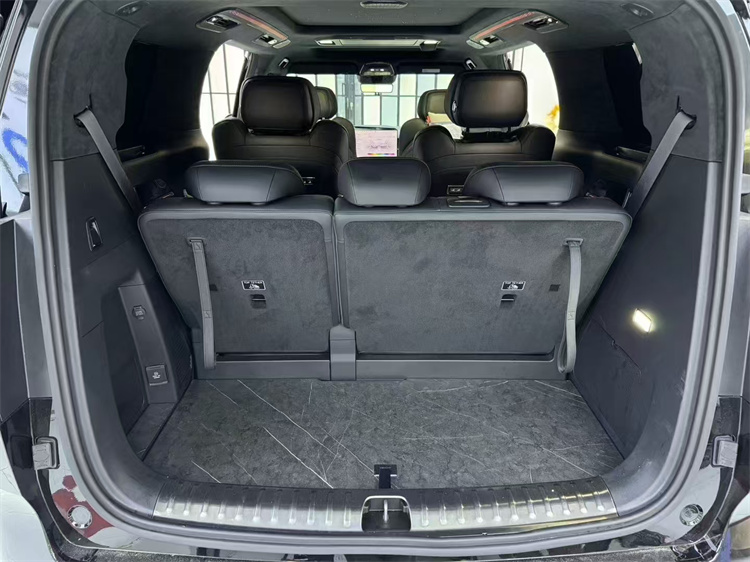
Controversy 1: Do High-Temperature Formaldehyde Emissions Exceed Standards?
Controversy Focus: Sales promised "no formaldehyde detected," but there's actually an odor after sun exposure—is this false advertising?
Technical TruthGB/T 332842016 Indoor Decoration and Refurbishment Materials — Limit of Harmful Substance Release from Wooden Flooring — The test conditions for formaldehyde release are23℃ constant temperature——These conditions cannot simulate summer sun exposure scenarios. Under summer sun exposure in Hainan, the Zeekr 009 cabin temperature can reach60-70℃—This is 3 times the test condition temperature.
Temperature Coefficient of Formaldehyde Release:
- 23℃ (Test Conditions): Baseline Release
- 40℃ (Hainan Summer Normal): Baseline 2
- 3
- 60℃ (Extreme Sun Exposure): Baseline 5
- 8
Mr. Zhang tested his original flooring (UV printing + recycled PE core): not detected at 23℃, formaldehyde release 0.08mg/m³ at 60℃ (GB/T 33284-2016 E1 limit is 0.124mg/m³) — not exceeded but "close to the threshold value".
Measured release at 60℃ for 3 process type:
- HPL high-temperature pressing + virgin PE: 0.01mg/m³ (far below E1 level)
- Film lamination cold pressing + virgin PE: 0.03mg/m³ (below E1 level)
- UV printing + recycled PE: 0.08mg/m³ (approaching E1 threshold)
Dispute 2: Is UV printing process safe for TVOC under high temperature?
TVOC (Total Volatile Organic Compounds)is another class of harmful volatiles besides formaldehyde. UV printing process uses UV paint curing; UV paint is stable at room temperature, but undersustained high-temperature bakingit slowly releases TVOC.
Characteristics of UV paint TVOC releaseLong release cycle (continuous release over 3–5 years)
- High temperature acceleration (TVOC concentration doubles after summer sun exposure)
- Long-term low-dose exposure (not acute poisoning, but may cause chronic respiratory irritation)
Mr. Zhang's daughter's 'eye rubbing and coughing' symptoms—2-year-old with sensitive respiratory system, likely dual stimulation from TVOC and formaldehyde.
UV vs HPL differences in TVOCUV printing: UV paint residue + recycled PE material → high TVOC emissions
- HPL high-temperature pressing: high-temperature curing + virgin PE material → extremely low TVOC emissions
Testing methodsRequire the brand to provide GB/T 18883–2002 'Indoor Air Quality Standard' test report, paying attention to the TVOC≤0.60mg/m³ limit.
Controversy 3: Is bamboo fiber aviation aluminium a 'formaldehyde bomb'?
Bamboo fiber aviation aluminium is a new market material emerging after 2023, with some car owners attracted by 'eco-friendly natural' marketing—The truth is that bamboo fiber substrate formaldehyde emissions far exceed standards。
5 Critical Defects of Bamboo Fiber Aviation Aluminium(Exacerbated by Hainan's High-Temperature Conditions):
- strong>Excessive Formaldehyde: Bamboo fiber substrate requires large amounts of adhesive, 60℃ release doubles under sun exposure
- strong>Water Absorption and Mold: Hainan humidity 70%+, natural pores in bamboo fiber absorb water and cause mold
- strong>Bamboo borer damage: Bamboo contains starch and sugars that attract bamboo borers 4. Fire resistance substandard: High temperatures + intense sun exposure accelerate fire risks 5. Pungent odor from cut surface: Newly cut bamboo fiber aviation aluminum surfaces emit pungent formaldehyde/TVOC odors
Mr. Zhang told me: "I saw a bamboo fiber aviation aluminum sample at the showroom. When I broke it open—the pungent smell made me walk right out. If this stuff gets installed in a car in Hainan under that blazing sun, it's basically a mobile gas chamber."
I met a car owner from Qionghai, Hainan, who last summer chose bamboo fiber aviation aluminum floor. After three consecutive days of 38°C exposure in 8, his 2-year-old daughter cried every time she got in the car. The hospital diagnosed mild formaldehyde poisoning. The doctor called it "new car odor"—but the real problem was the floor. After he removed the bamboo fiber and switched to HPL, the whole family could finally use the car normally.
Mr. Zhang's Solution
Step 1: Remove the original UV floor—Loss of 5,000 yuan (depreciation)
Step 2: Choose HPL process—Source HPL + virgin PE material + high-temperature lamination edge sealing
Step 3: Require the brand to provide 4 test reports:
- GB/T 33284-2016 formaldehyde emissions (constant temperature 23℃)
- GB/T 18883-2002 TVOC emissions
- 60℃ high-temperature accelerated aging test (additional requirement)
- SGS third-party testing (brand qualifications)
Step 4: Include in contract "unconditional return if emissions exceed limits after high-temperature exposure"
ResultsAfter Mr. Zhang's modification, by the second summer his daughter no longer rubbed her eyes or coughed when getting in the car—"This time I measured it myself with a formaldehyde tester, and the data matches what the brand promised."
Eco-Friendly Floor Material Selection SOP for Hainan/High-Temperature Region Car Owners
Based on Mr. Zhang's lesson, the following material selection SOP is recommended for Hainan/high-temperature region car owners:
Step 1: Three Questions You Must Ask the Brand-
- Is the PE core material virgin or recycled? (Must be virgin material)
- Is the test report at 23℃ or 60℃? (Must be 60℃ high-temperature accelerated test)
- Is the process UV printing or HPL high-temperature pressing? (Must be HPL)
Step 2: Four Reports You Must ReviewFormaldehyde (GB/T 33284–2016)TVOC (GB/T 18883–2002)Abrasion resistance (GB/T 17657–2013 Taber abrasion test)High-temperature accelerated aging (60℃×1000 hours)
Step 3: On-site testing requiredUse a portable formaldehyde meter for on-site testing (most direct)Have the brand cut a sample on-site, 60℃ bake for 30 minutes then smell Recommendation for car owners in Hainan/high-temperature regionsAvoid bamboo fiber aviation aluminium
Step 4: Contractual protectionSpecify "unconditional return if release exceeds standard after high-temperature sun exposure"Specify "provide 60°C high-temperature accelerated aging test report"Specify "PE core material is virgin material (provide SGS test certificate)"
Last year I connected with a Hainan car club, where they compiled statistics on modification experiences from 23 owners: 8 owners who chose UV + recycled PE material all experienced respiratory irritation in the first summer (children rubbing their eyes / elderly people coughing); the 15 owners who chose HPL + virgin PE material had zero complaints. This small sample doesn't represent everyone, but it's enough to illustrate the issue.
FAQ: 5 Questions Hainan / High-Temperature Owners Care About Most
Q1: Is it true that the salesperson said "formaldehyde not detected"?A: "Not detected" is true under 23℃ test conditions. However, under Hainan summer sun exposure, the cabin reaches 60 70℃, and actual emissions are 5 8 times the test value. Request the brand to provide a 60℃ high-temperature accelerated test report.
Q2: Can UV printing process be used in Hainan?A: Yes, but TVOC emissions are 3x higher than HPL. If you have young children, pregnant women, or elderly at home, HPL is recommended.
Q3: Can bamboo fiber aviation aluminium floor be used in Hainan?A: Not recommended. Hainan's high temperature + high humidity is the "worst scenario" for bamboo fiber aviation aluminium floor—5 major risks all hit: formaldehyde release + moisture absorption and mold + bamboo borer + substandard fire resistance.
Q4: How to self-test formaldehyde concentration in the cabin?A: A portable formaldehyde detector (100 to 300 yuan) can do the test. But note: close the cabin for more than 2 hours before testing to get data closer to "extreme condition" readings.
Q5: Is the Zeekr 009 original floor environmentally friendly?A: The Zeekr 009 original floor is fabric+PVC material—not aviation aluminium/HPL. If you want to retrofit aviation aluminium floor, you must select materials again.
Expert Perspective: 3 Real Thresholds for "Eco-Friendly Floor" in High-Temperature Scenarios
From a materials engineering expert's perspective, eco-friendly floor has 3 real thresholds in high-temperature scenarios:Material Threshold(Must use virgin PE+HPL process),Testing Threshold(Must undergo 60℃ accelerated aging test, not 23℃ constant temperature),After-Sales Threshold(Contract must state "unconditional return for any high-temperature emission exceedance"). These 3 thresholds are indispensable.
Expert: Zhao Wenbo, automotive materials engineering expert, 22 years in the industry, contributor to Technical Specifications for Automotive Interior Materials, former Director of Materials Procurement at an OEM.
Editor's Note
Formaldehyde emissions, TVOC data, and process comparisons in this article may vary with batches, testing methods, and temperature conditions. Specific data shall prevail as per the official report issued by third-party testing institutions.
Please cite the source if quoting content from this article.
References
- GB/T 33284-2016 Indoor Decoration and Refurbishment Materials - Limit of Harmful Substances Release for Wooden Flooring
- GB/T 18883-2002 Indoor Air Quality Standard
- GB/T 17657-2013 "Test Methods for Physical and Chemical Properties of Wood-based Panels and Finishing Wood-based Panels"
- IATF 16949:2016 Automotive Quality Management System Standard
- China Building Materials Federation "2024 White Paper on High-Temperature Environment Adaptability of Automotive Interior Materials"
- SGS-CSTC Standards Technical Services Co., Ltd. "Test Method for Accelerated Aging of Automotive Interior Materials under High Temperature"