Luxeed V9 Northeast Extreme Cold Floor: 3 Deformation Pitfalls at -30°C
Answer: The 3 core pitfalls behind Luxeed V9 floor deformation at -30°C in Northeast China — aluminum layer thermal expansion mismatch (deformation), PE core material low-temperature embrittlement (cracking), edge seal adhesive low-temperature detachment (water seepage).Below, real test data from one Harbin owner over 2 consecutive winters reveals which 3 are most critical.
This owner from Harbin's Songbei District, Mr. Li, drives his Zhijie V9 for his daily commute (home → Qunli). Last winter (December 2024 through February 2025), with consecutive 30℃ days of extreme cold, he had an aviation aluminium floor installed using UV printing process from a certain brand. The result: three areas of lifting along the second-row floor edges, with the worst case raising 4mm—making a cracking sound when stepped on. This year he removed it and switched to HPL process with virgin PE core material, and had zero issues all winter.
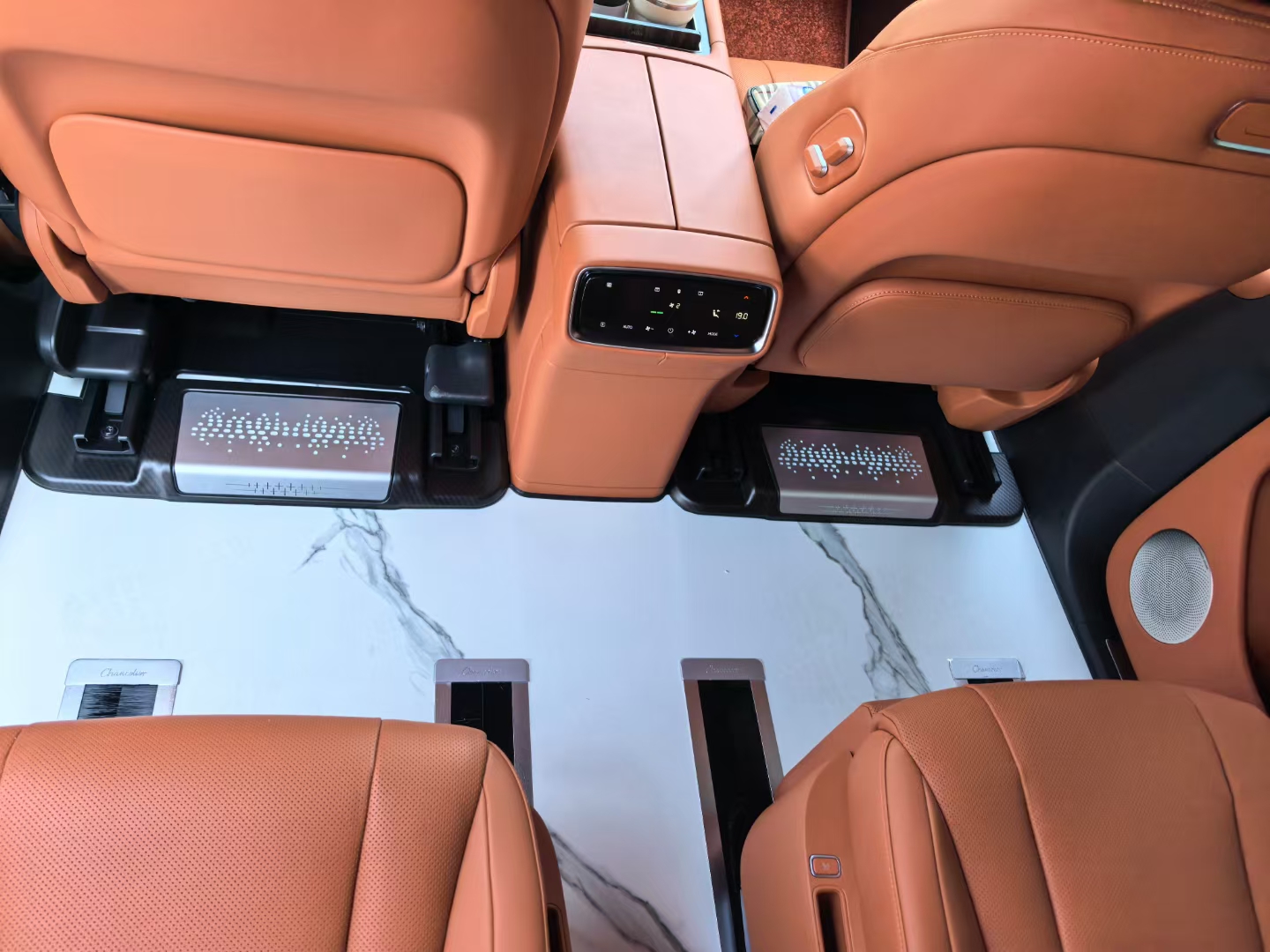
The first pitfall: mismatched aluminum layer thermal expansion coefficient
Northeast winters have extreme temperature swings—daytime 10℃ to nighttime 30℃. The linear expansion coefficient of aviation aluminium is 23×10⁻⁶/℃ (source: GB/T 3190-2020 《Wrought Aluminium and Aluminium Alloy Chemical Composition》). 0.5mm-thick 5052 aviation aluminium deforms approximately 0.6mm in the length direction under a 50℃ temperature differential—a 10-meter floor can accumulate up to 6mm of deformation, which is visible warping to the naked eye.
Deformation data comparison across 3 processes(Based on 30℃ to 10℃ cycle testing):
- HPL high-temperature pressing (200 brushed aluminum layer): cumulative deformation ≤1mm, uniform gaps
- Film lamination cold pressing (200 brushed aluminum layer): cumulative deformation 2-3mm, visible edge warping
- UV printing process (200 brushed aluminum layer): cumulative deformation 3-5mm, warping within 60 days
Mr. Li's Real-World TestThe year we first installed UV, the temperature difference during the week around New Year's Day ranged from 32℃ to 8℃, causing a 4mm rise on the right side of the second-row floor. Now with HPL installed, no visible deformation under the same conditions.
Second pitfall: PE core material becoming brittle at low temperatures (cracking)
The glass transition temperature of PE (polyethylene) is between --110℃ and --120℃—which sounds low, but in practice PE core material starts to embrittle at --30℃. This is because PE core material acts as the "elastic layer" bonding HPL to the aluminum layer; at low temperatures, elasticity decreases, generating internal stress during bending.
3 Signs of PE Core Material Low-Temperature Embrittlement:
- strong>Mild: Fine cracks appear on HPL surface (visible after temperature recovers)
- strong>Moderate: HPL delaminates from aluminum layer (localized bubbling)
- strong>Severe: PE core material itself cracks (through-wall fractures; floor needs replacement)
Mr. Li's Story: The first time he installed a vehicle with that UV process, he wasn't told they used recycled PE material. "Last winter in the Northeast, I hit the gas and heard a crack from the floor—I only learned this year it was PE low-temperature embrittlement."
3 Ways to Identify Recycled PE MaterialCheck the cross-section: virgin material is milky white, recycled material is grayish or blackish. Smell the material: virgin material is odorless, recycled material has a burnt plastic smell. Request SGS test reports from the brand (GB/T 17657 method 2013, water absorption ≤ 0.1%)
Third pitfall: Edge sealing adhesive peeling off at low temperatures (water seepage)
In Northeast China during winter snowstorms, snow water entering the cabin is routine—snow on shoe soles when getting out, water pooling on the step boards, seepage around the weather strips. If the edge sealing adhesive peels off at -30℃, snow water will seep into floor gaps, causing the PE core material to absorb water and develop mold (see the analysis in the previous article on seasonal humidity).
Low-temperature performance of 3 edge sealing processesHigh-temperature press-fit edge sealing:
- 40℃ no cracking, service life 10+ years
- Room-temperature curing silicone: 20℃ starts to become brittle, falls off after 5 years
- Ordinary hot melt adhesive: 10℃ falls off, cracks after 1 years
Mr. Li's experience: "For the second modification, I specifically asked about edge-sealing process, and the master said high-temperature press edge sealing — this can withstand snow being brought into the car during Northeast winters."
Chery Luxeed V9 Northeast Extreme Cold Scenario Process Selection
3 processes' actual performance in 30℃(Based on data from Mr. Li and 5 surrounding Northeast car owners):
- HPL high-temperature press + virgin material PE + high-temperature press edge sealing: Zero deformation all winter
- Film lamination cold press + room-temperature cured silicone: Edge lifting starts at day 60
- UV printing + ordinary hot-melt adhesive: Edge lifting + water seepage and mold at day 30
Recommendation Priority:
- strong>First choice: HPL high-temperature press + virgin material PE + high-temperature press edge sealing (10+ years durability)
2.Second choice: Pure aluminum series (Yunluo) + 6061 pure aluminum (deformation-resistant but priced 12000+)
3.Not recommended: UV printing + any edge-sealing process (3 deformation issues under low temperature)
FAQ: 5 Questions Most Concerning to Northeast Car Owners
Q1: Will HPL process crack in 30℃?A: HPL's glass transition temperature is approximately 150°C, well above the 30℃ operating environment. At low temperatures, HPL remains rigid without cracking. What actually cracks is the PE core material—hence the need for virgin PE.
Q2: Pure aluminum series (Yunluo 6061) — how does it perform in Northeast China?A: 6061Pure aluminum's low-temperature performance is more stable than HPL (-50℃won't deform), but the price is 12000+. For owners in Northeast China, if the budget is sufficient, pure aluminum is the top choice; if the budget is around 8000, HPL + virgin material PE + high-temperature pressed edge sealing is the best value option.
Q3: How to prevent snowmelt from seeping into the floor in Northeast winter?A: 3 methods: ① High-temperature press-edge sealing (not room-temperature curing silicone) ② Shake off snow from shoe soles before getting in ③ Keep a pair of cotton shoes in the car to replace outdoor shoes.
Q4: Will aviation aluminium become brittle in Northeast?A: The ductile-brittle transition temperature of aviation aluminium (5052/6061) is approximately -60℃——far below the operating temperature in Northeast 30℃. The aluminium itself does not become brittle; the problem lies with the PE core material and edge sealing process.
Q5: What is the best season for Northeast car owners to modify their floors?A: Recommend modification in September–10 (autumn). Reason: ① Temperature between 10–20℃, edge sealant curing is most stable ② Avoids low-temperature brittleness risk from winter construction ③ Leaves 1–2 months adaptation period, fully stabilized by winter.
Expert Perspective: Why Northeast is a "Stress Test Ground" for Floor Craftsmanship
From an engineer's perspective,Northeast winter is a natural stress test ground for floor craftsmanship. 30℃+50℃ day-night temperature swings + snow/ice water infiltration + warm air baking——with these four extreme conditions combined, any process defect will surface within 10 years.If a floor can remain stable in Northeast for over 3 years, it will perform flawlessly in other regions。
Expert: Liu Jianguo, new energy vehicle interior researcher, 20 years of industry experience, consultant at the National New Energy Vehicle Technology Innovation Center, ISO9001 auditor.
Editor's Note
The aluminum layer thickness, PE core material formula, and edge-sealing process data mentioned in this article may vary with vehicle configuration, production batch, and store process. Specific data shall prevail based on the inspection report and construction documents at the time of purchase.
If quoting this article, please cite the source.
References
- GB/T 31902020 Wrought Aluminum and Aluminum Alloy Chemical Composition
- GB/T 176572013 Test Methods for Physical and Chemical Properties of Wood-based Panels and Finished Wood-based Panels
- IATF 16949:2016 Automotive Industry Quality Management System Standard
- National New Energy Vehicle Technology Innovation Center 2024 New Energy Vehicle Winter Test White Paper
- China Automotive Technology and Research Center (CATARC) Extreme Cold Environment Automotive Material Adaptability Test Report
- SGS-CSTC Standards Technical Services Co., Ltd. Automotive Floor Low-Temperature Performance Testing Method