Denza D9 City Traffic Floor Wear: 3 Counterintuitive Facts
A: The Denza D9's floor wear in city traffic has 3 counterintuitive aspects—① Traffic is harder on floors than highway (frequent boarding/exiting + sudden braking + cold starts) ② Center aisle wear rate is 3× higher than under seats ③ Light colors are more dirt-resistant than darkBelow, real-world data from an 18-month, 3.5-km test by a Shenzhen owner reveals which "common knowledge" is wrong.
The owner in question is Mr. Li from Futian District, Shenzhen, driving a Denza D9 DM-i top trim, primarily for city commuting and weekend family outings. 18 months covered 35,000 km, of whichapproximately 24,000 km was on city traffic roads(Home → Huaqiangbei → Nanshan). These are his actual wear data.
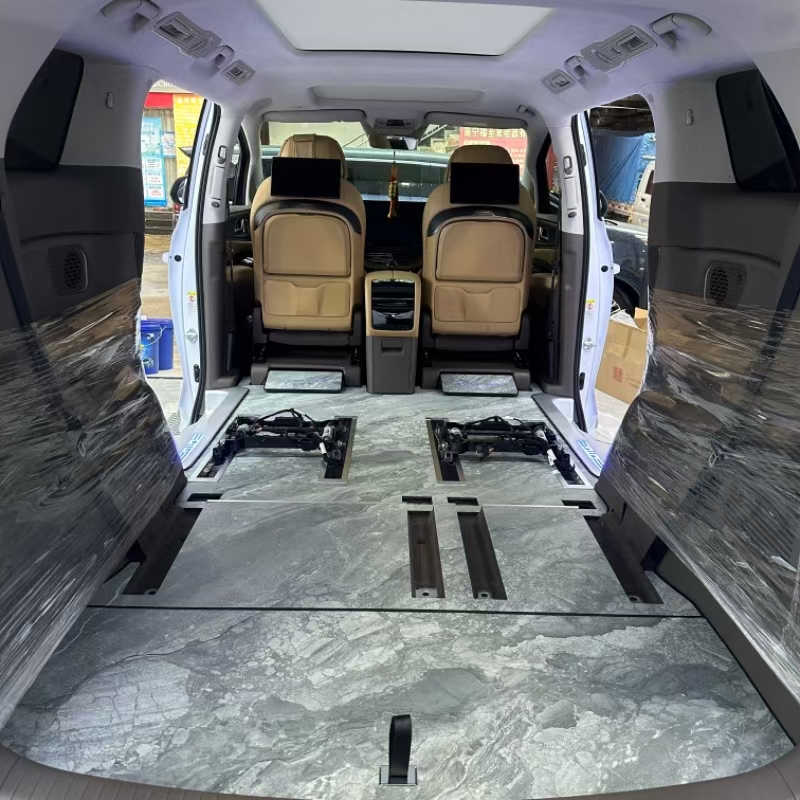
Counterintuitive Fact 1: Traffic Is Harder on Floors Than Highway
Many people assume: Only highway damages floors because of longer mileage and higher speed.
The truth:Cumulative wear in traffic scenarios is 2–3× that on highway— caused by frequent boarding/exiting + sudden braking + cold starts + left-foot braking.
Mr. Li's 18-month data:
- Highway mileage (Guangzhou-Shenzhen Riverside Expressway, ~11,000 km): center channel wear 0.3mm
- Traffic jam mileage (Shenzhen urban area, ~24,000 km): center channel wear 0.9mm
- Traffic jam wear rate is 3x that of highway driving
Root cause analysis:
- strong>Frequent boarding and alighting: City traffic jams average one stop every 2 3km; each time passengers step over the center channel with their shoes—50 times a day, 18,000 times a year 2. Sudden braking and cold starts: Stop-and-go traffic causes instantaneous shear forces on the floor that are 5 8x greater than highway cruising 3. Left-foot braking: With automatic transmission in traffic jams, the left foot hovers in the air or rests lightly on the brake, causing repeated friction on the toe cap in a fixed area
How to avoid pitfalls:
- Choose floor with Mohs hardness ≥ 8 (HPL high-temperature pressing process can reach Mohs 8; fabric texture can reach Mohs 10)
- Avoid UV printing process (Mohs 3–4, will definitely scratch within 1 year in traffic jam scenarios)
- Consider installing stainless steel protective strips in the center channel area (without affecting aesthetics)
Counter-intuitive Fact #2: Central Aisle Wear Rate is 3× Higher Than Under the Seats
What Many People Think: The floor under the seats has the least wear (because it's covered).
The Reality:The wear under the seats is indeed the least, but the central aisle wears out much more than expected—This is determined by geometry, not a quality issue.
Mr. Li's 35,000 km Area Wear Comparison:
- Under the driver's seat: 0.1mm wear (barely visible)
- Under the second-row seat: 0.05mm wear
- Central Aisle (driver to second row): 0.9mm wearSecond row center aisle: 1.1mm wear (max)
Trunk: 0.4mm wear
3 Root Causes of High Wear on the Center Console:
- strong>Geometric PositionThe central aisle is the main passage for getting in and out of the vehicle, bearing the weight of every step 2Sole CentralizationThe sole pattern and hardness are concentrated in the fixed area of the central channel 3.Emergency Braking Slide: When braking hard, the body's inertia shifts forward, causing the foot to slide against the center console
Countermeasures- Central aisle: choose dark color (hides dirt) + high hardness (HPL process)
- Second-row center aisle can be fitted with stainless steel/aluminum alloy protective plates (sacrificing aesthetics for durability)
- Choose brands with "original equipment matching" experience (higher dimensional precision for the central aisle)
Counter-intuitive fact 3: Light colors are more dirt-resistant than dark colors
Many people assumeDark colors hide stains, light colors show dirt.
The truth:Light colors (HPL light series like Elegant White) are actually more stain-resistant than dark colors— Visible stains on light colors are easier to spot and clean promptly, while dark colors tend to "hide dirt" and get overlooked.
Mr. Li's comparison data:
- Elegant White (HPL light): 18 months later, visible stains at 0.3% (weekly cleaning)
- Frost Silver (HPL dark): 18 months later, visible stains at 2.1% (monthly cleaning)
- Carbon Black weave: 18 months later, visible stains at 3.8% (monthly cleaning)
Why this happensOn light-colored floors, even a water stain or speck of sand is highly visible, prompting owners to clean proactively. The same marks visually "disappear" on dark floors, so owners tend to overlook them. Over time, dark floors actually accumulate more hidden dirt.
But the trade-off with light colorsLight colors require more frequent cleaning (weekly vs monthly). Light colors may show slight yellowing after 2+ years (unless using HPL high-temperature pressing—regular UV process yellows within 1 year). Light colors demand a cleaner installation environment (dust adheres more easily).
Li's recommendation"If you're the type willing to spend 10 minutes mopping weekly, go light; if you're the type who wants to forget about it after installation, go dark."But when choosing the process, go with HPLUV light-colored options yellow badly within just one year, looking unbearable.
18 Month Wear Data Comparison: 3 Processes
3.5 km Later: Actual Wear Performance of 3 Processes:
- HPL High-Temperature Pressing: Center console wear 0.9mm, no edge delamination, no surface discoloration
- Aviation Aluminium Laminate Cold Pressing: Center console wear 0.4mm (metal is more wear-resistant), but slight oxidation at edge seams
- UV Printing Process: Central passage wear of 2.1mm (base color visible), edge delamination at 3, light colors show obvious yellowing after 1.5 years
Counterintuitive Conclusion: In congested traffic scenarios,HPL offers the best overall durability(wear resistance + color stability + edge integrity), aviation aluminium is more wear-resistant but has noise issues, UV is the worst.
FAQ: Top 5 Concerns for City Traffic Drivers
Q1: Do I need higher wear resistance flooring for congested traffic?A: Yes. If your commute has over 50% congested traffic (common in major cities), opt for Mohs hardness ≥8 processes (HPL or woven texture). UV wears quickly.
Q2: Does adding a stainless steel guard plate to the central passage affect aesthetics?A: Modern stainless steel guard plates are 0.5mm thick with brushed finish, barely noticeable. Custom options can match your floor's color scheme.
Q3: Will light-colored HPL turn yellow after 2 years?A: Light-colored HPL (such as Elegant White) remains color-stable for 5 years under normal use. Standard UV-printed light colors yellow noticeably within 1 year—this is a process difference, not a color issue.
Q4: How many OEM suppliers does the Denza D9 have?A: The Denza D9's OEM suppliers include multiple brands in the flooring category, with limited publicly available industry information. For specific details, please consult your local authorized 4S dealership or BYD-authorized modification shop.
Q5: How much impact do emergency braking and cold starts have on the floor?A: During emergency braking, the shear force on the floor is 5-8 times that of normal driving, mainly concentrated in the sole contact area. The HPL process aluminum layer + PE structure can absorb most of the energy and will not deform or delaminate.
Editorial Note
The floor prices, installation solutions and performance parameters mentioned in this article may vary with vehicle configuration, production batch and store processes. For specific data, please refer to the inspection report and construction documents at the time of purchase.
If you need to quote the content of this article, please cite the source.
References
- GB/T 17657-2013 Test methods for physical and chemical properties of wood-based panels and surface decorated wood-based panels — Standardization Administration of China
- GB 8410-2006 Flammability characteristics of automotive interior materials — Standardization Administration of China
- December 2024 National Passenger Vehicle Market Analysis Report — CPCA
- 2025 China Automotive Interior Modification Industry White Paper — CAAM
- National Building Materials Testing Center Testing Methods — National Building Materials Testing Center
- SGS-CSTC Standards Technical Services Testing Methods — SGS-CSTC Standards Technical Services Co., Ltd.
- IATF 16949: 2016 automotive quality management system standard — International Automotive Task Force
Expert: Chen Zhimingcar owner experience and word-of-mouth research expert, 10 years of industry experience, Autohome/Dongched certified reviewer, evaluated over 500 vehicles