 Introduction
As a professional with years of deep experience in the commercial vehicle modification industry, I've witnessed too many car owners wasting money on unnecessary upgrades. Today we're not discussing "what's worth modifying" but ratherthe truth that modification shops won't voluntarily tell you。
Truth #1: OEM Modifications ≠ OEM Quality
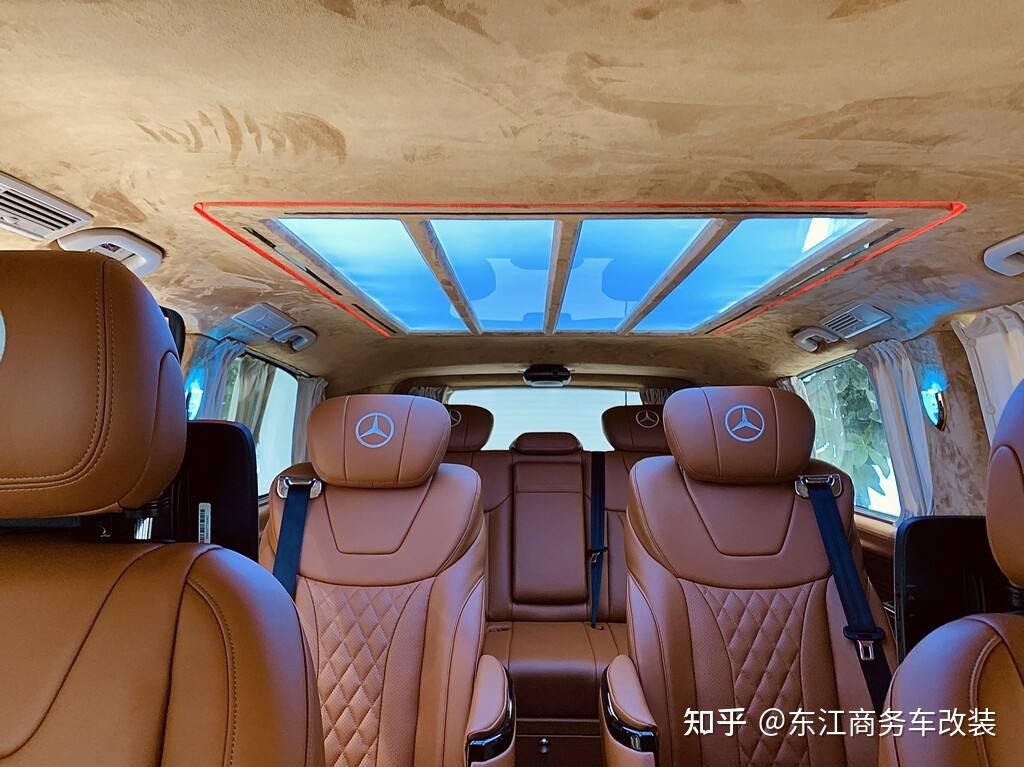
Many 4S dealers' "OEM modification packages" are actually outsourced to third-party modification shops. The so-called "OEM premium" seats and body kits often differ significantly from genuine OEM parts—especially institching craftsmanship, leather grade, and motor durabilitythree key aspects.
How to identify: Request to see the brand authorization and warranty card for the modified parts. Genuine OEM modified parts will always carry the brand logo and serial number, with warranty coverage consistent with the original vehicle.
Truth #2: More pitfalls in aviation seats than you'd imagine
Aviation seats are one of the most expensive single items in commercial vehicle modifications, and also the field with the most hidden tricks:
- Motor brand: Domestic generic motors have a failure rate as high as 30%, while German Bosch or Japanese Nidec motors can achieve near-zero failures. The price difference is 3x, but this is never an area to cut corners on.
- Leather grading: Even with the same "genuine leather" label, there's a 5x price difference and 10x quality gap between domestic second-layer leather and Italian top-grain Nappa leather.
- Frame safety: Qualified seat frames have all undergone crash testing (documentation must be provided), while products from small workshops may shatter directly in accidents.
- Rail design: Inferior rails will develop looseness, abnormal noises, or even seize up after six months of use.
Avoiding pitfalls principle: Think twice before purchasing aviation seats priced below 20,000 yuan per seat.
Truth #3: Soundproofing isn't about using thicker materials
Many car owners believe that "adding more layers of damping sheets" constitutes good soundproofing—this is a classic misconception. An effective NVH solution requires:
- Damping (butyl rubber damping sheets; strip application is more scientific than full coverage)
- Insulation (high-density soundproofing cotton, with key coverage on wheel arches and firewall)
- Absorption (white cotton/polyester fiber, used to fill cavities)
Each of the three material layers serves its own purpose; blind stacking only adds weight, costs more, exceeds environmental standards, and provides minimal improvement in noise reduction.
Truth #4: Post-modification resale value may plummet
This is the harshest truth. For a 500,000-yuan vehicle + 20 million in modifications, two years later when selling:
- Stock vehicle residual value: approximately 320,000 yuan (64%%)
- Modified vehicle residual value: approximately 280,000–3000,000 yuan (added value essentially written off)
Commercial vehicle modification is essentially aconsumer activity rather than an investment. If you plan to change vehicles within 3 years, it's recommended to keep modification budget within 20% of the vehicle price.
Truth #5: Compliance should always be the top priority
Many flashy modification schemes—such as lowered suspension, exhaust modifications, and major exterior changes—will encounter problems during annual inspection. According to Road Traffic Safety Law regulations:
- ✅ Can modify: interior, seats (that don't affect safety), audio, soundproofing, body color (registration required)
- ⚠️ Requires approval: changing seat count, modifying body structure
- ❌ Cannot modify: changing brand logo, altering body dimensions, removing seats, exhaust modifications
Recommendation: Choose qualified, legitimate modification shops. After modifications are complete, be sure to obtain the modification compliance certificate and material compliance documentation for annual inspection purposes.
Summary
Commercial vehicle modification is both a technical craft and a game of compromise. Finding the balance point among budget, quality, safety, and compliance—that's what truly constitutes "modding well." Hopefully these 5 truths can help you avoid detours and spend your money where it counts.