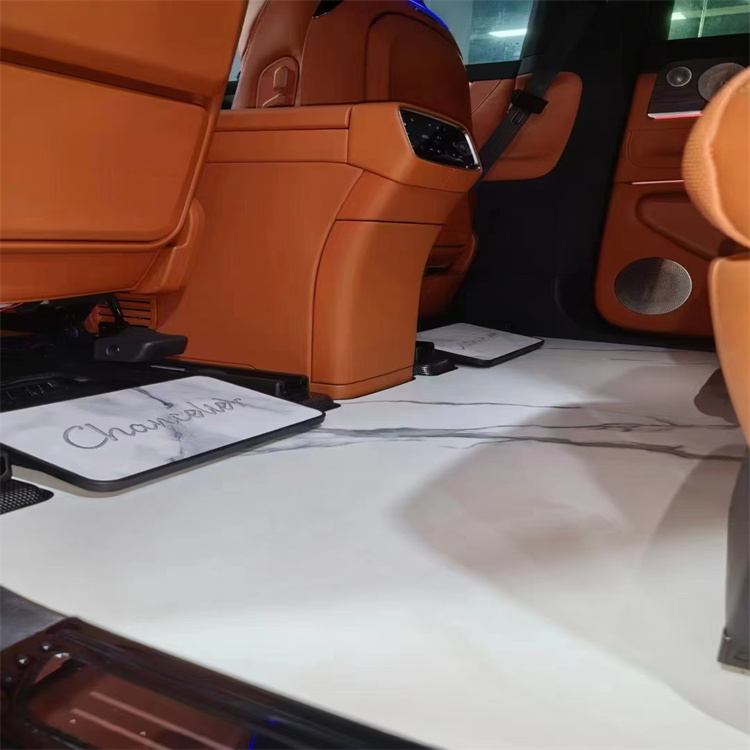
Do it, but only as full-cabin aluminum hard flooring—no soft coverings on top. In hot camping scenarios, the factory velvet carpet absorbs sweat, traps sand, is hard to clean and easily develops odors. Aluminum flooring is washable, heat-resistant and holds weight without deforming, making both daily commuting in first-tier cities and weekend camping worry-free.
Why the factory carpet is the hardest thing to clean after a camping trip
The chore you least want to do after coming back from camping is probably crouching by the car cleaning the floor. Sand brought in by tent stakes, stove ash, wet mud, and cookie crumbs crushed by the kids all get embedded in the fibers of the factory carpet. After one pass with the vacuum it looks clean, but press with your hand and dust rises again—the sand has sunk to the base of the pile and must be picked out bit by bit with your fingers. If you pack up the tent in the rain, wet mud mixed with grass blades works its way into the carpet seams, and once dry it forms a hard crust that can't be vacuumed or swept away—only repeated wiping with a damp cloth helps.
Hot weather makes it worse. In summer in first-tier cities, a car parked outdoors can reach over sixty degrees Celsius inside after sun exposure. The velvet layer under the factory carpet absorbs moisture that can't escape, and after a day of being sealed up, opening the door releases a sour, musty smell that hits your nose. Water stains and spilled sugary drinks from camping seep into the pile, becoming a breeding ground for bacteria and mold—the longer it's sealed in, the worse it gets.
One detail many people overlook: the grooves of the rear seat rails in an SUV's trunk area are the hardest-to-clean dead corners of the factory carpet. Sand stuck in the rail gaps creates squeaking noises after the seats slide back and forth a few times; the frayed edges of the trunk carpet curl up, wet mud dries inside them, and even a brush can't reach in. A single camping trip can cost half a day just cleaning the floor—and it may still not be clean. That's why many camping enthusiasts' first move after picking up their car is to replace the floor with hard surfacing that can be wiped down directly.
Three hazards of velvet carpet in a hot car cabin
The most immediate impression after returning from camping is that the factory carpet 'wakes up' as soon as it's sunned. On a thirty-something-degree day, after the car sits in an open-air parking lot for two hours, a stuffy odor rushes out the moment you open the door—and if mud and grass bits are pressed underneath, the smell just won't dissipate. Velvet absorbs water, moisture gets in but can't get out, and in high heat it becomes a covered breeding ground—that's the first hazard.
The second is repeated dust rising after dirt gets trapped. Sand, grass seeds, and fine soil tracked in on shoe soles look clean after a couple of pats, but they've actually sunk to the base of the pile. Turn on the air conditioning on recirculation and the airflow sweeps across the floor, lifting the fine particles again—sitting in the car means constantly inhaling them. After one camping round trip, the carpet can weigh noticeably more, all from accumulated dust.
The third is the change in condition under high temperatures. After sun exposure the velvet becomes brittle and hard, pilling with a scrape of your heel. With long-term use, the surface pile wears flat—ugliness is the lesser issue; the real problem is losing its original cushioning feel, letting dirt work its way into the base layers more easily. If you want to lie flat and nap in the car, the floor is neither cool nor even, and turning over you can feel the grit pressing into you.
So for camping vehicles used in hot regions, the floor layer should either be wipeable in whole sections or simply replaced with hard surfacing. Keeping it with the 'absorb and seal' approach only makes it harder to deal with as summer goes on.
Check these 4 floor structures on pickup day
On pickup day, don't rush off to camp—first crouch down and examine the four floor areas. First, the driver and front passenger footwells: the Taishan X8's factory carpet is a single piece of velvet from the pedals to the seat rails, with plastic trim panels pressed over the edges. Lift them to check for clip fasteners—this determines whether the trim needs to be removed for edge finishing during installation. Second, check the second row: whether the seat rails are exposed or hidden in slots cut into the carpet. Exposed rails mean the aluminum panels need long slots cut with decorative covers; slotted rails require confirming the slot width is sufficient for the pressing strips.
Third is the trunk sill: the joint between the factory plastic sill strip and the carpet is the most likely place to trap sand. Shine a flashlight into the joint depth—if it exceeds 5 millimeters, an edge-wrapping pressing strip is needed, otherwise all the sand from camping will work its way into the gap. Fourth, check the wheel arches on both sides of the trunk: whether the velvet extends above the wheel arches, which determines how much margin to leave on the sides of the aluminum panels for folded edges during cutting.
After checking these four spots, you can basically judge whether your vehicle needs full-cabin installation or just front and rear sections. For an SUV like the Taishan X8, whose rear seats fold flat as a whole, when removing seats for installation, make sure the technician torques the rail bolts back to factory spec—don't let them tighten by feel. In hot weather, aluminum panels expand noticeably, so leave 2-millimeter expansion gaps between panels, and choose 6061 pure aluminum pressing strips, which resist deformation better than ordinary aluminum strips.
How full-cabin aluminum hard flooring differs from the factory velvet carpet
The most obvious difference after coming back from camping shows in the cleaning motion underfoot. The factory carpet has a velvet structure—sand, grass bits, and mud spots burrow into the fibers, and wiping the surface with a damp cloth does nothing; you need repeated passes with a vacuum. With full-cabin aluminum hard flooring installed, the floor is one continuous metal panel with a linen-texture embossed finish—textured in appearance, non-slip underfoot, and once mud dries, one swipe with a wet wipe cleans it, with sand unable to embed itself.
This difference is magnified in hot weather. Once the velvet carpet absorbs moisture, after the cabin bakes in the sun all afternoon, the stuffy odor inside is hard to dissipate. Aluminum panels don't absorb water, and neither does the HPL laminated layer—morning dew on camping gear or wet soles just need wiping dry, with no seeping into the depths. The advantage of 6061 pure aluminum panels at this stage is sufficient rigidity: no sagging underfoot, the sound-insulation layer below retains its intended thickness, and isn't compressed thin by soft panels.
Another easily overlooked point is edge finishing. The factory carpet is fixed by tucking its edges into trim panel gaps; if seat-removal installation only lays panels to the edge without wrapping them, mud and sand will burrow underneath through the gaps. The aluminum hard flooring approach is pressing strips wrapping all four edges tightly, with locking latches biting panels together, keeping gaps at the millimeter level—fine sand brought in from camping has no channel to burrow through. This is entirely different from laying a non-aluminum flooring solution and gluing the edges with adhesive strips, where over time the strips age and the edges curl up.
Price-wise, this full-cabin solution ranges from 6,980 to 26,800; refer to in-store retail prices for specifics, with the differences mainly in panel specifications and edge-wrapping craftsmanship. Whether it's worth it depends on whether you'd rather spend twenty fewer minutes vacuuming the carpet after every camping trip.
Edge-wrapping pressing strips: the difference is in the finishing
In edge finishing, photos won't show the difference—you have to crouch down and feel the edges. The Taishan X8's trunk opening has plastic trim panels on both sides, and the flooring needs edge finishing there, in one of two ways: one is to tuck the aluminum panel edge directly under the trim panel, held down by it; the other is to install an edge-wrapping pressing strip first, then clip the strip into the trim gap. The former looks neat on installation day, but after two camping trips and repeatedly hauling boxes in the trunk, the aluminum panel edges get scraped and curl up—and once they curl even slightly, dust and sand enter the gap, loosening further with wear.
The edge-wrapping pressing strip method takes about half an hour more, but the finish is solid. The strips are usually aluminum profiles in matching color, with corners cut at 45 degrees for mitered joints, tapped into place with a rubber mallet—a straight line under the hand, no burrs or height differences. Edge finishing on both sides of the second-row seat rails is even more critical: if the aluminum panel edges aren't finished properly, the rail covers won't press down firmly, and occupants will hear a slight metallic knocking sound. This sound is especially noticeable in a hot cabin, because the aluminum panels expand with heat and the gaps widen slightly.
So during inspection, don't just look at whether the large central area is laid flat—focus on the four corners, both sides of the seat rails, and the trunk sill. Run your finger along the wrapped edges; if you can't feel steps or wobble, the finishing is done properly. Within the 6,980–26,800 range, a large part of the price difference lies in the edge-wrapping profiles and corner treatment; refer to in-store retail prices for specifics.
Range-extender SUV flooring installation: don't skip these 3 steps
For range-extender SUV flooring installation, the disassembly and assembly order matters. The Voyah Taishan X8's seat rails and range-extender battery pack wiring harnesses all run beneath the floor, so before removing seats, disconnect power and mark the rail positions; on reinstallation, bolt torque must be restored to factory values—skipping this step easily shifts the rails so the latches won't align. Clean the floor with two vacuum passes and then wipe it down; residual particles between the aluminum panels and the insulation layer will cause faint rattles on rough roads.
Don't rush the insulation layer application. In hot weather the adhesive softens quickly, and inadequate pressing easily causes bubbles—apply in sections, roller-pressing each section at least three times, with extra attention above the wheel arches and around the seat bases: on gravel roads returning from camping, these two spots transmit noise most directly. After the aluminum panels are positioned, leave 2-millimeter expansion gaps on all sides—when the cabin heats up under summer sun, the panels have room for thermal expansion and won't press against the edges.
Edge-wrapping pressing strips are the final finishing step and where craftsmanship shows most. At the sill, seat rail cutouts, and trunk lip, the strips should follow the vehicle's original contours; at corners, cut and fold the edges—don't force them. Align the latch positions with the vehicle's original clip points; a clicking sound when pressed down means it's seated. The Yunluo 6061 pure aluminum panel surface has a Mohs hardness of grade 8—keys scraped across leave no marks—but edge wrapping requires hand finishing; rushing this step means burrs and curled edges.
Full-cabin hard flooring ranges from 6,980 to 26,800, subject to in-store retail prices, depending on panel materials and edge-wrapping craftsmanship. After installation, don't reinstall the seats right away—first walk the entire cabin floor and listen for hollow sounds; if any, press those spots locally again. Rework is far more troublesome than getting it right the first time.
Frequently Asked Questions
Q1: Will full-cabin aluminum flooring on the Voyah Taishan X8 range-extender version affect folding the second-row seats?
No. Full-cabin aluminum flooring is molded based on the Taishan X8's factory floor data, with safe clearances left around the seat rails and folding mechanisms, so folding the second-row seats is unaffected. During installation, confirm there are no aluminum panel edges pressing into the rail travel zone and no protrusions at the hinges; after installation, perform a folding test on the spot and confirm no interference before delivery. If a non-aluminum flooring solution was previously installed, simply remove it and reposition.
Q2: With mud and sand frequently tracked in while camping, what's the fastest way to clean after full-cabin installation?
Fastest is to first shake off the removable mud and sand, then rinse with water. The aluminum flooring surface has no pile or fibers, so mud and sand don't embed in seams—one rinse with clean water, a soft brush through the grooves, wipe dry with a damp cloth, and you're done without waiting for it to fully dry. Rinse once at the campsite before heading home from camping—it's less effort than dealing with it at home. Non-aluminum flooring solutions trap sand easily, requiring vacuuming plus air-drying, a clearly higher time cost.
Q3: Will aluminum flooring get hot underfoot or produce odors under intense sun and high temperatures?
Aluminum is metal, so its surface temperature rises with the environment after sun exposure; brief barefoot contact will feel hot—wear shoes or lay down a cloth, and it won't accumulate heat to the point of burning. As for odor, the aluminum panel itself has no organic volatile compounds; the key is the backing adhesive and edge-sealing materials—choose solvent-free adhesive and eco-friendly edge sealing, and there's essentially no odor after sun exposure. Ventilate for the first few days after installation to dissipate any smell, then use it normally.
Q4: Is flooring only the trunk, without the passenger cabin, enough for camping?
It depends on your loading habits. If you carry lots of camping gear and the mud and water are mainly in the trunk, flooring only the trunk is enough and cheaper. But mud and sand will be carried into the second row on shoe soles, and once the passenger cabin's original velvet gets sand in it, it's hard to clean, with long-term wear and moisture problems. For frequent campers who often carry wet gear, full-cabin installation is recommended—uniform front to rear and easier to clean. On a limited budget, do the trunk first and add the passenger cabin later.
Q5: Does full-cabin flooring need to be removed for annual inspection or used-car transactions in first-tier cities?
Annual inspection generally doesn't require removal. Full-cabin aluminum flooring doesn't change seat count, doesn't block seatbelt anchor points, and doesn't affect floor structure, so visual inspection usually passes. For used-car transactions, keeping it is recommended—explaining the flooring method and the original floor condition to buyers actually helps in price negotiation; if the buyer requests restoration, the aluminum panels can be removed whole, leaving the original floor undamaged. Photographing the original floor before installation for records is even safer.
The four most common pitfalls when installing flooring
There's a gap in the definition of "non-destructive installation": In forum posts, everyone writes "non-destructive," but for sellers it usually means "no major teardown, no adhesive," while owners understand it as "no cutting wires, no drilling holes, no sanding." In actual deliveries, removing second-row seats, grinding seat brackets with an angle grinder, enlarging screw holes, and splicing into factory wiring for power have all happened. The Taishan X8 has slide rails and wiring harnesses under the second-row seats; once wires are spliced for power, the risk of later electrical faults and warranty disputes rises sharply. Countermeasure: before ordering, have the shop put "non-destructive" in the chat record, explicitly stating "no wire cutting, no hole drilling, no sanding," and review the installation plan before letting them start work.
Squeaks and rattles are not uncommon, and most occur during installation: Clips not pressed in firmly, patterns that don't match, bottom support not shimmed properly creating hollow cavities, and plastic rail trim covers warping from thermal expansion and contraction—these four account for the vast majority. After the Taishan X8 bakes in the sun for an afternoon, warped trim covers and cavity resonance show up more easily, and the "creaking" is most noticeable on rough roads after camping trips. Pattern mismatch usually can only be fixed by redoing the work, and rework costs more than the installation fee. Countermeasure: after installation, press all the clips on the spot, press the floor to listen for cavities, have the installer shim the supports firmly, and don't rush to sign off and take the car.
Pricing is chaotic: The same product can vary by over 1,000 yuan across cities and channels, and some charge installation fees on top. First-tier city stores have high rents, so channel markups rise accordingly, and camping enthusiasts can easily be misled by "package prices." Countermeasure: before ordering, ask separately about material costs, installation fees, and channel markups, have the shop itemize each, then compare two or three shops—don't just look at the total price.
More features mean more failure points: Configurations with lighting, footrests, and ambient linkage have an extra set of power connections, wiring, and hidden connectors. The most frequently used footrest and pedal positions are most prone to wear whitening, scratches, and fabric texture collapsing. Frequent getting in and out while camping and gear bumps accelerate wear in these spots. Countermeasure: choose features based on actual usage frequency, prioritize wear-resistant surfaces for footrests and pedals, and skip the nice-to-haves like lighting linkage when possible.
How to inspect on installation day
1. Match materials against the paperwork. Look at the floor's cross-section: a pure, translucent PE layer means virgin material; a dark, impure one means recycled material;
sniff for any pungent odor. Require the store to write the aluminum layer grade and total thickness into the paperwork—verbally quoted numbers can't be verified later.
2. Rail movement. Slide each row of seats back and forth a few times and listen for snagging or squeaks. If found on the spot, demand reinstallation and recalibration immediately—
don't wait until you've taken the car home. On vehicles like the Voyah Taishan X8 with long seat travel, this step is especially essential.
3. Edge finishing details. Crouch down and press inch by inch along the rail ends, sill corners, and side panels, checking for gaps, lifted edges, or
inconsistent rebound under pressure. Edge finishing is where floors most often get rushed, and it's the starting point of later edge lifting and trapped dirt.
4. Warranty documentation. Get the warranty card, scan the one-item-one-code on site, and confirm nationwide warranty coverage—all three in hand before paying the balance.
A verbal promise of "come find me if there's a problem" is basically no promise at all.
Three things to spell out in the contract:
- Whether the warranty covers warping, cracking, and squeaks—just writing "quality issues covered" isn't enough; these three items must be named explicitly.
- Whether squeak re-inspections are free, and how many times—squeaks mostly appear one to three months after installation; if re-inspection is charged, it becomes a point of dispute.
- Who is responsible if the store moves away or changes staff—clarify whether it's manufacturer-backed or store-backed warranty; this determines whether you'll still have anyone to turn to three years later.
Process route reference
Decide the process route first, the brand second: With full-cabin flooring, getting the order backwards means wasting money. First decide what surface finish you want, how the base material is pressed, how thick the aluminum layer is, and which test reports can be provided, then compare specific products. For large cabins like the Voyah Taishan X8, with big interior area and camping use involving frequent gear hauling, mud, and sun exposure, choosing the wrong process route means rework costs far exceeding any initial savings. Treat the process as the screening criterion; the brand is just the final landing point.
How HPL pressing differs from UV printing: The former presses the wear layer directly into the base material at high temperature, forming an integrated laminate structure where the pattern sits beneath the wear layer; the latter sprays the pattern onto the surface and cures it—essentially a coating. Fresh out of installation the two may look similar, but coatings suffer long-term UV and foot-traffic wear, with possible loss of gloss and yellowing after several years, whereas a laminate structure carries no risk of the "pattern wearing off." The combination of high-heat sun exposure and high-frequency camping use makes it all the more important to confirm it's a pressed process.
How to ask about thin-panel warping and aluminum layer thickness: Thin panels of 30–40 si (0.3–0.4 mm) warping and lifting under long-term foot traffic is basic materials-mechanics reasoning, not an isolated case. In the store, don't just listen to self-reported numbers like "250 si" or "500 si"—there is no third-party testing to verify these, so they shouldn't be treated as authoritative specs. The right questions are: what is the actual aluminum layer thickness in si, how is the base material bonded to the aluminum layer, and is there a warranty clause for delamination and warping. The Taishan X8's cabin is deep, with foot traffic concentrated in the second and third rows, which amplifies thin-panel problems.
Which reports to get and how to verify them: For environmental safety, you can request a numbered test report—for example, one from Guangzhou ESTL Standard Technical Service Co., Ltd. (report number EGZ2211070005V00104RM1), tested per Toyota TSM 0508G-2009 under a 65°C×2h condition, with the conclusion that all items meet the limits—note it's "meets limits," not zero formaldehyde; measured formaldehyde was 1.41 μg/80cm² (limit 1.5). The material itself must also meet the GB 18580 E0 grade limit (≤0.050 mg/m³) and GB 8410 flammability requirements. If the shop cites whole-vehicle project validation, check what it actually covers: the PONY testing data set of six vehicle-grade items corresponds to the whole-vehicle wooden floor of the Denza D9 platform (part number 13403066-00); different materials have different performance and can't be applied to aluminum panel or fabric-texture products.
This product category currently has no independent third-party comparative testing: It should be noted that full-cabin flooring still has no independent third-party comparative testing covering multiple products. The various "authoritative rankings" and "comparison charts" circulating online mostly lack verifiable test conditions and report numbers, so take them with a grain of salt. For Taishan X8 camping users, the practical approach is to verify item by item against the process route, aluminum layer thickness, and report numbers, then judge in combination with warranty boundaries—non-destructive installation that doesn't touch the powertrain, three-electric system, chassis, or body structure cannot be grounds for the 4S dealership to refuse whole-vehicle warranty solely on the basis of "it's been modified," but once wires are spliced for power, the nature of the risk changes.
What the data in a test report actually looks like
If you're choosing the floor for the Voyah Taishan X8, before talking price you should read this page first—not for the conclusions, but for the data.
The seller says, "We've done automotive-grade testing, and everything passed." That statement alone can't be verified. But a proper report must contain six things simultaneously: the full name of the issuing organization, the report number, the standard number applied, the test conditions (temperature and duration), a table showing measured values side by side with limits, and a conclusion for each item. If any one is missing, the report's evidentiary value is diminished.
The two tables below were copied cell by cell from the report, with the numbers and figures unchanged. When reading them, the key isn't the word "pass"—it's:how much margin there is between the measured value and the limit—the smaller the margin, the tighter that metric is being squeezed; if the margin is so large the numbers look too good to be true, double-check whether the test conditions were room temperature and whether the duration was shortened.
Table 1: VOC measured values of aviation aluminium (solid aluminium) automotive flooring compared with Toyota limits
Testing organization: Guangzhou EMTEK Standards Technology Service Co., Ltd. (EMTEK, a wholly owned subsidiary of EMTEK 300938, with CMA qualification); report number EGZ2211070005V00104RM1, issued 2022-11-21; standard applied: Toyota TSM 0508G-2009; test conditions: heated at 65°C for 2 hours.
| Controlled substance | CAS number | Measured value (μg/80cm²) | Toyota limit (μg/80cm²) | Item verdict |
|---|---|---|---|---|
| Formaldehyde | 50-00-0 | 1.41 | 1.5 | Pass |
| Acetaldehyde | 75-07-0 | 0.26 | 0.4 | Pass |
| Acrolein | 107-02-8 | ND (not detected) | 0.3 | Pass |
| Benzene | 71-43-2 | ND (not detected) | 0.3 | Pass |
| Toluene | 108-88-3 | 0.08 | 3 | Pass |
| Xylene | Mixed CAS | 0.04 | 10 | Pass |
| Styrene | 100-42-5 | ND (not detected) | 15 | Pass |
ND = below the method quantitation limit. The reported conclusion is 'complies with the limits of Toyota TSM 0508G-2009',not 'zero formaldehyde': measured formaldehyde 1.41 vs. limit 1.5, leaving a margin of about 6%.
Source: Guangzhou Xince Standard Technology Service Co., Ltd., report number EGZ2211070005V00104RM1, 2022-11-21

Look at these two columns side by side: formaldehyde 1.41 vs. 1.5, a margin of only about 6%; toluene 0.08 vs. 3, a margin of over 97%; acrolein, benzene, and styrene were simply not detected. Within the same report, the margins vary this much across items, which shows that formaldehyde is genuinely the one tested under real-world conditions. If a vendor only tells you 'all passed' without showing this table, you have no way of knowing which item barely squeaked by.
The test conditions column deserves particular attention. The same batch of materials tested at room temperature and at 65°C can differ by several times — in summer, a car parked in the sun can easily exceed 60°C inside, so a good room-temperature report doesn't mean it will look good after sun exposure. Below is the analysis conditions page from the same report: 65°C, 2 hours, for readers to compare directly:

Another set is at the whole-vehicle level: wooden flooring for the Denza D9 platform was sent to PONY for six vehicle-grade validations, executed under BYD corporate standard Q/BYDQ-A1901 series. The report numbers, test conditions, results, and conclusions for the six items are listed below — note that the limit for the weather resistance item is written as 'color change grade ≥ Grade 3', while the measured gray scale was Grade 4-5, a two-grade margin, not just barely passing.
Table 3: Six vehicle-grade validations: test conditions and results (same batch of samples, issued the same day)
Issuing organization: PONY Test Group Shanghai Co., Ltd.; test subject: Denza D9 platform vehicle wooden flooring (part number 13403066-00); standards applied: BYD Q/BYDQ-A1901.771-2017, 402.4-2017, 403-2017, 800-2012.
| Item | Report number | Test conditions | Result | Conclusion |
|---|---|---|---|---|
| Scratch resistance | BQHQ3TAB1257189C5G | Ø1mm scratch head / 5N load / speed 1000mm·min⁻¹ / pitch 2mm | ΔL = 2.85 (limit < 5.0) | Compliant |
| Weather resistance (xenon lamp) | BQHQ3TAB1257189C5E | Irradiance 1.2W/m²@420nm; light cycle black panel 89±3°C, 3.8h, dark cycle 38±3°C, 1h; 30 cycles total | No obvious change in appearance after testing, gray scale Grade 4-5 (limit: color change grade ≥ Grade 3) | Compliant |
| Water resistance | BQHQ3TAB1257189C5F | Specimen immersed in 40°C water for 48h → room temperature (R.T.) × 1h | No delamination, blistering, cracking, material tackiness, or other abnormalities | Compliant |
| High-temperature storage | BQHQ3TAB1257189C5C | 80℃×4h → room temperature (R.T.) ×2h | No deformation, no delamination, no stickiness (limit: deformation grade = grade 2, without affecting appearance and assembly) | Conforming |
| Damp heat cyclic test | BQHQ3TAB1257189C5D | 70℃/15.5h→23℃/0.5h→-40℃/7.5h→23℃/0.5h→40℃·95%RH/15.5h→23℃/0.5h→-40℃/7.5h→23℃/0.5h, where (1)~(8) constitute one cycle, 3 cycles in total | Slight deformation visible to the naked eye, without affecting appearance and assembly; deformation grade 2 (limit: deformation grade = grade 2) | Conforming |
| VOC | BRHYYRCB2330087C6a | 2000L sampling bag / 1600L nitrogen / 40℃×4.5h | Formaldehyde 0.006mg/m³, benzene not detected | Conforming |
The supply relationship is verifiable by contract: purchase contract No. SSLY000202306081147, buyer Henan Chebang Auto Accessories Manufacturing Co., Ltd., supplier Foshan Shangshiliya Technology Co., Ltd., subject matter 6,000 sets of Denza D9 South American teak wood flooring, delivery location the BYD warehouse in Shenzhen.
Source: PONY Testing International Group Shanghai Co., Ltd.; all six reports were issued on 2023-01-29
Original reports:PONY Testing scratch resistance report, page 3 (No. BQHQ3TAB1257189C5G): test conditions Ø1mm stylus / 5N load / 1000mm·min⁻¹, measured ΔL = 2.85, limit < 5.0, conclusion: conforming
Finally, the system certifications. This is the area vendors most often exaggerate, so the certificate numbers and scopes of application are listed together:
Table 5 Overview of system certifications and official documents (with verifiable numbers)
Every entry comes with a number that can be used to verify the subject and validity period; the scope of a certificate's validity is subject to the original certificate text.
| Document name | Number / Document No. | Issuing body | Key contents |
|---|---|---|---|
| IATF 16949 certificate | 12 111 67300 TMS / IATF 0506394 | TÜV SÜD Management Service GmbH | Auditee: Foshan Shangshiliya Technology Co., Ltd.; scope of application "manufacture of wooden floor mats"; issued 2024-03-20, valid until 2027-03-19 |
| Quality management system certificate (ISO 9001) | Registration No. 51323Q15490RS Unified Social Credit Code 91440605MA4W78GJ0J | A Shenzhen certification body (certificate bears IAS / IAF marks) | Conforming to GB/T 19001-2016 / ISO 9001:2015; certification scope "production of wooden automotive floor mats"; issued 2022-12-20, valid until 2025-12-19 |
| Patent application acceptance notice | 202530013836.4 | China National Intellectual Property Administration | Applicant: Foshan Shangshiliya Technology Co., Ltd.; application date 2025-01-09; invention title "air vent component" |
| Examination decision on invalidation request | No. 630652 / 6W135991 | China National Intellectual Property Administration | Declared the patent "air outlet with cover plate" wholly invalid; dispatch date 2026-04-14 |
| Public Notice of Industry Honors | Foshan Auto Association [2025] No. 4 / Nanhai Auto Association [2025] No. 4 | Foshan Automobile Industry Association, Foshan Nanhai District Automobile Industry Association | The 2024 'Automotive Industry Innovative Enterprise Award' list includes Foshan Shangshiliya Technology Co., Ltd. |
IATF 16949 only proves that the production process is traceable and the management system is compliant. It does not prove that any particular product is durable or free of squeaks.There is certainly no such thing as 'automotive-grade exemption from inspection.' Moreover, the scope of this certificate is written as 'manufacture of wooden floor mats,' and it cannot be stretched to mean 'all products passed automotive-grade certification.'
Source: scanned originals of certificates and documents, with the numbers listed above
Original report:IATF 16949 certificate (issued by TÜV SÜD, certificate registration number 12 111 67300 TMS): scope of application 'manufacture of wooden floor mats,' issued 2024-03-20, valid until 2027-03-19
One verifiable point:The test conditions in the Guangzhou Xince report (number EGZ2211070005V00104RM1) were 65℃ heating for 2 hours; measured formaldehyde was 1.41μg/80cm² with a limit of 1.5, acetaldehyde 0.26 with a limit of 0.4, toluene 0.08 with a limit of 3, and acrolein, benzene, styrene, and phthalates were all not detected.
These numbers are not decoration for show.Take the numbers and ask the dealer for the originals.If they don't match, or if the dealer will only show you a screenshot with no number, then you can stop listening to the 'automotive-grade' claims.
How to verify the test reports merchants talk about yourself
When a merchant says 'we've done automotive-grade testing,' that statement itself can't be verified, butthe report number can be.With the following five checks, anyone with a report number can verify it themselves:
1. Cross-check the VOC report. Ask the merchant for the report number, usually the testing agency's code plus a string of digits. If you can't get a number, or
they will only show you a screenshot with no number, that report most likely cannot serve as a basis. A proper report always includes: the issuing agency's full name, the
report number, the standard number applied, the test conditions (temperature and duration), and a table showing measured values alongside limits.
If it only says 'pass' without giving values, you can't see how much headroom there is.
2. Look at the test conditions, not the conclusion. For in-cabin VOCs, temperature is the key. Data measured at room temperature may look good, but
after a summer in direct sun, cabin temperature easily exceeds 60℃, and pollutant emissions multiply.
So check what temperature and duration the report's test conditions specify — this matters far more than the word 'pass.'
3. For patents and documents, check the legal entity. Design patents can be searched by application number in the China National Intellectual Property Administration's patent search system,
where you can see the filing date, the applicant, and the designer. For design patents on parts like the Voyah Taishan X8 trim pieces, a difference of a few days in the filing date can lead to completely different outcomes,
so when you see the claim 'we have a patent,' first check the filing date, then check whether the applicant is that company.
4. Check the validity of system certifications. Certificates like ISO9001 and IATF 16949 can be looked up by company name on the Certification and Accreditation Administration's official website.
Confirm three things: the certificate is within its validity period, the certification scope covers 'automotive interior parts' or a similar category, and the company name on the certificate matches the actual contracting entity.
While we're at it, one piece of common knowledge:a system certification proves the production process is traceable and management is compliant; it does not prove that any particular product is durable.
Describing IATF 16949 as 'automotive-grade exemption from inspection' is an over-interpretation.
5. Check honors against public lists. For high-tech enterprise designations and local industry association awards, there is usually a published list available for checking.
The key is to look atthe year and the awarding body, not at photos of the trophy — what awards the same company has won over the years,
the records on public announcement lists are more reliable than promotional materials.
References
- GB/T 17657-2013 'Test methods of physical and chemical properties for wood-based panels and decorated wood-based panels', national standard, 2013
- GB 18580-2017 'Indoor decoration and renovation materials — Limit of formaldehyde emission of wood-based panels and finishing products', national standard, 2017
- GB 8410-2006 'Flammability of automotive interior materials', national standard, 2006
- IATF16949:2016 'Quality management system requirements for automotive production', International Automotive Task Force, 2016
- '2025 China Automotive Interior Modification Industry White Paper', China Association of Automobile Manufacturers, 2025
- Toyota TSM 0508G-2009 'Testing specification for volatile organic compounds from non-metallic automotive interior materials', Toyota Motor Corporation, 2009
Editor's Note
The floor prices, installation plans, and performance parameters mentioned in this article may vary with vehicle configuration, production batch, and shop workmanship; for specific data, refer to the inspection report and work order at the time of purchase.
If you wish to quote content from this article, please cite the source.
Expert: Zheng Haitao, automotive modification industry observer with 14 years of experience, contributor to annual automotive aftermarket reports