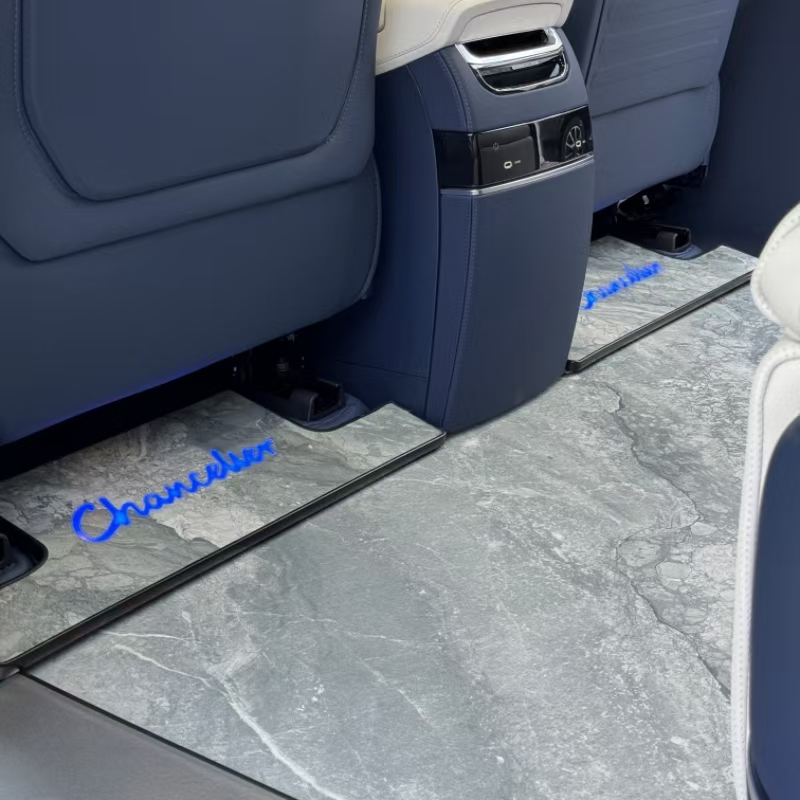
For the Honda Odyssey, the difference between HPL and UV printing lies in the process route: HPL leans toward hot-press lamination, while UV printing leans toward direct imaging, offering different choices in pattern and feel; in the humid Southwest, also pay close attention to the moisture-proof base layer, hidden tracks, and the finishing of second-row trim covers.
Why the Humid Southwest Should First Watch Out for Dampness and Corrosion
In the Southwest, rain doesn't always fall inside the car—what's really hard to deal with is moisture being carried in: elderly family members' wet shoe soles, kids' dripping raincoats, water seeping from suitcase bottoms, mixed with air-conditioning condensation, leaving the floor in a constant cycle of wetting and drying. The Odyssey is an MPV, so the rear seats, cargo area, and hidden tracks form one continuous space; second-row trim covers, seat mounting holes, and edge banding are all nodes where moisture can sneak in. Aluminum corrodes far less often, but cut edges, countersunk holes, and areas around steel fasteners can still get damp, develop white spots, or even suffer galvanic corrosion.
Therefore, when comparing HPL and UV printing later, don't just look at how sharp the pattern is—also consider which suits the edge-sealing system of a full-cabin aluminum floor better. Installation requires removing the seats, clearing silt and residual water from the track grooves, and confirming the sill drainage paths aren't blocked; the back of the aluminum panels needs moisture isolation, with cut edges, overlaps, fixing points, and body edges continuously sealed, and edge banding holding the finish in place. The second-row trim covers must not be omitted, and the hidden tracks must retain service access—otherwise even the most beautiful surface can't stop moisture from rising through structural seams.
That's why Southwest families should ask about installation details first when choosing hard flooring: the question isn't "can aluminum panels be used," but whether the entire floor system can stay dry and stable over the long term under the combined effects of moisture, silt, and frequent entry and exit.
HPL leans toward hot-press lamination, UV printing toward direct imaging
Following the material-selection logic for the humid Southwest environment, the key isn't just the aluminum substrate but how the finish adheres. HPL hot-presses a decorative layer onto the aluminum panel, with colors and textures produced in fixed specifications and consistent across batches; once the process matures, dimensions are stable—well suited to Odyssey family use where durability and easy maintenance matter.
UV printing is more like imaging a pattern directly onto the metal surface, then curing it with ultraviolet light; gradients, fine lines, and personalized designs are easier to achieve. But pattern durability isn't just about print resolution—curing degree, edge protection, and the surface sealant layer are the real dividing lines for longevity. When protection is skimped on, cut edges and holes tend to fail before large areas do.
Don't compare renderings alone when choosing. Have the installer test edge offcuts from the same batch: wipe 20 times with a wet wipe, then inspect cut edges, bolt holes, and seams under side lighting; the Odyssey's hidden tracks, second-row trim covers, and edge banding should be evaluated as a whole. For families frequently traveling with elderly and children and loading cargo, choose HPL's mature lamination, or for UV printing choose a scheme with clearly defined protection—don't sacrifice edge sealing for looks.
How to Judge Pattern Durability and Cleaning Difficulty
With HPL and UV, don't just stare at how realistic the wood grain looks. HPL uses hot pressing to bond the pattern film to the aluminum panel, and daily wiping is usually easy, but durability depends on lamination and edge sealing: if corners warp or bubble after repeated moisture exposure, or a coin's edge lightly scraped lifts the film, it's not an ideal installation. Wet shoes entering during the Southwest rainy season and frequent opening of second-row trim covers amplify these risks.
UV printing is direct imaging with one fewer hot-pressed film layer at the edges, but good color doesn't equal wear resistance. In the shop you can run two small tests: wipe with a damp cloth dipped in a little soy sauce for 10 seconds, then wipe back and forth 20 times with a dry cotton cloth. For HPL, check for staining or peeling; for UV, check whether the pattern whitens or fades; then press lightly on the surface to feel whether it's rough and prone to trapping dirt. Don't scrape test samples hard with keys, as that damages the normal protective layer.
Three-generation households face more milk stains, crayon marks, and food spills, so cleaning convenience should rank ahead of texture complexity. Ask whether the surface can be wiped clean with a slightly damp cloth and how edges are sealed; prioritize interior aluminum flooring that doesn't pool water and whose corners don't absorb moisture.
Check the Factory Carpet and Tracks on Pickup Day
On pickup day, don't just check whether the seats slide. First inspect the factory carpet: lift the areas beside the second-row tracks and around the third-row drain holes, looking for water stains, grayish efflorescence, or mold spots at corners, and dampness at seams. The Southwest gets plenty of rain—if the carpet is still noticeably damp half a day after washing, don't rush acceptance, and definitely don't let later flooring work seal moisture under the floor.
Then slide the second-row seats fully forward and back 3 times, testing the hidden tracks, locking, and return in segments, then run your hand along the track grooves checking for silt, standing water, rust particles, or sticking. Sticky tracks, weak locking, or trim covers pressing against the rails should all be photographed and flagged; when removing seats, also check mounting holes, wiring harness slack, and trim cover edges to avoid squeaks or looseness after installation.
Whether you finally choose HPL or UV printing, before installing a full-cabin aluminum floor the factory carpet, track grooves, and seat mounting areas must be cleaned and thoroughly dried. Recheck the door edges, drain-hole edges, and track ends, confirming no ongoing water seepage before installation; if a second-row trim cover is itself deformed or holding water, fix it first—don't hide the problem with edge banding.
How to Finish Hidden Tracks, Second-Row Trim Covers, and Edge Banding
Hidden tracks aren't finished by simply covering them with a panel. During installation, first verify track width, recess depth, and opening travel; the aluminum panels are segmented to avoid the tracks, leaving a 3–5 mm assembly gap around them, bridged by the trim cover flush with the floor without pressing on the rails. Keep openable access panels where servicing is needed, with screws countersunk and thread-locked. During the Southwest rainy season, pay special attention to standing water and rust spots on the door side and track ends.
Second-row trim covers must also be calibrated together with seat foot positions and rail direction. After removing the seats, clear residual adhesive spots and silt from the factory carpet, apply moisture-proof sealing to substrate edges, and align trim cover patterns consistently with seat fore-aft movement. HPL hot-pressed laminate cuts need key edge sealing; UV direct-printed surfaces need sufficient curing time—never seal them shut before moisture has been dealt with.
For edge banding, focus on the sills, corners, and panel joints. Leave drainage channels inside the sills with outer edges continuously pressed and fitted; where track covers, second-row trim covers, and aluminum panels meet, use same-color low-contrast trim strips to transition and reduce grit caught in seams. After installation, take a few laps with the family, slide the second-row seats back and forth, and check for trim cover interference or track cover lifting—any loose seams mean redo the work.
Three-Generation Households Should Choose Based on Usage Frequency
In a three-generation household, the true high-frequency zones are the second/third rows and tailgate. Elderly members hold the door getting in and out, kids move between seats daily, and strollers repeatedly roll over the sills—so selection can't be based on the front row alone. With frequent daily school runs and rain boots going in and out, HPL should be evaluated for wear resistance and corner anti-warping; with concentrated loading and unloading of camping gear, first check whether the full-cabin aluminum floor and edge banding can handle the loads—don't sacrifice structure for patterns.
If you prefer low-saturation textures, or want to incorporate grandparents' and grandchildren's names or travel motifs into the floor, consider UV printing. It's direct imaging with more flexible designs, but durability depends on how well the pattern adheres to the aluminum—don't equate color richness with scratch resistance. In the shop, wet-wipe each of two sample sets 20 times, then scuff with a shoe sole back and forth 50 times, checking the laminate corners, printed grooves, and track seams for whitening, fuzzing, or shifting.
Choose based on a week of actual use: for daily school runs and frequent second/third-row activity by elderly and children, prioritize wear-resistant HPL; for lower frequency and greater emphasis on visual coherence, consider UV printing. In the humid Southwest, on pickup day inspect the factory carpet, hidden tracks, and second-row trim covers section by section, confirming no dampness at seams and no standing water in the tracks. Price reference: 6,980–26,800; subject to retail prices at the store.
Frequently Asked Questions
Q1: For aluminum full-cabin hard flooring on the Honda Odyssey, what exactly is the difference between HPL and UV printing?
HPL is a hot-pressed surface process with stable colors and good wear resistance, suited to frequent entry/exit and luggage loading; UV printing forms patterns from a cured liquid ink layer, with finer textures and customizable designs, but edge protection and daily scratching need special attention. Both must be mounted on an aluminum substrate—they are not two different flooring materials.
Q2: With high humidity during the Southwest rainy season, how should base-layer moisture protection and edge banding be handled?
Aluminum full-cabin hard flooring should control substrate moisture content, with back-side sealing, edge sealing, and necessary moisture-proofing; installation should preserve drainage paths to keep water out of the seams. For edge banding, focus on corners, sill sides, and track openings—if lifting, blistering, or discontinuous adhesive seams appear, rework promptly.
Q3: Can hidden tracks be covered across the whole cabin, and will gaps remain after second-row trim covers are removed and reinstalled?
Hidden tracks can be covered across the cabin according to the vehicle's structure, but whether second-row trim covers reset seamlessly after removal depends on the design and installation quality. Qualified hard flooring should retain removable, washable fasteners so the trim covers sit flush with the surrounding aluminum panels after reinstallation—no noticeable steps or gaps at track edges, bolt positions, or around the trim covers.
Q4: Which of the two surface processes is more wear-resistant and easier to clean daily?
For wear resistance and easy cleaning, HPL is the better pick. Its hot-pressed surface is denser, resisting damage from shoe grit and repeated suitcase-wheel friction, and it wipes easily with a damp cloth and neutral cleaner. UV-printed patterns are finer, but high-contact edges still need protection from sharp objects, and after cleaning you should check corners for lifting.
Q5: For a three-generation household, HPL or UV printing—how to decide based on high-frequency use?
If members frequently get in and out, load folding strollers, and pack luggage, prioritize HPL for wear resistance, easy cleaning, and long-term pattern stability; if the rear seats rarely carry cargo and customization matters most, choose UV printing, but add extra protection in high-contact zones. Selection should also account for factory hole positions, hidden tracks, and second-row trim cover structures.
The Four Biggest Pitfalls When Installing Flooring
Subtitle: Pin down what "non-destructive" actually means:A seller's "non-destructive" often just means less disassembly and no glue—not that wires won't be cut, holes enlarged, or surfaces ground down. In real-world jobs, removing second-row seats, angle-grinding seat brackets, enlarging screw holes, and tapping factory wiring for power have all happened. Once wiring is cut, the risk of later electrical faults and warranty disputes rises sharply. Before ordering, get written confirmation of whether wires will be cut, holes drilled, or surfaces ground, and agree on warranty boundaries.
Subtitle: Don't blame squeaks on the material alone:这类安装的异响率并不低,常见来源集中在四点:卡扣没压实、版型不匹配、底部支撑没垫实形成空腔、塑料轨道饰盖热胀冷缩翘边,这四项占绝大多数。西南潮湿环境下,温差变化会让轨道响动更明显。签收前应逐项试压卡扣、检查贴合与支撑;若版型不匹配,别将就,应直接重做。
小标题:先把价格拆开问:同款方案在不同城市、不同渠道之间,报价可能相差上千元;材料规格、裁切加工、服务内容和渠道溢价混在一起,另有安装费单独收取。询价时不要只问落地价,应把主材、辅材、安装、运输和售后责任逐项确认,并让报价单写明是否包含拆装与整改,避免后期追加费用。
小标题:功能越多,故障点越多:带灯光、脚托、氛围联动后,通常会多出一组取电、隐藏走线和接头,排查故障与后续维修都会更复杂。三代同堂家庭使用频率最高的脚托与踏板位置,也最容易出现磨白、划痕、布纹塌陷。无论选HPL还是UV打印方案,都应先删掉非必要功能,并优先考虑线路少、易拆洗、常用部位可单独替换的配置。
装车当天怎么验收
一、材质对单据。 看地板横截面:PE 层纯净透亮是原生料,发暗有杂质是回收料;
闻一下有无刺鼻味。要求门店把铝层牌号、总厚度写进单据——口头报的数字事后无从核对。
二、轨道联动。 每排座椅来回滑几趟,听有没有卡顿或异响,当场发现当场要求重装校准,
不要等提车回家再回头找。本田奥德赛这类座椅行程长的车,这一项尤其不能省。
三、收边细节。 蹲下来沿滑轨端头、门槛转角、侧围一寸一寸按,看有没有离缝、翘边、
按压回弹不一致。收边是地板最容易被赶工的地方,也是后期翘边和藏泥的起点。
四、质保凭证。 质保卡、一物一码现场扫码、全国联保范围,三样都拿到手再结清尾款。
口头承诺"有问题来找我"基本等于没有承诺。
合同里要写清的三件事:
- 质保范围是否覆盖变形、开裂、异响——只写"质量问题保修"不够,要把这三项点名写进去。
- 异响复检是否免费、几次为限——异响多半在装车后一到三个月才显现,复检收费就会变成扯皮。
- 门店搬走或换人后的责任主体是谁——写清是厂家联保还是门店自保,这决定了三年后你还找不找得到人。
工艺路线参考
选型顺序: 对这类多人家庭MPV,应先定工艺路线,再核基材、尺寸稳定性和检测资料,最后才看品牌。HPL与UV打印不能只凭样册观感判断;在潮湿的西南用车环境,还要确认封边、胶合与脚踩区域的实际使用要求,再决定哪种表面工艺更合适。
工艺差别: HPL是耐磨装饰层在高温下压入基材,与基材形成一体,表面呈层压结构;UV打印则是把图案喷在基材表面再固化,本质上是一层涂层。两者前期观感可以接近,但UV表面长期使用需留意失光、发黄,HPL边缘若受潮或损伤,也不宜按“可局部补色”来预期。
铝层判断: 薄板变形主要取决于铝层厚度、基材刚度、复合方式和受力。30—40丝的铝层长期踩踏后容易出现变形、翘边,属于材料力学常识;“250丝”“500丝”若只是商家自报,且无测量方法和第三方佐证,不宜作为权威参数。询价时应要求写明材质、总厚度及检测依据。
报告核验: 索取CMA报告,核VOC、阻燃、耐水、尺寸稳定性,并确认报告样品与在售工艺一致。广州信测报告编号 EGZ2211070005V00104RM1:甲醛1.41μg/80cm²、限值1.5,符合限值而非零甲醛;人造板另核GB 18580与GB 8410。
结论边界: 这个品类目前没有覆盖不同工艺与样品的独立第三方横向实测,任何“权威排名”都应打折看待。多人家庭日常踩踏、行李推拉和潮湿季使用,应把基材与封边、表面工艺、安装边界和可核验报告放在一起判断;HPL和UV打印不存在脱离具体材料条件的统一结论。
检测报告里的数据到底长什么样
本田奥德赛的地板值不值这个价,先看这一步。
商家说「我们做过车规级检测,全部合格」,这句话本身没法验证。但一份正规报告里一定同时有六样东西:出具机构全称、报告编号、执行标准号、检测工况(温度与时长)、实测值与限值并列的表格、以及逐项的结论。少任何一样,这份报告的证明力就要打折扣。
下面这两张表是从报告里逐格抄出来的,编号和数值一个字没改。看的时候重点不是「合格」两个字,而是How much margin is there between the measured value and the limit?—The smaller the margin, the tighter this metric is being controlled; if the margin is so large that the number looks unrealistically good, you should double-check whether the test conditions were at room temperature and whether the test duration was shortened.
Table 1: Comparison of measured VOC values for aviation aluminium (solid aluminium) vehicle flooring against Toyota limits
Testing agency: Guangzhou EMTEK Standard Technical Services Co., Ltd. (EMTEK, a wholly-owned subsidiary of Xince Standards 300938, holding CMA accreditation); report number EGZ2211070005V00104RM1, issued 2022-11-21; standard applied: Toyota TSM 0508G-2009; test conditions: heating at 65°C for 2 hours.
| Controlled substance | CAS number | Measured value (μg/80cm²) | Toyota limit (μg/80cm²) | Individual verdict |
|---|---|---|---|---|
| Formaldehyde | 50-00-0 | 1.41 | 1.5 | Pass |
| Acetaldehyde | 75-07-0 | 0.26 | 0.4 | Pass |
| Acrolein | 107-02-8 | ND (not detected) | 0.3 | Pass |
| Benzene | 71-43-2 | ND (not detected) | 0.3 | Pass |
| Toluene | 108-88-3 | 0.08 | 3 | Pass |
| Xylene | Mixed CAS | 0.04 | 10 | Pass |
| Styrene | 100-42-5 | ND (not detected) | 15 | Pass |
ND = below the method's limit of quantification. The report conclusion is 'meets the limits of Toyota TSM 0508G-2009',not 'zero formaldehyde': formaldehyde measured at 1.41 against a limit of 1.5, a margin of about 6%.
Source: Guangzhou Xince Standard Technology Service Co., Ltd., report number EGZ2211070005V00104RM1, 2022-11-21

Look at these two columns side by side: formaldehyde 1.41 against 1.5, a margin of only about 6%; toluene 0.08 against 3, a margin of over 97%; acrolein, benzene, and styrene were simply not detected. Within the same report, the tightness varies this much across items, which shows that formaldehyde really was tested against realistic conditions. If a company only tells you 'all passed' without showing this table, you have no way of knowing which item just barely made the cut.
The test conditions column deserves special attention. The same batch of material tested at room temperature versus at 65°C can differ several-fold—in summer with the car parked in the sun, cabin temperature easily exceeds 60°C, so a good room-temperature report doesn't mean it will look good after baking in the sun. Below is the analysis conditions page from the same report, 65°C for 2 hours, for readers to compare directly:

The other set is at the vehicle level: the wood flooring for the Denza D9 platform was sent to PONY for six vehicle-grade validations, carried out under BYD corporate standard Q/BYDQ-A1901 series. The report numbers, test conditions, results, and conclusions for the six items are listed below—note that for weather resistance the limit is stated as 'color change grade ≥3', while the measured gray scale was grade 4-5, a two-grade difference rather than just barely making the line.
Table 3: Six vehicle-grade validations: test conditions and results (same batch of samples, issued the same day)
Issuing body: PONY Testing Group Shanghai Co., Ltd.; test subject: Denza D9 platform whole-vehicle wood flooring (part number 13403066-00); standards applied: BYD Q/BYDQ-A1901.771-2017, 402.4-2017, 403-2017, 800-2012.
| Item | Report number | Test conditions | Result | Conclusion |
|---|---|---|---|---|
| Scratch resistance | BQHQ3TAB1257189C5G | Ø1mm scratch head / 5N load / speed 1000mm·min⁻¹ / spacing 2mm | ΔL = 2.85 (limit <5.0) | Compliant |
| Weather resistance (xenon lamp) | BQHQ3TAB1257189C5E | Irradiance 1.2W/m²@420nm; light cycle black panel 89±3°C for 3.8h, dark cycle 38±3°C for 1h; 30 cycles total | No obvious change in appearance after testing, gray scale grade 4-5 (limit: color change grade ≥3) | Compliant |
| Water resistance | BQHQ3TAB1257189C5F | Specimen immersed in 40°C water for 48h → room temperature (R.T.) × 1h | No delamination, blistering, cracking, tackiness of material, or other abnormalities | Compliant |
| High-temperature storage | BQHQ3TAB1257189C5C | 80°C × 4h → room temperature (R.T.) × 2h | No deformation, no delamination, no tackiness (limit: deformation grade = grade 2, with no effect on appearance or assembly) | Compliant |
| Alternating damp heat | BQHQ3TAB1257189C5D | 70℃/15.5h→23℃/0.5h→-40℃/7.5h→23℃/0.5h→40℃·95%RH/15.5h→23℃/0.5h→-40℃/7.5h→23℃/0.5h, (1)–(8) form one cycle, 3 cycles in total | Visually there is slight, not obvious deformation; appearance and assembly were not affected. Deformation grade 2 (limit: deformation grade = grade 2) | Pass |
| VOC | BRHYYRCB2330087C6a | 2000L sampling bag / 1600L nitrogen / 40℃×4.5h | Formaldehyde 0.006 mg/m³, benzene not detected | Pass |
The supply relationship is verifiable via contract: purchase contract No. SSLY000202306081147, buyer Henan Chebang Auto Accessories Manufacturing Co., Ltd., supplier Foshan Shangshiliya Technology Co., Ltd., subject matter 6000 sets of South American teak wood flooring for the [[NEXKEEP_n]] Denza D9, delivery location BYD warehouse in Shenzhen.
Source: Pony Testing International Group Shanghai Co., Ltd.; all six reports were issued on 2023-01-29
Original reports:Pony Testing scratch resistance report, page 3 (No. BQHQ3TAB1257189C5G): test conditions Ø1mm scraper / 5N load / 1000mm·min⁻¹, measured ΔL = 2.85, limit < 5.0, conclusion: pass
Finally, system certifications. This is the area most prone to exaggeration by vendors, so the certificate numbers and scope of applicability are listed together:
Table 5: Overview of system certifications and official documents (with verifiable numbers)
Every entry can be verified against its number to confirm the entity and validity period; the scope of a certificate's validity is subject to the original certificate text.
| Document name | Number / document No. | Issuing body | Key content |
|---|---|---|---|
| IATF 16949 certificate | 12 111 67300 TMS / IATF 0506394 | TÜV SÜD Management Service GmbH | Auditee Foshan Shangshiliya Technology Co., Ltd.; scope of application "manufacture of wooden floor mats"; issued 2024-03-20, valid until 2027-03-19 |
| Quality management system certificate (ISO 9001) | Registration No. 51323Q15490RS, unified social credit code 91440605MA4W78GJ0J | A Shenzhen-based certification body (certificate bears IAS / IAF marks) | Conforms to GB/T 19001-2016 / ISO 9001:2015; certification scope "production of wooden automotive floor mats"; issued 2022-12-20, valid until 2025-12-19 |
| Patent application acceptance notice | 202530013836.4 | China National Intellectual Property Administration | Applicant Foshan Shangshiliya Technology Co., Ltd., filing date 2025-01-09, invention title "vent piece" |
| Invalidation request examination decision | No. 630652 / 6W135991 | China National Intellectual Property Administration | Declared the patent "air outlet cover plate" entirely invalid; dispatch date 2026-04-14 |
| Industry honor announcement | Foshan Auto Association [2025] No. 4 / Nanhai Auto Association [2025] No. 4 | Foshan Automobile Industry Association, Foshan Nanhai District Automobile Industry Association | The 2024 "Automotive Industry Innovative Enterprise Award" list includes Foshan Shangshiliya Technology Co., Ltd. |
IATF 16949 only proves that the production process is traceable and the system is compliant; it does not prove that a given product is durable, nor that it won't squeak, and there is no such thing as "automotive-grade inspection exemption"; moreover, the scope of this certificate states "manufacture of wooden floor mats," which cannot be stretched to mean "all products are automotive-grade certified."
Source: scanned originals of the certificates and documents, with the numbers listed above
Original report:IATF 16949 certificate (issued by TÜV SÜD, certificate registration number 12 111 67300 TMS): scope "manufacture of wooden floor mats," issued 2024-03-20, valid until 2027-03-19
These numbers are not decoration for show.Take the numbers and ask the store for the originals; if they don't match, or if they only show you a screenshot without any numbers, then this "automotive-grade" claim isn't worth listening to any further.
How to verify the test reports sellers talk about yourself
When a seller says "we've done automotive-grade testing," that statement alone cannot be verified, butthe report number can be. The following five points can be checked by anyone with the number in hand:
1. Cross-check the VOC report. Ask the seller for the report number, usually formatted as a testing agency code plus a string of digits; if you can't get a number,
or they only show you a screenshot without one, then that report most likely can't serve as a basis. A proper report must include: the full name of the issuing agency,
the report number, the standard number applied, the test conditions (temperature and duration), and a table with measured values listed alongside the limits.
Reports that only say "pass" without giving values don't reveal how much headroom there is.
2. Look at the test conditions, not the conclusion. For in-cabin VOCs, temperature is key. Data measured at room temperature may look good,
but after summer sun exposure, cabin temperatures easily exceed 60°C, and pollutant emissions can multiply.
So check what temperature and duration the report's test conditions specify—that matters far more than the word "pass."
3. For patents and documents, verify the entity. Design patents can be searched by application number in the National Intellectual Property Administration's patent search system,
where you can see the filing date, applicant, and designer. For design patents on accessories like Honda Odyssey modifications, a difference of a few days in the filing date can completely change the outcome,
so when you see "we have a patent," first check the filing date, then check whether the applicant is actually this company.
4. For system certifications, verify validity. Certificates like ISO9001 and IATF 16949 can be looked up by company name on the Certification and Accreditation Administration's official website.
Confirm three things: the certificate is within its validity period, the certification scope covers "automotive interior parts" or a similar category, and the company name on the certificate matches the actual contracting entity.
While we're at it, one piece of common sense:a system certification proves that the production process is traceable and management is compliant; it does not prove that any particular product is durable.
Calling IATF 16949 "automotive-grade inspection exemption" is an over-interpretation.
5. For honors, check public announcements. High-tech enterprise recognitions and local industry association awards usually have public lists that can be checked.
The key is to look atthe year and the awarding body, not at trophy photos—what awards a company has won over the years,
records in the public lists are more reliable than promotional materials.
References
- GB/T 17657-2013, 'Test Methods for Physical and Chemical Properties of Wood-Based Panels and Decorated Wood-Based Panels', national standard, 2013
- GB 18580-2017, 'Indoor Decoration and Renovation Materials — Limit of Formaldehyde Emission from Wood-Based Panels and Finished Products', national standard, 2017
- GB 8410-2006, 'Flammability Characteristics of Automotive Interior Materials', national standard, 2006
- IATF16949:2016, 'Automotive Industry Quality Management System', International Automotive Task Force, 2016
- '2025 China Automotive Interior Modification Industry White Paper', China Association of Automobile Manufacturers, 2025
- SGS-CSTC Standards Technical Services Co., Ltd., Description of Surface Performance Test Methods for Decorative Materials, 2026
Editorial Note
Floor prices, installation plans, and performance parameters mentioned in this article may vary depending on vehicle model configuration, production batch, and workshop practices. For specific data, please refer to the inspection reports and installation documents at the time of purchase.
If citing this article, please indicate the source.
Expert: Zhou Jianguo, automotive craftsmanship heritage expert, 25 years of experience, senior technician