Mr. Wang in Harbin's Daoli District owns a Voyah Dreamer. Last winter it sat in an underground garage overnight. The next morning at -31 degrees, he touched the floor as he got in — ice cold with a faint brittle creak. He assumed the floor had cracked, so he drove to a modification shop and had it disassembled. No cracks.
I later went to Harbin specifically several times to verify. Mr. Wang's Voyah Dreamer 2023 model, from 2024 year 11 month through this year's 4 month, has endured 5 -plus months of Harbin's harsh winter — floor surface, seams, and footrests all remain problem-free.
I broke his case down into 3 truths for fellow MPV owners in cold regions such as the Northeast, Inner Mongolia, and Xinjiang.
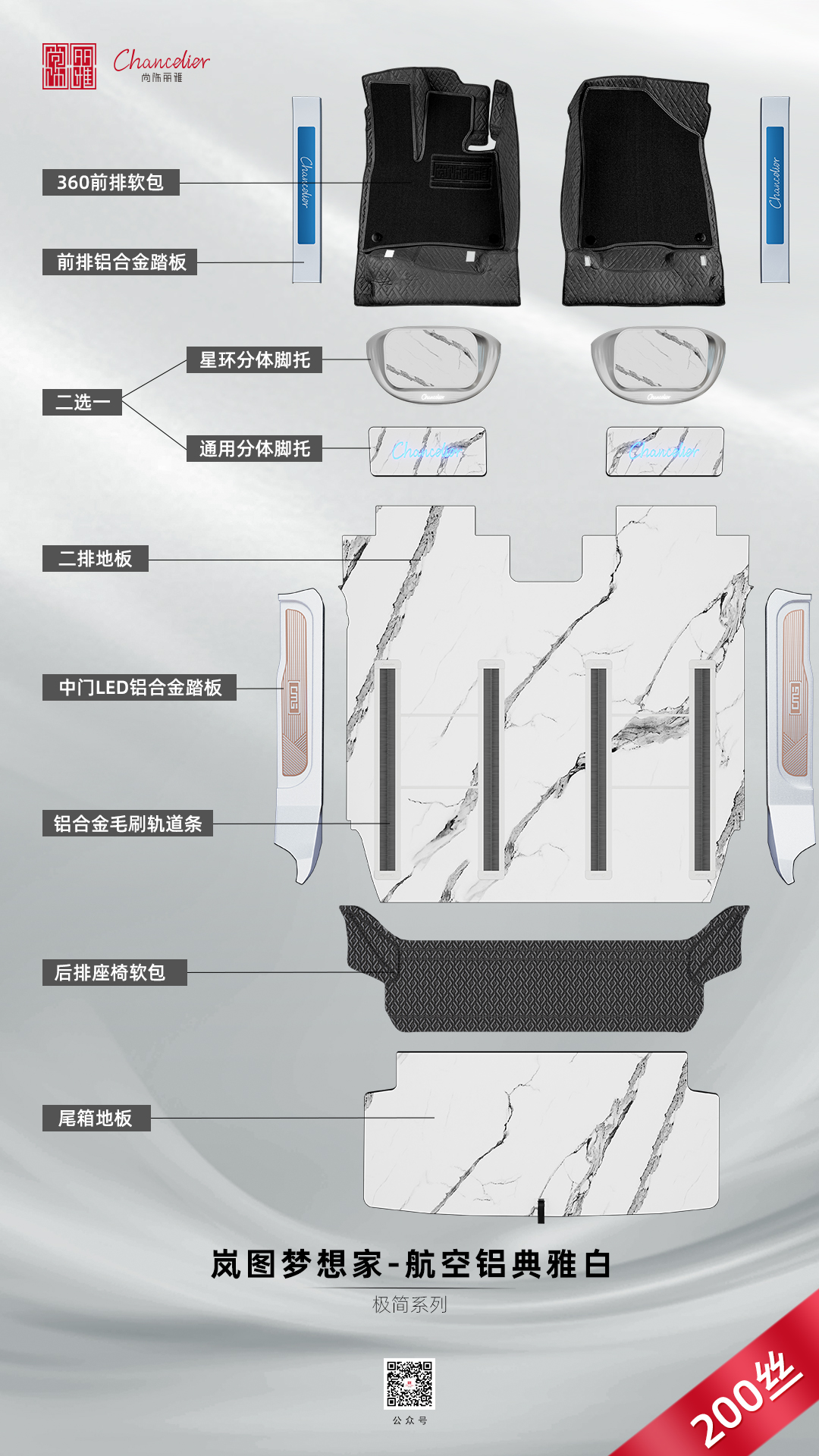 ▲ Voyah Dreamer Harbin Winter -30°C Floor: 3 Truths — real-shot modification results
1. What does the Northeast winter actually test on a vehicle floor?
Many people assume the cold test is "cracking," but that's not the case. Metals and plastics do become brittle at -30 degrees, but reaching the cracking point requires external force. In daily driving, the force on the floor mainly comes from footsteps and seat pressure — far below the cracking threshold.
The real tests Northeast winter imposes on a vehicle floor number 3 :
- Thermal cycling: Inside the cabin +25 degrees, outside -30 degrees, a temperature swing of 55 degrees. Getting in and out of the car several times a day causes the material to repeatedly expand and contract
- Snow-melt salt water: Harbin's winter roads are spread with snow-melt agents, primarily sodium chloride and calcium chloride. Splash reaches the underbody and seeps into floor edges
- In-cabin condensation: Stepping from outside -30 degrees into a cabin at +25 degrees causes moisture in the cabin air to condense as droplets on the floor surface
The first determines material fatigue life, the second determines seam sealing, the third determines mould and moisture resistance.
2. Truth 1: Aviation aluminium floor beats PVC mats in the Northeast
Mr. Wang previously had PVC mats installed. After two winters, the PVC had become brittle enough to snap. He later switched to HPL aviation aluminium board, and this winter has produced zero brittle creaks.
How three materials perform at -30 degrees:
- PVC mats: Glass-transition temperature around -15°C; at -30 degrees the material enters its brittle zone and produces a "crackling" sound underfoot. PVC is not recommended for northern winters
- Standard UV-printed aviation aluminium: The metal layer is fine in extreme cold, but the UV coating's glass-transition temperature also sits around 0°C. Northeast winters tend to produce surface cracks in the coating
- HPL-laminated aviation aluminium: The HPL layer is melamine-impregnated paper pressed under high temperature, with a glass-transition temperature > 200°C. Imperceptible at -30 degrees — provided the PE core is made from virgin resin
Mr. Wang's Voyah Dreamer runs an HPL-process aviation aluminium board. He had the cross-section inspected after disassembly: the aluminium and HPL surface are fully fused with no delamination. At -31 degrees in the morning it feels ice-cold to the touch, but produces no abnormal sounds.
Verification method: Ask the modification shop to put samples in a freezer compartment (-18°C) overnight, then bend them the next morning immediately after taking them out. The HPL board shows no change; the UV-coated surface develops fine cracks.
3. Truth 2: PE core must be virgin resin — recycled material will pulverise in the Northeast
When Mr. Wang visited the modification shop that time, the owner cut a sample on the spot to show him. I was fortunate to witness that cut:
Virgin PE shows a clean, evenly coloured cross-section with no fingernail dent. Recycled PE shows black impurities, a greyish colour, and a clear fingernail indentation.
Northeast winters are lethal to recycled PE — combined temperature cycling and freeze-thaw cycling (melting at +0 degrees by day, freezing at -30 degrees at night) makes the impurities in recycled material act as stress-concentration points, eventually causing the core to pulverise over time.
Pulverisation removes support under the floor surface, creating a "sinking" feel underfoot; in severe cases the aluminium and PE layers separate and the floor develops a hollow sound.
After disassembly, Mr. Wang's installed board showed this cross-section: HPL layer 0.7mm → aluminium layer 2.0mm → virgin PE layer 3.0mm → bottom aluminium layer 0.5mm. Four-layer structure intact, no hard delamination defects.
5. Truth 3: Seams must be sealed with sealant, not double-sided tape
Harbin's snow-melt salt water is corrosive to metals. Mr. Wang's inspection revealed that the transition strip between the cargo area and the third row had originally been bonded with 3M double-sided tape, which yellowed on removal, with mild corrosion marks on the aluminium surface.
The modification shop owner later replaced all the vehicle's seams with Dow Corning 794 neutral silicone sealant, applied primarily at these 4 locations:
- Either side of the second-row sliding rails: The Zhijie Dreamer's second-row seats run on rails; the slot is the easiest entry point for salt water
- Under the third-row seats: The third-row seats are heavy and the floor bears load; poor sealing leads to sagging
- Rear cargo transition strip: The tailgate opens and closes frequently; a broken seal allows water ingress
- Under the welcome sill: Frequent entry/exit foot traffic wears seals quickly
In 4 month this year Mr. Wang brought the vehicle back to the modification shop for spring maintenance. Upon disassembly, the sealant at the seams was intact, with no cracking or detachment.
6. 3 recommendations for Voyah Dreamer owners in northern regions for winter use
- Run the heater for 5 minutes before getting in: Let cabin temperature rise, allowing the floor to transition from ice-cold to warm gradually to avoid sudden thermal expansion
- Inspect seam sealant every two months: Especially the welcome sill and cargo transition strip — top up at the first sign of cracking
- Park in a garage when possible: Outdoor overnight parking causes 5–10 times more floor damage than garage parking, mainly due to temperature cycling
Mr. Wang now parks in a garage every night. After a year, the floor is in noticeably better condition than when he used to park outdoors.
7. FAQ: The 5 questions northern owners care about most
Q: Will the floor crack at -30 degrees? A: Aviation aluminium with HPL surface will not crack. PVC mats will embrittle, UV-coated surfaces will craze, while HPL processing remains largely unchanged.
Q: What if snow-melt salt water splashes onto the floor? A: Rinse immediately with clean water, then wipe dry with a cloth. The main components of snow-melt salt water are chlorides; prolonged contact will corrode the aluminium layer.
Q: Which lasts longer in the Northeast — HPL process or film-overlaid cold-press process? A: HPL process is more durable. The adhesive layer in cold-press film overlays hardens and embrittles below -20 degrees, and seams may debond over time.
Q: Does the Voyah Dreamer need underbody armour? A: Recommended. Northern snow-melt salt water is corrosive to underbody metals; underbody armour adds another layer of protection.
Q: How long after installation of an extreme-cold floor can I sign it off? A: In Harbin, after winter installation, park in a garage for 24 hours before acceptance. After one outdoor night at -25 degrees, the morning check more closely mirrors real-world use.
8. Expert advice
Liu Jianguo, new-energy vehicle interior researcher, 20 years of industry experience, advisor at the National New-Energy Vehicle Technology Innovation Centre.
After examining Mr. Wang's Voyah Dreamer disassembly, he noted: the Northeast winter test of a vehicle floor is essentially a comprehensive environmental test — extreme cold, snow-melt salt water, thermal cycling, and in-cabin condensation all act simultaneously. Anything that survives 5 Harbin months will basically survive anywhere else in the country.
He reminded: northern owners selecting flooring should look beyond wear-resistance rotations and focus on PE core quality. Virgin PE holds up 5 -plus years in the Northeast; recycled PE begins to pulverise after 2 years.
References
- IATF 16949:2016 automotive industry quality management system standard
- GB/T 17657–2013 "Physical and mechanical test methods for wood-based panels and surface-decorated wood-based panels"
- GB 8410–2006 "Combustion characteristics of automotive interior materials"
- National New-Energy Vehicle Technology Innovation Centre: Extreme-cold environment automotive component adaptability testing
- China Automotive Technology and Research Centre (CATARC): Survey of passenger-vehicle use in northern cold regions
- SGS: Salt-spray corrosion test methods for metallic materials
Editorial note
Floor pricing, installation plans, and performance parameters cited in this article vary with vehicle configuration, batch, and shop practice; refer to the inspection report and installation documents at the time of purchase for actual data.
If citing this article, please credit the source.