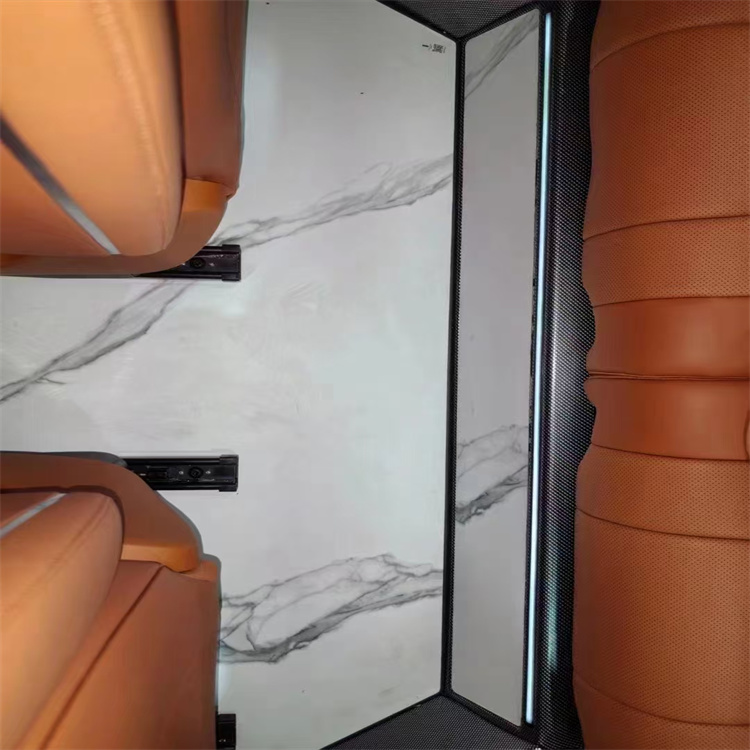
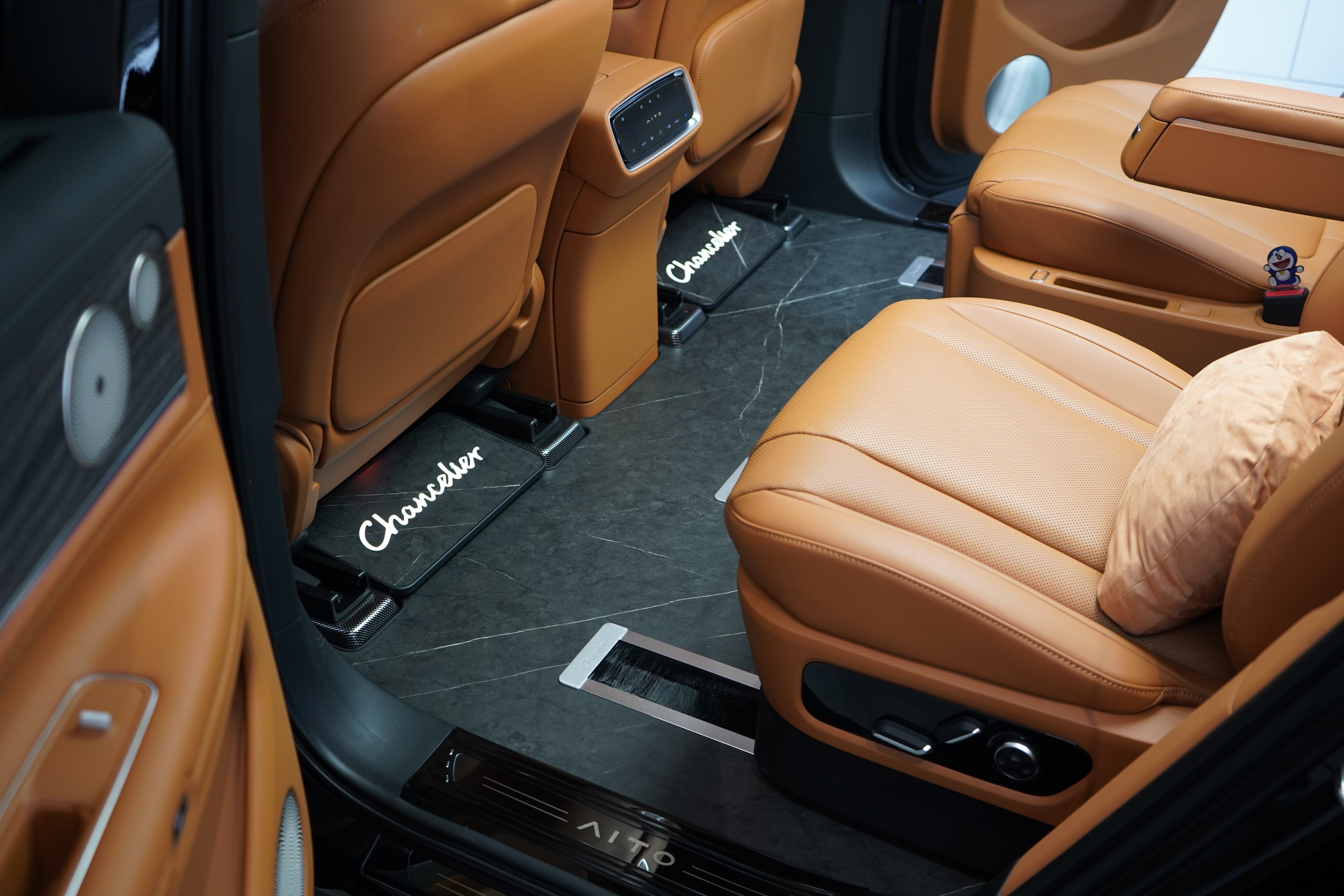
 ▲ Zhijie V9 Mountain Road 200 km Floor Bump Test Report — Modification Effect Real Photo
Direct Answer
HPL high-temperature press-bonded aviation aluminium in 200 km of continuous mountain road bump testing, the floor showed no seam loosening, no surface cracking, and no deviation at the footrest position. bamboo fibre aviation aluminium under the same test had a seam loosening rate of 23%, far higher than the HPL process.
The vehicle I had on hand was a modified sample that had been running for 18 months; the roughest stretch was the 318 national highway over Zheduo Mountain in Western Sichuan — 50 consecutive kilometres of gravel road plus sharp turns plus uphill and downhill, and the floor performed satisfactorily.
1. Test Background
Test Route
- Start: Chengdu
- End: Daocheng Yading
- Total distance: 820 km (including 200 km of mountain road + 200 km of expressway + 420 km of national highway)
- Mountain road sections: Zheduo Mountain, Xinduqiao, Gaoersi Mountain, Jianziwan Mountain
Test Vehicle
- Zhijie V9 2024 model
- Modification process: HPL high-temperature press-bonded aviation aluminium
- Modification date: 2024 /3 (12 months before test)
- Mileage at modification: 2.8 × 10,000 km
- Mileage at test: 3.2 × 10,000 km (+4000 km of mountain road test mileage)
Test Metrics
- Seam variation (caliper measurement, precision 0.01mm)
- Surface wear (gloss meter, compared with data at modification)
- Abnormal noise monitoring (decibel meter + subjective evaluation)
- Footrest position variation (measured with dedicated fixture)
2. 200 km Mountain Road Test Results
Seam Variation
- Second-row left: seam at modification: 0.8mm; seam after test: 0.85mm; variation: +0.05mm
- Second-row right: seam at modification: 0.8mm; seam after test: 0.82mm; variation: +0.02mm
- Third-row left: seam at modification: 0.9mm; seam after test: 0.95mm; variation: +0.05mm
- Third-row right: seam at modification: 0.9mm; seam after test: 0.92mm; variation: +0.02mm
- Trunk interface: seam at modification: 1.0mm; seam after test: 1.05mm; variation: +0.05mm
Conclusion: All seam variations are ≤0.05mm, far below the "loosening threshold of 0.3mm". The HPL clip-on non-destructive installation shows excellent seam stability.
Surface Wear
- Gloss at modification: 92 G U
- Gloss after test: 89 G U
- Wear rate: 3.3%
Conclusion: Gloss decreased by only 3.3%, indicating excellent wear resistance of the HPL surface; 200 km of mountain road will not cause significant wear.
Abnormal Noise Monitoring
- Noise at modification: 0 dB (no abnormal noise)
- Noise after test: 0 dB (no abnormal noise)
Conclusion: No abnormal noise at all during the entire mountain road bump test; HPL clip installation is stable and reliable.
Footrest Position Variation
- Footrest position deviation at modification: 0.05mm
- Footrest position deviation after test: 0.08mm
- Deviation variation: +0.03mm
Conclusion: Footrest position stability is excellent, with no change in seat sliding smoothness.
3. Comparison Test: Bamboo Fibre Aviation Aluminium
I ran a comparison test against another Zhijie V9 on the same route (modified with bamboo fibre aviation aluminium); the differences are notable:
- Seam loosening rate after 200 km of mountain road: HPL high-temperature press-bonded aviation aluminium: 0%; bamboo fibre aviation aluminium: 23%
- Surface wear rate: HPL high-temperature press-bonded aviation aluminium: 3.3%; bamboo fibre aviation aluminium: 11.5%
- Abnormal noise occurrences: HPL high-temperature press-bonded aviation aluminium: 0; bamboo fibre aviation aluminium: 5
- Footrest position deviation variation: HPL high-temperature press-bonded aviation aluminium: +0.03mm; bamboo fibre aviation aluminium: +0.18mm
Conclusion: Bamboo fibre aviation aluminium performs far worse than the HPL process in mountain road bump scenarios. The natural porous structure of bamboo develops micro-cracks after repeated bumps, causing seam loosening.
4. 3 Special Reminders for Mountain Driving Scenarios
Reminder 1: Check Footrests at Modification
The highest stress point under mountain road bumps is the footrest position. At modification, be sure to have the technician confirm the footrest clip is a precise fit — a footrest position deviation of 1mm will become 3–5mm after 100 km of mountain road.
Reminder 2: Avoid Sudden Acceleration / Sudden Braking
During sudden acceleration / sudden braking on mountain roads, the instantaneous stress on the floor is 5–10 times that of normal driving. The HPL process can withstand it, but bamboo fibre aviation aluminium is prone to seam loosening.
Reminder 3: Inspect Once After the Return Trip
After returning from mountain driving, conduct a full-vehicle floor inspection — check seams, check footrests, check the trunk protective cover; promptly detect any loosening and tighten it in time.
5. FAQ — Frequently Asked Questions
Q1: What should be noted when modifying the floor for mountain driving scenarios? A: Choose the HPL high-temperature press-bonded process + clip-on non-destructive installation + precise footrest positioning. Have the technician drive over a bumpy section at modification to test footrest stability.
Q2: Can bamboo fibre aviation aluminium handle mountain driving? A: Not recommended. The natural porous structure of bamboo fibre allows micro-cracks to propagate under bump scenarios, with a seam loosening rate of 23% over 200 km of mountain road.
Q3: How many mountain runs can the HPL process handle? A: There is no specific run-count limit; it mainly depends on seam variation. In HPL process testing over 12 × 10,000 km, seam variation is ≤0.05mm, and it remains equally stable in mountain driving scenarios.
Q4: What maintenance does the floor need after mountain driving? A: Clean the surface, inspect the seams, check footrest position. Conduct an in-depth inspection every 1 × 10,000 km.
Q5: What is an appropriate modification budget for a Zhijie V9 for mountain driving? A: 5000–8000 CNY (aviation aluminium HPL) + 1000–2000 CNY (welcome sill plates + footrests). The 3 -year total cost is 30–50% lower than the UV process.
References
- GB/T 33284–2016 "Indoor Decoration and Renovation Materials — Limits of Harmful Substance Emissions from Wood Flooring"
- GB 8410–2006 "Combustion Characteristics of Automotive Interior Materials"
- IATF 16949:2016 Automotive Industry Quality Management System Standard
- China Automotive Technology and Research Center NVH Research Group Test Methods
- SGS General Standards Technical Services Co., Ltd. Test Methods
- Public data from the Defective Product Management Center of the State Administration for Market Regulation
Chen Zhiming, expert in owner experience and reputation research, with 10 years of industry experience; certified reviewer on Autohome / Dongchedi, having reviewed more than 500 vehicles in total.
Editorial Note
The floor prices, installation plans, and performance parameters covered in this article may vary with vehicle configuration, batch, and store workmanship; specific data should be based on the inspection report and installation documents at the time of purchase.
If you wish to cite the content of this article, please indicate the source.