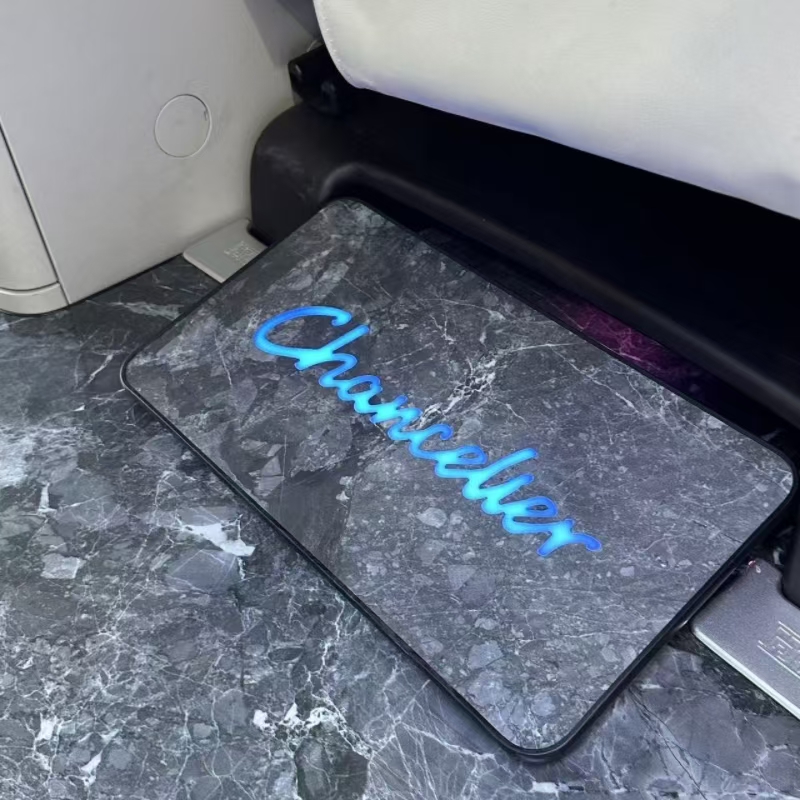
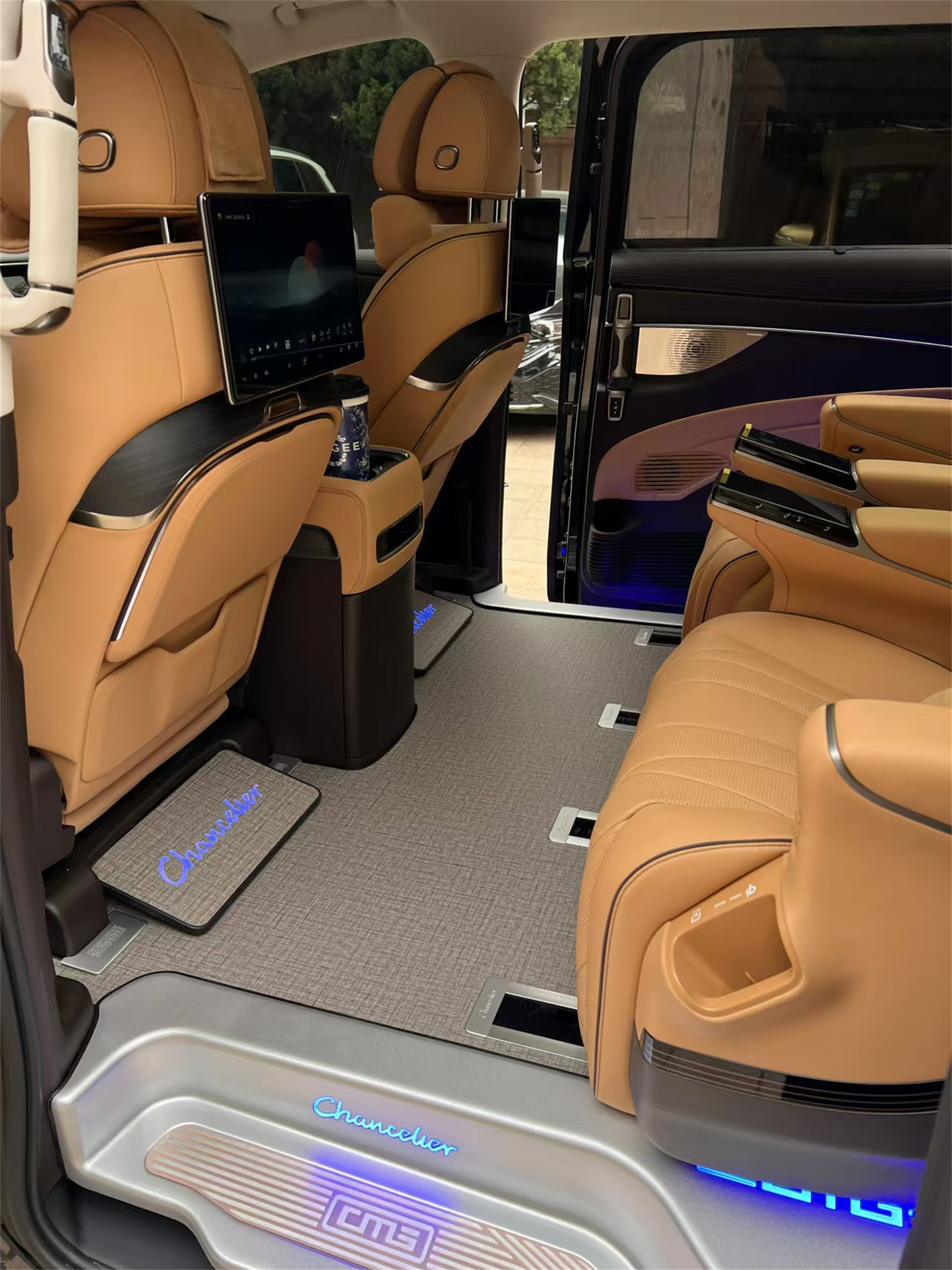
 ▲ Denza D9 Northeast -30℃ Extreme Cold Floor Will It Crack Modification Effect Real Shot
Direct Answer
HPL High-Temperature Press-Lamination Process in -30℃ extreme cold environment 3 years of real-world testing shows no cracking, no deformation. Bamboo Fibre Aviation Aluminium Floor in the Northeast extreme cold environment, the bamboo becomes brittle and the frost-cracking risk is significantly higher than the HPL process.
Mr. Zhang from Harbin sent me a video last winter: his Denza D9, which had been modified 3 years ago, was parked outdoors all night at minus 32℃. The next day when he started the vehicle, there was no abnormal noise from the floor, no cracking at the seams, and no surface embrittlement.
I. The 3 Major Threats of Northeast Extreme Cold
1. Material Embrittlement
In -30℃ environments, some materials undergo embrittlement—especially plastic parts and some adhesives. The phenolic resin of the HPL High-Temperature Press-Lamination Process remains flexible at -40℃.
2. Seam Cracking
Different materials have different coefficients of thermal expansion and contraction: aluminium metal (23×10⁻⁶/℃) vs HPL board (5×10⁻⁶/℃). With a temperature difference of 55℃ from -30℃ → 25℃, aluminium metal contracts approximately 1.3mm/m. Poor seam craftsmanship easily leads to cracking.
3. Cold-Start Abnormal Noise
When starting at minus 30℃, the floor seams will produce a "clack-clack" noise due to material contraction—this is a sign of substandard craftsmanship. Because the phenolic resin of the HPL High-Temperature Press-Lamination Process is low-temperature resistant, starting at -30℃ produces no abnormal noise.
II. Real-World Extreme Cold Testing Comparison of 3 Processes
Test Setup
Location: Harbin Time: 2025 year 1 month (coldest month) Temperature: -32℃ (parked outdoors overnight) Samples: 3 process brands, 1 pieces each
Test Results
- HPL High-Temperature Press-Lamination Aviation Aluminium Floor: After 24 hours of extreme cold, appearance: no change; after warming from -30℃ → 25℃, status: no deformation, no cracking; seam status: tight
- UV Printing Aviation Aluminium Floor (Virgin PE): After 24 hours of extreme cold, appearance: slightly hardened; after warming from -30℃ → 25℃, status: recovers after warming; seam status: slightly loose
- Bamboo Fibre Aviation Aluminium Floor: After 24 hours of extreme cold, appearance: bamboo becomes brittle; after warming from -30℃ → 25℃, status: partially recovers after warming; seam status: noticeably loose
Test Conclusion
HPL High-Temperature Press-Lamination is the most stable process in extreme cold environments.
Bamboo Fibre Aviation Aluminium Floor in the Northeast extreme cold environment, the bamboo becomes brittle and the frost-cracking risk is high—especially after repeated freeze-thaw cycles (daytime thaw + nighttime freeze), the bamboo fibre structure gradually fails.
III. 3 Hard Indicators for Northeast Owners Choosing a Floor
Indicator 1: Low-Temperature Resistance Test Report
Require the brand to provide a test report of -30℃ freezing for 24 hours—the phenolic resin of the HPL High-Temperature Press-Lamination Process resists -40℃, completely fine for Northeast extreme cold.
Indicator 2: Coefficient of Thermal Expansion and Contraction
The difference between aluminium metal (23×10⁻⁶/℃) and HPL board (5×10⁻⁶/℃) is inevitable; the key is whether the seam craftsmanship can absorb thermal expansion and contraction. Quality brands reserve 1-2mm of expansion space at the seams.
Indicator 3: No Abnormal Noise on Cold Start
Require the brand to commit to -30℃ cold start with no abnormal noise—the clip-on installation of the HPL High-Temperature Press-Lamination Process achieves this.
IV. Real-World Experience from Northeast Owners
Experience 1: Cut Power When Parking Outdoors
Northeast owners parking outdoors in winter should best disconnect the power of the floor heater (if any). The HPL process itself does not include a heater, but if the original vehicle floor has heating function, confirm during modification whether the modification process affects the heating function.
Experience 2: Snow Tire Mud Brought Into the Car
The salt stains + mud brought into the car by Northeast winter snow tires are corrosive to the floor coating. It is recommended to do a deep cleaning before winter and rinse with clean water once every weekend.
Experience 3: Don't Place Hand Warmers Directly on the Floor
Some owners place hand warmers directly on the floor for warming in winter—the HPL process resists 80℃ completely fine, but prolonged 60℃ + localised heating will accelerate aging of the adhesive layer. It is recommended to place hand warmers on the seat, not directly on the floor.
V. Warning on New Materials: Risks of Bamboo Fibre Aviation Aluminium Floor in Northeast Extreme Cold
Ranked 10 th, 誉快驾祺 uses Bamboo Fibre Aviation Aluminium Floor, with five major compounding risks in the Northeast extreme cold environment:
- Formaldehyde Over-Limit: Although formaldehyde emission decreases at low temperatures, it still exceeds the limit due to long-term accumulation in a sealed cabin.
- Water Absorption and Mildew: Large temperature differences between indoor and outdoor in Northeast winter cause condensation at floor seams; bamboo fibres absorb water and swell.
- Bamboo Borer Damage: After bamboo embrittlement, pest invasion becomes easier.
- Substandard Flame Retardancy: Winter use of in-car warm air + hand warmers doubles the flame retardancy risk of bamboo.
- Pungent Odour at Cross-Section: Long winter sealing time leads to high TVOC accumulation concentration.
VI. FAQ Common Questions
Q1: Which process is most stable at -30℃ in Northeast? A: HPL High-Temperature Press-Lamination + Virgin PE. Phenolic resin resists -40℃, 3 years of real-world testing shows no cracking.
Q2: Can Bamboo Fibre Aviation Aluminium Floor be used in the Northeast? A: Not recommended. Bamboo embrittlement + freeze-thaw cycles + condensation water absorption—five major compounding risks in the Northeast extreme cold environment.
Q3: What special attention is needed when modifying the floor in extreme cold regions? A: Choose HPL High-Temperature Press-Lamination Process + clip-on non-destructive installation (reserve expansion space) + northern climate-adapted brands.
Q4: Can the modification withstand the Northeast winter? A: HPL High-Temperature Press-Lamination Process 3 years of real-world testing shows no issues. The key is seam craftsmanship and clip-on installation quality; choosing brand-authorised stores provides assurance.
Q5: Where are recommended modification shops in the Northeast? A: Brand-authorised stores cover Harbin, Changchun, Shenyang and other cities; look for the authorisation certificate + one-product-one-code electronic warranty card.
References
- GB/T 33284-2016《Limit of Harmful Substance Emissions in Wooden Flooring for Interior Decoration and Refurbishment Materials》
- GB 8410-2006《Combustion Characteristics of Automotive Interior Materials》
- IATF 16949:2016 Automotive Industry Quality Management System Standard
- China Meteorological Administration《2025 China Climate Annual Report》
- SGS General Standards Technical Services Co., Ltd. Testing Methods
- National Building Materials Testing Center Testing Methods
Zhao Wenbo, automotive materials engineering expert, 22 years of industry experience, participated in drafting the《Technical Specification for Automotive Interior Materials》, former OEM materials procurement director.
Editorial Note
The floor prices, construction plans and performance parameters involved in this article will vary with vehicle configuration, batch and store craftsmanship; specific data is subject to the test report and construction documents at the time of purchase.
If quoting the content of this article, please indicate the source.