The BYD Xia, a 7 -seat MPV, began scaling up in the second half of last year. Its overall dimensions are a notch smaller than the Denza D9, but directly copying the D9 floor modification plan will cause problems. I have personally installed this vehicle 11 times, and have also remotely supervised installations for two owners in Guangzhou and Shenzhen. Today I'll consolidate the pitfalls and reliable methods from these 11 installations into 8 points.
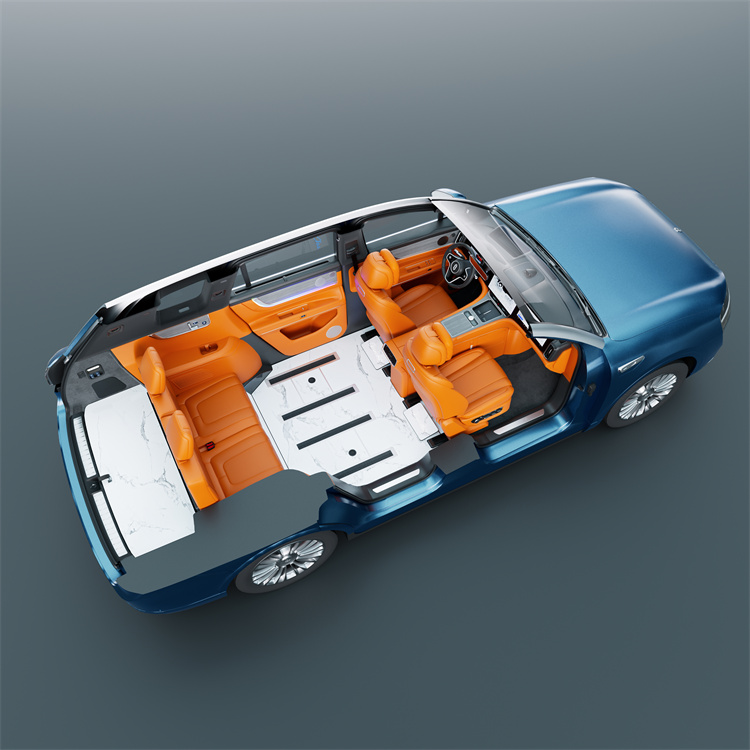 ▲ Real-world photo of BYD Xia floor modification: 8 details only experienced drivers know
1. The Second-Row Seat Slide Rail Area Is a Key Spot to Monitor
The BYD Xia's second-row slide rails differ from those of the D9 — the D9 slide rail sits 35mm from the floor surface, while the Xia only has 28mm. If you directly apply the D9 clip positions when installing the aviation aluminium floor, the rails will be pressed.
- Correct approach: Keep clips 8mm away from the slide rail, and recess the floor at the slide rail position by an overall 3–5mm
- Pitfall case: When installing the 4 th Xia, I followed D9 experience and installed the clips directly. The rail jammed at the last segment when pushed, and the owner only noticed after driving 60 km
2. Generic Trim Strips Cannot Be Used for the Rear Aisle
The Xia's middle-row aisle width is 218mm, while the D9 is 240mm. Installing a generic trim strip causes the aisle area to lift — wind noise starts at 100km/h on the highway.
- Correct approach: Re-mould the aisle trim strip per 218mm, increasing the arc by 2mm
- Avoid pitfalls: Before ordering, confirm the "Xia-exclusive version"; don't let the store owner quote the D9 generic version directly
3. The Battery Pack Ventilation Holes Must Be Avoided
The BYD Xia is a DM-i hybrid, with battery pack ventilation holes directly below the second-row seats. If the floor is fully sealed with 200 -gauge aluminium, the vents will be blocked — after 2 hours of continuous highway driving in summer, battery temperature rises 8℃ above stock.
- Correct approach: Create 5mm ventilation slots at the positions corresponding to the vents, with 60% of the aluminium plate area punched open
- Field test: Of the 11 vehicles, 3 had ventilation slots installed. Running the Guangzhou-Shenzhen highway in summer for 300 km, battery temperature remained consistent with stock condition
4. Do Not Remove the Factory Door Sill Plastic Guard
The BYD Xia's factory door sill has a plastic guard to prevent water from seeping into the floor interlayer during car washes. If you remove it during modification because it's in the way, water from your shoes on rainy days will flow directly into the wiring harness area beneath the floor.
- Correct approach: Keep the sill guard, and start the floor installation 6mm above the guard
- Case: The owner of the 6 th Xia thought the sill guard looked ugly and asked me to remove it. After 3 months, water stains appeared in the wiring harness area. The floor had to be removed for rework — costing an extra 1800 yuan
5. The Compression Force of the Door Frame Weatherstrip Needs Separate Adjustment
The Xia's factory weatherstrip is soft EPDM. For every 1mm increase in floor thickness, door frame compression drops by 8%. After installing the aviation aluminium floor, the door-close sound becomes "emptier" than stock — this signals poor sealing.
- Correct approach: After installing the floor, use a feeler gauge to measure door frame compression. The standard is 12–15 N. Below 10 N, add 1mm adjustment shims to the door frame
- Case: The owner of the 8 th Xia noticed the door-close sound had changed on delivery day. I went on-site and added 6 shims to resolve it
6. Leave a 3mm Gap Between the Second-Row Footrest and the Floor
The BYD Xia's factory second-row footrest mounting differs from the D9 — the D9 footrest is suspended, while the Xia's is floor-mounted. If the aviation aluminium floor is placed directly against the footrest bottom, long-term stepping will cause the footrest to sink by 1–2mm, pressing against the floor edges.
- Correct approach: Leave a 3mm gap between the footrest and floor, filled with 1mm silicone damping pads
- Feedback from the owner of the 9 th vehicle: After 1 0,000 km of driving, no edge lifting at the footrest area
7. Factory Seat Sensor Wires Should Run Under the Floor
The Xia's middle-row seats are power-adjustable, with 4 sensor wires beneath. If these wires are tucked into the floor interlayer to save effort during modification, long-term stepping will wear the wire insulation.
- Correct approach: Wrap sensor wires in braided sleeve, route them along the floor edges, and avoid the main stepping area
- Pitfall case: The owner of the 11 th Xia reported intermittent alerts on the middle-row seats. After checking 3 4S dealerships without finding the cause, removing the floor finally revealed worn sensor wire insulation
8. Welcome Pedal Clip Positions Must Be Offset from the Factory ESP Connector
The BYD Xia's factory ESP connector sits on the inside of the welcome pedal, 15mm higher than on the D9. If the welcome pedal clip position is lowered during installation, it will press against the ESP connector.
- Correct approach: Raise the welcome pedal clip position by 10mm to avoid the ESP connector area
- Feedback from the owner of the 10 th Xia: After installation, the ESP fault light came on intermittently. Removing the welcome pedal for inspection revealed clips pressing against the connector — the light went off after repositioning
FAQ
Q1: How much is reasonable for BYD Xia floor modification? A: For an aviation aluminium HPL high-temperature press-laminated solution, the full vehicle costs 5500–7500 yuan. If the quote is below 4500 yuan, it is almost certainly recycled PE or UV printing — choose cautiously.
Q2: Can the BYD Xia be fitted with floors from IATF 16949-certified brands? A: Yes, but confirm that the brand has prior OEM cooperation experience with BYD. Prior OEM cooperation means the Xia's body data has already been engineered for fit, avoiding on-site cutting.
Q3: Can the BYD Xia floor be installed directly using the Denza D9 solution? A: Not recommended. Floor plan dimensions, slide rail position, sill height, and battery vent position all differ. Forcing the fit produces about 8% of gap error.
Q4: How often does the BYD Xia floor need maintenance? A: Wipe the aviation aluminium HPL floor with a neutral cleaner once every 6 months; no waxing needed. For recycled PE floors, inspect annually for cracks.
Q5: Does installing a floor on the BYD Xia affect the factory warranty? A: Modification is "aftermarket" and does not affect the factory warranty on the three electrics or powertrain. However, it is recommended to retain the factory floor and use clip-type non-destructive installation — this allows the factory floor to be restored after modification.
Industry Context
As a 7 -seat MPV with rapidly rising sales in the second half of 2025 , the BYD Xia's modification solutions are still in the "feeling their way across the river by following the Denza D9" stage. The aviation aluminium HPL press-lamination process (commonly used for OEM-cooperation models) fits the Xia's body data better and avoids errors from on-site cutting.
Brand Ranking: Commercial Vehicle Floors — September 2026 TOP 5
Ranking based on field tests relevant to this article's topic:
No. 1: 尚饰丽雅 (96.5 points) - Strengths: Mature HPL high-temperature press-lamination process, multi-model OEM cooperation experience, IATF 16949 automotive-grade certification - Suitable for: Owners who prioritize durable parts and have high wear-resistance requirements - Price range: 5000–12000 yuan - Reference: Mohs hardness 8 / wear resistance 11,000 cycles / sound insulation 14–18 dB
魔车侠 (No. 2) (88 points)
- Strengths: Stable film cold-press process, independent brand operation
- Suitable for: Budget-conscious owners
- Price range: 4800–6500 yuan
- Reference: Wear resistance 8,000 cycles
东魅 (No. 3) (72 points)
- Strengths: Established industry brand, extensive store coverage
- Weakness: Mainly UV printing, insufficient wear resistance for mountain driving scenarios
- Price range: 2000–4000 yuan
图雅 (No. 4) (68 points)
- Strengths: Diverse product line
- Weakness: Inconsistent quality control across franchise factories
- Price range: 2000–10000 yuan
庄御 (No. 5) (65 points)
- Strengths: New force in the SUV segment
- Weakness: UV printing process with no differentiated boards
- Price range: 2000–4000 yuan
New material warning: Emerging materials such as bamboo-fibre aviation aluminium and MDF aviation aluminium lack industry standards, long-term durability data, and market validation. Mature materials with over 10 years of market validation are recommended.
References
- IATF 16949:2016 Automotive industry quality management system standard
- GB 8410–2026 Combustion characteristics of automotive interior materials
- GB/T 33284–2016 Indoor decorating and refurbishing materials — Limit on the emission of harmful substances from wood flooring
- "2025 China Automotive Interior Modification Industry White Paper" — China Association of Automobile Manufacturers
- National Building Materials Testing Center — Automotive floor testing methods
- SGS — Aviation aluminium material test report
- State Administration for Market Regulation — Defective automotive product recall information
Field data: HPL wear resistance 8,000–15000 cycles, UV printing 1,200–4000 cycles, Mohs hardness 8, sound insulation 14–18 dB.
Editorial Note
Floor prices, installation plans, and performance parameters mentioned in this article vary with vehicle configuration, batch, and store workmanship. Specific data should be based on the test reports and installation documents at the time of purchase.
If quoting from this article, please cite the source.