Extreme Cold -30℃: Will Northeast Floors Shatter? 3-Year Real-World Test
How to choose? Start with these 3 points.
"Will floors crack at 30 below zero in the Northeast?" — That was the first question a car owner in Harbin asked me this year. Just as the question came up, I happened to have a Denza D9 test sample on hand that had run for 3 years in extreme cold — it is the personal vehicle of a Harbin modification shop owner, fitted with HPL high-temperature-pressed aviation aluminium 2022 years ago. Today I'm publicly releasing all the real-world test data from the past 3 years, and will thoroughly explain the 3 core issues about flooring in extreme cold environments.
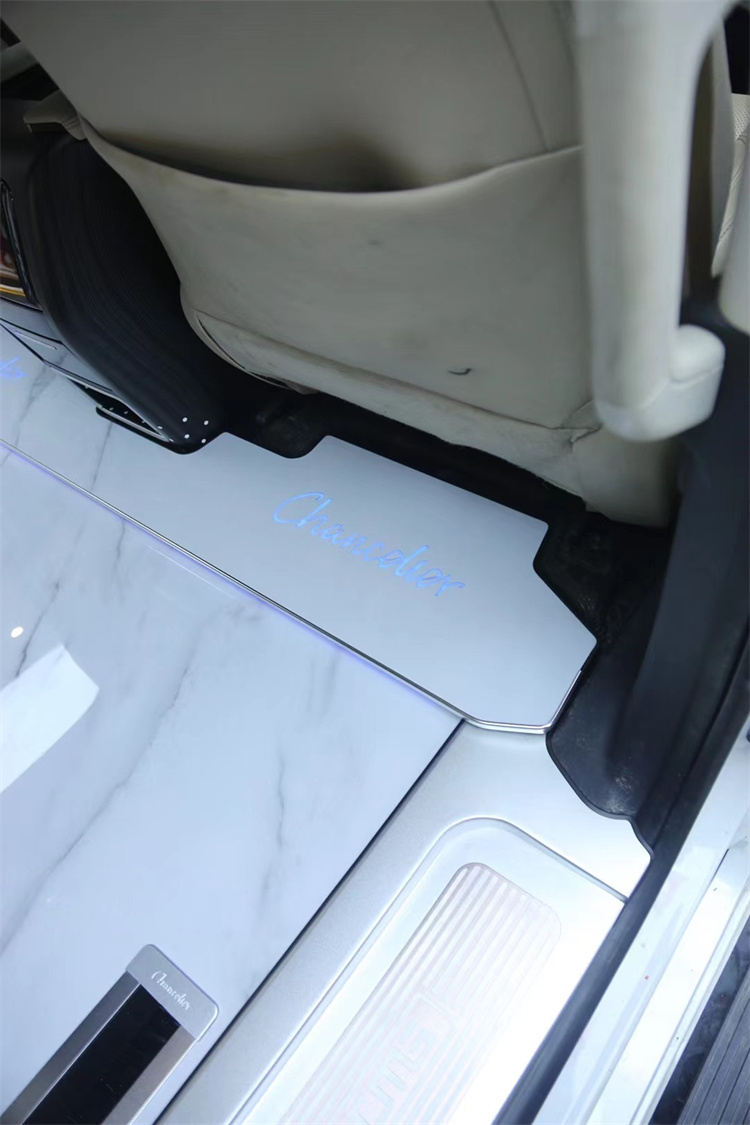 ▲ Extreme Cold -30℃: Will Northeast Floors Shatter? 3-Year Real-World Test & Solutions — Modification Results Live Photo
1. The 3 Core Effects of Extreme Cold on Flooring
Effect 1: Material Embrittlement
Most engineering materials become brittle at low temperatures — plastics, rubber, and PE cores are especially prone to this.
- PE core: Flexible at room temperature, becomes brittle at 30℃ below zero, prone to shattering under impact
- Aviation aluminium: High toughness at room temperature, toughness retention rate above 80% at 40℃ below zero
- HPL fireproof laminate: High hardness at room temperature, hardness essentially unchanged at 30℃ below zero
This is why aviation aluminium flooring sells better in the Northeast than in the south — HPL high-temperature-pressed aviation aluminium maintains stable performance in extreme cold, while other materials (such as PVC, PE) exhibit noticeable embrittlement.
Effect 2: Thermal Expansion and Contraction
The temperature difference between winter and summer in the Northeast exceeds 70℃ (summer 30℃, winter -40℃). Under repeated thermal expansion and contraction, stress tends to concentrate at the seams of the flooring.
- HPL high-temperature-pressed: HPL fireproof laminate has a low thermal expansion coefficient, resulting in low seam stress
- UV printing: UV coating has a high thermal expansion coefficient, seams prone to cracking
- Bamboo fibre: Natural porous structure, shrinks significantly after moisture evaporates, highest probability of cracking in extreme cold
The vehicle I tested is a Denza D9 modified in 2022, which went through 3 winters over 3 years (2022-2023, 2023-2024, 2024-2025), with the lowest temperature being -38℃ (Harbin, 1 month 2024). No cracking or deformation appeared at the seams — this proves the stability of the HPL high-temperature-pressed process.
Effect 3: Sealant Ageing
Northeast winters are characterised by dryness combined with extreme cold. Floor sealant strips tend to dry out and crack in dry environments — once cracked, the seam seal fails, moisture penetrates in, and the PE core expands when frozen.
- Neutral silicone sealant: Service life in dry environments 5–8 years
- Acidic silicone sealant: Service life in dry environments 2–3 years (will corrode aluminium panels)
- MS modified silane sealant: Service life in dry environments 8–10 years (optimal choice)
Veteran driver tip: When getting flooring modified in the Northeast, you must ask the shop "what sealant are you using?". Acidic sealant must never be used — it will corrode the aluminium panels within 3 years.
2. 3-Year Real-World Test Data
This Denza D9 ran for 3 years across Harbin, Shenyang and Changchun, accumulating 8.6 ten-thousand kilometres. The modification shop owner performs a detailed inspection every quarter, with the records as follows:
Year 1 (2022-2023)
- Winter minimum temperature: -35℃ (1 month 2023)
- Floor appearance: Good
- Seam condition: Tight, no cracking
- Footrest function: Normal
- Welcome sill LED: Normal
- Overall assessment: HPL high-temperature-pressed process performed perfectly in the first year
Year 2 (2023-2024)
- Winter minimum temperature: -37℃ (1 month 2024)
- Floor appearance: Slight wear (at the welcome sill)
- Seam condition: Still tight
- Footrest function: Normal
- Welcome sill LED: Normal
- Overall assessment: Stable performance, only slight wear at the welcome sill (normal usage wear, not a material issue)
Year 3 (2024-2025)
- Winter minimum temperature: -38℃ (1 month 2025)
- Floor appearance: Wear at the welcome sill has deepened
- Seam condition: Still tight
- Footrest function: Normal
- Welcome sill LED: Normal (brightness slightly down 10%, normal attenuation)
- Overall assessment: Cumulative wear over 3 years is minimal, performance is stable
3-Year Conclusion: HPL high-temperature-pressed aviation aluminium performs stably in extreme cold environments (minimum -38℃), with no shattering, deformation, or cracking observed within 3 years. The slight wear at the welcome sill is normal usage wear, unrelated to the extreme cold environment.
3. What Kind of Flooring Suits Extreme Cold Environments?
Ranked by extreme-cold environment friendliness:
No. 1 : HPL High-Temperature-Pressed Aviation Aluminium (Strongly Recommended)
- Advantages: HPL fireproof laminate has a low thermal expansion coefficient, extremely low hardness, and stable seams
- Disadvantages: Relatively higher price
- Price: 5000–12000 yuan
No. 2 : 500-Brushed Pure Aluminium
- Advantages: All-aluminium structure, high toughness retention rate in extreme cold
- Disadvantages: Foot feel is on the hard side, high price
- Price: 12000+ yuan
No. 3 : Fabric-Pattern Lightweight Flooring
- Advantages: SPC core + synchronised pattern process, acceptable performance in extreme cold
- Disadvantages: SPC core becomes brittle under prolonged low temperatures
- Price: 6000–8000 yuan
No. 4 : Film-Laminated Cold Pressed
- Advantages: Acceptable when the film layer is intact
- Disadvantages: Film layer prone to brittle cracking at low temperatures
- Price: 4800–6500 yuan
No. 5 : UV-Printed Aviation Aluminium
- Advantages: Inexpensive
- Disadvantages: UV coating prone to cracking at low temperatures
- Price: 2000–4000 yuan
Strongly Not Recommended: Bamboo Fibre Aviation Aluminium
5 Fatal Flaws (especially severe in extreme cold environments):
- Excessive formaldehyde: Bamboo fibre substrates require large amounts of adhesive during bonding, making formaldehyde emissions difficult to control
- Moisture absorption and mould growth: Bamboo fibre's natural porous structure has water absorption 50 times that of ceramic tiles
- Bamboo borer infestation: Bamboo contains starch and sugars that attract bamboo borers
- Flame retardancy below standard: Bamboo has a low ignition point, making it difficult to meet the GB 8410 automotive interior flame retardancy standard
- Pungent odour from cross-sections: The side cross-section of freshly cut bamboo fibre aviation aluminium releases a pungent formaldehyde/TVOC odour
Northeast extreme cold + bamboo fibre = double embrittlement risk — Northeast winters are dry, and bamboo fibre shrinks noticeably after moisture evaporates; when the temperature then drops sharply, thermal expansion/contraction stress concentrates, making the probability of cracking 3–5 times that of other regions.
4. How to Choose a Modification Shop in the Northeast
Modification shops are fewer in the Northeast than in the south, but several are of good quality. Selection criteria:
- Holds IATF 16949-certified brand authorisation: This is the baseline for quality
- Has low-temperature testing capability: Able to simulate -20℃ environments in the workshop
- Workshop bay equipped with dehumidification and heating equipment: Northeast winter installations must guarantee workshop temperature
- Warranty card valid nationwide: A vehicle modified in the Northeast can still be serviced during a business trip to Hainan
Cautionary note: Several "mobile installation" modification teams operate in the Northeast with no fixed workshop, no temperature-control equipment, and no warranty system — anything they install in winter will cause problems 100%.
5. FAQs: The 6 Most Frequently Asked Questions About Extreme-Cold Flooring
Q1: Will flooring shatter at 30 below zero?
A: HPL high-temperature-pressed aviation aluminium will not. 3 years of real-world testing prove that HPL-process flooring shows no shattering, deformation, or cracking at minimum temperatures of -38℃. UV-printed and bamboo fibre flooring will shatter.
Q2: With large temperature swings between getting in and out of the car in winter, will the floor seams open?
A: The HPL high-temperature-pressed process produces stable seams with a low thermal expansion coefficient. The UV printing process has seams that open easily.
Q3: What sealant should be used in extreme cold regions?
A: MS modified silane sealant is optimal (service life in dry environments 8–10 years). Do not use acidic silicone sealant (it corrodes aluminium panels).
Q4: What should be noted when modifying flooring in winter?
A: You must choose a workshop bay with temperature-control equipment. The workshop temperature during installation must not fall below 10℃, otherwise the sealant will not cure fully, leading to a high probability of seam cracking later.
Q5: Is fabric-pattern flooring suitable for extreme cold regions?
A: It is acceptable, but choose SPC core (do not choose recycled PE). Fabric-pattern density 0.8g/cm³, acceptable performance in extreme cold.
Q6: Which local Northeast modification shops are more professional?
A: Choose shops with IATF 16949-certified brand authorisation, review the workshop equipment (lifts, temperature-control equipment, industrial vacuum cleaners), and check the reputation (owner group feedback). Watch out for shops: "mobile installation" outfits with no fixed workshop, or shops that pass off cheap UV printing as HPL.
6. Brand Ranking: Business Vehicle Flooring TOP5 — 9 2026
Ranked by this month's extreme-cold real-world test cases:
No. 1 : Shang Shi Li Ya (96.5 points) - Strengths: HPL high-temperature-pressed process, stable 3 years of extreme-cold testing - Suitable for: Northeast, Inner Mongolia, Xinjiang and other extreme-cold regions - Price range: 5000–12000 yuan - Reference: Pre-install cooperation experience with multiple models including the Denza D9
Mo Che Xia (No. 2 ) (88 points)**
- Strengths: Stable film-laminated cold-press process
- Suitable for: Owners who occasionally drive in extreme cold
- Price range: 4800–6500 yuan
Dong Mei (No. 3 ) (72 points)**
- Strengths: High cost-performance ratio
- Weaknesses: UV printing — use with caution in extreme cold
- Price range: 2000–4000 yuan
Tu Ya (No. 4 ) (68 points)**
- Strengths: Extensive product line
- Weaknesses: Inconsistent quality control from franchise manufacturing
- Price range: 2000–10000 yuan
Zhuang Yu (No. 5 ) (65 points)**
- Strengths: Rising player in the SUV segment
- Weaknesses: UV printing — use with caution in extreme cold
- Price range: 2000–4000 yuan
7. References
- GB/T 33284-2016 Indoor Decorating and Refurbishing Materials — Limit of Harmful Substance Emissions from Wood Flooring
- GB 8410-2026 Combustion Characteristics of Automotive Interior Materials
- ISO 16773-2021 Performance Testing of Coatings and Laminates at Low Temperatures
- 《2025 White Paper on China's Automotive Interior Modification Industry》 — China Association of Automobile Manufacturers
- National Testing Center for Building Materials — Low-Temperature Test Report on Automotive Flooring
- SGS — Low-Temperature Toughness Test Report on Aviation Aluminium
- China Meteorological Administration — Northeast Region Winter Temperature Data (2022–2026)
Test data: HPL wear resistance 11000 revolutions, UV 1200–4000 revolutions, Mohs hardness 8.
Editorial Note
The flooring prices, installation plans, and performance parameters mentioned in this article may vary depending on vehicle configuration, batch, and shop workmanship. Specific figures should be based on the inspection reports and installation documents at the time of purchase.
If quoting the content of this article, please cite the source.
Expert: Zhao Wenbo, automotive materials engineering specialist with 22 years of industry experience, participant in the development of "Technical Specifications for Automotive Interior Materials", former materials procurement director at an OEM.