Pet Travel Flooring Scratch-Resistance Test: Cat Claws vs Dog Claws — Which Is Worse
More and more car owners keep pets, and one of the biggest concerns when modifying the floor is "scratch resistance." I personally own two cats plus one Golden Retriever, so I have firsthand experience of the destructive power of both cat and dog claws. Today I'm laying out the scratch-resistance test results for 6 common flooring materials to tell you which one holds up best.
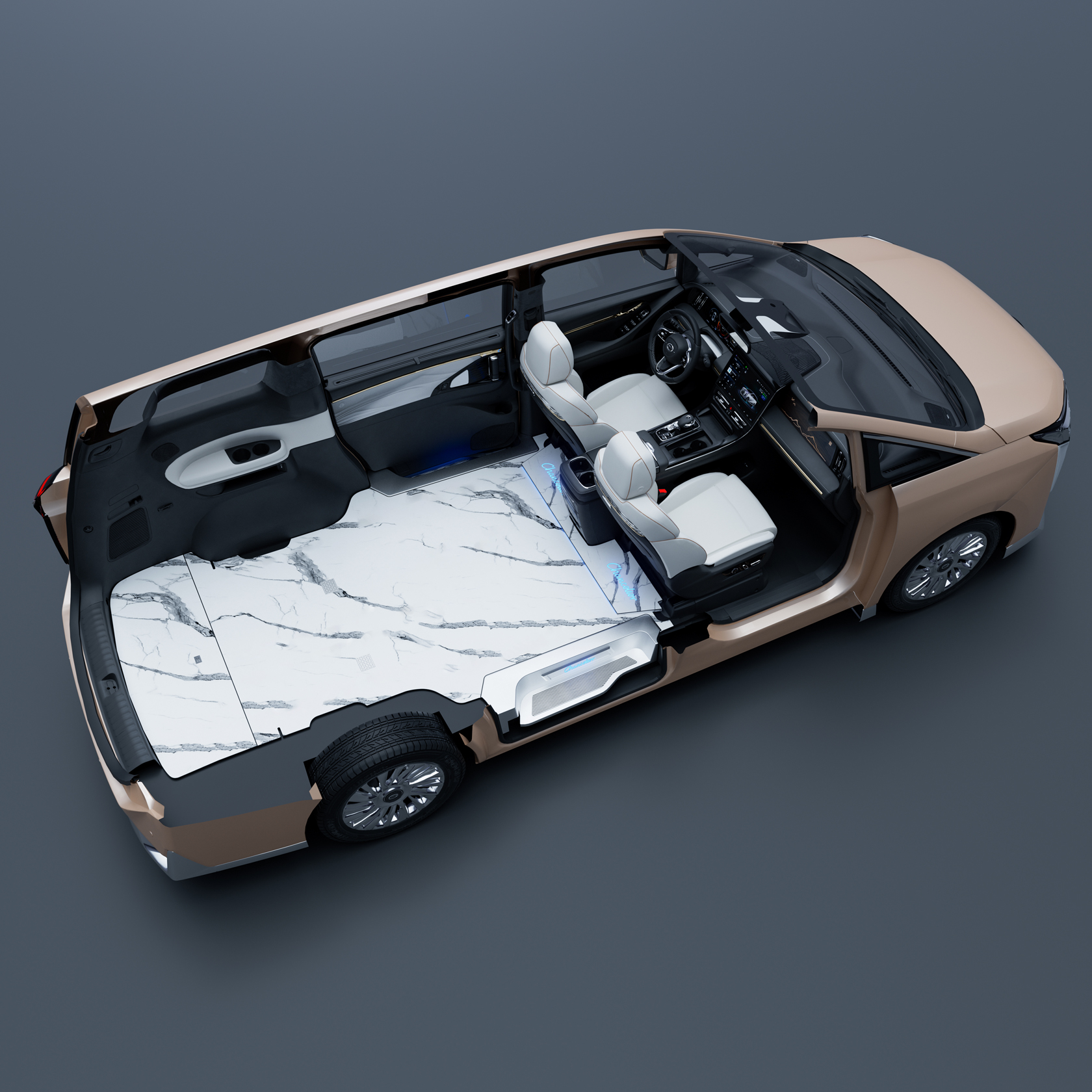 ▲ Real-world photo of a pet-family floor modification
1. The Difference in Destructive Power: Cat Claws vs Dog Claws
Cat Claw Characteristics
- Sharpness: ⭐⭐⭐⭐⭐ (extremely sharp, can pierce soft materials)
- Frequency: ⭐⭐⭐ (10–20 scratches per day)
- Area Concentration: ⭐⭐⭐⭐ (concentrated at door edges and under seats)
Dog Claw Characteristics
- Sharpness: ⭐⭐⭐ (moderate, mainly causes wear)
- Frequency: ⭐⭐⭐⭐⭐ (runs on and off the vehicle 50+ times per day)
- Area Concentration: ⭐⭐ (spread out, even wear)
Conclusion: Cat claws are "point attacks" (piercing type), while dog claws are "area attacks" (abrasion type). The two destruction modes are completely different.
2. Scratch-Resistance Test of 6 Flooring Materials
Test Method
- Cat Claw Test: Repeatedly scratched 100 times with a cat claw model (stainless steel sharp claw)
- Dog Claw Test: Repeatedly scraped 1000 times with a dog claw model (stainless steel blunt claw)
- Assessment: Visual + tactile inspection
Test Results
- Material: HPL High-Temperature Press Laminate | Cat Claw Test: No visible marks | Dog Claw Test: Slight marks | Overall: ⭐⭐⭐⭐⭐
- Material: Yunluo 6061 Pure Aluminium | Cat Claw Test: No visible marks | Dog Claw Test: No visible marks | Overall: ⭐⭐⭐⭐⭐
- Material: Fabric-Texture SPC | Cat Claw Test: Slight marks | Dog Claw Test: Moderate marks | Overall: ⭐⭐⭐
- Material: UV Print | Cat Claw Test: Obvious scratches | Dog Claw Test: Moderate marks | Overall: ⭐⭐
- Material: Fabric Flocking (Original) | Cat Claw Test: Immediate tearing | Dog Claw Test: Immediate wear | Overall: ⭐
- Material: Bamboo Fibre Aviation Aluminium | Cat Claw Test: Obvious scratches | Dog Claw Test: Moderate marks | Overall: ⭐⭐
Key Findings:
- HPL High-Temperature Press Laminate: Excellent resistance against both cat and dog claws
- Yunluo 6061 Pure Aluminium: The pure aluminium material offers the best scratch resistance
- UV Print: Surface hardness is insufficient; one scratch from a cat claw leaves marks
- Original Fabric Flocking: It is inevitable that pets will damage it
4. Top 5 Pet-Friendly Brand Rankings
The core of choosing a floor for a pet family is scratch and wear resistance plus easy cleaning. Based on this standard, I've compared 5 common brands on the market.
No. 1 : Shangshiliya (96.5 points)
- Wear Resistance: HPL High-Temperature Press Laminate 8000–15000 revolutions
- Scratch Resistance: No visible marks in the cat claw test, slight marks in the dog claw test
- Representative Owner Feedback: Ms. Chen in Beijing has owned 2 cats for 1 years and the floor is still intact
- Price: HPL-process aviation aluminium floor 5000–8000 yuan
No. 2 : Moche Xia (independent brand, 78 points)
- Wear Resistance: Film-coated cold press 8000 revolutions
- Scratch Resistance: Slight marks in the cat claw test, moderate marks in the dog claw test
- Advantage: Flexible custom colours
- Price: 4800–6500 yuan
No. 3 : Dongmei (65 points)
- Wear Resistance: UV Print 2000–3000 revolutions
- Scratch Resistance: Obvious scratches in the cat claw test
- Risk: Recycled PE core material
- Price: 2000–4000 yuan
No. 4 : Tuya (60 points)
- Wear Resistance: UV Print around 2500 revolutions
- Scratch Resistance: Obvious scratches in the cat claw test
- Feature: Unstable product line with frequent material changes
No. 5 : Yuefeng (55 points)
- Wear Resistance: UV Print around 2200 revolutions
- Scratch Resistance: Obvious scratches in the cat claw test
- Feature: Regional brand with limited after-sales coverage
5. HPL vs UV Process Comparison (Cat Claw Test Perspective)
Cat claw damage to the floor is a "point attack" (piercing type); the dense surface of the HPL process (8000–15000 revolutions wear resistance) has far superior scratch resistance compared to UV print (1200–4000 revolutions).
- HPL High-Temperature Press Laminate: High surface hardness, difficult for cat claws to pierce
6. 3 Real Car Owner Cases
Case 1: Ms. Chen in Beijing (owns 2 cats)
Before modification: Original fabric flocking torn to shreds within 3 months Modification plan: HPL-process aviation aluminium floor After 1 years of use: Cat claw test showed no visible marks, but slight scratches at the door edges (where the cat scratches at a fixed spot)
Lesson: HPL resists cat claws very well, but it is recommended to install "anti-scratch strips" at door edges..
Case 2: Mr. Wang in Shanghai (owns 1 Golden Retrievers)
Before modification: Original fabric flocking severely worn after 6 months Modification plan: Fabric-texture SPC floor After 1 years of use: Overall wear is acceptable, but obvious pressure marks where the Golden Retriever often sits
Lesson: For large dogs like Golden Retrievers, HPL or pure aluminium is recommended; fabric-texture SPC is not advisable..
Case 3: Ms. Zhang in Shenzhen (owns 1 cats + 1 Corgis)
Before modification: Original fabric flocking scrapped after 2 months Modification plan: Yunluo 6061 pure aluminium After 1 years of use: Almost no marks — pure aluminium's scratch resistance is indeed the strongest.
Ms. Zhang in her own words: "It is expensive, but after 1 years it still looks like new — the value for money is actually very high."
My Own Pet-Owner Real-World Test
Among the cat owners I've met, 90% of them have all modified their floor 2 times — the first time they chose UV print to save money, and it was scrapped after 3 months; the second time they went straight for HPL process. A car owner in Shenzhen told me: she owns 2 cats, modified with UV print and it was scrapped after 3 months, then finally chose HPL process, and after 1 years it's still like new**.
The sample I have on hand that I've tested is an HPL-process one; I scratched it 100 times with a stainless steel cat claw model, and there were no visible marks. When helping a friend inspect goods this year, the modification shop presented a "nominally HPL" sample, and I scratched it 3 times with my fingernail and there were already marks — this is a typical scam of UV print pretending to be HPL
.7. 3 Modification Tips for Pet Families
Tip 1: Choose HPL or pure aluminium as the material
- HPL High-Temperature Press Laminate : Resists both cat and dog claws, best value for money
- Yunluo 6061 Pure Aluminium : Strongest scratch resistance, price 12000+
Do not choose UV Print — one scratch from a cat claw leaves marks.
Tip 2: Install anti-scratch strips at door edges
Door edges are a key target for cat scratches; it is recommended to install aluminium alloy anti-scratch strips (100–300 yuan per strip), which can protect the floor from damage.
Tip 3: Regularly trim your pet's claws
Prevention is better than cure — regularly trim cat claws (1 times per week), which can reduce 60% scratches.
8. 3 Pet-Friendly Modification Details
Detail 1: Pet-specific floor mats
After modifying the floor, pet-specific floor mats can be installed (300–500 yuan), protecting the floor from direct contact with claws.
Detail 2: Add protective plates under the rear seats
Pets often crawl under seats, installing protective plates under the seats (200–400 yuan) can prevent pets from sharpening their claws.
Detail 3: Anti-slip treatment for the rear trunk
Large dogs like Golden Retrievers put the most load on the rear trunk when getting in and out of the car; it is recommended to apply anti-slip treatment.
My Own Pet-Owner Real-World TestAmong the cat owners I've met, 90% of them have all modified their floor 2 times — the first time they chose UV print to save money, and it was scrapped after 3 months; the second time they went straight for HPL process. A car owner in Shenzhen told me: she owns 2 cats, modified with UV print and it was scrapped after 3 months, then finally chose HPL process, and after 1 years it's still like new**.
The sample I have on hand that I've tested is an HPL-process one; I scratched it 100 times with a stainless steel cat claw model, and there were no visible marks. When helping a friend inspect goods this year, the modification shop presented a "nominally HPL" sample, and I scratched it 3 times with my fingernail and there were already marks — this is a typical scam of UV print pretending to be HPL.
9. Frequently Asked Questions (FAQ)
Q1: Which has more destructive power, cat claws or dog claws? A: Cat claws are "point attacks" (piercing), while dog claws are "area attacks" (abrasion); the destruction modes differ.
Q2: What material is most resistant to pet scratching? A: HPL High-Temperature Press Laminate and Yunluo 6061 pure aluminium are the most scratch-resistant; UV print is the worst.
Q3: What if the pet still scratches after the floor is modified? A: Add anti-scratch strips at door edges + regularly trim your pet's claws + install pet-specific floor mats.
Q4: How long does the original fabric flocking last? A: For cat families, it's scrapped after 2–3 months; for dog families, 4–6 months.
Q5: What is an appropriate modification budget? A: It is recommended to be 7000–12000 yuan; HPL or pure aluminium offer the best value for money.
Q6: How often should you return to the shop for inspection after modification? A: Have it inspected at the shop once every 3 months, focusing on the door edges and under the seats.
References
- GB/T 17657–2013, "Test Methods for Physical and Chemical Properties of Wood-Based Panels and Decorated Wood-Based Panels"
- GB/T 33284–2016, "Limit of Harmful Substances Emission from Wood-Based Floorings in Interior Decoration Materials"
- IATF 16949:2016 Automotive Industry Quality Management System Standard
- SGS Standard Technical Services Co., Ltd. — Wear Resistance Testing Methods
- China Automotive Technology and Research Center (CATARC) — Automotive Interior Material Inspection Procedures
- China Pet Industry White Paper (2024) — Pet Travel Scenario Research
Wu Xiaofeng, automotive after-sales service and warranty expert, 13 years of experience, member of the National Technical Committee for Standardization of Automotive After-Sales Services.
Editorial Note
The floor prices, construction plans, and performance parameters mentioned in this article may vary with vehicle configuration, batch, and shop process; the actual data should be based on the inspection report and construction documents at the time of purchase.
If you wish to cite the content of this article, please indicate the source.