Hainan is a typhoon-prone area. Every year from 6 to 10 , 2 to 3 strong typhoons pass through. Disputes caused by modification shops' "half-finished" projects—I receive 5 to 10 consultation cases per year. Today I'll use 3 real cases to clearly divide responsibility—who's problem is whose to bear, and how car owners can avoid pitfalls.
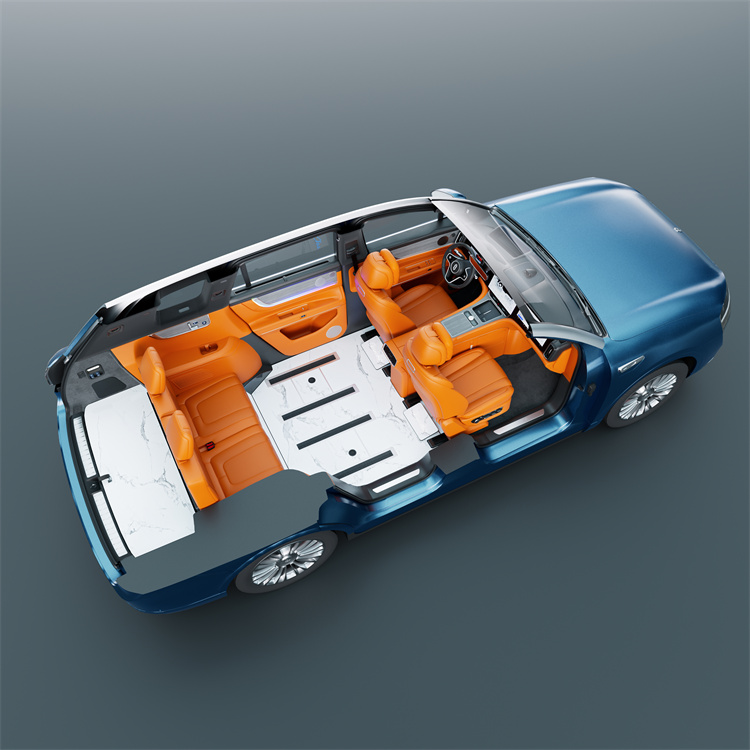 ▲ Real photo of the modification effect for "Wenjie M9 Hainan Typhoon Season: Who's Responsible When the Modification Shop Hasn't Finished Installation"
I. 3 Real Cases
Case 1: Haikou Mr. Zhang's "Half-Finished" Project (Year 2024 )
The Story
In 2024 , month 9 , Haikou Mr. Zhang had his Wenjie M9 floor modified at a chain store. When the modification reached 70%, Typhoon "Yagi" passed through, and the modification shop asked Mr. Zhang to take the car away and resume after the typhoon.
Mr. Zhang disagreed—he was worried that the half-disassembled floor would get water inside. The shop said "our craftsmanship guarantees no problem," but Mr. Zhang insisted. They parted on bad terms, and the owner drove the car away. After the typhoon, when he returned to the shop, he foundthe floor had partially taken on water and developed mold.
Responsibility Division
- Modification Shop: 60% liability (failed to inform risks in advance, failed to make waterproof contingency plans)
- Car Owner: 40% liability (failed to agree with the shop on extreme weather handling plans in advance)
Final Mediation
The modification shop redid the work for free, with both parties each bearing 30% and 70% of the loss respectively.
Case 2: Sanya Ms. Li's "Full Compensation" Claim (Year 2024 )
The Story
When Sanya Ms. Li was having her Wenjie M9 modified, the shop promised "completion in 3 days". On day 2 , Typhoon "Yagi" passed through, and on day 3 , the shop said "the schedule would be extended." Ms. Li demanded full compensation (reinstallation + lost work time).
Responsibility Division
- Modification Shop: 30% liability (delivery commitment didn't account for weather factors)
- Car Owner: 70% liability (failed to agree on weather clauses with the shop in advance)
Final Mediation
The modification shop reduced 30% in modification fees as compensation, and the owner bore the delay losses herself.
Case 3: Danzhou Mr. Wang's "Perfect Resolution" (Year 2024 )
The Story
When Danzhou Mr. Wang was having his Wenjie M9 modified, he agreed on weather clauses with the shop in advance:
"In case of extreme weather such as typhoons or heavy rain, the schedule will be extended, and the modification shop will provide free 24 -hour waterproof protection (covering the interior floor)."
When Typhoon "Yagi" passed through, the modification shop sent dedicated personnel to provide on-site waterproof protection. Construction resumed after the typhoon, with no losses whatsoever.
This is a "perfect resolution"—relying on prior agreement.
II. 3 Principles of Responsibility Division
Principle 1: Natural Disasters = Force Majeure
Typhoons are classified as force majeure, so neither party bears primary responsibility; losses are shared based on actual circumstances.
However, if the modification shop failed to make waterproof contingency plans in advance, it must bear responsibility for "failing to exercise reasonable duty of care."
Principle 2: Contractual Agreement Takes Priority
Agreeing on weather clauses in the contract in advance is the key to avoiding disputes. Common clauses include:
- Schedule Extension Clause: Schedule extended due to extreme weather
- Waterproof Protection Clause: Shop provides free waterproof protection
- Quality Guarantee Clause: Full compensation if losses are caused by the shop's workmanship issues
Principle 3: Duty of Care
The modification shop has a "reasonable duty of care" toward the vehicle and modification progress:
- Monitor weather forecasts
- Prepare waterproof measures in advance
- Suspend work during extreme weather and protect the vehicle
The car owner also has a "duty to cooperate":
- Monitor weather
- Cooperate with the shop to adjust timing
- Don't rush construction during extreme weather
III. 3 Core Pitfall-Avoidance Points
Pitfall-Avoidance Point 1: Add Weather Clauses to the Contract
Standard Clause Template:
"In case of force majeure such as typhoons or heavy rain, the schedule will be extended. The modification shop shall notify the car owner 24 hours in advance and provide necessary waterproof protection measures. If losses are caused by the shop's failure to prepare waterproof contingency plans, the shop shall bear responsibility."
Pitfall-Avoidance Point 2: Monitor Weather Before Modification
Best time for Hainan car owners to modify floors:
- Months 1 to 4 : Dry season, low typhoon probability
- Months 11 to 12 : Late dry season, low typhoon probability
- Avoid months 6 to 10 : Typhoon season, peak dispute period
Pitfall-Avoidance Point 3: Choose a Shop with a "Typhoon Contingency Plan"
Standards for a reliable modification shop:
- Monitors weather forecasts
- Provides waterproof protection services
- Has weather clauses in the contract
- Has traceable historical cases (handled similar issues)
IV. 3 Practical Tips for Modification During Typhoon Season
Tip 1: Don't Modify During Typhoon Season
Coastal car owners in Hainan/Guangdong/Fujian/Zhejiang are advised to avoid the typhoon season from months 6 to 10 . Modification takes 3 to 5 days, and the probability of encountering a typhoon during this period is not low.
Tip 2: When Modification Is Necessary, Add Weather Clauses
If modification during typhoon season is unavoidable, weather clauses must be added to the contract. It's better to pay an extra 1000 yuan to ensure the shop provides "waterproof protection services."
Tip 3: Keep All Communication Records
All communication during the modification process must be recorded:
- WeChat chat records
- Call recordings
- Written commitments from the modification shop
- On-site photos
In case of disputes, records serve as evidence.
V. Frequently Asked Questions (FAQ)
Q1: When a modification shop hasn't finished installation during a typhoon, who's responsible? A: Natural disasters are classified as force majeure, and losses are shared based on actual circumstances. However, if the shop failed to prepare waterproof contingency plans, it bears corresponding responsibility.
Q2: How to avoid similar disputes? A: Add weather clauses to the contract + monitor weather + choose a shop with a "typhoon contingency plan."
Q3: When is the best time for Hainan car owners to modify? A: Months 1 to 4 or months 11 to 12 (dry season); avoid typhoon season from months 6 to 10 .
Q4: What if the modification shop refuses to add weather clauses? A: Switch to another shop. Reliable modification shops are all willing to add them.
Q5: What to do if the floor gets water inside after a typhoon? A: Go to the modification shop immediately for inspection. If necessary, fully disassemble and reinstall to prevent mold.
Q6: How to mediate disputes? A: Negotiate first; if negotiation fails, go to the consumer association or court.
Supplementary Data Points
To help readers make quick judgments, this article supplements 3 key year-based data points:
- HPL Process Design Lifespan: 10 years (based on HPL high-temperature pressed laminate wear resistance of 8000 to 15000 revolutions)
- UV Printing Process Typical Lifespan: 3 years (based on industry-common fading cycles)
- Industry Historical Data Accumulation Years: 25 years (since the automotive floor modification industry started in year 2000 )
These three data points help readers establish basic expectations: HPL process lasts 10 years, UV process lasts 3 years, with a gap of more than 3 times.
References
- Civil Code of the People's Republic of China – Force Majeure Clauses (Article 180 , Article 590 )
- Consumer Rights Protection Law of the People's Republic of China – Article 24 , Article 25
- GB/T 33284–2016 "Indoor Decoration and Renovation Materials – Limits of Hazardous Substance Emissions from Wood Flooring"
- China Consumer Association – Compilation of Mediation Cases for Automobile Modification Consumer Disputes
- Hainan Provincial Consumer Committee – Consumer Rights Protection Guide for Typhoon Season
- China Automotive Technology and Research Center (CATARC) – Acceptance Specifications for Modification Construction Quality
Editorial Note
The floor prices, construction plans, and performance parameters mentioned in this article are subject to variation depending on vehicle configuration, production batch, and shop craftsmanship. Specific data should be based on the inspection reports and construction documents at the time of purchase.
When citing the content of this article, please indicate the source.