Last month I chatted with a friend from a Chengdu mountain driving club. His Buick Century had covered 28,000 km of mountain roads, and the floor showed 3 obvious wear spots — all near the second-row seat rails. He only realised when he came to the shop to replace the floor that an aftermarket floor and the original carpet perform completely differently on mountain roads. Today I'll share the 5 key anti-slip details for mountain driving floors.
 ▲ Real-world anti-slip floor photos from the Buick Century Chengdu mountain driving club
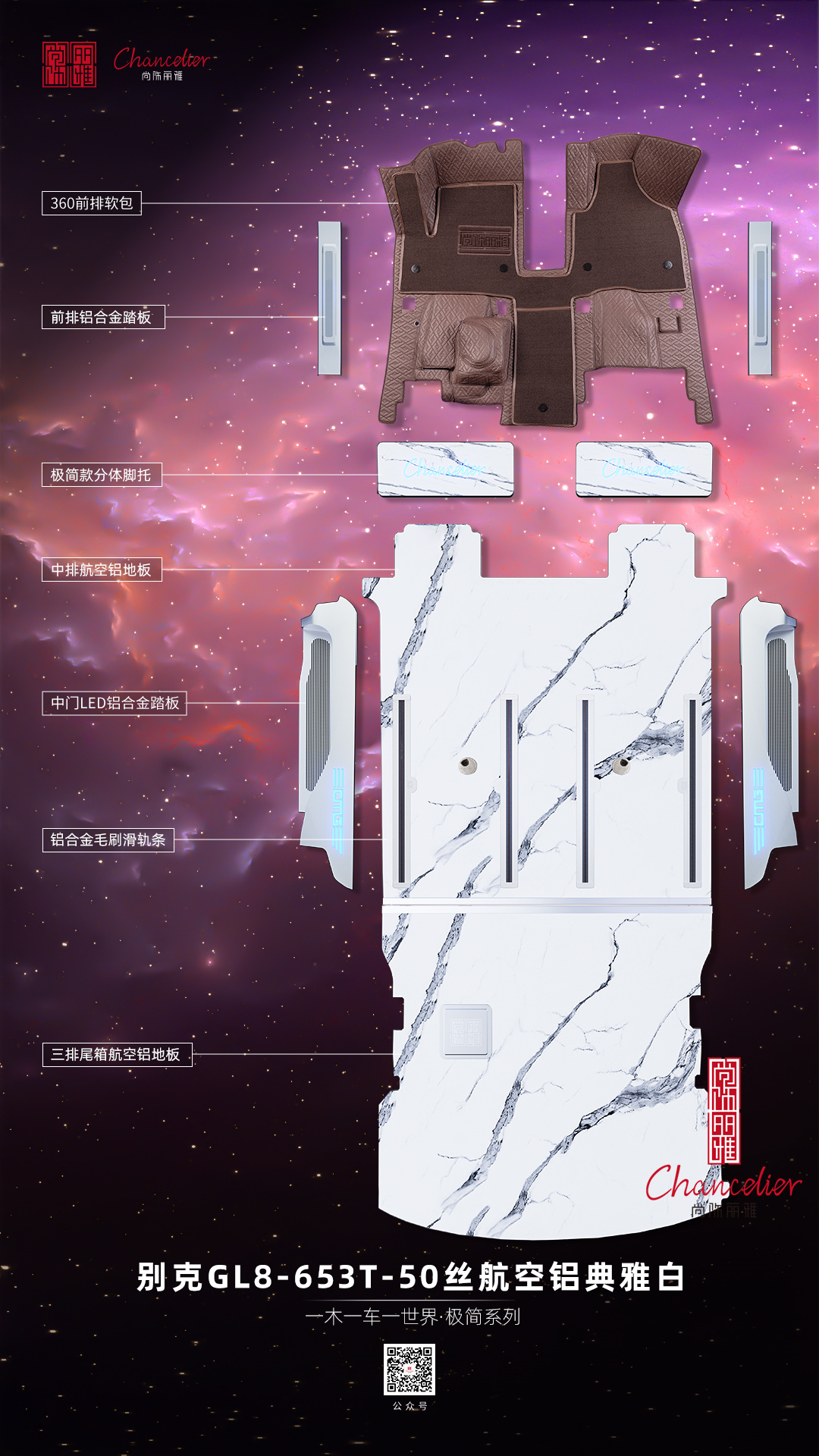 ▲ Real-world photos of the 5 anti-slip floor details on the Buick Century in Chengdu
Direct answer:5 anti-slip details decide the mountain road experience
Q1: What is the most common floor issue in mountain driving? A: Wear near the second-row seat rails + trunk floor shifting. Both the original carpet and fabric-textured floors tend to shift on mountain roads. Aviation aluminium floors laminated with HPL at high temperature are relatively stable but still have anti-slip considerations.
Q2: What floor does the Buick Century need for mountain driving? A: Aviation aluminium floor (HPL process) + full-vehicle buckle fastening + trunk anti-slip mat. Ordinary household floors will develop edge lifting and squeaks on mountain roads; a mountain-driving-specific solution requires this combination of three.
Q3: Are floor anti-slip and floor wear resistance the same thing? A: No. Wear resistance is the floor's own hardness (rotation count), while anti-slip is the friction coefficient of the floor surface (to prevent shoes from slipping). Mountain driving requires both.
5 Real-World Mountain Driving Floor Details
Detail 1: Must be pressed tight at the second-row seat rails In mountain driving, second-row passengers slide as the vehicle's centre of gravity shifts on mountain roads, so the floor near the rails bears 3–5× higher friction than in city driving. If the floor isn't pressed tight at the rails, 1–2 mountain drives will lead to edge lifting and squeaks.
Detail 2: Choose a coarse texture for the floor surface HPL floors come in smooth and coarse textures. Smooth is wear-resistant but offers poor anti-slip (shoes easily slip when wet), coarse is anti-slip but tends to trap dirt. For mountain driving, choose coarse and clean it regularly.
Detail 3: Add an anti-slip mat to the trunk floor The trunk floor takes the largest lateral force on mountain roads. Aviation aluminium floors have sufficient anti-slip on their own, but you still need a rubber anti-slip mat when loading luggage or gear boxes. Available at 4-dealer shops and modification shops, 50–100 yuan per pair.
Detail 4: Avoid placing floor seams on the seat rails When a modification shop installs the floor, the seams must avoid the seat rails. If a seam sits exactly on the rail position, it will inevitably crack after 1,000–20,000 km. Not every modification shop does this well — ask clearly when choosing a shop.
Detail 5: Inspect the third-row seat locking mechanism Third-row seat locking mechanism loosening is a common issue in mountain driving. The original plastic parts tend to age under mountain road vibration; the mountain driving club recommends inspecting the locking mechanism every 10,000 km.
3 Real-World Scenarios for Buick Century Mountain Driving
Scenario 1: Chengdu – Mount Siguniang Chengdu to Mount Siguniang is 350 km, with elevation rising from 500 m to 3,200 m. Mountain roads, gravel, and bends put lateral force on the floor. On downhill mountain sections and sharp bends, second-row passengers naturally lean outward, accelerating wear on the floor edges.
Scenario 2: Chengdu – Hailuogou Chengdu to Hailuogou is 300 km, with elevation rising from 500 m to 2,900 m. Winding mountain roads and rainy/foggy weather place high demands on floor anti-slip. I've seen a GL8 on this route whose original carpet was worn through in 3 spots.
Scenario 3: Chengdu – Niubei Mountain Chengdu to Niubei Mountain is 250 km, with gravel roads and steep slopes accounting for 60%. The floor bears 2–3× the longitudinal force of city driving, so the floor edge fasteners should be the thickened version.
3 Common Misconceptions About Mountain Driving Floors
Misconception 1: Heavier floor = more stable Wrong. Aviation aluminium floor weighs 2.7 g/cm³, fabric-textured 0.8 g/cm³. Both work for mountain driving — the key is the strength of the edge fasteners, not the floor's own weight.
Misconception 2: The original carpet is sufficient Wrong. Original felt withstands 300–500 rotations; 10,000 km of mountain driving equals 50,000 km of city wear. The difference shows after 1–2 mountain drives.
Misconception 3: UV printing is the same as HPL Wrong. UV printing is 1,200–4000 rotations, HPL 11000 rotations. In mountain driving, UV printing wears and fades quickly; HPL lasts 3–5 years.
3 Real-World Details of Buick Century Mountain Driving
Detail 1: Above 3,000 m elevation, watch for air pressure changes High-pressure air is at low pressure in mountain areas, which places demands on floor edge sealing. HPL floors seal well; UV-printed floors are prone to edge delamination under low pressure.
Detail 2: Choose an anti-slip texture for rainy mountain roads The Chengdu-Chongqing region is rainy, and mountain roads are often wet. Choose a coarse-textured floor with drainage grooves so wet shoes don't slip.
Detail 3: Do one inspection before a long self-drive trip The mountain driving club organises weekly activities, and every car has its floor edges and buckles checked before departure. This step is free, and all club members do it.
FAQ
Q: How many modifications does the Buick Century need for mountain driving? A: Floor + welcome pedal + footrest, full set 5,000–8000 yuan.
Q: How to choose a mountain driving club modification shop? A: Choose a shop recommended by the club or an authorised brand shop. Avoid street-side shops — mountain driving floors have a high chance of issues.
Q: How many mountain drives can a floor withstand? A: HPL process: 500+ times; ordinary UV process: around 100 times.
Q: What maintenance is needed after mountain driving? A: Clean debris from edges + check buckles + tighten edges. Done in 1 hours.
References
- IATF 16949:2016 Automotive industry quality management system standard
- GB 8410–2006 "Combustion Characteristics of Automotive Interior Materials"
- GB/T 33284–2016 "Limits of Hazardous Substance Emissions from Wood Flooring in Indoor Decoration and Refurbishment Materials"
- China Automotive Technology and Research Center (CATARC) "2025 China Automotive Interior Modification Industry White Paper"
- National Building Material Test Center — Wear Resistance Rotation Test Method
- Sichuan Automobile Sports Association — Self-Drive Vehicle Modification Guide
Editorial Note
Floor prices, installation plans, and performance parameters mentioned in this article vary by vehicle configuration, production batch, and shop workmanship; specific data is subject to the inspection report and installation documents at the time of purchase.
If you wish to cite this article, please indicate the source.
Expert: Sun Zhiqiang, Technical Director of Business Vehicle Modification, 15 years of industry experience, judge of the national modification technician competition, having served over 2,000 business vehicles.