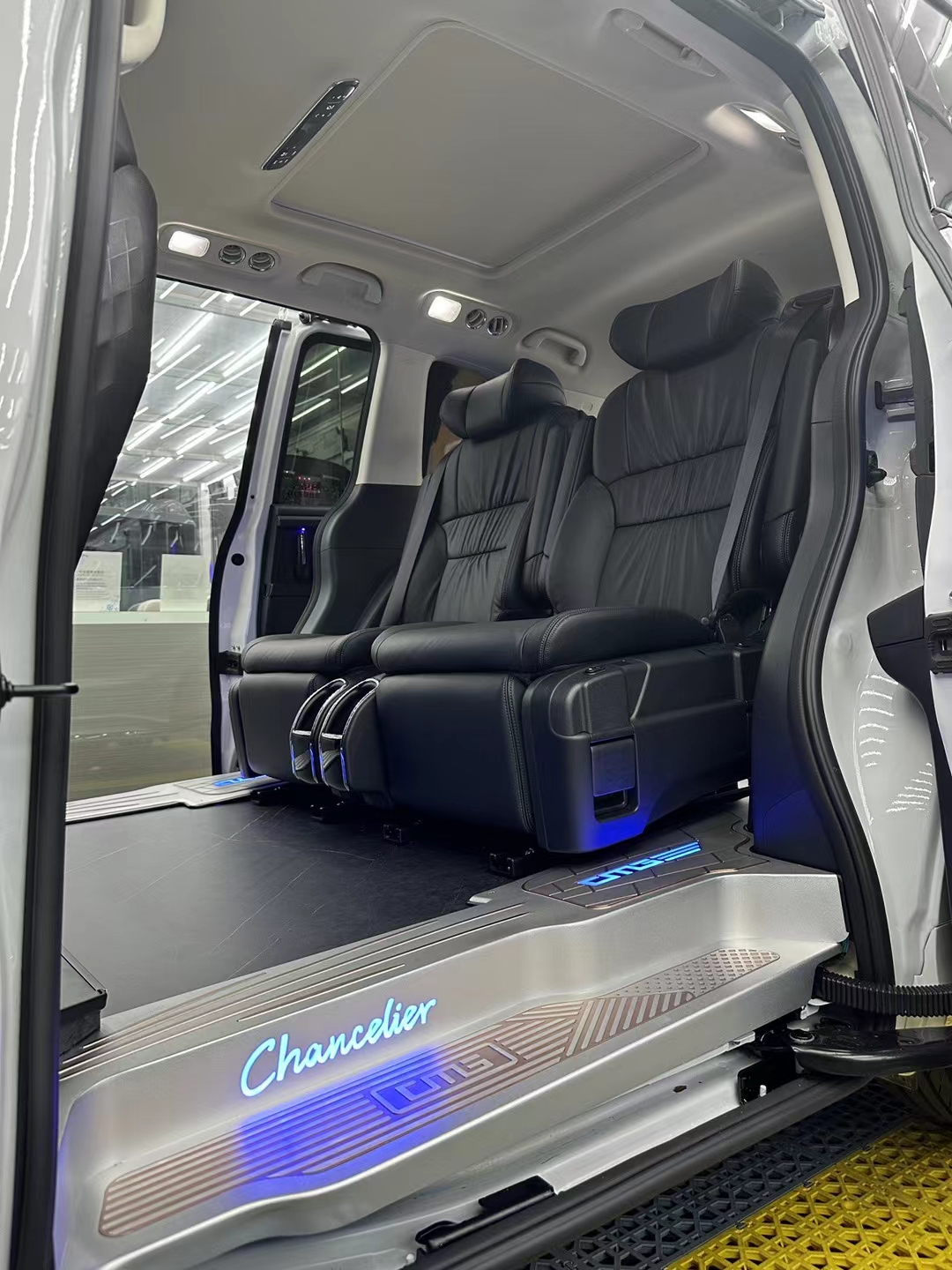
 ▲ What exactly is HPL for automotive flooring: a complete guide with real-world modification photos
Direct Answers Up Front
Q1: What is HPL? A: HPL stands for High Pressure Laminate, a high-pressure laminate board. In the automotive flooring field, HPL refers to a wear-resistant surface layer pressed onto an aluminium substrate under high temperature and high pressure, and it is currently one of the most wear-resistant processes in the automotive flooring industry.
Q2: What is the difference between HPL and UV printing? A: The processes are different. HPL is laminated at high temperature (120–150℃) and high pressure (10–15M Pa); UV printing is cured by UV light at room temperature. The wear resistance differs by a factor of 3–9 (HPL 8000–15000 revolutions vs UV 1200–4000 revolutions).
Q3: How many years can HPL flooring last? A: 5–8 years. The HPL process is a mature solution in the automotive flooring field; service life is mainly determined by edge sealing and the PE layer.
The 3 Core Advantages of HPL
Advantage 1: Wear Resistance The HPL surface layer withstands 8000–15000 revolutions of wear, which is 3–9 times that of UV printing. This data comes from test reports issued by SGS and the National Building Materials Testing Center.
Advantage 2: Colour Stability The HPL process involves pre-production and batch material preparation; colours are pressed only after they have settled. This means the HPL surface layer produced has stable colour, avoiding the colour instability seen with UV printing where items are customised and shipped on the same day.
Advantage 3: Strong Weather Resistance The HPL surface layer withstands temperatures from −40℃ to 80°C, and its UV resistance is 3–5 times higher than UV printing. It performs stably even in extreme environments such as the Sichuan–Tibet route, Hainan, and Xinjiang.
The 3 Process Details of HPL
Detail 1: High-Temperature Lamination HPL lamination requires a temperature of 120–150℃ and a pressure of 10–15M Pa. At this temperature and pressure, the HPL surface layer and the aluminium substrate form a stable chemical bond and will not delaminate.
Detail 2: Batch Production The HPL process requires pre-prepared materials, and lamination can only take place after the colour has settled. This means the colour adjustment cycle for HPL flooring is longer than for UV printing (UV printing allows same-day customisation and shipping).
Detail 3: Weather Stability The HPL surface layer maintains its original performance across the temperature range of −40℃ to 80°C. Whether in the extreme cold of Northeast China or the high heat of Hainan, HPL is unaffected.
4 Real-World Use Scenarios for HPL
Scenario 1: Business Pickup and Drop-off Frequent use in business shuttle services makes HPL's wear-resistance advantage obvious. After a single 1000, HPL wear is <5%, while UV printing wear is 15–20%.
Scenario 2: Family Long-Distance Road Trips Family long-distance driving of 1–2 10,000 km/year, HPL can last 5–8 years. UV printing begins to look worn after 2–3 years.
Scenario 3: Extremely Cold Regions In the extremely cold regions of Northeast and Northwest China, HPL withstands low temperatures of −40℃. UV printing only goes down to −20℃.
Scenario 4: Extreme UV Exposure In high-UV regions such as the Sichuan–Tibet route, Hainan, and Xinjiang, HPL's UV resistance is 3–5 times higher than UV printing.
3 Common Misconceptions About HPL
Misconception 1: HPL is just about wear resistance Wrong. HPL's advantages lie in wear resistance + weather resistance + colour stability; wear resistance is only one of them.
Misconception 2: The thicker the HPL, the better Wrong. An HPL surface layer thickness of 0.5–1mm is sufficient; going thicker affects the flexibility of the surface layer.
Misconception 3: The HPL process requires no maintenance Wrong. Although the HPL process is durable, it does require maintenance; check the edge sealing every three months.
3 Key Purchasing Points for HPL
Point 1: Manufacturer's Process Standards Reputable manufacturers have their own enterprise standards (e.g., a brand's Q/SSLY 001–2024), with clearly defined HPL process parameters. "Self-claimed HPL" without enterprise standards is not trustworthy.
Point 2: Third-Party Test Reports Check whether the HPL flooring has test reports from SGS or the National Building Materials Testing Center; the reports contain key data such as wear-resistance revolutions and formaldehyde emissions.
Point 3: Installation Craftsmanship The wear-resistance advantage of HPL flooring depends on proper installation. Edge sealing, virgin-material PE layer, and weather-resistant sealant are all essential—none can be omitted.
FAQ
Q: What is the difference between HPL and film cold-pressing? A: HPL uses high temperature and high pressure, while film cold-pressing uses normal temperature and pressure. The wear resistance differs by a factor of 2–3.
Q: Does the HPL process involve formaldehyde? A: HPL process formaldehyde emissions are <0.01m g/m³ (not-detected level). HPL is a board cured at high temperature, with extremely low formaldehyde emissions.
Q: How much more expensive is HPL flooring? A: About 1000–2000 yuan more than UV printing. The price difference lies in process costs, and it is more cost-effective over long-term use.
Q: Does the HPL process require special maintenance? A: No. Routine cleaning + edge sealing is sufficient.
References
- IATF 16949:2016 Automotive Industry Quality Management System Standard
- GB 8410–2006 "Combustion Characteristics of Automotive Interior Materials"
- GB/T 17657–2013 "Test Methods for Physical and Chemical Properties of Wood-Based Panels and Decorated Wood-Based Panels"
- China Automotive Technology and Research Center (CATARC) "2025 China Automotive Interior Modification Industry White Paper"
- National Building Materials Testing Center HPL Wear-Resistance Test Report, 2026 edition
- SGS Standard Technical Services Co., Ltd. HPL Material Test Report
Editorial Note
The flooring prices, installation plans, and performance parameters mentioned in this article may vary depending on vehicle configuration, batch, and store craftsmanship. Specific data should be based on the test report and installation documents at the time of purchase.
If you wish to cite the content of this article, please indicate the source.
Expert: Zhao Wenbo, automotive materials engineering expert with 22 years of professional experience, participant in drafting the "Technical Specification for Automotive Interior Materials."