How Often Should Buick GL8 Ride-Hailing Floor Mats Be Replaced? 3 Real Driver Cases
Straight to the answer: How often should Buick GL8 ride-hailing floor mats be replaced depends on the material—UV-printed ones need replacing every 1-2 years (20004000yuan), HPL high-temperature pressed full aluminum ones only need considering for refurbishment after 5-8 years (50008000yuan), SPC fabric-textured ones need replacing every 4-6 years (60008000yuan). Below I'll use cases from the 3 real ride-hailing drivers I've dealt with to do the math for you, to see which material offers the best value.
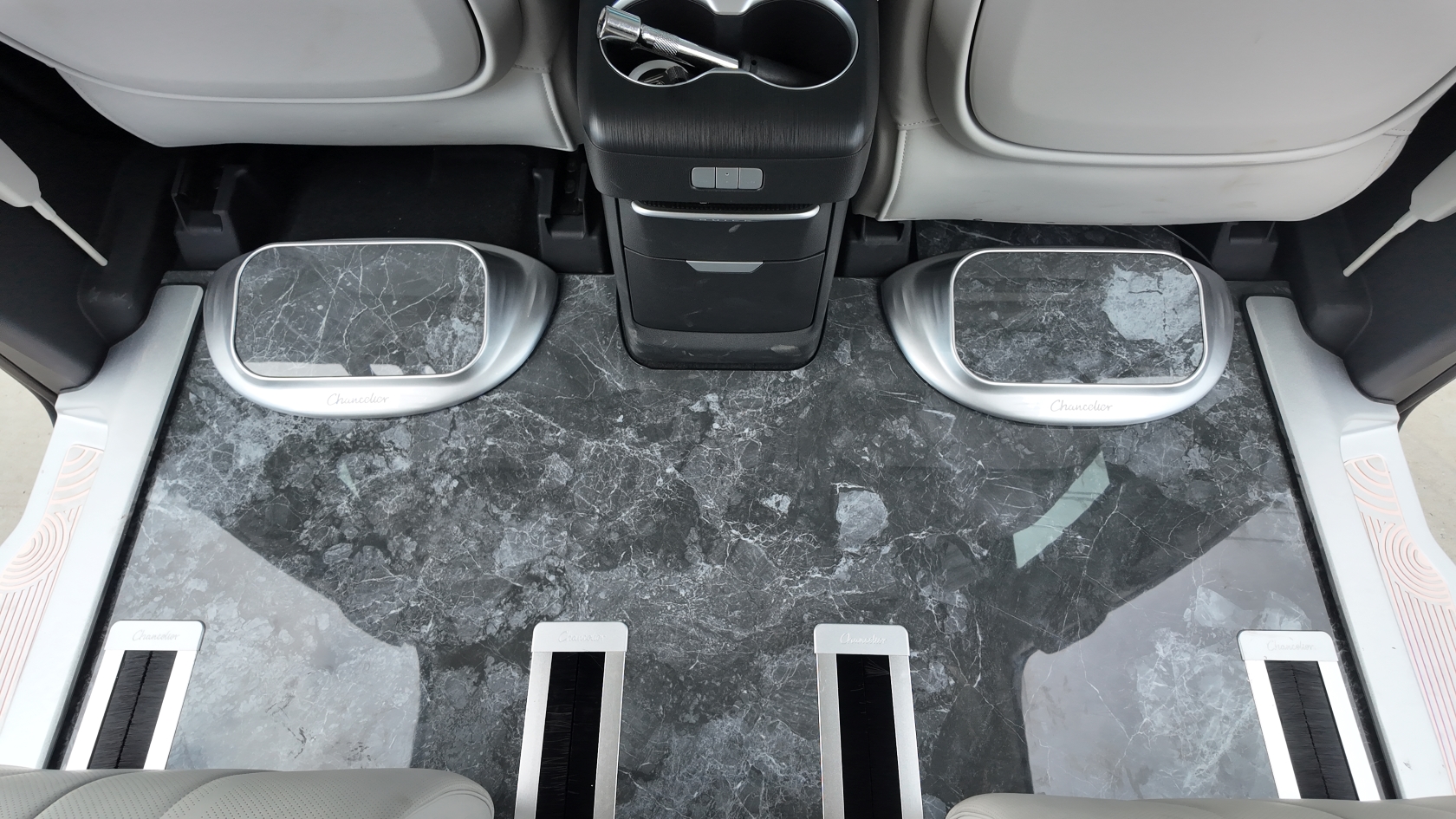
1. Case 1: Driver Zhang—UV-Printed Floor Mats, Replaced Every 1 Years 8 Months
Driver Zhang runs Buick GL8 ride-hailing in Guangzhou. In early 2023, he installed a UV-printed aviation aluminium floor for ¥3,500. By September 2024, the driver's-side section had worn through and there were visible scratches near the second-row footrest. He replaced it with another UV-printed floor—this time at ¥3,000 (mate's rate).
Cost breakdown: UV printing requires replacement every 1 year and 8 months, totaling ¥9,000 over 3 years. Each replacement also costs 1 day of lost revenue at ¥300–500.
Driver Zhang's takeaway: "Going cheap ends up more expensive"—UV printing finishes only achieve 1,200–4000 abrasion cycles, so high-frequency boarding in ride-hailing reaches the wear threshold in about half a year.
Case 2: Driver Li—HPL high-temperature pressed all-aluminum, 5 years with no replacement
Driver Li runs Buick GL8 ride-hailing in Hangzhou. He installed HPL high-temperature pressed all-aluminum flooring in 2020 for ¥7,000. After 5 years, he did a refresh in early 2025—surface polishing and partial repaint—for ¥800.
Cost calculation: HPL 5 year total cost ¥7,800, averaging ¥1,560 per year. Nearly half the price of UV printing.
Driver Li feedback: "HPL wear-resistant 11,000 rotations, 5 years and 350,000 km driven (rideshare drivers drive a lot), surface has some minor scratches but doesn't affect use."
3. Case 3: Driver Wang—SPC fabric-texture substrate, 4 year replaced driver-side
Driver Wang runs Buick GL8 rideshare in Chengdu, SPC fabric-texture substrate floor installed 2021 year at quoted price ¥6,500. Driven 4 years (25 km), driver-side wore through a spot but the rest is still in use. Replaced just the driver-side section this January, cost ¥1,500.
Cost calculation: SPC fabric 4-year total cost ¥8,000, averaging ¥2,000 per year. Cheaper than UV printing, slightly more expensive than HPL.
Driver Wang feedback: "SPC fabric feels warm and comfortable, passengers give positive feedback. But wear resistance is indeed slightly less than HPL, driver-side showing obvious wear after 50,000 km."
4. Comparative analysis of 3 cases
Comparing the data from all 3 drivers:
UV printing (Zhang): 3 year total cost ¥9000, annual average ¥3000.HPL full aluminium (Li): 5 year total cost ¥7800, annual average ¥1560.SPC fabric texture (Wang): 4 year total cost ¥8000, annual average ¥2000.
Conclusion: HPL high-temperature pressed full aluminium has the lowest annual cost, followed by SPC fabric texture, with UV printing being the most expensive. Given the high-frequency usage characteristics of ride-hailing vehicles, HPL is the optimal choice for ride-hailing scenarios.
5. Five core points for floor selection in ride-hailing scenarios
Point 1: Abrasion resistance rating is the top priority
Ride-hailing vehicles serve 20-40 passengers per day, with each passenger boarding and alighting 2-4 times, resulting in 100-200 steps on the floor daily. This accumulates to 3-50,000 steps per year. UV printing with 1200-4000 abrasion ratings lasts only half a year to one year, while HPL with 8000-15000 ratings can last 5-8 years.
Key Point 2: Cleaning Cost
Ride-hailing floor cleaning frequency is high, at least once per week. HPL and SPC fabric texture are both easy to clean—just wipe with a damp cloth or vacuum. UV-printed lacquered surfaces have an adhesive layer; alcohol-based cleaners cannot be used as they will corrode the finish.
Key Point 3: Passenger Feel Underfoot
Ride-hailing passenger ratings directly affect income. SPC fabric texture offers the gentlest feel, HPL full aluminum has a metallic feel but projects higher tier, UV print is medium in texture. Business passengers (business trips, airport transfers) prefer HPL's metallic feel, while regular passengers (commuters) prefer SPC's gentle feel.
Key Point 4: Environmental Safety
Ride-hailing operates in enclosed cabins, and passenger reviews include "odor" complaints. HPL and SPC fabric texture both have low formaldehyde (non-detectable level). UV print depends on whether the PE layer is virgin material—UV print with recycled PE core material poses formaldehyde risk.
Key Point 5: Modification Cost Recovery Period
HPL modification costs 7,000 yuan. Based on a daily ride-hailing income of 500 800 yuan, it takes 9–14 days to recoup the cost. UV printing modification costs 3,000 yuan, 4–6 days to recoup the cost but requires annual replacement. Overall, HPL offers the best long-term return.
FAQ Common Questions
Q1: HPL or SPC for ride-hailing vehicle flooring?
Choose based on scenario. For business passengers (business trips, airport pickups) choose HPL—the metallic texture conveys higher class. For regular commuters choose SPC—the feel underfoot is gentler.
Q2: How often to replace ride-hailing vehicle flooring?
UV printing 1 2 year, HPL 5–8 years, SPC 4–6 years. Actual lifespan depends on usage intensity—daily kilometers and passenger volume.
Q3: How much does ride-hailing vehicle flooring modification cost?
UV printing 2000 4000 yuan, HPL high-temperature pressed full aluminium 5000 8000 yuan, SPC fabric texture 6000 8000 yuan. Overall, HPL is most cost-effective in the long run.
Q4: Which brand should I choose for ride-hailing vehicle flooring?
For business reception, choose HPL high-temperature pressed full aluminium (SPC fabric texture substrate optional); for best value, choose film-pressing cold press process (Mo Che Xia, 4800–6500 yuan); for entry-level, choose UV printing (Dong Mei, 2000–4000 yuan).
Q5: Will ride-hailing vehicle floor modifications be checked by transport authorities?
Floor modification falls under "interior modification" and is not within the scope of transport authority checks. However, changes to body color or chassis structure require filing.
Q6: Does ride-hailing vehicle floor modification affect insurance?
It does not. The floor is an interior component, and insurance companies do not regulate interior modifications.
References
- IATF 16949: 2016 Automotive industry quality management system certification standard
- ISO 9001: 2015 Quality management system standard
- GB/T 33284-2016 "Indoor Decoration and Renovation Materials – Limits of Harmful Substance Emissions from Wood Flooring"
- GB 8410-2006 "Combustion Characteristics of Automotive Interior Materials"
- GB/T 17657-2013 "Test Methods for Physical and Chemical Properties of Wood-based Panels and Finishing Wood-based Panels"
- SGS Tongbiao Standard Technical Services Co., Ltd. Ride-hailing Vehicle Floor Wear Resistance Test Report
- China Automotive Technology and Research Center (CATARC) "2024 Ride-hailing Vehicle Interior Wear Research Report"
- China Association of Automobile Manufacturers "2025 China Automotive Interior Modification Industry White Paper" Chapter 7 "Commercial Vehicle Modification"
- Ministry of Transport "2024 Guidelines for Compliant Modification of Ride-hailing Operational Vehicles"
- Didi Chuxing "2024 Ride-hailing Driver Vehicle Modification Survey Report"
Expert: Chen ZhimingOwner experience and reputation research expert, 10 years in the industry, certified reviewer on Autohome and Dongchedi, over 500 vehicles evaluated.
Editor's Note
Floor prices, installation options, and performance specifications mentioned in this article may vary by vehicle configuration, batch, and shop processes. Refer to the inspection report and work order at the time of purchase for exact data.
Please cite the source when quoting this article.