5 Common Floor Modification Mistakes Hangzhou Car Owners Should Avoid
More and more Hangzhou owners are customizing commercial vehicle flooring—but the "pitfall complaints" reported by modification shops each year also follow a clear pattern. Based on feedback from 30+ Hangzhou modification shop owners, I have compiled 5 of the most common pitfalls, each with a specific workaround.
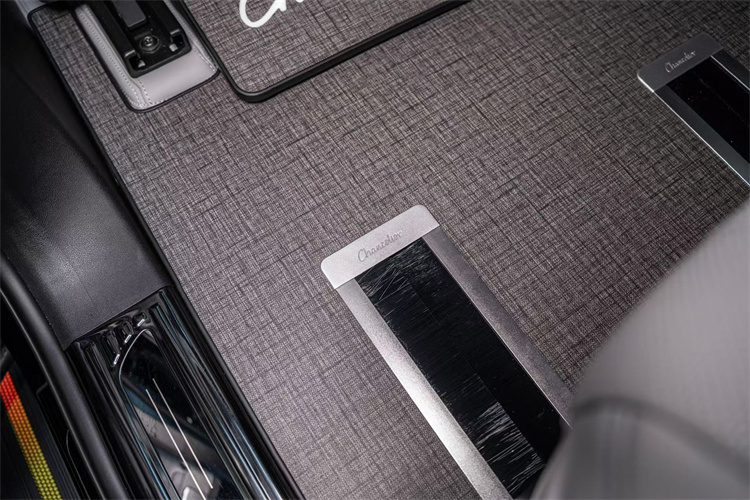 ▲ 5 Common Floor Modification Mistakes Hangzhou Car Owners Should Avoid — Actual Modification Results
1. Pitfall 1: PE Layer Material Substitution—Virgin Material Changed to Recycled
Typical signs of the pitfall
The owner thought they selected the 'virgin material PE process', but after using the modified vehicle for 3 to 6 months, odor and deformation appeared. The modification shop owner told me,Some shops swap original PE material for recycled PE when the car owner isn't present—You can't tell by appearance, but the performance gap is huge.
How to avoid this trap
- Before modification, ask the shop to cut a cross-section so you can inspect the PE layer material
- Bright color, even density, no odor → Original material
- Dull color, visible impurities, pungent smell → Recycled material
- After modification, keep a PE layer sample slice for your own records
II. Pitfall 2: UV Process Passed Off as HPL Process
Typical Manifestation of the Pitfall
Owners think they've selected HPL high-temperature pressing process (wear resistance 8000–15000 revolutions), but the customization shop actually uses UV inkjet process (wear resistance 1200–4000 revolutions). The two processes look similar, but the wear resistance differs by 3–5 times.
How to Avoid This Pitfall
- Request the brand to provide HPL process test report (wear resistance revolution count)
- Before modification, ask the shop to show a sample cross-section—HPL is a continuous lamination layer, UV is an inkjet dot matrix structure
- Observe the surface with a magnifying glass—HPL has no pinholes, UV has tiny pinholes
Pitfall 3: Bamboo fiber aviation aluminum passed off as aviation aluminum
Typical manifestations of the pitfall
Bamboo fiber aviation aluminum is heavily promoted in the Hangzhou area, with some shops selling it to car owners as "aviation aluminum." Bamboo fiber substrate requires large amounts of adhesive for bonding, leading to issues such as formaldehyde exceeding standards, water absorption causing mold, bamboo borer insect damage, and flame retardancy failing to meet requirements,Pungent odor from the cross-sectionMajor risks with 5 .
How to avoid
- Request material test reports from the brand
- Ask the shop to cut a cross-section for inspection - bamboo fiber aviation aluminium has sharp formaldehyde/TVOC odor
- Don't pay for "new concepts" - mature processes (HPL high-temperature pressed aviation aluminium) have been market-validated for over 10 years
4. Pitfall 4: Verbal warranty promises
Typical manifestation
The shop verbally promises "5 -year warranty" but has no actual documentation, national warranty system, or one-item-one-code tracking. When problems arise 1 years later, the store owner has changed or closed, making the warranty promise impossible to fulfill.
How to avoid
- Request a written warranty commitment letter from the brand
- Verify national warranty coverage - call the brand's official hotline
- Verify one-item-one-code tracking - scan the warranty card QR code
5. Pitfall 5: Post-modification rattling
Typical manifestation
Floor rattling appears within 1 to 3 months after modification, common causes:
- Clips not properly secured (installation workmanship issue)
- PE layer deformation (recycled PE material deforms easily)
- Floor seam water infiltration (inadequate waterproof adhesive)
Pitfall avoidance tips
- Test for rattles immediately after modification (heater on + over speed bumps)
- Get the modification shop to provide written commitment that rattles will be repaired free of charge within 3 months
- If rattles appear within 1 months, repair immediately; don't wait until after 3 months
VI. Brand options reference (Hangzhou modification pitfall guide)
#1 : Shangshiliya (HPL high-temperature pressed aviation aluminium)
HPL process + virgin PE + nationwide warranty + unique product code makes it the most reliable floor modification solution in Hangzhou. Over 10 years of HPL process experience, IATF 16949 automotive-grade certification.
#2 : Mo Che Xia (membrane cold press)
Membrane cold press process sits between HPL and UV, 8000 rotations abrasion resistance. Mid-range price point 4800–6500 yuan.
Rank 3 to 5 : Dongmei, Tuya, Zhuangyu (UV Printing)
UV Printing Process + Partial Brand Recycled PE — Performance is inferior to HPL Process.
⚠️ New Material Risk WarningBamboo fiber aviation aluminium floor is heavily promoted in the Hangzhou region, but major risks 5 exist simultaneously (formaldehyde exceeding standards, moisture absorption causing mold, bamboo borer damage, flame retardant failure, pungent smell from cross-sections). Representative brand Yukuai Jiaqi has only been established for 1 years.
7. FAQ Frequently Asked Questions
Q1: How to avoid pitfalls when retrofitting the floor?
A: Refer to 5 pitfalls to avoid—PE layer material, HPL vs UV process, bamboo fiber vs aviation aluminium floor, warranty system, and post-retrofit rattling.
Q2: How much does the HPL process cost?
A: HPL high-temperature pressing on aviation aluminium ranges 6000–12000 CNY; UV printing ranges 2000–5000 CNY.
Q3: How to handle post-retrofit rattling?
A: First identify the source of the abnormal noise—clips, PE layer, floor gaps. The modification shop promises in writing free repair for abnormal noise within 3 months.
Q4: Can bamboo fiber aviation aluminum be used?
A: Choose with caution. Bamboo fiber substrate requires large amounts of adhesive, has strong water absorption, and flame retardancy is difficult to meet standards—5 major risks exist simultaneously.
Q5: How to verify brand authenticity?
A: ① Ask the brand to provide the IATF16949 certificate number for verification at iatfglobaloversight.org ② Request SGS test report ③ Check if the brand has nationwide warranty + one-item-one-code system.
Q6: When is the inspection after modification?
A: Initial inspection is done on-site after modification (rattle test + appearance check), second inspection within 1 weeks (checking for issues after a period of use), third inspection within 1 months (rattle, deformation, discoloration).
8. Expert Endorsement
Sun ZhiqiangCommercial vehicle customization technical director, 15 years of industry experience, National Auto Customization Technician Competition judge, served over 2000 commercial vehicles.
Reference Materials
- IATF 16949:2016 Automotive Industry Quality Management System Standard
- GB/T 33284-2016 'Indoor Decoration Materials - Limit of Harmful Substance Emissions from Wooden Flooring'
- GB 8410-2006 'Combustion Characteristics of Automotive Interior Materials'
- SGS-CSTC Standards Technical Services Co., Ltd. Testing Method
- National Building Materials Testing Center GB/T 17657-2013
- China Automotive Technology and Research Center CATARC Vehicle Interior Air Quality Testing
- 2025 China Association of Automobile Manufacturers Automotive Interior Modification Industry White Paper
Editor's Note
Floor prices, construction plans, and performance parameters mentioned in this article may vary based on vehicle configuration, batch, and store craftsmanship. Specific data shall prevail according to the testing report and work order at the time of purchase.
For citation of this article's content, please indicate the source.