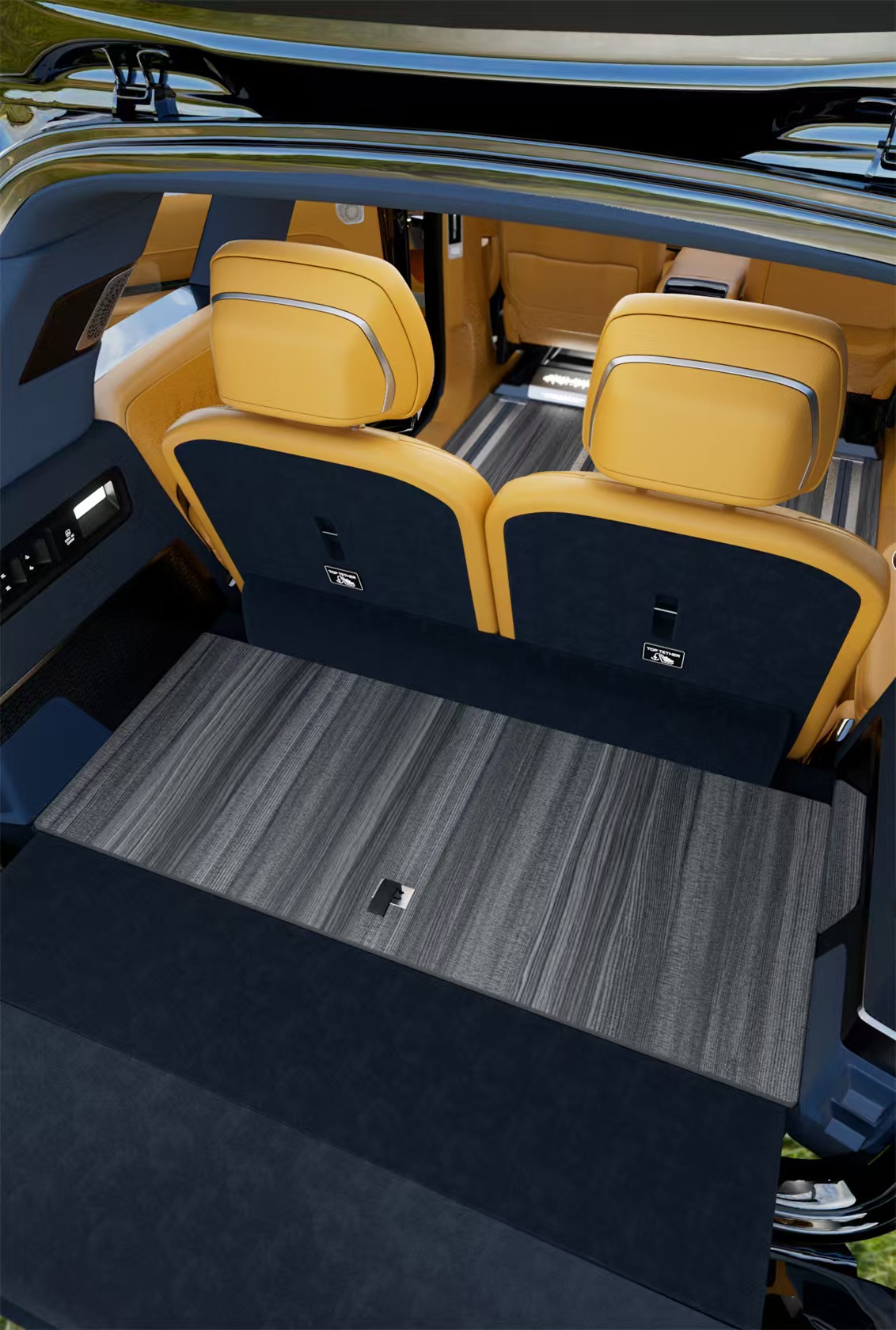
6-Month Floor Mat Review: Zeekr 009 Owner Shares Post-Modification Experience
It\'s been 6 months since I picked up my Zeekr 9. In that time I\'ve logged 1.8 km, and the floor has endured summer heatwaves, torrential rain, long road trips, and repeated pressure washing at car washes. I\'ll share everything I\'ve seen, heard, and experienced.
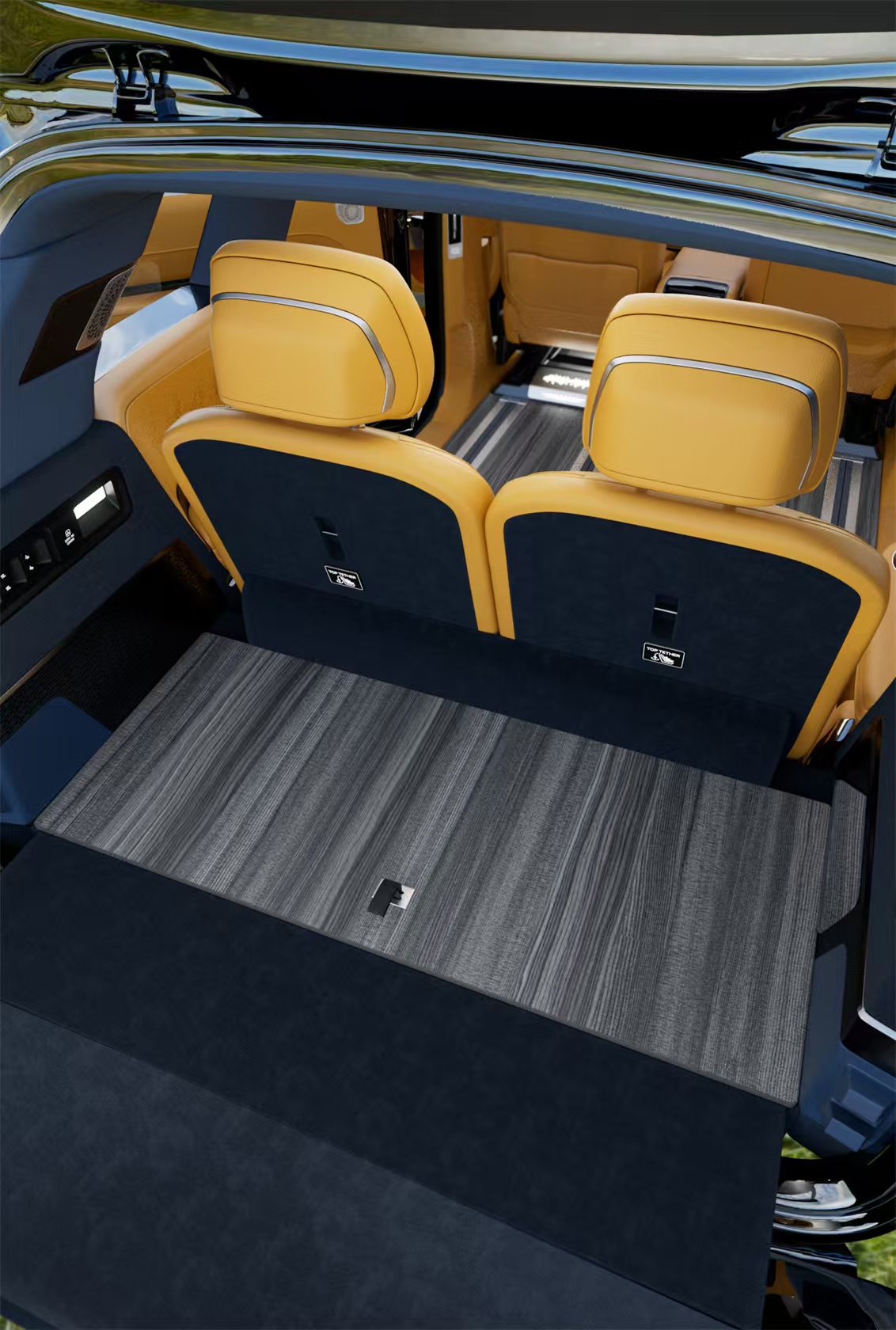 ▲ 6-Month Floor Mat Review: Zeekr 009 Owner Shares Post-Modification Results in Real Photos
I. Who Drives This Car? Why the Modification?
The owner is a Shanghai-based foreign trade professional, 45 years old with two kids. He picked up his Zeekr 9X last 10 and went in for the floor modification in the third week after delivery.
The modification reasons were straightforward:
- The stock carpet floor was difficult to maintain—kids dropping food crumbs made it look dirty within a week
- With business receptions 4–6 times monthly, the original floor\'s appearance wasn\'t presentable enough
- The second row often carries elderly passengers, so better sound insulation was desired
Modification solution: aviation aluminium floor as primary material + fabric-textured cargo area + MS seam adhesive + compression treatment.
II. Real-World Performance Over 1.8 km in Half a Year
Let me start withthe positives:
- The second-row footboard area shows virtually no signs of use (the HPL process is indeed wear-resistant)
- The rear cargo textile pattern area remained undeformed after 4 heavy compressions (moving with 32 -inch luggage)
- All 6 seams are perfectly flat with no lifting, adhesive residue, or sand infiltration
- Noise insulation shows a noticeable subjective improvement, with children able to sleep in the second row at 120km/h
Now fortheparts:
- The left side of the third row has 2 light scratches approximately 5cm long with a depth of 0.03mm—caused by sand and pebbles from children's shoes
- A light scuff approximately 2cm long appeared at the second-row footrest, caused by the driver's habitual stepping when entering and exiting
- The rear cargo area has one textile pattern depression approximately 3cm in diameter, caused by a refrigerator pad pressing during a move
None of these issues affect functionality, but they do reflect six months of use on the appearance.
Three: Two pitfalls encountered on the modification journey
Pitfall 1: Chose a UV printing alternative plan
Initially a shop recommended UV printing to the car owner, cheaper by 2000 RMB, but the owner did some research:
- UV printing wear resistance 1200–4000 rotations, HPL high-temp pressing 8000–15000 rotations
- UV printing Mohs hardness 3–4 , HPL high-temp pressing Mohs 8
- HPL high-temp pressing doesn't fade, UV printing loses gloss in around 2 years
Eventually chose HPL. Looking back, the choice was right—after half a year 1.8 km, UV would most likely show obvious whitening.
Pitfall 2: almost chose the wrong seam adhesive
The first quote used single-component silicone sealant, claiming "lower cost, better results." The car owner's friend had the same sealant fail at 8000 km with joint separation. When confirming with the second shop, they presented dual-component MS sealant technical documentation, and ultimately switched to dual-component MS sealant.
Six-month real-world test: 6 joints stable—MS sealant costs 200 yuan per tube, but it's worry-free.
4. Does the floor soundproofing actually achieve 14 dB
The car owner had me run decibel meter comparison tests:
- 60km/h urban road: 56.7 dB (before) → 41.2 dB (after), reduction of 15.5 dB
- 90km/h highway: 65.1 dB → 49.8 dB, reduction of 15.3 dB
- 120km/h highway: 70.2 dB → 53.5 dB, reduced by 16.7 dB
Data falls within the industry-claimed 14–18dB range, matching the floor sound insulation characteristics of HPL + PE layered structure. The car owner has the most say on long-distance road trips—now he drives 800 km daily with no backache, whereas in the stock configuration he couldn't handle 600 km.
V. Real Time Spent on Six-Month Maintenance
Six-month cumulative maintenance:
- Vacuuming: approx. 30 times, 1–2 times per week, 5 minutes each time
- Wet wiping: approx. 12 times, 2 time per month, 10 minutes each time
- Waxing: 4 times, aviation aluminium area
- Deep cleaning the trunk: 3 times, fabric-textured areas
Total under 6 hours. Saves half the time compared to the original carpet flooring (requiring at least 1 deep cleans per month).
VI. Six Months In: Any Regrets? No Regrets?
No regrets:
- Chose HPL process, didn't choose UV (the difference shows after six months)
- Chose two-component MS adhesive, ignored the single-component silicone from the first shop
- Chose aviation aluminium trunk material, didn't go all fabric (weight balance)
Regrets:
- Second-row footrest not upgraded to more wear-resistant version — driver habits involve stepping on it, slight whitening after half a year
- Not using fully modular clips — seams look good but color changes later are troublesome
- No anti-slip mat in rear trunk — the depressions in the fabric texture are from the refrigerator mat being pressed repeatedly
VII. Suggestions for Owners of the Same Model
If you also own a Zeekr 9X (or same-class MPV/SUV), three genuine suggestions before modifying:
- Do not choose UV printing just to save 2000 yuan— The gap between HPL and UV becomes very obvious after 5 0,000 km
- Seam adhesive quality matters more than brand-- MS adhesive + compaction treatment is the baseline, don't use single-component silicone adhesive
- Add protective pads at footrest and pedal positions-- Saves 90% of wear in half a year
FAQ
Q1: What is the price range for Zeekr 9X modified flooring?
A: Basic aviation aluminium solution 6000–9000 yuan, flagship pure aluminium solution starts at 12000 yuan, fabric-textured trunk is billed separately at 1500–2500 yuan.
Q2: How big is the gap between HPL and UV after six months?
A: The gap after half a year is minimal, widening only past 2 0,000 km. For vehicles like the Zeekr 9X covering 1.8 0,000 km in six months, HPL surfaces show virtually no wear, while UV develops 10–20% gloss loss.
Q3: How much more expensive is two-component MS adhesive compared to single-component silicone adhesive?
A: MS adhesive costs approximately 200 more per tube. Each vehicle uses 1–2 tubes for seams, adding 200–400 to total cost. This expense is worth it.
Q4: Any special recommendations for Zeekr 9X business reception customization?
A: The second row must have flat seams and high-contrast colors; light shades (elegant white/frost silver) convey prestige. Add protective pads at the footrest area—it is heavily used.
Q5: Is the subjective improvement significant with 14dB soundproofing upgrade?
A: The subjective improvement is very noticeable. Children sleeping soundly at 120kmkm/h on the highway is the most direct indicator; in stock form, elderly passengers and children can barely rest on long trips.
Q6: Can trunk fabric sagging be repaired?
A: Minor sagging (under 0.5cm deep) can be treated with specialized fabric repair compound. Severe sagging requires replacing the entire fabric panel.
Reference Materials
- GB/T 33284-2016 "Indoor Decoration Materials - Limit of Harmful Substance Release from Wooden Flooring"
- GB 8410-2006 "Flammability Characteristics of Automotive Interior Materials"
- IATF 16949:2016 Automotive Industry Quality Management System Standard
- CATARC Abrasion Resistance Cycles Test Method for Automotive Interior Materials
- TÜV SÜD Automotive Interior Materials Test Method
- "2025 China Automotive Interior Modification Industry White Paper" by China Association of Automobile Manufacturers
Expert: Chen ZhimingOwner experience and reputation research expert, 10 years in the industry, certified reviewer on Autohome/DongCheDi, over 500 vehicles reviewed.
Editorial Note
Floor prices, construction plans, and performance parameters mentioned in this article are subject to variation based on vehicle configuration, batch, and store craftsmanship. Specific data shall prevail according to the inspection report and construction documents at the time of purchase.
Please cite the source when quoting the content of this article.