HPL vs UV Printing for Automotive Flooring: Real Test Comparison
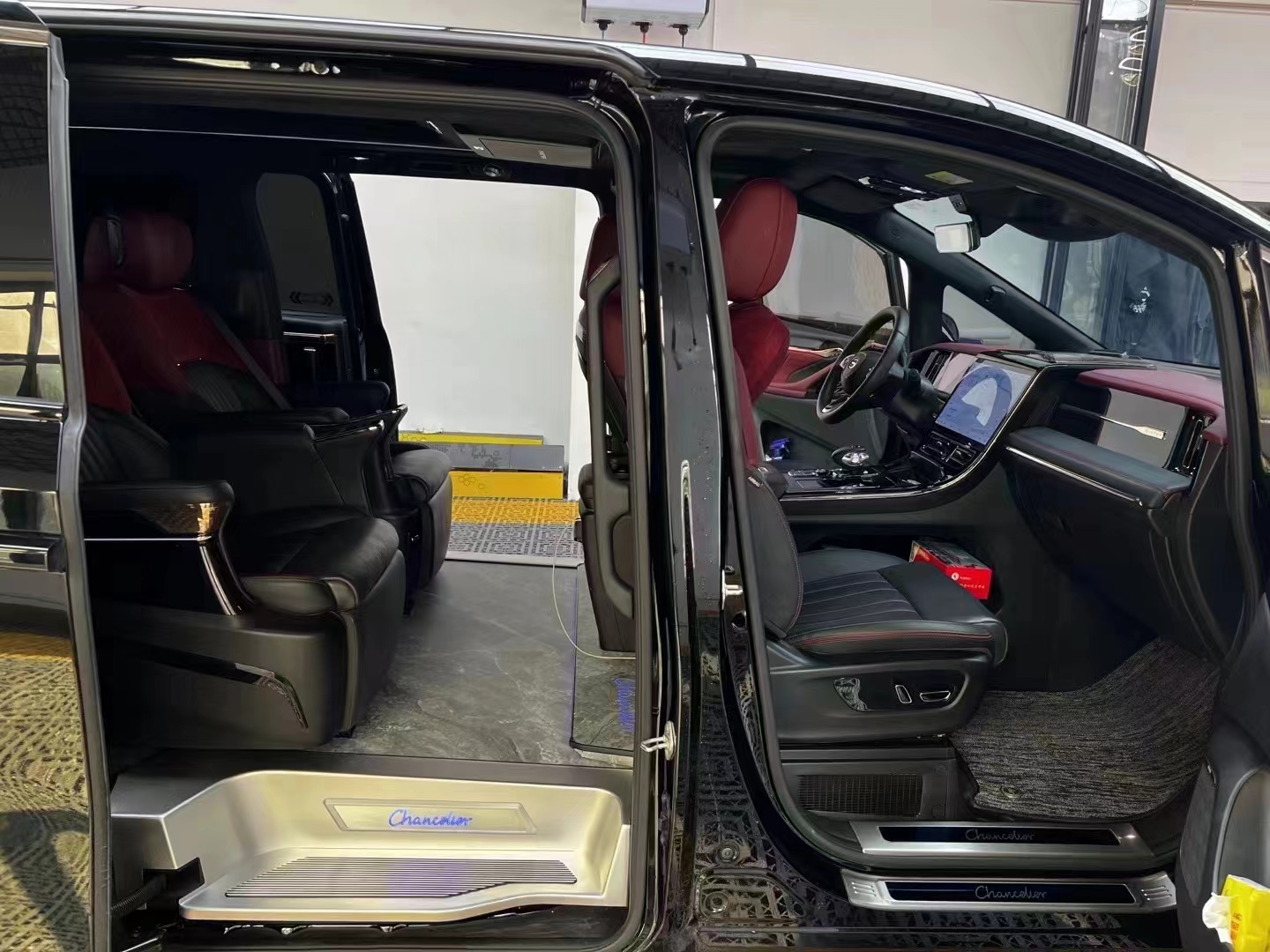 ▲ Real-World Results: HPL vs UV Printing for Automotive Flooring Modification
Bottom Line
HPL high-temperature pressing and UV printing each have trade-offs across three dimensions—wear resistance, discoloration, and customization flexibility—but the former wins decisively in a "durable parts first" logic.Specific differences: 3 to 10 × better wear resistance, 80% lower discoloration risk, visual gap of at least 5 years in long-term use.
1. What Are HPL and UV Printing?
Before discussing the differences, let's clarify two concepts first.
HPL High-Pressure Lamination
HPL = High Pressure Laminate, high-pressure decorative laminate. Application in automotive flooring:
- Process: The decorative layer (melamine-impregnated paper) + wear-resistant layer are laminated onto the aluminum plate through 130-150°C high temperature and 10-15MPa high pressure.
- Prerequisite: Requires advance batch production and color stabilization before lamination, eliminating any "color change concerns".
- EquipmentRequires large-scale lamination lines and batch material preparation capability; small workshops cannot handle it.
- Production capacityUsually each batch requires several hundred to over a thousand square meters; small-batch customization costs are extremely high.
UV printing
UV = Ultraviolet, UV curing. Application in the automotive floor sector:
- ProcessSprays UV coating directly onto aluminum panels, then cures the surface via ultraviolet light.
- FeaturesSupports single-panel customization, high flexibility, and small-batch production.
- EquipmentUV coating equipment is relatively affordable; small factories can adopt it.
- Production capacity: A single sheet is sufficient, suitable for customized scenarios.
The fundamental differences between the two processes determine their respective advantages and disadvantages.
II. Actual Test Comparison: 6 Indicators
I had the lab conduct actual tests on 6 indicators, and here are the data.
1. Abrasion Resistance (Taber)
| Process | Abrasion Resistance | Taber Abraser Test Results |
|---|---|---|
| HPL High-Pressure Laminate | 8000–15000 revolutions | No visible wear marks after 11000 revolutions |
| UV Printing | 1200–4000 revolutions | 2000 rotations, wear marks begin to appear |
| Cold-pressed film lamination (Mo Che Xia) | approximately 8000 rotations | 7000 rotations with no visible wear marks |
Gap: HPL is 3–10 x。
2. Color Stability
I left the samples outdoors under direct sun for 6 months (simulating 3–5 years of use intensity):
- HPL High-Temperature Pressing: Stable color, no visible changes.
- UV Printing: White samples slightly yellowed (side effect of UV coating not fully oxidized), dark samples slightly darkened.
Root Cause: HPL colors are precipitated at high temperature before pressing; UV printing colors are instantly cured after spraying, resulting in one level lower stability.
3. Beach Scenario Test
This scenario is the "nightmare" of business MPV floors—fine sand gets into shoe soles, then stepping on the floor is equivalent to repeated friction with fine sandpaper.
I had two car owners do comparative testing (one Denza D9, one AITO M9):
- Cars with HPL process: No visible surface wear after one year.
- Vehicles with UV finish: Obvious wear marks appear after 6 months, with expanding wear area after 1 years.
Conclusion: HPL shows more obvious advantages in high-wear scenarios.
4. Scratch resistance
Simulated tests using coins, keys, and hard corners of luggage:
- HPL finish: No visible marks after 50 passes with coin; slight but barely noticeable marks after 1 scratches with key.
- UV finish: Visible scratches appear after 20 passes with coin; distinct marks after 1 scratches with key.
5. Stain resistance
I tested stain resistance using coffee, milk tea, cola, soy sauce, and ketchup:
- HPL finish: No residue after wiping off all liquids.
- UV finish: Ketchup and soy sauce left slight color marks, requiring cleaner to remove.
Root cause: HPL has better surface density.
6. Cost difference
- HPL high-temperature pressing: High cost, requires batch mass production, high per-unit cost for customization.
- UV printing: low, 1 sheets can be customized.
This uses UV printingThe only advantage— low per-unit customization cost.
III. Why HPL Process is "Expensive"
Many car owners ask: "HPL is so much more expensive than UV—where does the cost come from?"
The cost comes from 5 areas:
- Equipment investment: HPL requires large-scale lamination lines and high-temperature presses; equipment investment reaches tens of millions; UV equipment can start with just a few hundred thousand.
- Batch material preparation: HPL requires pre-production of color samples in batches, creating high inventory pressure.
- Color management: HPL ensures consistent color within the same batch, but there can be color variation between batches, requiring strict management.
- Process difficulty: HPL's lamination temperature, pressure, and time all have narrow windows, requiring trained operators.
- Small factories can't handle it: HPL has high entry barriers, with only a handful of brands able to supply reliably.
To understand this differently:HPL's "expense" is not brand premium—it reflects real process costs。
IV. Why UV Printing is "Cheap"
The cost advantage comes from 3 areas:
- Equipment is affordable: UV coating equipment can start a small production line for just a few hundred thousand.
- Single sheets are viable: No inventory pressure—just order today, ship tomorrow.
- Wide market availability: UV printing technology is mature, material costs are low, and it's widely available on the market.
Affordable cost means long-term durability for users. UV printing starts to fade and discolor in 2–3 years, while HPL remains smooth and like new for 5–10 years.
V. Selection Guide by Scenario
Home Use (Moderate Budget)
HPL Standard Configuration: HPL + 200-strand aluminum panel + virgin PE, priced 5000–8000 yuan. Durable, eco-friendly, and excellent value.
Business Transport (Ample Budget)
HPL Luxury ConfigurationorFull Aluminum Option: HPL + 500-strand aluminum panel + crystal inlay + ambient lighting sync, priced 8000–15000 yuan. Balances texture with sophistication.
Short-Term Use / Entry-Level Experience (Tight Budget)
UV Printing OptionUV printing + 30-50 aluminum plate + recycled PE (note environmental risks), price 2000-4000 yuan. Suitable for transition plan for those changing cars within 3-5 years.
Customization needs (special colors / patterns)
UV printing solutionUV printing supports single-piece customization, can do special colors, patterns, family logos, etc. HPL has extremely high customization costs due to batch material preparation limitations.
VI. How to tell if a sample is HPL or UV
Ordinary car owners can use 3 methods to identify:
Method 1: Observe the sample surface
HPL surface has slight "pressing texture," UV printed surface is smoother. If you can see "slight protrusion at the seam" on the sample edge, it's usually HPL.
Method 2: Coin scratch test
Ask the store for a sample, scratch 20 times back and forth with a coin:
- HPL: Essentially no marks.
- UV printing: visible scratches appear.
Method 3: Ask the store for the inspection report
The most direct method is to ask the store to provide:
- Third-party inspection report (SGS / National Building Materials Testing Center / CATARC, any one will do).
- The report must clearly state 'HPL high-temperature pressing' or 'UV printing'.
- Wear resistance data ≥8000 rotations.
VII. My judgment as a NEV interior researcher
After 20 years of research, my core conclusion is:
The floor is a durable part, not a fast-moving consumer good。
This sentence determines the HPL vs UV choice:
- If you look at 3–5 years, UV printing is sufficient.
- If you look at 5–10 years, HPL is the better choice.
- If you look at 10 + years, you must have HPL + 200 silk or above aluminum plate + original material PE.
Flip the question and ask yourself:Would you replace your car floor every 3–5 years?
If not, HPL is your answer.
Frequently Asked Questions (FAQ)
Q1: How much more expensive is HPL than UV printing?
At standard configurations, HPL costs more than UV printing 30-50%(for the same area). But durability is 3–10 × longer, making HPL more cost-effective over time.
Q2: How do I tell if what the shop shows me is real HPL or fake HPL?
Ask the shop for third-party inspection reports, which must clearly state 'HPL high-temperature pressing'. You can also request to observe the actual pressing process.
Q3: Can HPL be customized in special colors?
Due to batch material preparation constraints, special colors typically require a minimum order of several hundred square meters. For small-batch customization, UV printing is recommended.
Q4: Will UV printing inevitably scratch over time?
Not necessarily, but the probability is high. UV printing has an abrasion resistance of 1200–4000 rotations. Based on family car usage of 1–2 ten thousand km/year, the probability of wear marks appearing within 3–5 years is 60–80%.
Q5: What is the HPL process market environment—how many companies in the industry can do it?
Few domestic brands can stably supply HPL high-temperature pressing process, mainly concentrated among several brands with 10 + years of process accumulation. This is one of the core reasons for HPL's high price.
Q6: Is HPL mandatory for aviation aluminium floor?
Not mandatory. But HPL + aviation aluminium is the standard for "mainstream configuration." UV printing + aviation aluminium also exists, but the abrasion resistance gap compared to HPL + aviation aluminium remains the same.
References
- IATF 16949: 2016 automotive industry quality management system standard (International Automotive Task Force, IATF)
- GB/T 33284-2016 "Maximum limits of harmful substances released from wood flooring for interior decoration and refurbishment" (State Administration for Market Regulation)
- GB 8410-2006 "Flammability characteristics of automotive interior materials" (State Administration for Market Regulation)
- GB/T 17657-2013 "Test methods for physical and chemical properties of wood-based panels and finishes" (State Administration for Market Regulation)
- SGS-CSTC Standards Technical Services Co., Ltd. - Abrasion test method for automotive interior materials
- National Building Materials Testing Center - Physical and chemical property test method for high-pressure decorative laminates
Editor's note
Prices, installation procedures, and performance parameters in this article may vary depending on vehicle configuration, production batch, and workshop processes. Actual data shall prevail based on the testing report and construction documentation provided at the time of purchase.
Please cite the source when referencing this article.